Tokyo Fuji
Fuji's Complete Picture: Bashō's Paradox That Fuji in the Mist is More Delightful Than Fuji Visible, the January Lake Ice That Lasts 10 Days Per Year & Fujisan-tsume the Plant That Grows Only Here Above 3,000 Metres
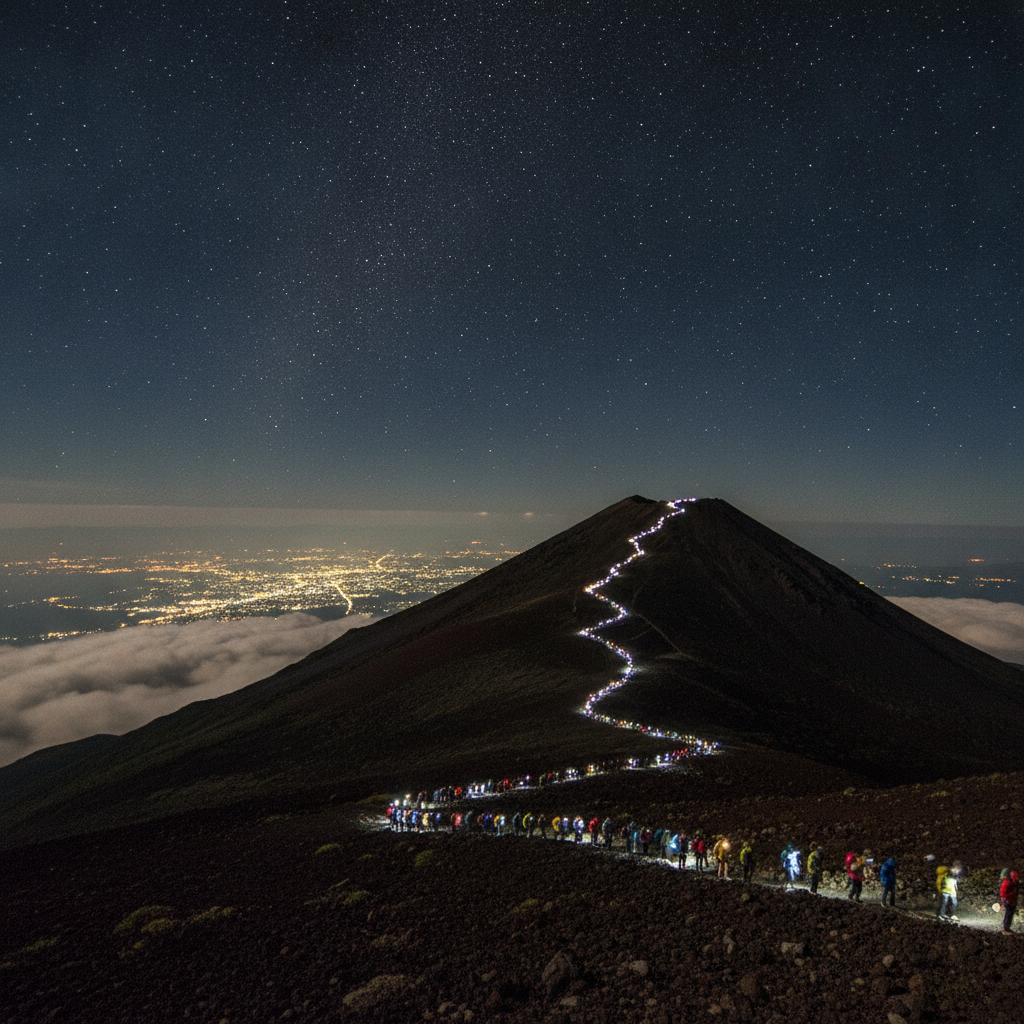
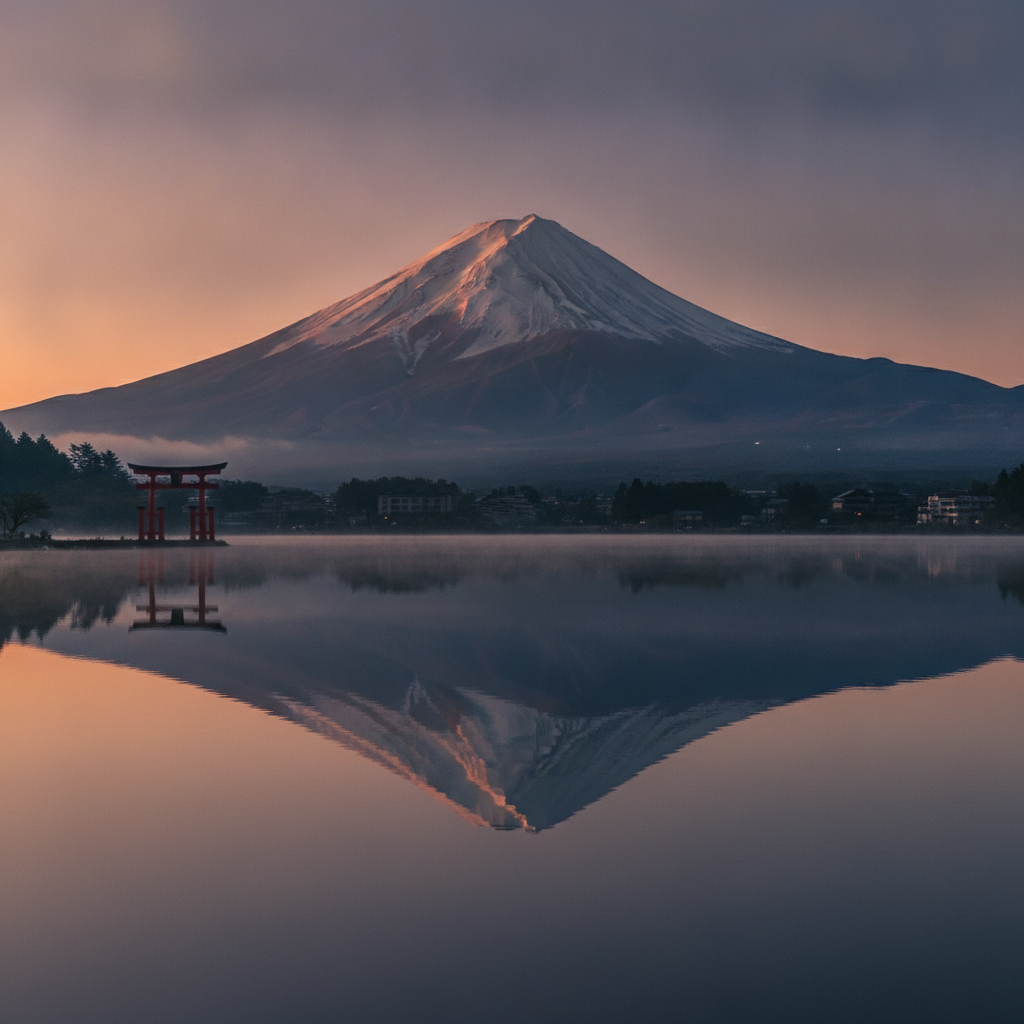
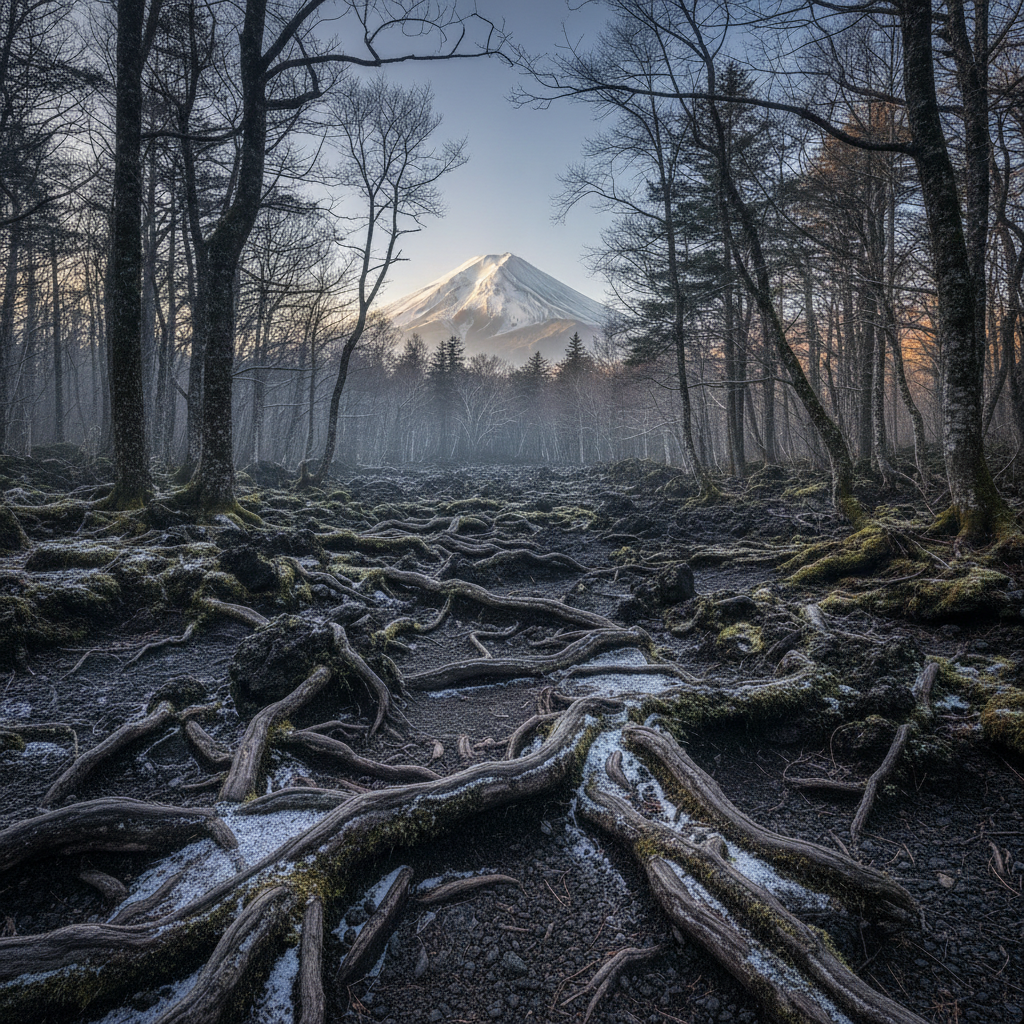
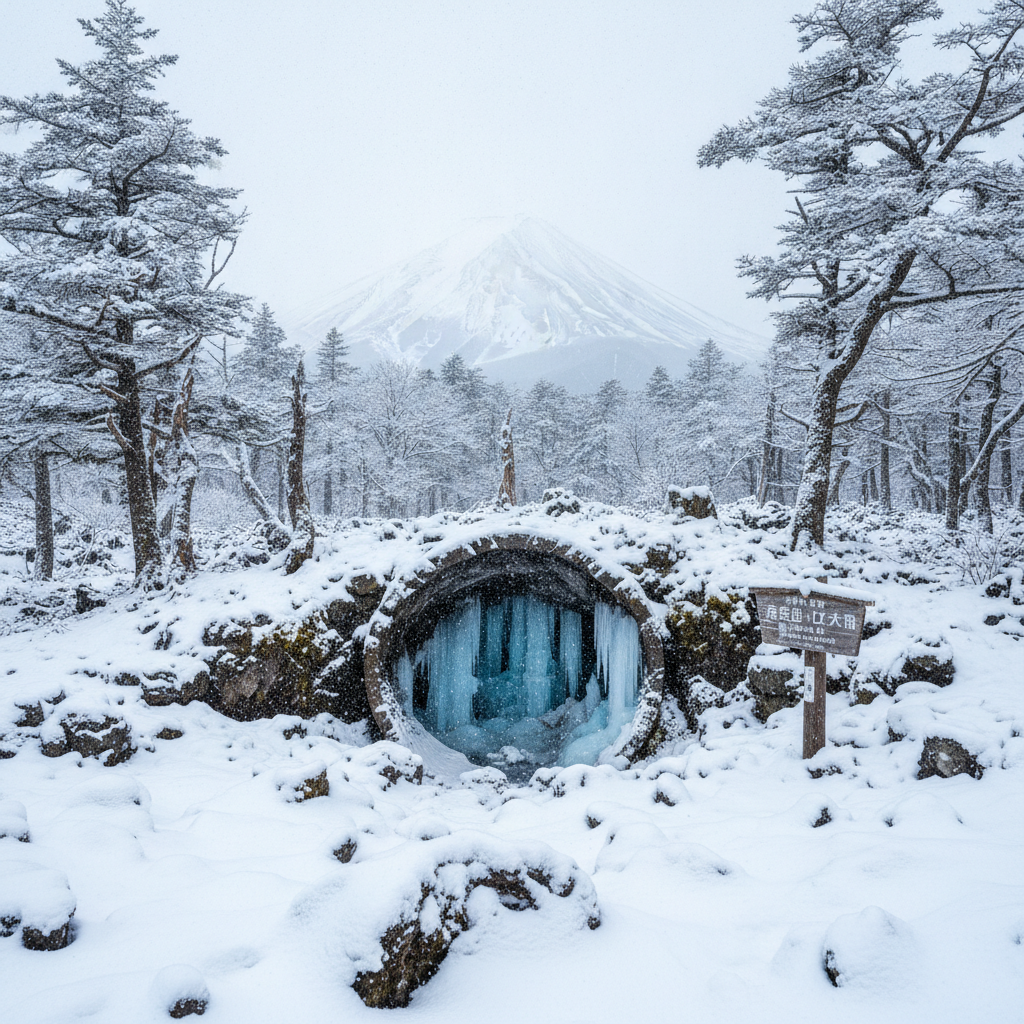
The Chureito Pagoda's late-April cherry blossom and mid-November maple composition as the two peak photography events of the year versus the flat-mirror Lake Motosu reflection requiring a windless dawn in winter; the Lake Kawaguchi partial ice formation lasting 5–10 days annually as the most competed-for photography event on the Fuji calendar; the midnight ascent's 'Fuji cough' at 2,700m and the headlamp chain visible from below as 200 simultaneous climbers become a single light-sculpture; the Fujisan-tsume cushion plant with the most restricted range of any vascular plant in Japan growing only between 3,000–3,700 metres; Aokigahara's 5 open lava tube caves and 20+ mapped underground passages in the 864 CE Jōgan lava field; and Bashō's 1694 haiku establishing that Fuji is most present in its absence—the ma aesthetic applied to Japan's most imposing mountain.
Fuji's Cultural Detail: Yoshida Udon's 70 Private-House Restaurants Open Only at Lunch, the Yoshida Fire Festival's 72 Cedar Torches Burning Simultaneously on 26 August & the 80-Year Snowmelt Springs of Oshino Hakkai
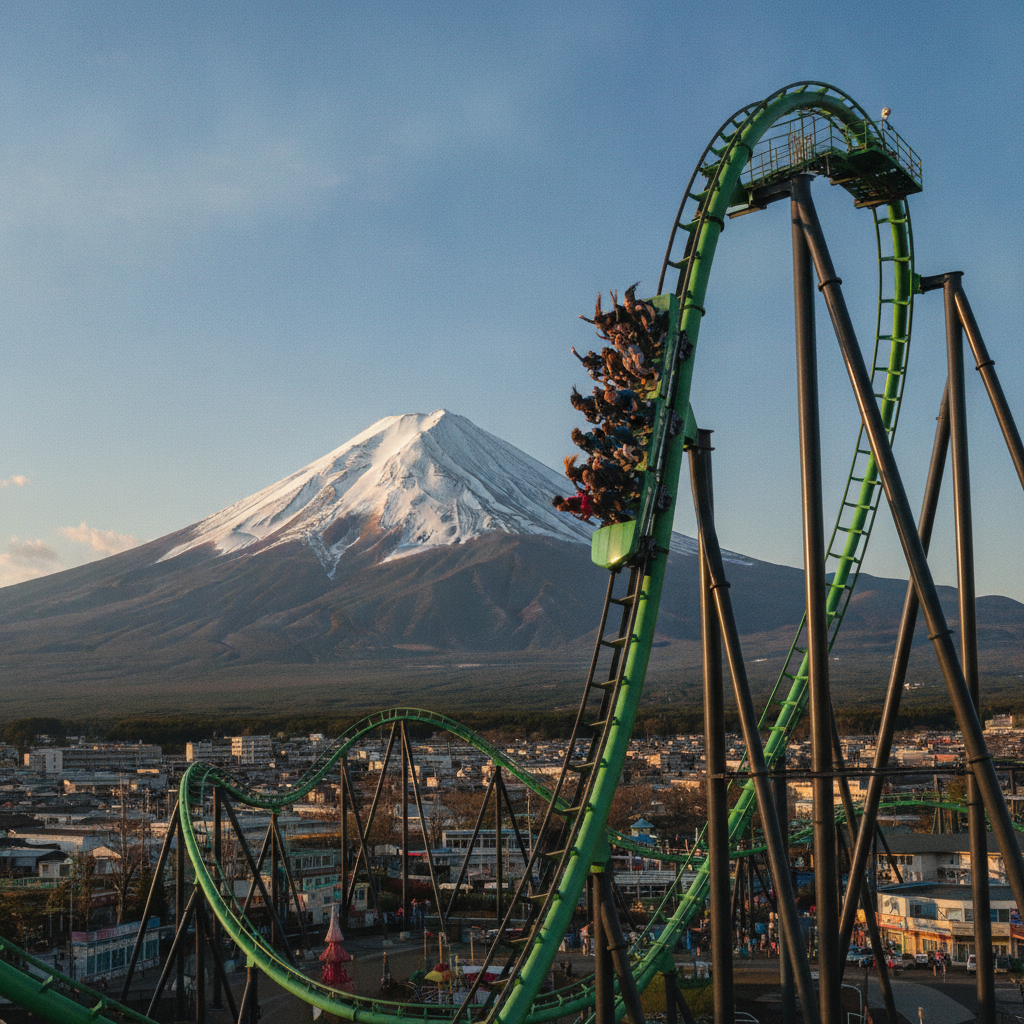
Yoshida udon's raw cabbage topping in miso-soy broth as the most regionally specific noodle culture in Japan after Kagawa's Sanuki udon; the Kachi Kachi Yama ropeway's tanuki-and-rabbit folklore summit giving the Fuji photography location a distinctly Japanese whimsical character; Takabisha's 121.5-degree verified Guinness drop in the shadow of Fuji; the 8 Oshino Hakkai springs where 80-year-old Fuji snowmelt emerges with 2-metre-depth water clarity; the 72 cedar torches burning simultaneously at 18:00 on 26 August drawing 100,000 visitors as the most photographed Fuji festival moment of the year; and the restored pilgrimage trail through Fujiyoshida's 17th-century Tokugawa cedar forest to the 5th Station that was the original route before the road.
Fuji & Tokyo: The 3,776m Sacred Volcano Visible from Shinjuku on Clear Mornings, the 4,000 Climbers Per Day That Prompted a Physical Trail Barrier in 2024 & the Ryokan With Private Onsen Facing the Summit
Fuji's last eruption in 1707 depositing ash across Edo (Tokyo) and the active volcano designation with a dedicated metropolitan government eruption response plan; the Chureito Pagoda's cherry blossom composition as the most photographed single Fuji image; Owakudani's black sulfur-boiled eggs adding 7 years to the consumer's life at a price that has increased with peak-season ropeway demand; the diamond Fuji sunrise at Lake Yamanaka on winter solstice as the most sought-after photography event in Japan; the 2024 Yoshida trail physical barrier closing the trail at 14:00 and the JPY 2,000 conservation fee as the most restrictive mountain management in Japanese history; and the Fujikyu bus from Shinjuku at JPY 1,800 as the correct answer to the getting-there question.
Bashō's Paradox, the 10-Day Ice Window & the Plant That Grows Only on Fuji Above 3,000 Metres
Photography windows at the Chureito Pagoda (cherry blossom in late April, maple in mid-November), Lake Motosu's windless dawn reflection, and the Owakudani sulfur-steam foreground; the Lake Kawaguchi partial ice that forms for 5–10 days per January as the most competed-for frame in Japanese mountain photography; the midnight ascent's headlamp constellation and the goraiko sunrise that has drawn pilgrims for 1,300 years; Fujisan-tsume—the cushion plant endemic only to Fuji's 3,000–3,700 m band; the Jōgan lava field's 5 open tube caves and the Asagiri Highlands paragliding plateau; and Bashō's 1694 haiku arguing that Fuji in the mist is more delightful than Fuji visible—the ma aesthetic applied to Japan's most imposing mountain.
Mount Fuji's Layers: Hokusai's Great Wave Van Gogh Traced, Aokigahara's Compass-Distorting Iron Lava & the 800 Edo-Period Fujikō Confraternities That Created Modern Mountain Pilgrimage Culture
The Great Wave's provenance as the opening print of the Thirty-Six Views—the image Van Gogh traced, Debussy's La Mer, and 1 billion consumer products worldwide from the same Kanagawa viewpoint; Aokigahara's actual identity as a lava tube ice cave system and unique ecological forest rather than the single-aspect reductive international media characterisation; the Subashiri trail's forested lower section absent on the Yoshida trail and the Gotemba Premium Outlets as the most extraordinary juxtaposition of luxury retail and sacred mountain in Japan; Konohanasakuya-hime's Sengen shrine technically owning the summit as the Inner Shrine's pilgrimage goal in white garments; the koyo-plus-first-snow October combination as the most photographed ground-level Fuji season; and the Shimizu tuna auction at the port below Fuji's southern face.
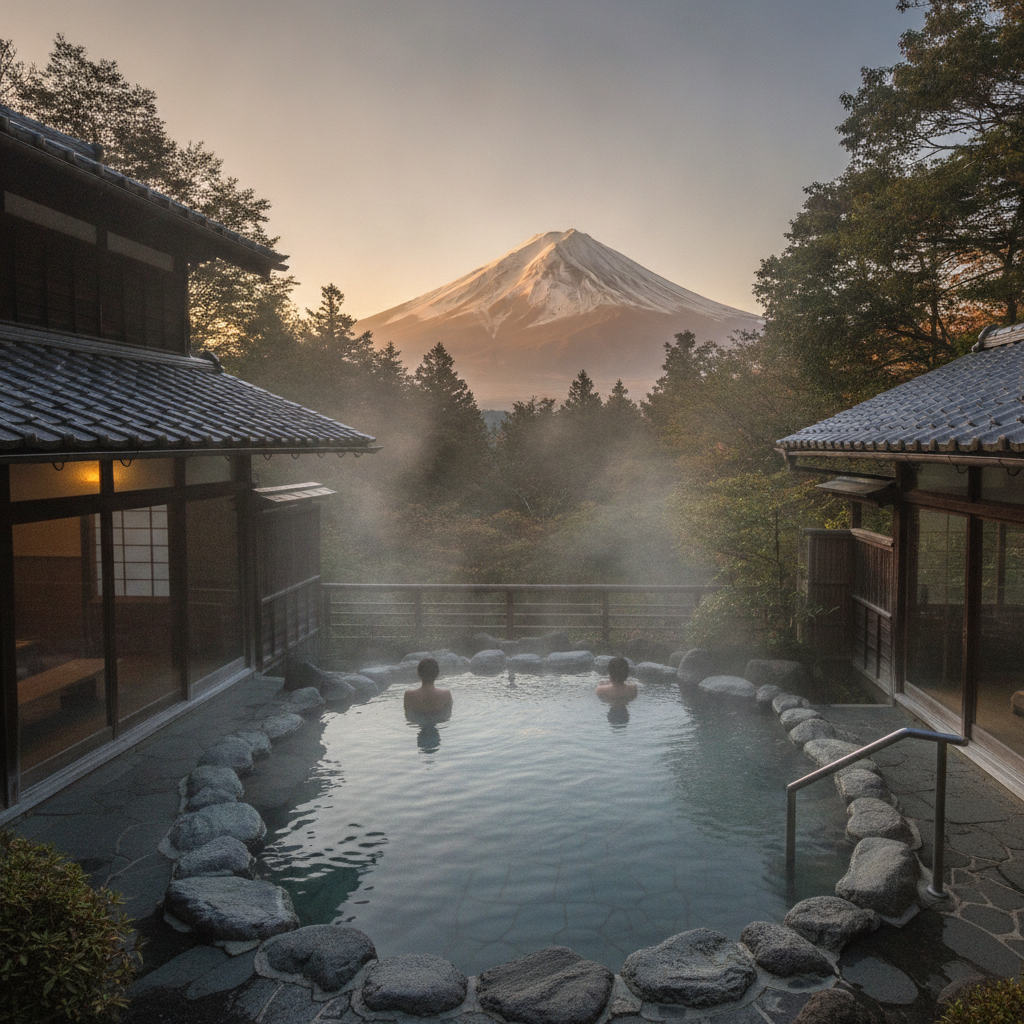
Tokyo-Fuji Weekend Planning: The Hakone Ryokan at JPY 80,000/Night With Fuji-View Rotenburo, the 70km Lakes Cycling Circuit & the Lawson Parking Lot That Became the Most Viral Fuji Photograph
The Romancecar from Shinjuku at 19:00 arriving at the Kozantei Ubuya ryokan in time for the late-arranged kaiseki dinner with Sagami Bay fish in the tatami room; the 70-km Fuji Five Lakes cycling circuit from Kawaguchiko's north-shore classic view to Motosuko's 1,000-yen banknote flat-water reflection; the JGSDF Higashifuji live-fire tank exercise in August observable from the Ura-Fuji road while artillery shells pass below the sacred mountain; the UNESCO 2013 Cultural (not Natural) inscription because the ecological state was too degraded but the Hokusai connection was unquestionable; the Lawson convenience store parking lot barrier installed to reduce the crowd drawn by the viral Fuji photograph; and the 3-night Thursday–Sunday combination that covers Hakone onsen, Kawaguchiko dawn photography, and the summit climb.