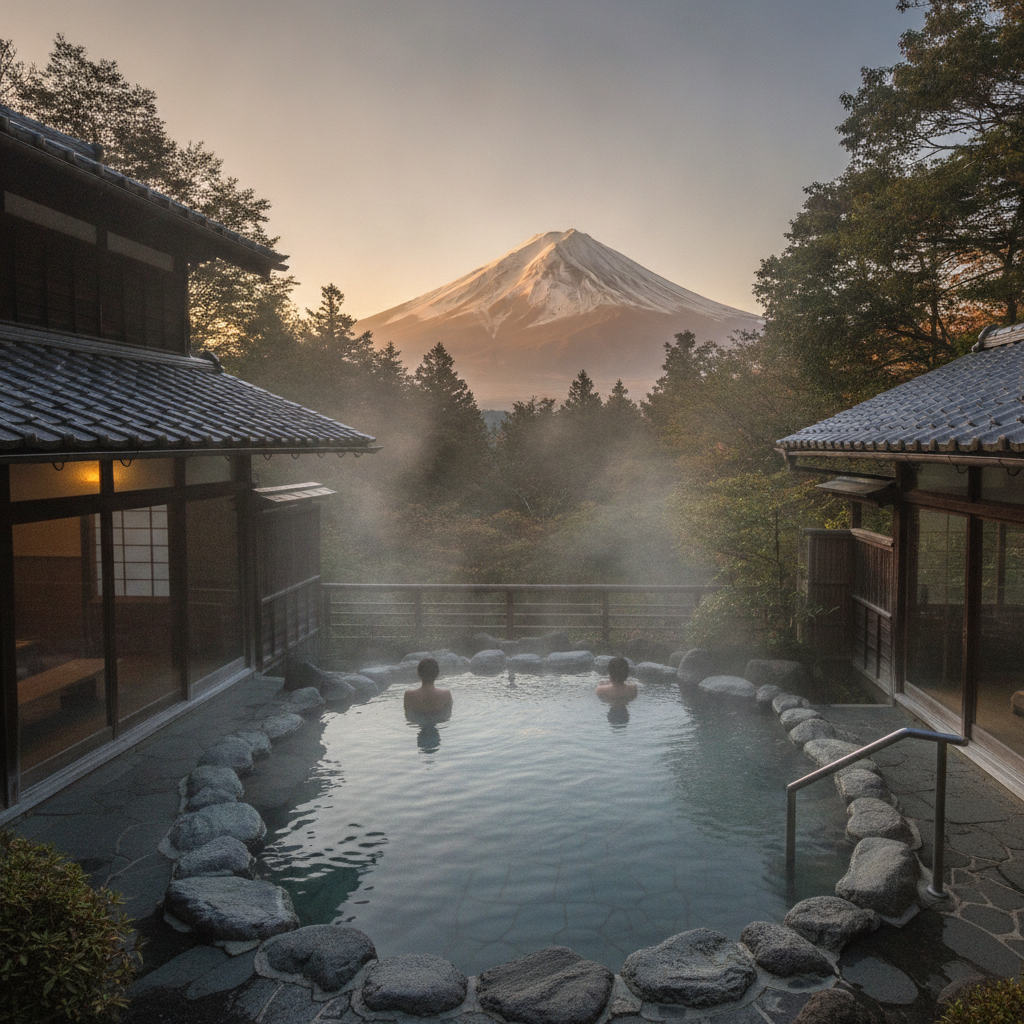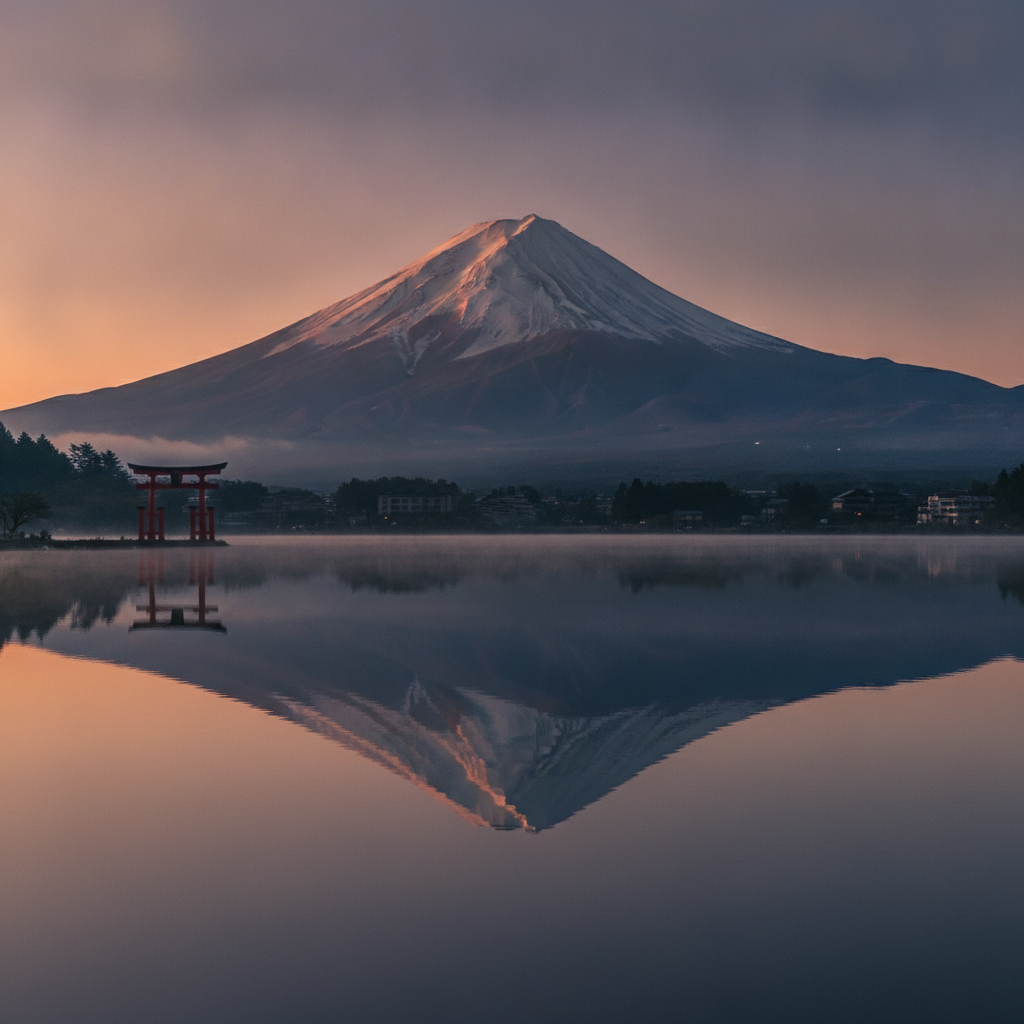
Fuji & Tokyo: The 3,776m Sacred Volcano Visible from Shinjuku on Clear Mornings, the 4,000 Climbers Per Day That Prompted a Physical Trail Barrier in 2024 & the Ryokan With Private Onsen Facing the Summit
Fuji's last eruption in 1707 depositing ash across Edo (Tokyo) and the active volcano designation with a dedicated metropolitan government eruption response plan; the Chureito Pagoda's cherry blossom composition as the most photographed single Fuji image; Owakudani's black sulfur-boiled eggs adding 7 years to the consumer's life at a price that has increased with peak-season ropeway demand; the diamond Fuji sunrise at Lake Yamanaka on winter solstice as the most sought-after photography event in Japan; the 2024 Yoshida trail physical barrier closing the trail at 14:00 and the JPY 2,000 conservation fee as the most restrictive mountain management in Japanese history; and the Fujikyu bus from Shinjuku at JPY 1,800 as the correct answer to the getting-there question.
- 1
Mount Fuji – Japan's Sacred Summit
Mount Fuji (Fujisan—3,776 metres; the highest peak in Japan; a stratovolcano on the boundary of Shizuoka and Yamanashi prefectures, 100 km southwest of Tokyo; UNESCO World Heritage Site inscribed 2013 as 'Fujisan, Sacred Place and Source of Artistic Inspiration') is simultaneously the most recognisable natural landmark in Japan and the country's most significant sacred site—the combination of its near-perfect volcanic cone form, its snow cap (visible from Tokyo on clear winter and spring days), and its 1,200-year history of pilgrimage and artistic inspiration makes it the defining natural image of Japanese identity. The geology: Fuji is a Holocene stratovolcano, last erupting in 1707 (the Hōei eruption—the most recent of approximately 10 eruptions in the past 5,000 years; the Hōei eruption deposited ash across the Kantō Plain including Edo (Tokyo) and is considered one of the most damaging volcanic events in Japanese history); the volcano is classified as active and has a dedicated eruption response plan from the Tokyo Metropolitan Government. The climbing season: the official Fuji climbing season (July 1–September 10) opens the 4 main trails (Yoshida, Subashiri, Gotemba, and Fujinomiya) and the mountain hut system; outside the official season, climbing is strongly discouraged (the mountain is icy and weather is unpredictable); the Yoshida trail (from Fuji-Subaru Line 5th Station—2,305 metres, accessible by bus from Kawaguchiko Station) is the most used trail, accounting for approximately 55% of all Fuji climbs. The UNESCO citation: the UNESCO inscription specifically recognised Fuji's role as a source of artistic inspiration—the landscape that produced Hokusai's '36 Views of Mount Fuji' (1830–1833) and Hiroshige's '100 Views of Mount Fuji' (1834), the most important series in Japanese visual arts.
- 2
The Fuji Five Lakes – Photography, Ryokan & the Classic View
The Fuji Five Lakes (Fuji-Goko—the 5 lakes north of Mount Fuji formed by successive lava flows that dammed the river valleys: Kawaguchiko, Saiko, Shojiko, Motosuko, and Yamanakako) provide the most famous ground-level views of Mount Fuji—the combination of the lake in the foreground and the mountain behind has been the dominant compositional format for Fuji photography since the 19th century. Kawaguchiko (Lake Kawaguchi—the most accessible lake, 1 hour by direct Fujikyu Railway from Shinjuku or 2 hours by highway bus from Shinjuku Station; the most developed tourist infrastructure; the most famous view spot—the Chureito Pagoda (a 5-storey pagoda on the hillside above Fujiyoshida—the most photographed single Fuji image, combining the pagoda, the cherry blossoms, and the mountain in a single composition)). The ryokan experience: the lakeside ryokan (the traditional Japanese inn) at Kawaguchiko (the Fujitomita Ryokan, the Mizno Hotel, and the Kozantei Ubuya—the most luxurious, with private onsen rotenburo (open-air hot spring baths) with Fuji views): the specific ryokan experience (the Japanese kaiseki multi-course dinner served in the room, the yukata cotton robe, the futon bedding, and the morning hot spring bath before breakfast) combined with the Fuji view creates the most concentrated Japanese traditional experience available within 2 hours of Tokyo. Motosuko (Lake Motosu—the westernmost lake, with the most famous symmetrical Fuji reflection; the view depicted on the pre-1984 Japanese 1,000-yen note).
- 3
Hakone's Hot Springs Corridor – The Onsen Approach to Fuji
Hakone (the resort town in Kanagawa prefecture, on the eastern side of the Fuji volcanic field—1.5 hours from Shinjuku by the Romancecar limited express train; the most accessible onsen resort from Tokyo and the most popular weekend destination for Tokyo residents) is the gateway to the Hakone Ropeway (the cable car system ascending from Sounzan to Owakudani and then to Togendai on Lake Ashi—the highest point of which passes through the active volcanic venting area of the Owakudani sulfur fumaroles). The Owakudani: the active volcanic zone on the Hakone caldera rim (accessible by ropeway from Sounzan—the fumaroles venting sulfur dioxide at temperatures of 120–140°C; the kurotamago (black eggs hard-boiled in the sulfuric hot spring water, turning the shell black—said to add 7 years to the life of the eater; sold at the Owakudani egg stalls from the 1900s—the most distinctive food product in Hakone)). The Lake Ashi: the crater lake at Hakone's caldera centre (formed approximately 3,000 years ago by the Hakone volcano's final collapse; the lake surface at 723 metres above sea level; on clear days, the Mount Fuji peak (1,000 metres higher) is visible above the lake's southern horizon—the most atmospheric Fuji view accessible without approaching the mountain itself; the Hakone Sightseeing Cruise (the galleon-replica tourist ferry from Hakonemachi to Moto-Hakone, 30 minutes) crosses the lake with the Fuji view).
- 4
Tokyo's Fuji Views – Urban Sightings of the Sacred Mountain
The relationship between Tokyo and Mount Fuji—the world's largest metropolitan area and the country's most sacred peak, 100 km apart but connected by visual lines—is one of the defining geographic relationships in Japanese culture: on clear days (most commonly in winter and early spring, when the air is driest), the Fuji peak is visible from multiple points in Tokyo. The best Tokyo Fuji views: the Tokyo Metropolitan Government Building's North Observatory (the free public observatory on the 45th floor of the Shinjuku government building—free admission, open daily except Mondays; the clearest unobstructed Fuji view from central Tokyo); the Roppongi Hills Mori Art Museum sky deck (the most expensive Fuji view—JPY 2,000 admission to the observatory; but also one of the widest panoramas over the Tokyo skyline); Fuji-view of convenience (the elevated sections of the Chuo Line between Tachikawa and Hachioji—the commuter train route where locals know that Fuji is visible from the right side window on clear winter mornings from approximately 08:15 between Takao and Hachioji Stations). The fujizuki: the phenomenon called 'diamond Fuji' (daiyamondo Fuji—the sunrise or sunset aligned with the Fuji peak, so that the sun appears to sit exactly on the summit; photographed from specific locations around the lake district at specific times of year—the Lake Yamanaka site at winter solstice dawn is the most sought-after daiyamondo Fuji position).
- 5
The Fuji Climbing Experience – A First-Hand Account
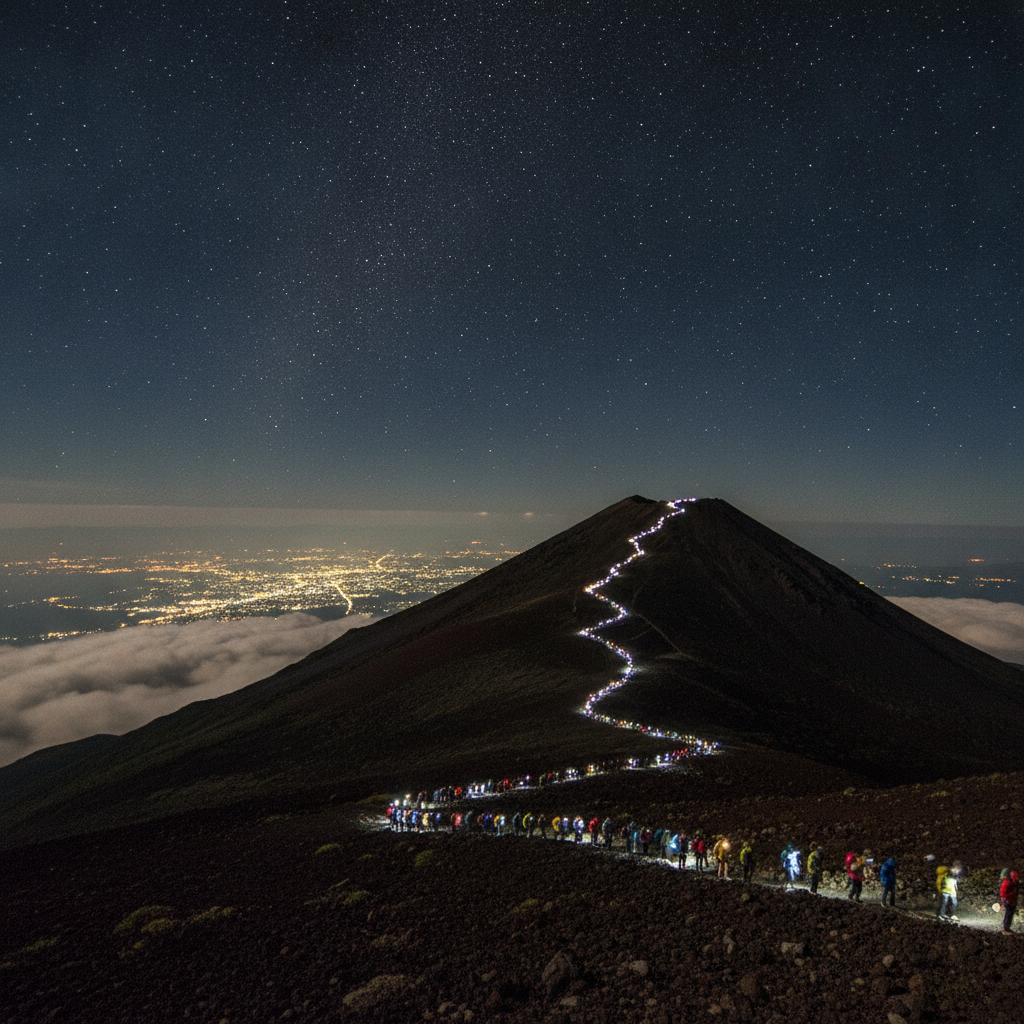
The Fuji climb—ascending Japan's highest peak on one of the 4 official trails, typically over 1 night (departing at 20:00 from the 5th Station, ascending through the night to reach the summit for the sunrise at approximately 04:45 in July–August) or over 2 days (5th Station to an 8th-station mountain hut for the night, summit the next morning)—is the most iconic adventure activity in Japan. The preparation: the summit at 3,776 metres is cold (the summit temperature in August averages 6°C with wind; the base temperature at the 5th Station is 20°C on a typical August afternoon); the essential kit is layers (the 'seven layers' of Japanese climbing advice), headlamp, rain gear, and hiking poles. The experience: the night ascent on the Yoshida trail—ascending 1,471 metres from the 5th Station (2,305 metres) to the summit (3,776 metres) over 5–7 hours; the trail is rocky volcanic ash and switchbacks; the mountain huts (at 7th and 8th Station levels) sell water, noodles, and oxygen cans at peak-season prices (JPY 500 for 500ml water); the summit crater rim circuit (the o-hachiめぐり—the walk around the summit crater, approximately 1 hour—the traditional completion of the Fuji pilgrimage). The crowds: the Fuji climbing trail is the most crowded mountain trail in the world during the July–August peak; the Yoshida trail can have 4,000+ climbers per day on peak summer weekends; the 2024 management measures (a physical barrier installed at the Yoshida trail midpoint at 14:00 to prevent overcrowding on the summit—the most restrictive crowd management measure at a Japanese mountain in modern times).
- 6
Practical Tokyo-Fuji – Getting There, Booking Huts & the New Rules
Getting to Fuji from Tokyo: the Fujikyu Highland bus from Shinjuku Station (direct to Kawaguchiko Station—2 hours, JPY 1,800; the most straightforward option for the Fuji Five Lakes base); the Fujikyu Railway from Otsuki (for Japan Rail Pass holders—transfer at Otsuki from the JR Chuo Line; approximately 1.5 hours from Shinjuku, JPY 1,180 from Tokyo for the JR portion); the Shinkansen option (for Fuji Subashiri or Fujinomiya trails—Shinkansen to Mishima or Shin-Fuji Station, then bus to the 5th Station). Getting to the 5th Station (the standard Fuji climbing start point): buses from Kawaguchiko Station to Fujisan 5th Station (for the Yoshida Trail—50 minutes, JPY 1,540 round trip; operating July–September only). The mountain hut reservations: the 8th Station huts (Tomoe-kan, Fujisan Hotel, Goraikōkan) are the most popular overnight stops on the Yoshida trail; reservations required in July–August (available online at the individual hut websites from April); cost JPY 8,000–9,000 per person including dinner and breakfast. The new 2024 rules: the Fuji climbing management rules introduced in 2024 in response to overtourism include: the daily quota on the Yoshida trail (4,000 people per day—registration required from July 2024 onwards); the overnight climbing restriction (the trail above the 2nd Station gate is closed from 16:00 to 03:00 to prevent dangerous overnight climbing without equipment); and the JPY 2,000 conservation fee per climber. When to climb: early July (after July 1 opening—before the August peak crowds; the snow line has typically receded to just below the summit by early July).
Walk this route with audio
Stories play automatically as you reach each stop — no tapping needed.
More in Tokyo-Fuji
Fuji's Complete Picture: Bashō's Paradox That Fuji in the Mist is More Delightful Than Fuji Visible, the January Lake Ice That Lasts 10 Days Per Year & Fujisan-tsume the Plant That Grows Only Here Above 3,000 Metres
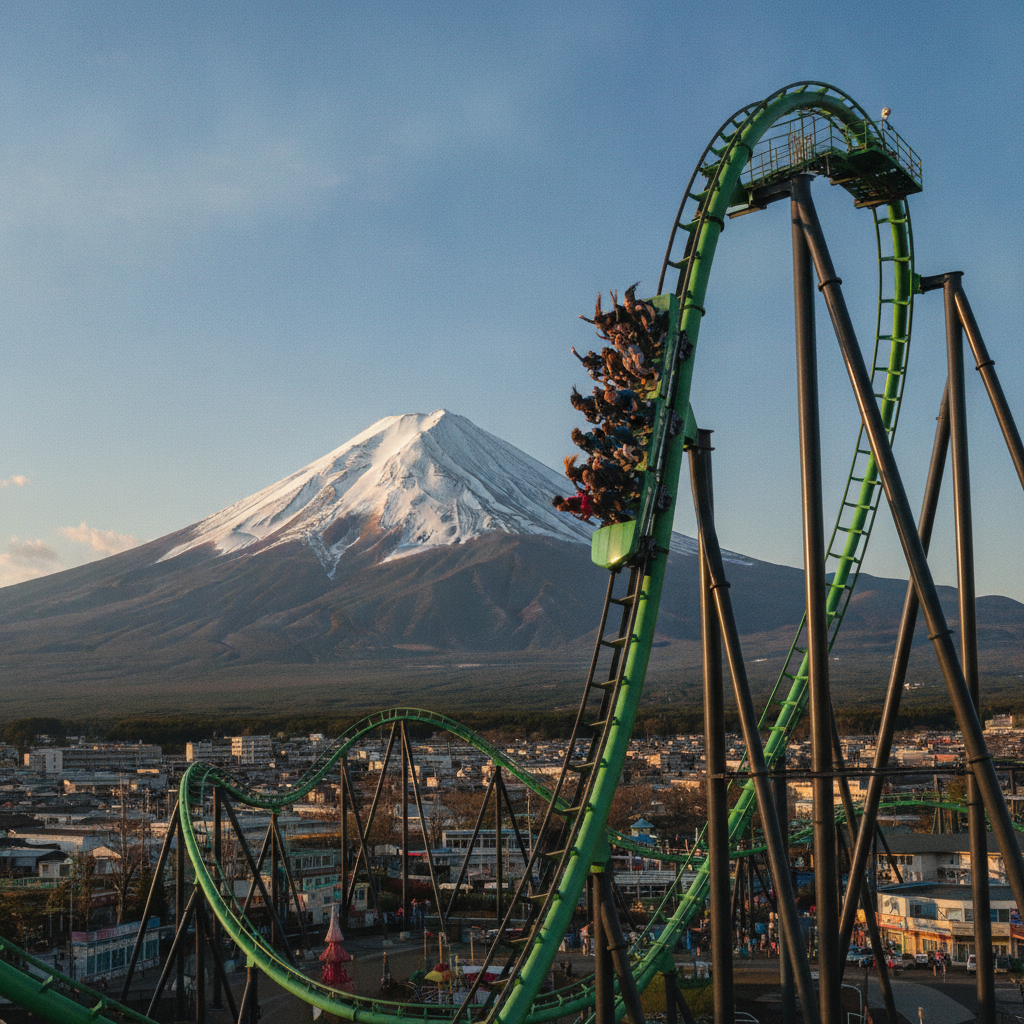
Fuji's Cultural Detail: Yoshida Udon's 70 Private-House Restaurants Open Only at Lunch, the Yoshida Fire Festival's 72 Cedar Torches Burning Simultaneously on 26 August & the 80-Year Snowmelt Springs of Oshino Hakkai
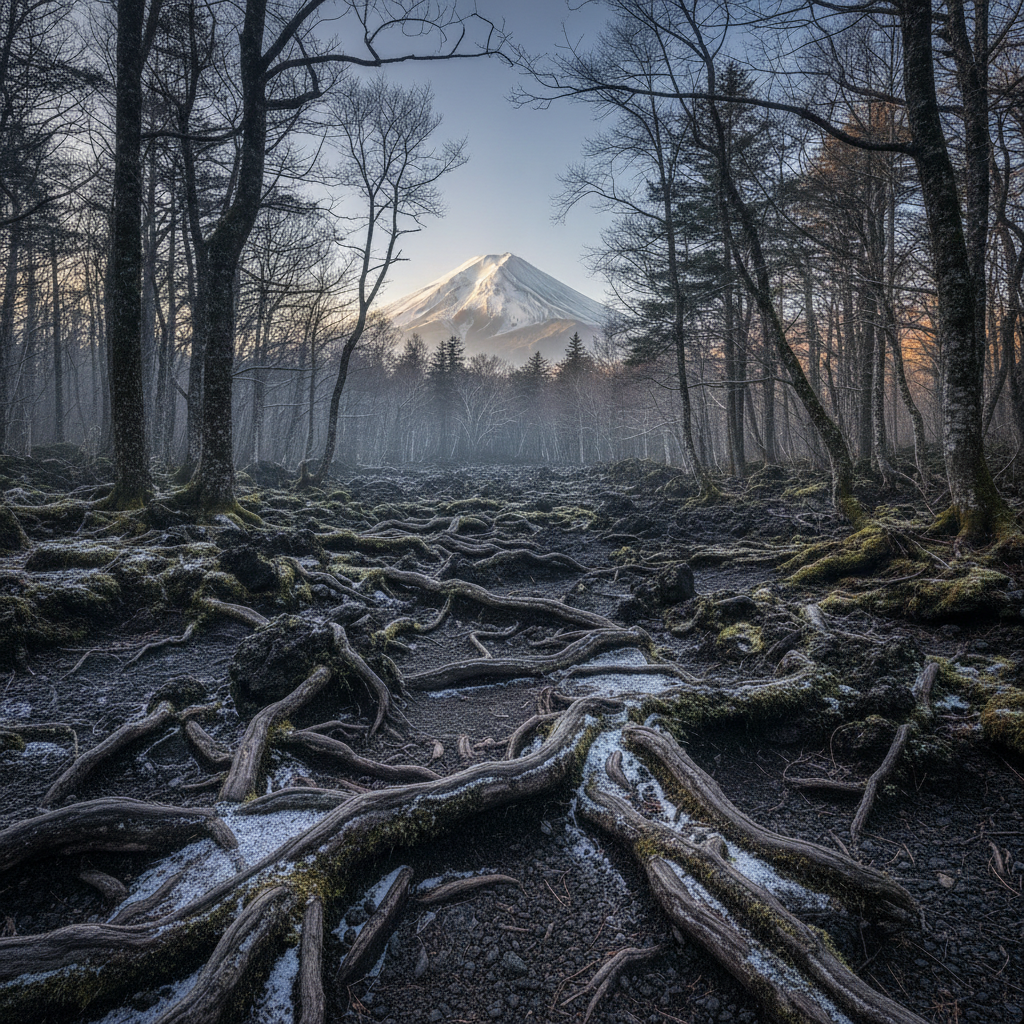
Bashō's Paradox, the 10-Day Ice Window & the Plant That Grows Only on Fuji Above 3,000 Metres
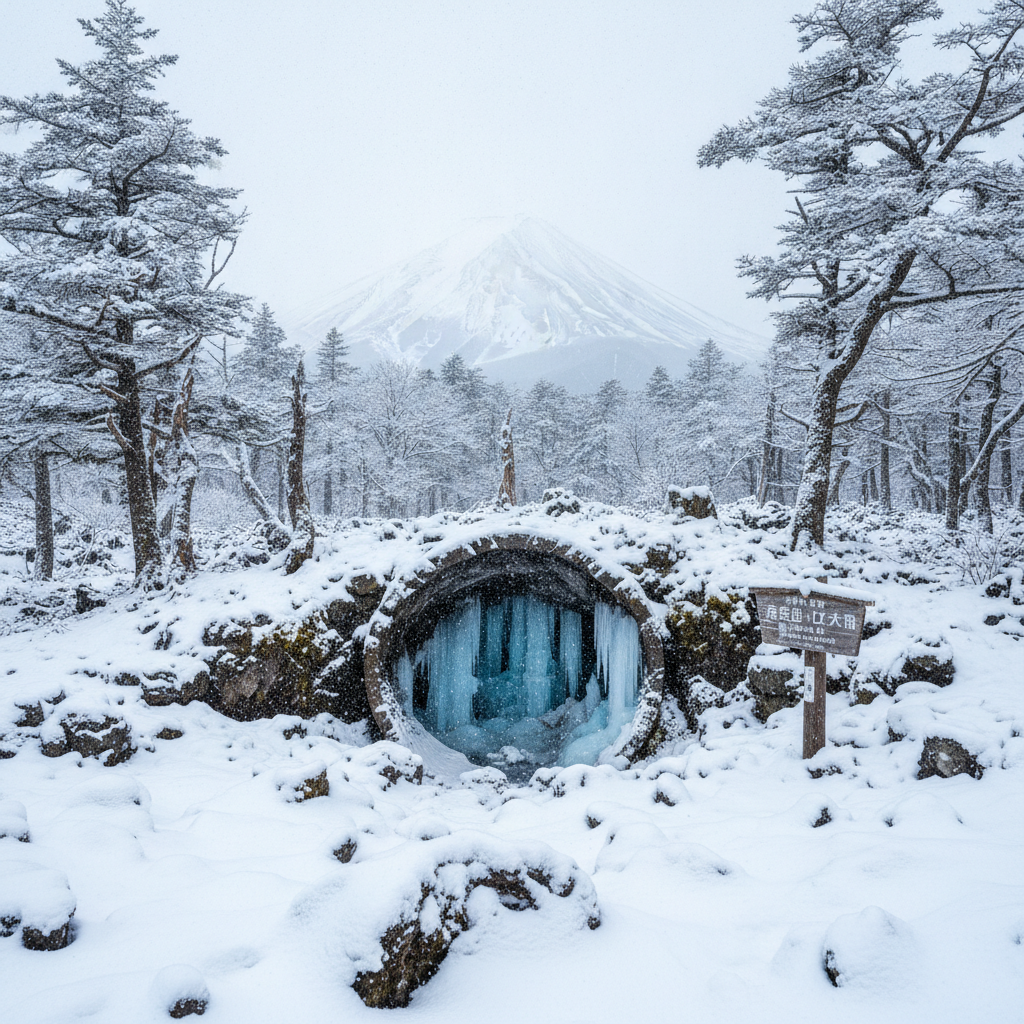
Mount Fuji's Layers: Hokusai's Great Wave Van Gogh Traced, Aokigahara's Compass-Distorting Iron Lava & the 800 Edo-Period Fujikō Confraternities That Created Modern Mountain Pilgrimage Culture