Tokyo-Fuji Weekend Planning: The Hakone Ryokan at JPY 80,000/Night With Fuji-View Rotenburo, the 70km Lakes Cycling Circuit & the Lawson Parking Lot That Became the Most Viral Fuji Photograph
The Romancecar from Shinjuku at 19:00 arriving at the Kozantei Ubuya ryokan in time for the late-arranged kaiseki dinner with Sagami Bay fish in the tatami room; the 70-km Fuji Five Lakes cycling circuit from Kawaguchiko's north-shore classic view to Motosuko's 1,000-yen banknote flat-water reflection; the JGSDF Higashifuji live-fire tank exercise in August observable from the Ura-Fuji road while artillery shells pass below the sacred mountain; the UNESCO 2013 Cultural (not Natural) inscription because the ecological state was too degraded but the Hokusai connection was unquestionable; the Lawson convenience store parking lot barrier installed to reduce the crowd drawn by the viral Fuji photograph; and the 3-night Thursday–Sunday combination that covers Hakone onsen, Kawaguchiko dawn photography, and the summit climb.
- 1
Tokyo Before Fuji – The Urban Launch Pad
Tokyo (the world's largest metropolitan area—population 37 million in the greater metropolitan area; the capital of Japan since 1869; the city of Shinjuku, Shibuya, Akihabara, Asakusa, and Harajuku) is the standard base for the Fuji excursion: the mountain's 100-km distance from the city centre is close enough for a day trip but far enough that staying at the Fuji Five Lakes (for the mountain dawn light) or at Hakone (for the onsen experience) is significantly better. The Tokyo Fuji context: the view of Fuji from Tokyo—available on clear winter mornings from the Tokyo Skytree, the Tokyo Tower, and the Shinjuku government building observatories—provides the essential context for the mountain's relationship to the city: Fuji is Tokyo's sacred mountain, visible on the horizon like a ghost, reminding the megacity of the volcanic landscape beneath its urban surface. The practical Tokyo-Fuji transition: the Shinjuku highway bus terminal (the Bāsutāminal Shinjuku—the departure point for highway buses to the Fuji Five Lakes and Hakone) is at the west exit of Shinjuku Station—the most convenient single-point departure for all Fuji area destinations from central Tokyo.
- 2
Hakone Ryokan Deep Dive – The Ultimate Onsen Stay
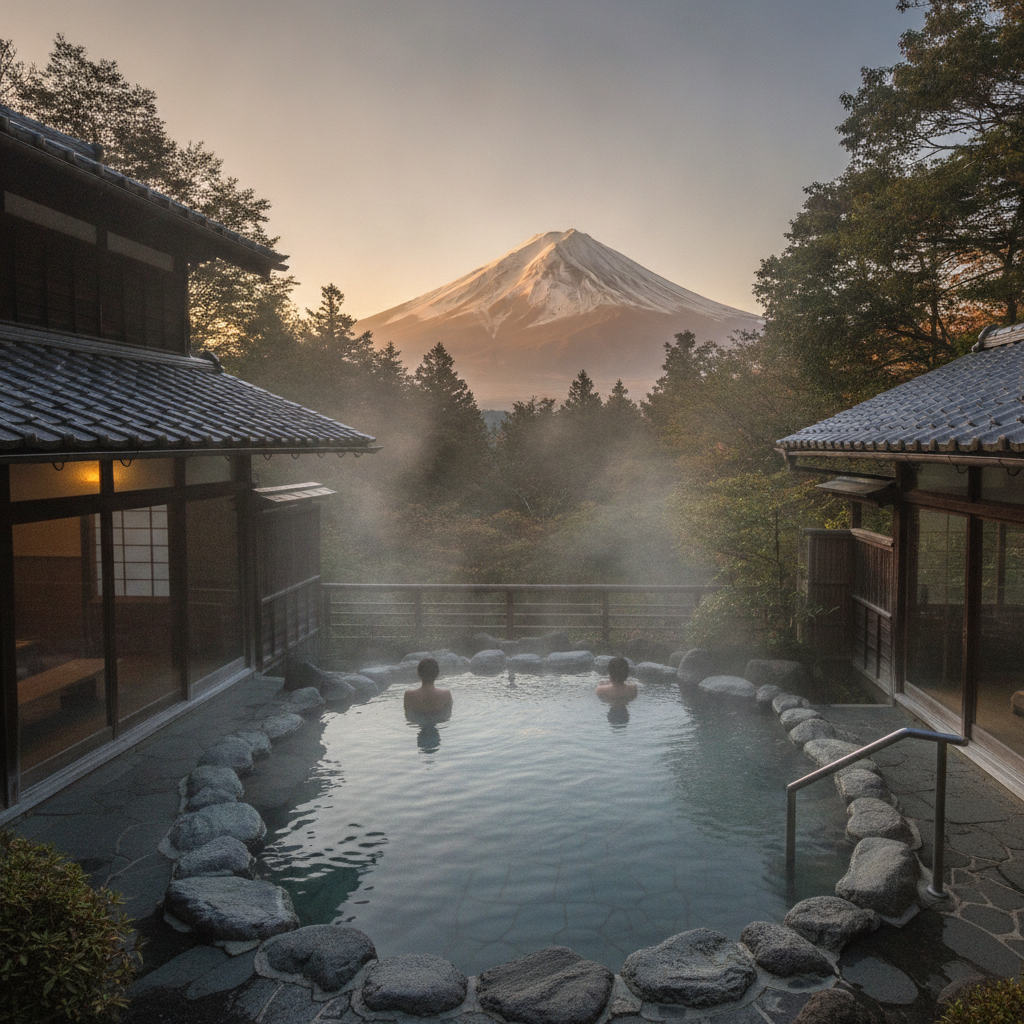
The Hakone ryokan experience—the full traditional Japanese inn immersion that begins at the Hakone-Yumoto Station (the last JR station before the resort zone begins, 1 hour from Shinjuku by Odakyu Romancecar) and ends with the morning breakfast served at the low table in the tatami room—is the most widely recommended single Japanese cultural experience available within 2 hours of Tokyo. The ryokan structure: the traditional ryokan check-in (16:00; the okami-san/innkeeper greeting in yukata and geta wooden sandals; the tea and wagashi sweets served in the tatami room while the itinerary is explained; the private or shared onsen bath schedule communicated); the kaiseki dinner (served in the room at 18:30—the multi-course Japanese culinary art form, originating in tea ceremony culture, using seasonal ingredients from the local region in small, precisely prepared courses; the Hakone version emphasising Sagami Bay fish, local mountain vegetables, and the Ashigarashimo miso); the futon bed (prepared while guests are at dinner—the cotton quilt bedding on the tatami floor that is the most discussed practical aspect of the ryokan experience); the morning onsen (05:30–07:00—the most atmospheric bath time, in the outdoor rotenburo with the Hakone steam rising from the mountain and the morning light on the trees). The price: the Kozantei Ubuya (the most photographed Hakone ryokan, with the Fuji-facing rotenburo): JPY 50,000–80,000 per person per night including dinner and breakfast—the most expensive 2-hour-from-Tokyo experience in Japan.
- 3
The Fuji Five Lakes Cycling Circuit
The Fuji Five Lakes cycling circuit—the 70-km loop around all five lakes (Kawaguchiko, Saiko, Shojiko, Motosuko, and Yamanakako) with Fuji visible throughout the circuit—is the most rewarding cycling tour accessible from Tokyo and the best way to understand the Fuji Five Lakes landscape in its full geographical context. The circuit: the full 70-km circuit is achievable in one day by an experienced cyclist (6–8 hours of riding); the shorter Kawaguchiko circuit (the 20-km loop around the largest lake) is appropriate for casual cyclists (2–3 hours); bicycle rental from the Kawaguchiko Station rental shops (electric assist bicycles—JPY 2,500–3,500/day; the electric assist is recommended for the hills between the lakes and for the Fuji Panoramic Ropeway ascent). The view progression: the circuit provides a continuous changing perspective of Fuji—from the north shore of Kawaguchiko (the most photographed front-face view), to the west shore of Saiko (the forested view through the larch trees), to the Momiji Tunnel (the tunnel of Japanese maple trees in autumn colour at the Saiko–Shojiko connection), to the south shore of Motosuko (the flat-water reflection view from the 1,000-yen banknote composition), to the eastern Yamanakako (the widest-angle view across the largest lake). The timing: the April–May period (the cherry blossoms have passed but the spring freshness remains; the summer crowds have not yet arrived; the mountain is still snow-capped) is the optimal cycling season.
- 4
Mount Fuji's Restricted Zones – The Military History
The restricted zones around Mount Fuji—the military and governmental areas that are not accessible to visitors and that constitute the largest land parcels around the mountain not managed as national park or prefectural land—are the least-known aspect of the Fuji landscape. The Higashifuji Training Ground: the Japan Ground Self-Defense Force's largest training area in eastern Japan (Higashifuji Sōgō Enshu-jō—approximately 88 km² of the southeastern Fuji flank between the Fujinomiya and Gotemba areas; the training area includes live-fire ranges with artillery and armored vehicle maneuvers): the training ground is visible from the Fuji Subashiri trail as the restricted zone extends to within 2 km of the 5th Station; the tank tracks are visible on the lower slopes from the trail. The annual military exercise: the Fuji Sōgō Kaen Enshu (the largest combined-arms live-fire military exercise in Japan, held annually in August at the Higashifuji range): the exercise (involving approximately 5,000 soldiers, tanks, artillery, and helicopter gunships) is conducted in view of Mount Fuji—spectators can observe from designated viewpoints on the Ura-Fuji road; the combination of the live-fire artillery and the sacred mountain background is the most unexpected juxtaposition in the Fuji area. The US military connection: the Higashifuji training area is used jointly by the JGSDF and the US Army under the Status of Forces Agreement (SOFA)—American soldiers from Camp Fuji (the US Marine Corps base immediately south of the training area) participate in the annual exercises.
- 5
The Fujisan World Heritage Site & Management Plan
The Fujisan UNESCO World Heritage Site (inscribed June 2013 as a Cultural Heritage site—not Natural Heritage, as the original nomination proposed; the UNESCO World Heritage Committee's decision to inscribe Fuji as a Cultural rather than Natural World Heritage Site reflects the assessment that the mountain's ecological state had been degraded by tourism and the industrial development of the surrounding area, but its cultural significance as 'a source of artistic inspiration' was unquestionable): the most complex and most contested UNESCO inscription in Japan. The inscription conditions: UNESCO inscribed Fuji with specific management conditions—the improvement of the toilet and waste management facilities on the climbing trails; the restriction of vehicle access on the Fuji Subashiri Line 5th Station road (the Subashiri 5th Station road was closed to private vehicles in 2005, before the inscription); and the management of visitor numbers on the summit. The current management crisis: the 2024 overtourism response (the physical barrier on the Yoshida trail, the 4,000-person daily quota, the JPY 2,000 conservation fee) represents the most significant management intervention since the UNESCO inscription, triggered by the 'Lawson convenience store photo' phenomenon (tourists photographing Fuji from the Lawson parking lot in Fujikawaguchiko becoming the most viral Fuji photograph since the Chureito Pagoda image, driving an unsustainable concentration of visitors to a single residential street—the town ultimately installed a barrier blocking the view to reduce the crowd).
- 6
The Complete Fuji-Tokyo Weekend Itinerary
The optimal Tokyo-Fuji weekend itinerary—the programme that provides the maximum Fuji experience within a 2-day, 2-night framework departing from and returning to central Tokyo—requires choosing between two fundamentally different approaches: the active approach (Fuji climbing) and the contemplative approach (Lakes + onsen + photography). The active approach: Saturday bus from Shinjuku to Kawaguchiko (10:00); Kawaguchiko exploration and the Chureito Pagoda afternoon photography; overnight at Kawaguchiko budget guesthouse (JPY 4,000–6,000/person); Sunday 05:30 bus to the Yoshida 5th Station (in the non-climbing-season period) or full summit climb if within the July–September season. The contemplative approach: Friday night departure to Hakone (the 19:00 Romancecar to Hakone-Yumoto—arrive 21:00 after the ryokan dinner hour, but advance booking allows a late dinner arrangement); the full Saturday ryokan experience (the Hakone Ropeway to Owakudani, the Lake Ashi cruise, the Hakone Open-Air Museum (an outdoor sculpture park with Picasso ceramics collection)); Saturday night ryokan dinner and the outdoor onsen; Sunday morning Lake Ashi Fuji view before the bus back to Tokyo. The combination (3 nights): the combination itinerary (1 night at Hakone ryokan; 1 night at Kawaguchiko; 1 night Fuji climb from the 5th Station) provides the most complete Fuji-area experience, achievable as a 4-day Thursday–Sunday trip from Tokyo.
Walk this route with audio
Stories play automatically as you reach each stop — no tapping needed.
More in Tokyo-Fuji
Fuji's Complete Picture: Bashō's Paradox That Fuji in the Mist is More Delightful Than Fuji Visible, the January Lake Ice That Lasts 10 Days Per Year & Fujisan-tsume the Plant That Grows Only Here Above 3,000 Metres
Fuji's Cultural Detail: Yoshida Udon's 70 Private-House Restaurants Open Only at Lunch, the Yoshida Fire Festival's 72 Cedar Torches Burning Simultaneously on 26 August & the 80-Year Snowmelt Springs of Oshino Hakkai
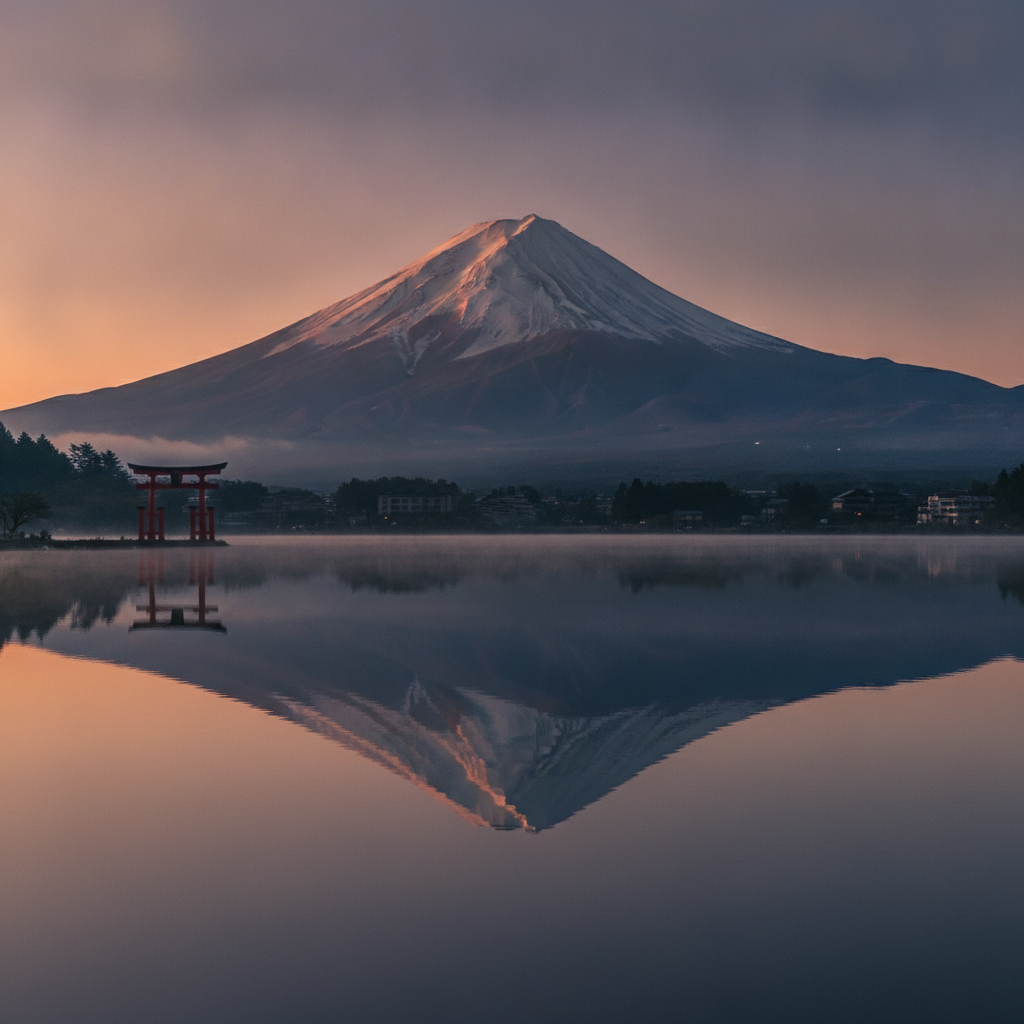
Fuji & Tokyo: The 3,776m Sacred Volcano Visible from Shinjuku on Clear Mornings, the 4,000 Climbers Per Day That Prompted a Physical Trail Barrier in 2024 & the Ryokan With Private Onsen Facing the Summit
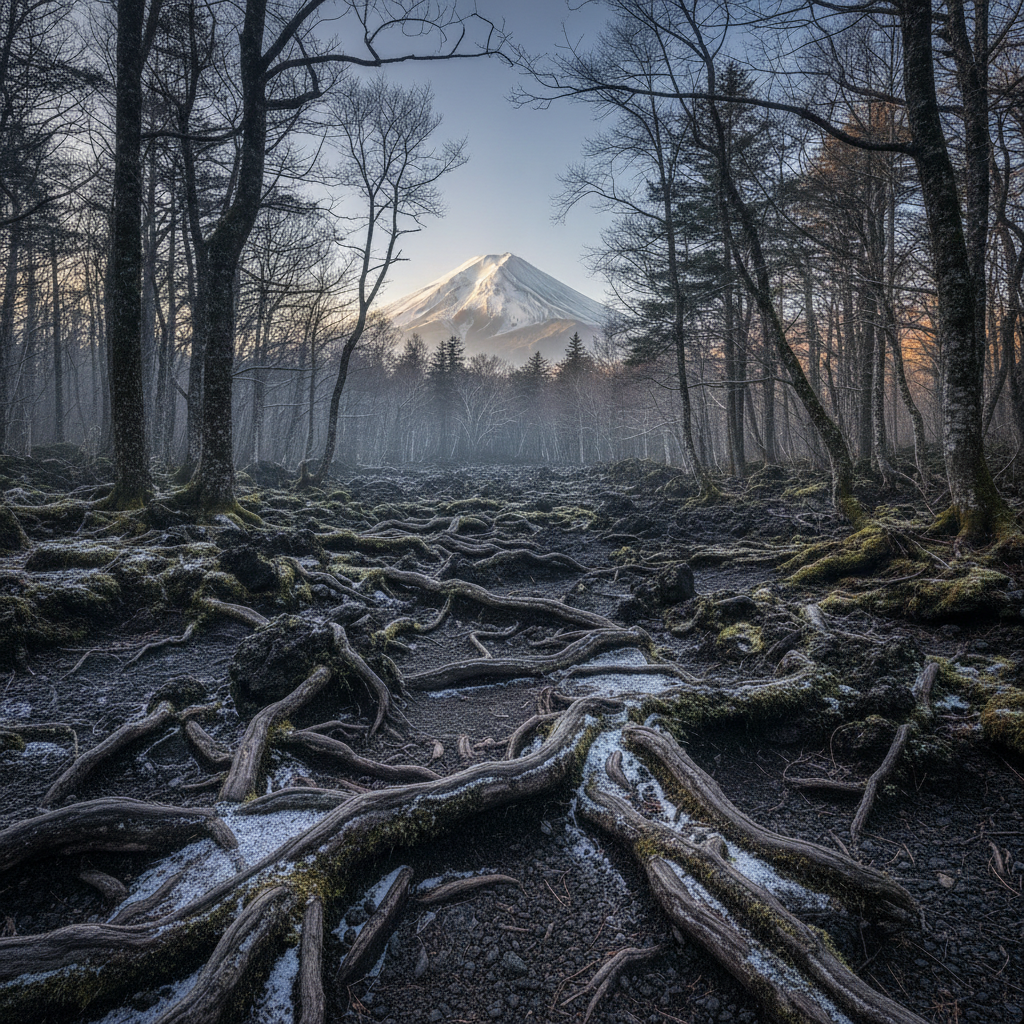
Bashō's Paradox, the 10-Day Ice Window & the Plant That Grows Only on Fuji Above 3,000 Metres