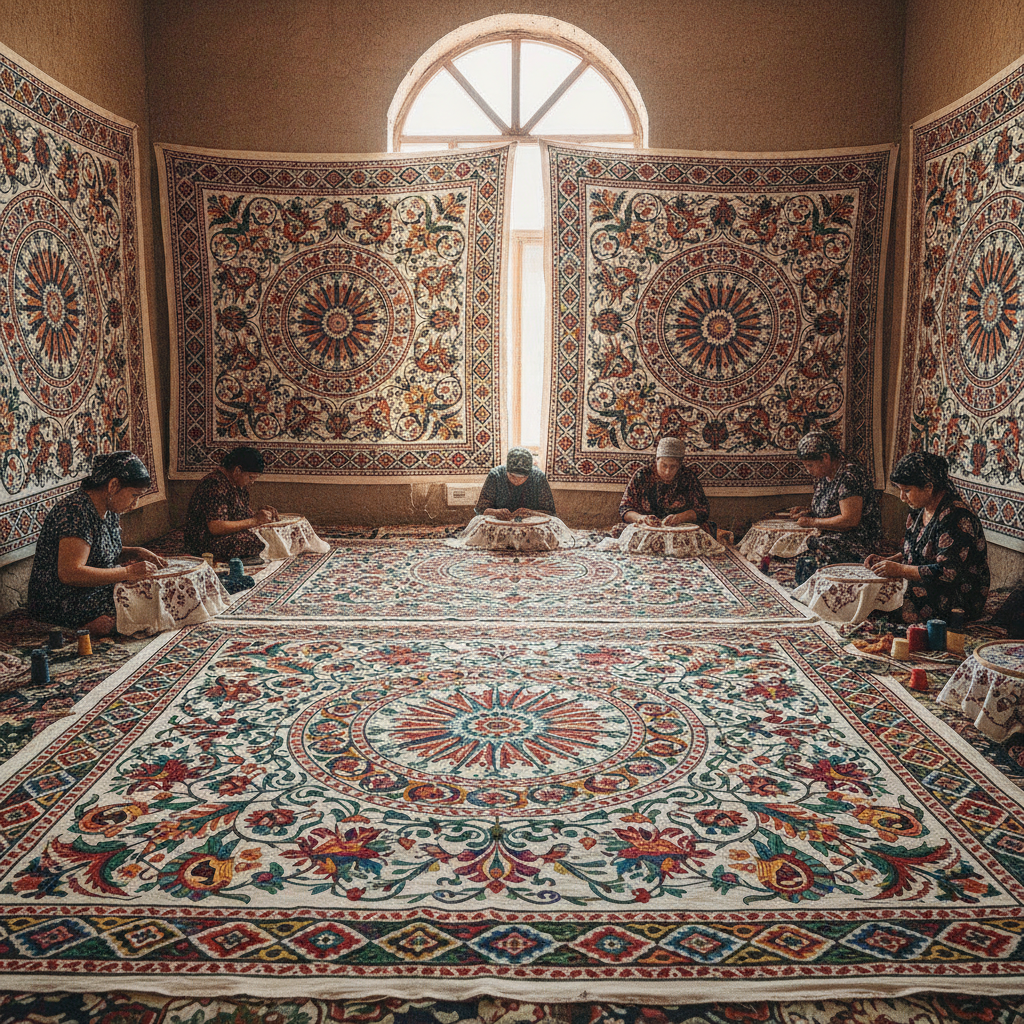
Namangan Traditional Embroidery and Craft Heritage
Explore the traditional craft heritage of Namangan — the city known for its embroidery tradition producing the distinctive Namangan style of suzani and gold thread embroidery, the craft workshops where women work on the large-scale decorative panels that are among Central Asia's most celebrated textile arts, and the male-dominated crafts of knife-making, ceramics, and woodworking.
- 1
Suzani Embroidery Workshop
A suzani embroidery workshop in Namangan — the large decorative panels worked in silk thread on cotton backing, the Namangan style distinguished by its bold circular medallion compositions and the rich combination of colors, the women working in groups on the large frames sharing the embroidery of a single panel that may take months to complete.
- 2
Gold Thread Embroidery Zardozi
The gold thread embroidery (zardozi) tradition of Namangan — the technique of embroidering with metal-wrapped thread onto velvet to produce the robes, wall hangings, and prayer mats used in ceremonial contexts, the Namangan workshops producing some of the finest zardozi work in Central Asia, the craft requiring years of apprenticeship to master the needle technique.
- 3
Embroidery Pattern Vocabulary
The embroidery pattern vocabulary of Namangan — the pomegranate, almond (bodom), and vine leaf motifs that are the core design elements of the Central Asian embroidery tradition, the Namangan interpretation of these shared patterns distinguishable by the specific color combinations and the density of the embroidery filling the background field.
- 4
Knife Making Tradition
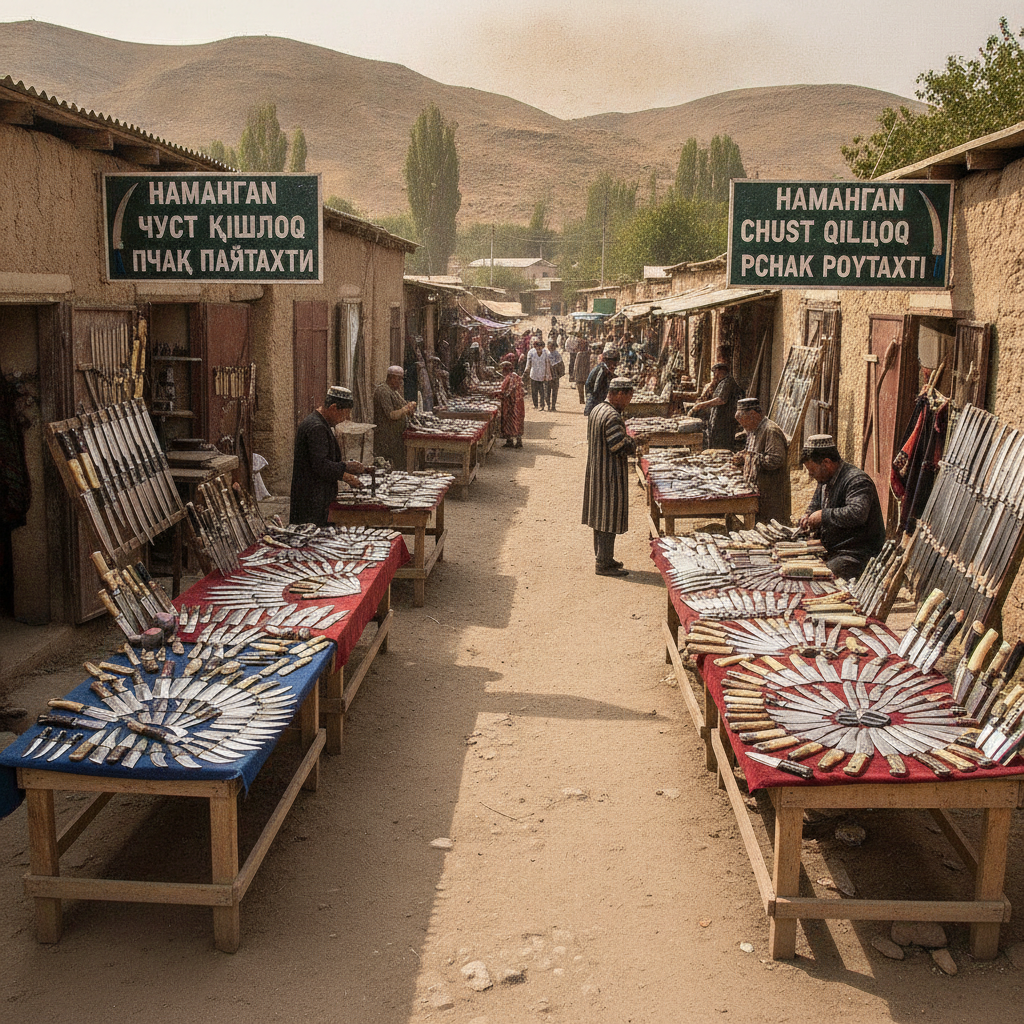
The knife-making tradition of Namangan — the pchak workshops producing the characteristic Central Asian utility knife with its distinctive blade shape and decorated handle, the Namangan pchak having its own style preferences for blade geometry and handle material, the craft practiced by male artisans in small workshops near the bazaar.
- 5
Namangan Doppi Cap Production
The Namangan doppi cap production — the four-pointed skullcap that is the characteristic headwear of Uzbek men, the Namangan version distinguished by its black background and the white embroidered geometric pattern on each of the four panels, the doppi worn as everyday headwear and as formal attire for religious occasions.
- 6
Craft Training Apprenticeship
The craft training apprenticeship system in Namangan workshops — the transmission of technical skill from master craftsperson to apprentice over years of unpaid or low-paid training, the system surviving the Soviet period's attempt to industrialize craft production and continuing to function as the primary way that specialized craft knowledge is transmitted to the next generation.
Walk this route with audio
Stories play automatically as you reach each stop — no tapping needed.