Namangan Chust Village Pchak Knife Capital
Visit Chust — the village 30 kilometers from Namangan that is the pchak knife capital of Central Asia, where virtually every family is involved in knife production and the village's knives are sold across Uzbekistan and exported to Russia, Kazakhstan, and beyond, the craft making Chust synonymous with quality knife production across the region.
- 1
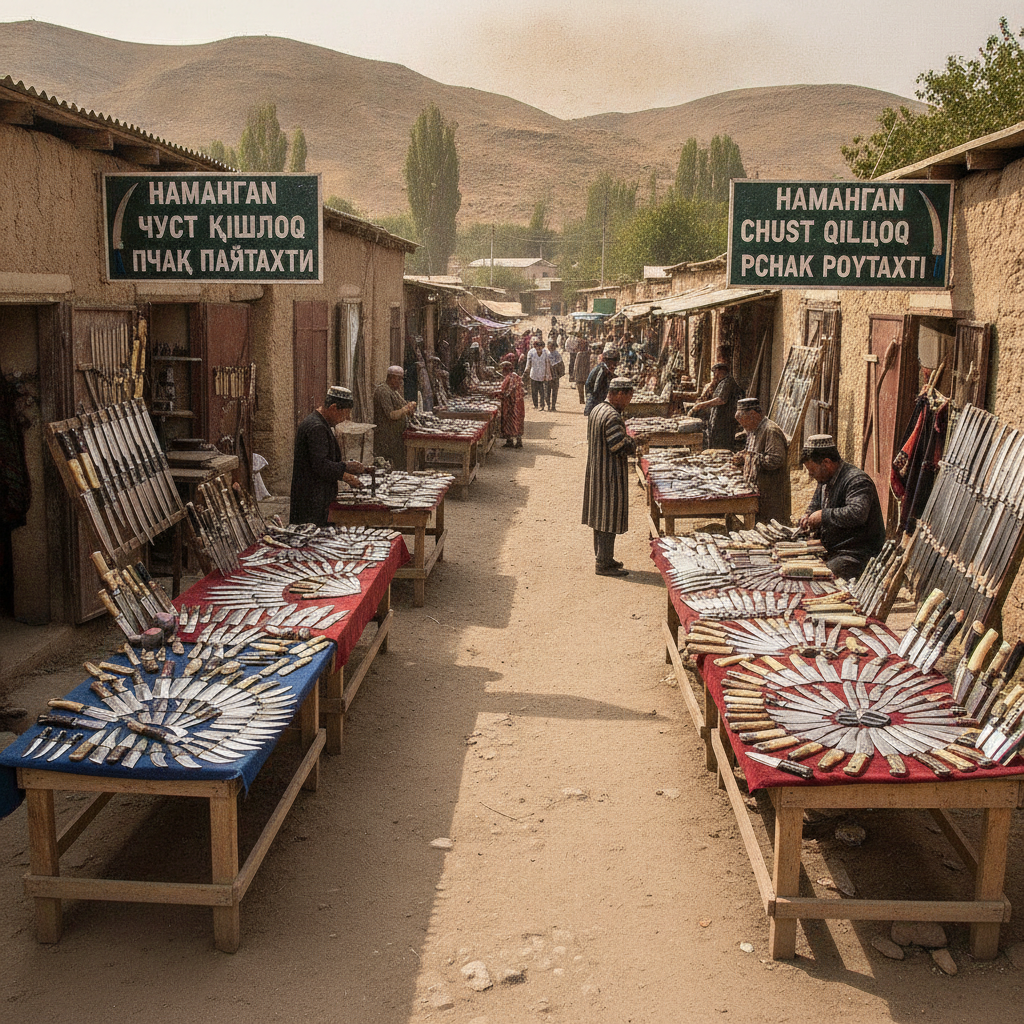
Chust Village Entry Knife Displays
The entry to Chust village with its knife displays — the roadside stalls and workshop-front tables covered with pchak knives of every size and quality from the smallest folding pen knife to the largest butcher's blade, the profusion of knives creating an immediate visual statement about the village's single dominant craft specialization.
- 2
Family Workshop Forge
A family workshop forge in Chust — the small coal forge in which the steel billet is heated to working temperature, the anvil and hammer with which the blade is shaped through repeated heating and hammering, the quench bucket for hardening, the grinding wheel for the initial bevel, the complete smithing setup occupying one room of a courtyard house.
- 3
Steel Quality Sourcing
The steel quality sourcing used by Chust knife makers — the preference for certain grades of recycled Soviet-era steel, car leaf springs, or railroad spike steel that the smiths have found produce superior cutting performance through their experience, the knowledge of steel behavior being part of the craft knowledge transmitted from master to apprentice.
- 4
Handle Material Variety
The handle material variety at Chust workshops — the bone (typically cattle or camel), horn, hardwood, and in lower-quality production the plastic and Plexiglas substitutes, the handle material determining both the price and the social status of the knife, the finest handles being of stag horn or worked bone with elaborate silver wire inlay.
- 5
Village Knife Bazaar
The village knife bazaar of Chust — the weekly market where the village's production is concentrated and where buyers from across Uzbekistan come to select knives for resale, the market an efficient wholesale distribution mechanism for the village's cottage industry production, the prices varying from a few dollars for a simple utility knife to hundreds for a decorated presentation piece.
- 6
Chust Doppi Connection
The Chust doppi connection — the village is also famous for the Chust style of doppi skullcap embroidered in white on black ground, a craft practiced by the women of the same families whose men make knives, the combination of the two craft specializations making Chust uniquely associated with two of Uzbekistan's most distinctive traditional manufactures.
Walk this route with audio
Stories play automatically as you reach each stop — no tapping needed.
More in namangan
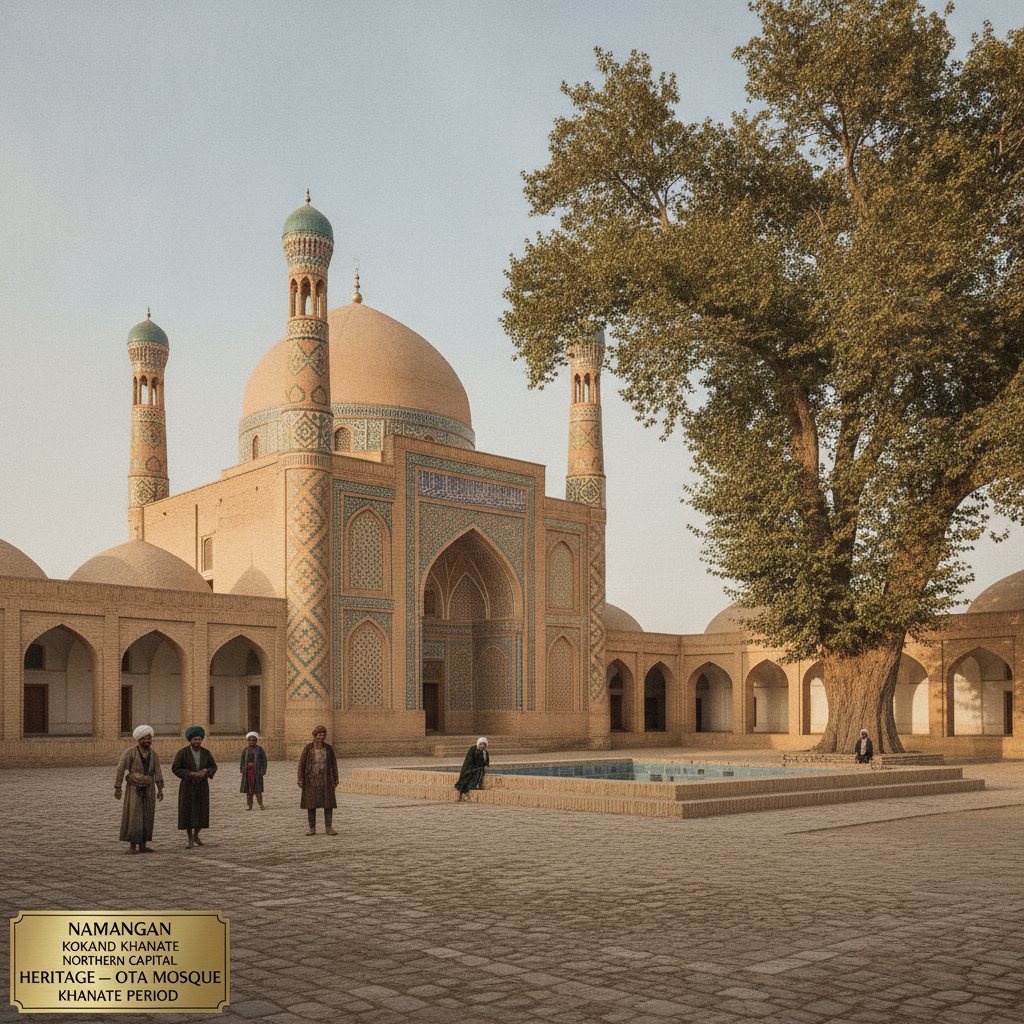
Namangan Kokand Khanate Northern Capital Heritage
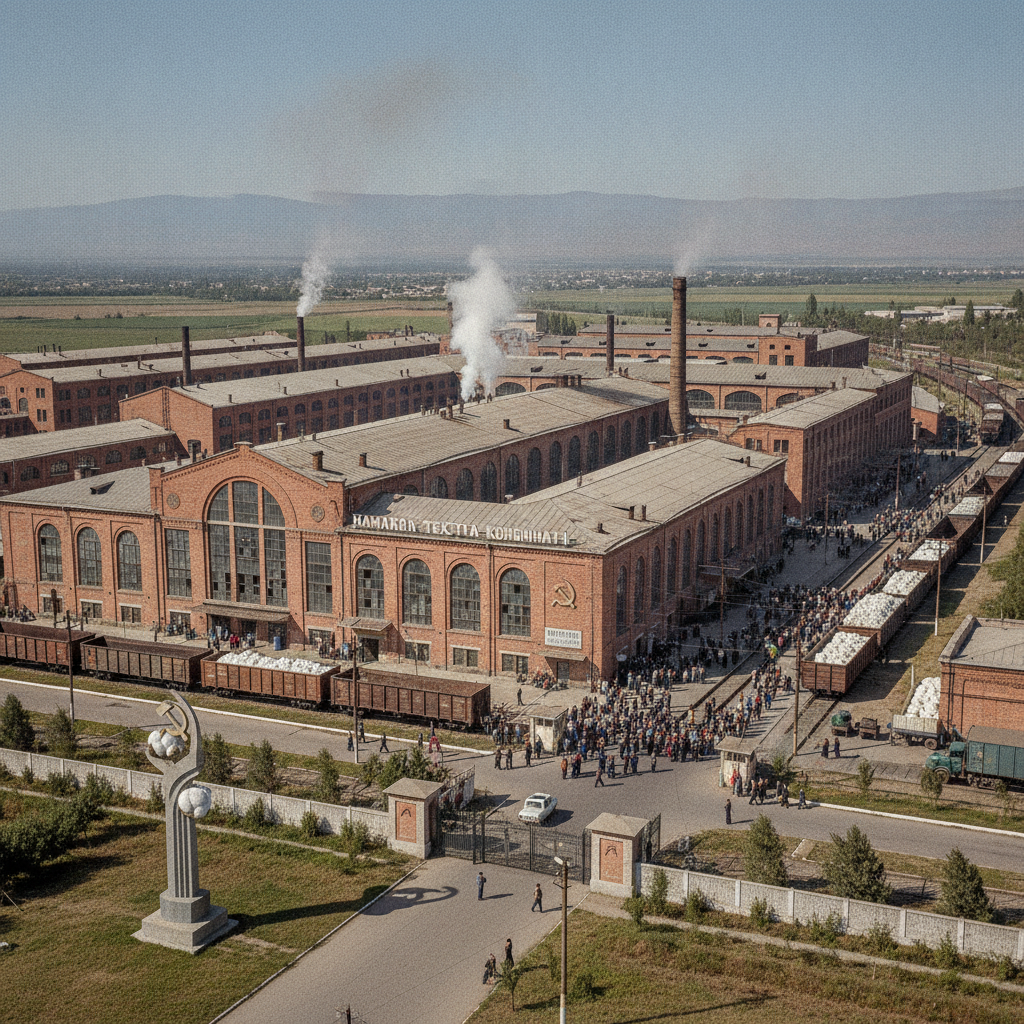
Namangan Soviet Industrial Legacy Textile City
Namangan Islamic Revival Mosques Religious Life
Namangan Northern Fergana Valley Landscape