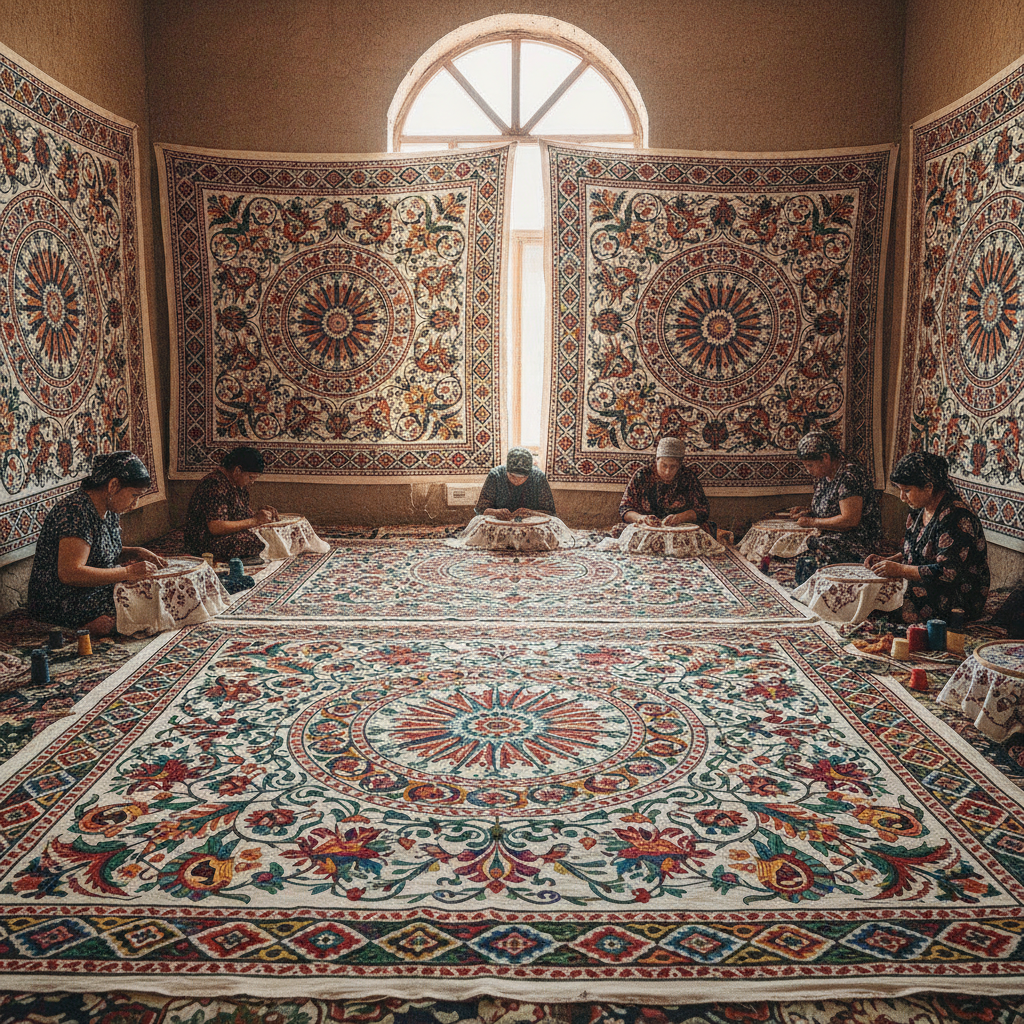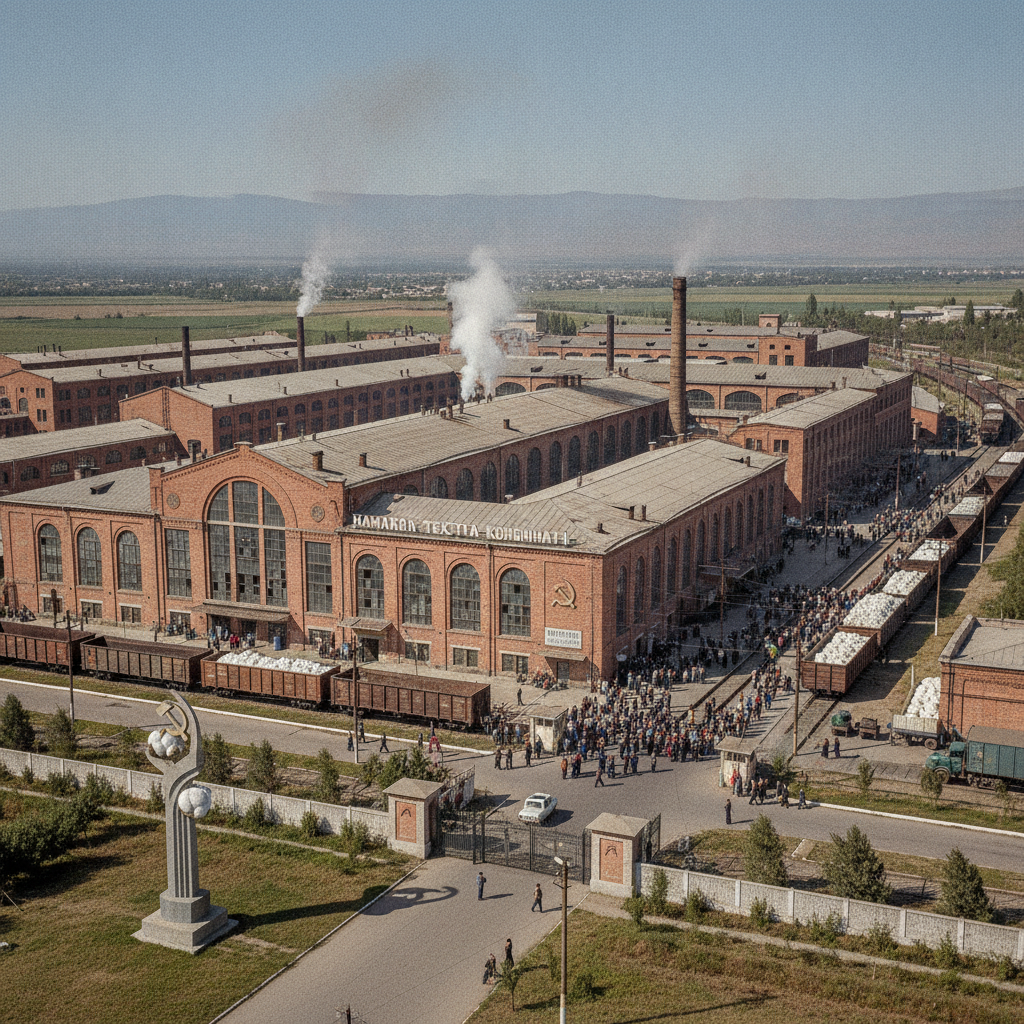
Namangan Soviet Industrial Legacy Textile City
Explore Namangan's Soviet industrial legacy — the city transformed by Soviet planners from a traditional craft and commercial center into a major textile manufacturing hub, the cotton ginning and silk processing factories that employed tens of thousands of workers, the industrial infrastructure that remains central to the city's economy alongside the revival of traditional craft production.
- 1
Textile Factory Complex
The textile factory complex of Namangan — the large Soviet-era spinning, weaving, and finishing factories built to process the cotton and silk of the Fergana Valley, the factories that employed the majority of the city's industrial workforce during the Soviet period and that have been partially privatized and modernized since independence while still forming the backbone of the city's manufacturing economy.
- 2
Cotton Gin Processing Facility
The cotton gin processing facility near Namangan — the industrial-scale cotton processing plant where the raw cotton picked from the valley's fields is ginned to separate the fiber from the seed, the scale of industrial cotton processing contrasting with the artisan silk weaving of the traditional economy, the facility operating seasonally during the autumn cotton harvest.
- 3
Worker Housing Districts
The worker housing districts of Namangan built in the Soviet period — the microrayon neighborhoods of prefabricated apartment blocks housing the factory workers who moved from rural areas to the city during the Soviet industrialization, the contrast between the traditional courtyard house neighborhoods of the old city and the standardized apartment blocks of the Soviet urban expansion.
- 4
Industrial Food Processing
The industrial food processing facilities of Namangan — the canning and preserving plants that process the abundant fruit and vegetable production of the valley, the facilities producing canned tomatoes, dried fruit, and fruit juice for distribution across the former Soviet space, the food processing industry representing a natural industrialization of the valley's agricultural surplus.
- 5
Post-Soviet Economic Transition
The post-Soviet economic transition in Namangan — the privatization of state enterprises, the growth of the bazaar economy and small private business, the remittance economy of workers in Russia and Kazakhstan, and the development of new textile and food processing enterprises under private ownership, the economic transformation visible in the mixture of Soviet industrial facilities and new private commercial buildings.
- 6
Free Economic Zone Development
The free economic zone development around Namangan — the government initiative to attract investment to the Fergana Valley by creating special economic zones with tax incentives and simplified regulations, the zone hosting new manufacturing facilities for garments, electronics, and processed foods, the investment intended to modernize the industrial economy inherited from the Soviet period.
Walk this route with audio
Stories play automatically as you reach each stop — no tapping needed.
More in namangan
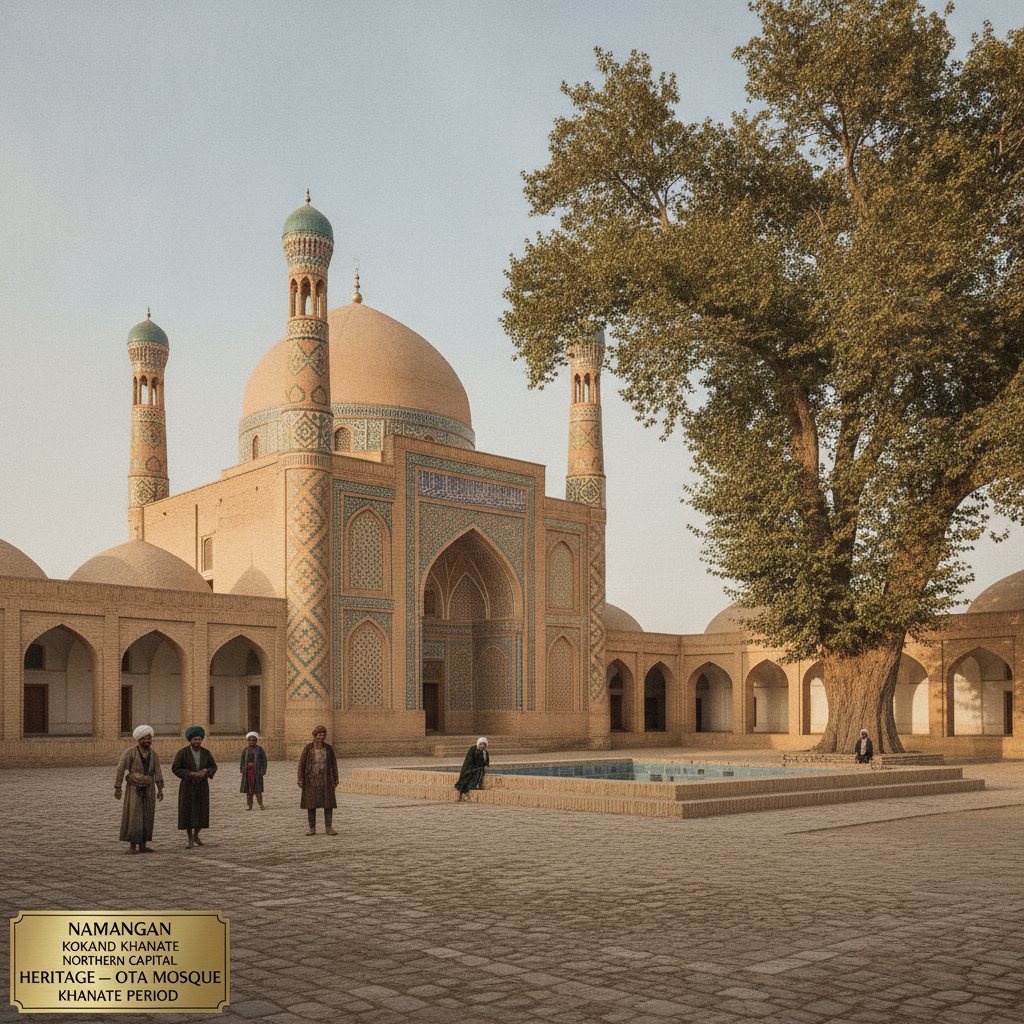
Namangan Kokand Khanate Northern Capital Heritage
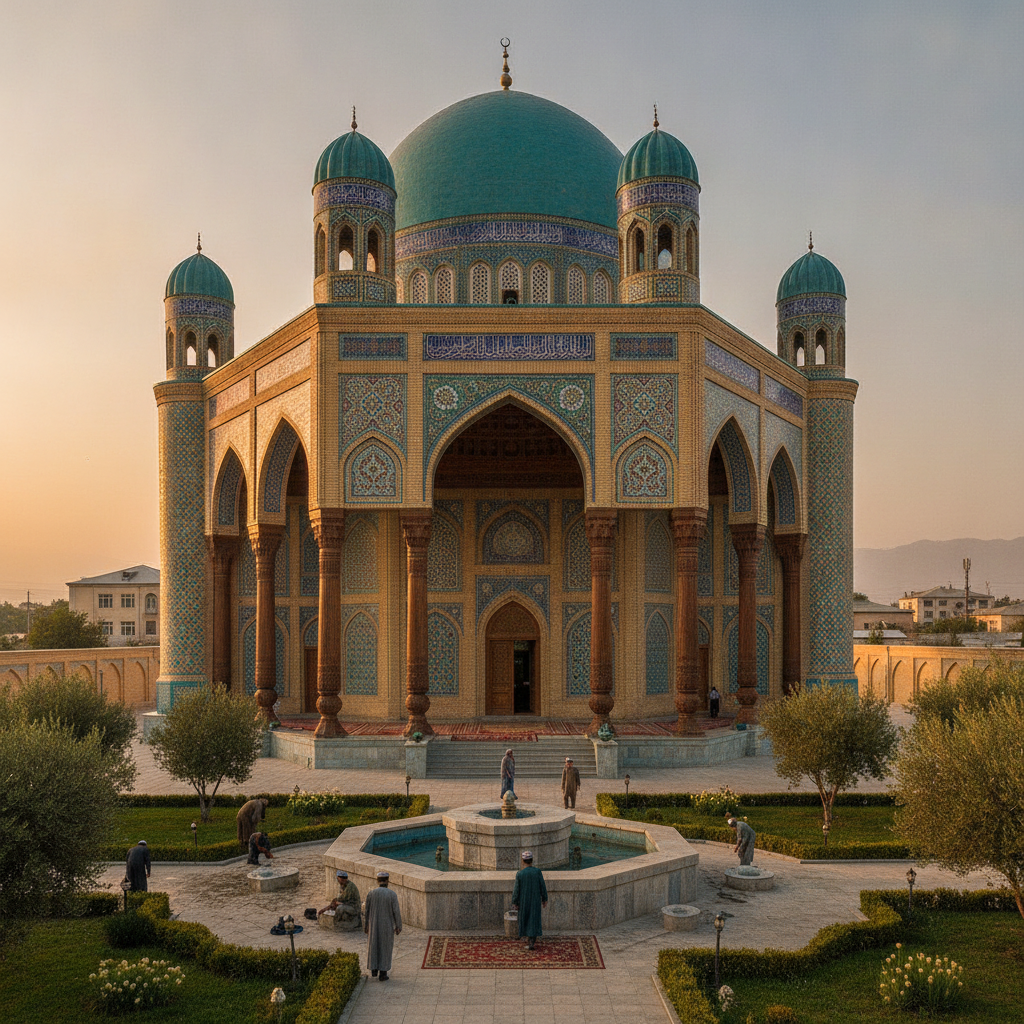
Namangan Islamic Revival Mosques Religious Life
Namangan Northern Fergana Valley Landscape
Namangan Chust Village Pchak Knife Capital