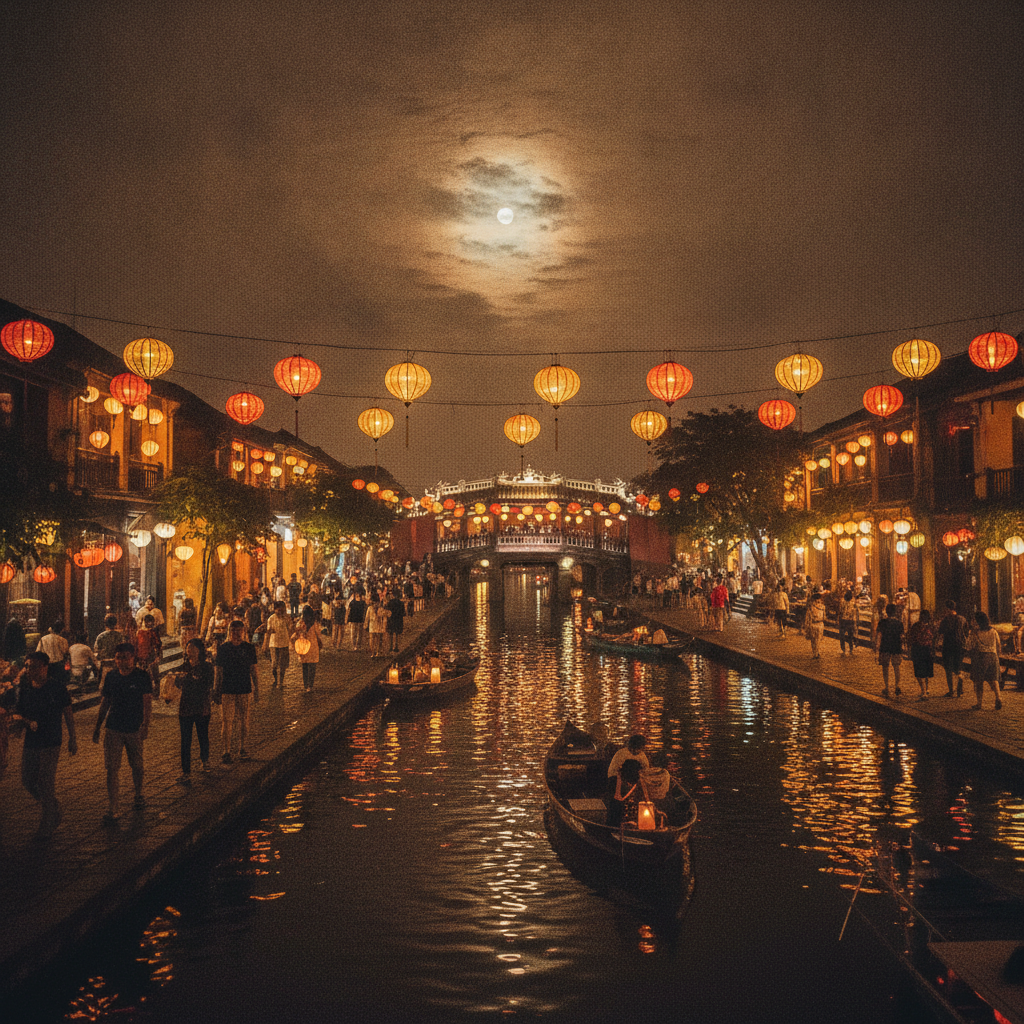

Hội An: The Japanese Bridge Built in 1593, the Cao Lầu Noodles Made from One Well's Water & the 500 Tailoring Shops That Produce Your Suit in 48 Hours
The five Chinese Assembly Halls of Hội An's Hokkien, Cantonese, Mandarin, Hainanese, and Chaozhou trading communities from the 15th–19th centuries; the full moon night when electric lights go out and the Thu Bồn River reflects hundreds of paper lanterns; the high-water marks painted inside ancient buildings recording every flood since 1967; cao lầu noodles whose authentic production depends on water from the Ba Lễ well and ash from Cham Island trees; Anthony Bourdain's 'best sandwich in the world' verdict on Bánh mì Phượng producing 1,000 sandwiches per day; and the Cham Islands marine biosphere 15 km offshore with 35% live coral cover accessible by a 20-minute speedboat.
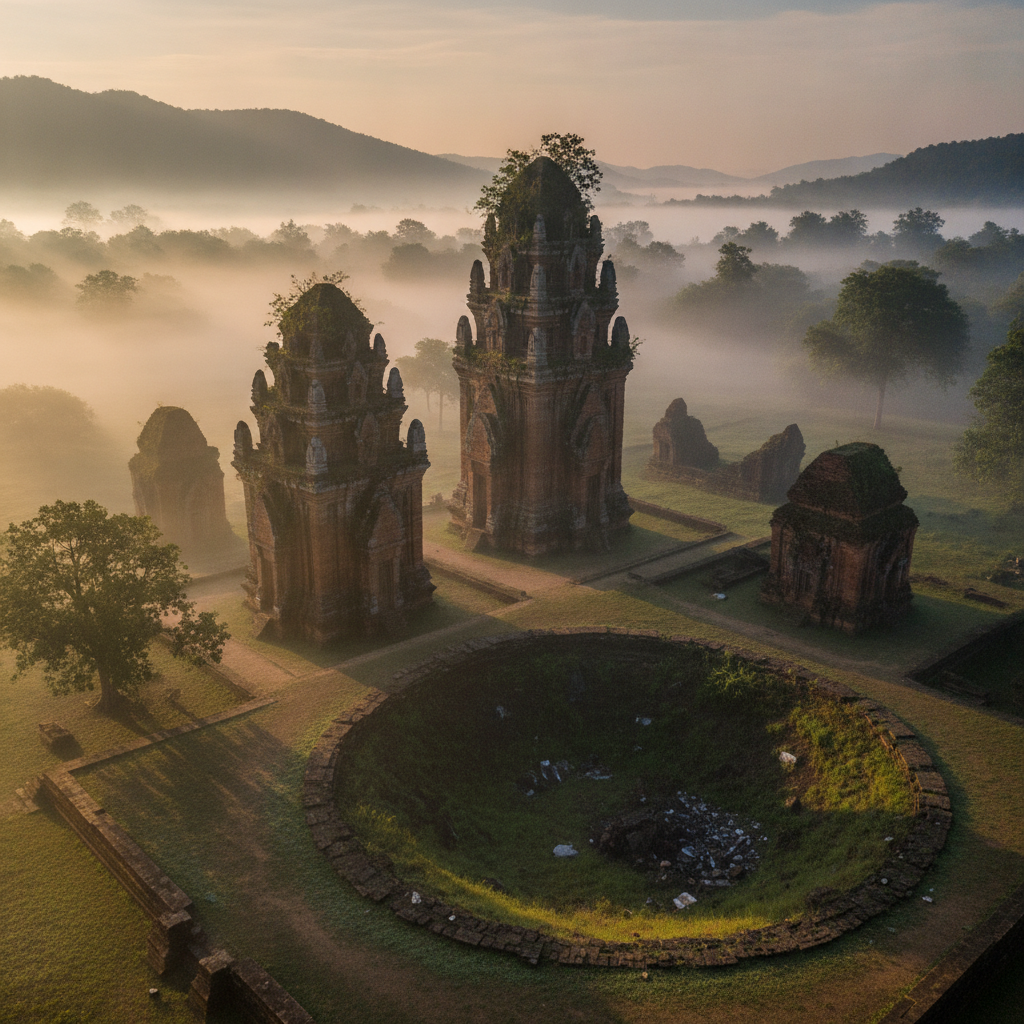
Hội An Beyond the Ancient Town: Cham Tower-Temples B52-Bombed in 1969, Cao Lầu Made from One Well's Water & the Mã Châu Silk Weavers Nobody Cycles To
Mỹ Sơn's Group A tower destroyed by B52 strike targeting Viet Cong in 1969—the most significant cultural heritage loss of the American War and now a UNESCO site 40 km from Hội An; Trà Quế herb village's certified organic gardens supplying the cooking class market at 06:30; the 50 cooking schools making Hội An the world's most visited destination for Vietnamese cooking education with cao lầu technique and bánh xèo heat control; the dawn golden hour at 05:30 before tourists arrive when vegetable sellers and temple sweepers are the only subjects; Mã Châu village's 50 traditional floor looms producing silk 5 km north of the Ancient Town at prices far below the shopfront retail; and An Bàng beach's fishing boat catch arriving at the Hội An market by motorbike at 05:30.
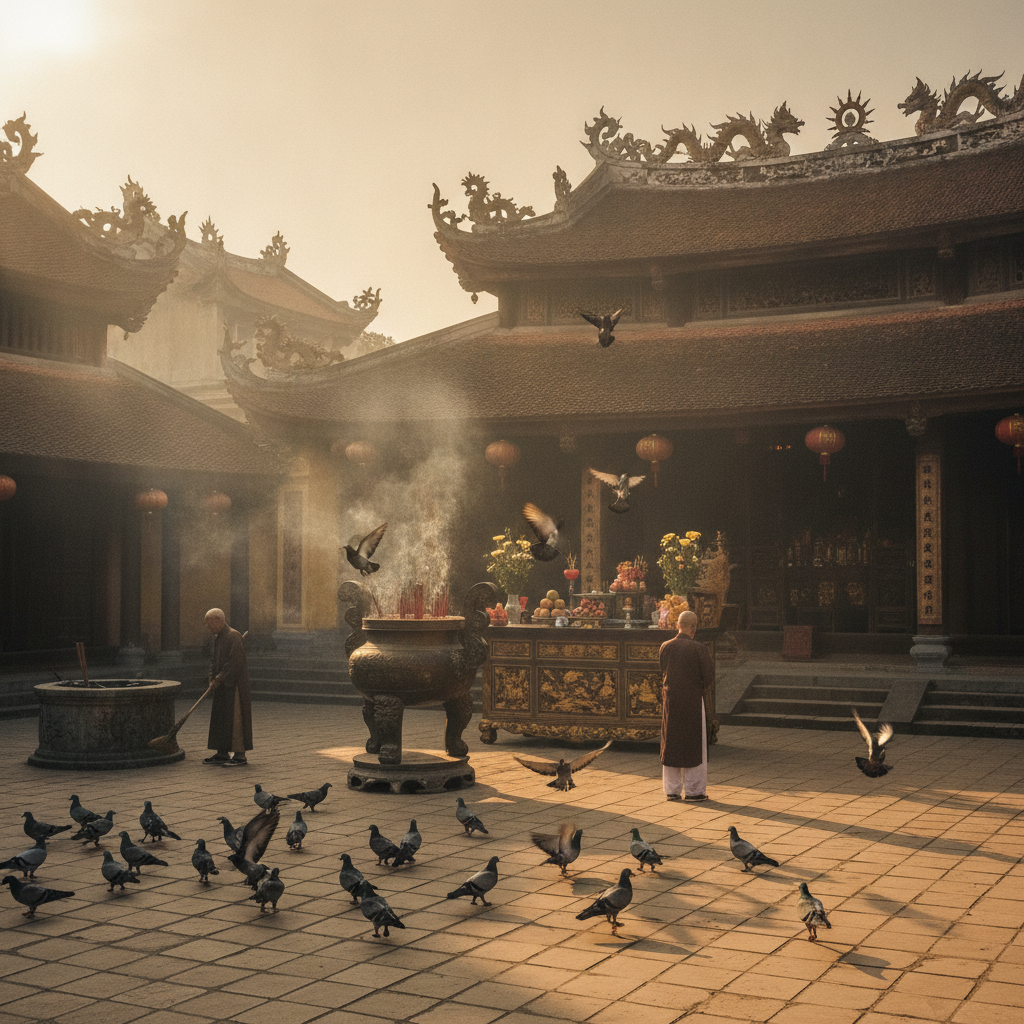
Hội An's Full Day Cycle: 05:30 Vegetable Boats at the Market, the Bioluminescent Cham Islands After Dark & Why the Living Heritage Model Succeeds Where Angkor Failed
Phúc Kiến Assembly Hall at 06:00 when only the temple keeper is present—before the incense seller sets up and before the UNESCO entrance ticket window opens; Noctiluca bioluminescence off the Cham Islands from March to May when squid fishing boats' lights cluster on the horizon; heritage warehouses converted to Anantara rooms with the courtyard now a swimming pool; lantern-frame bamboo bending at USD 5 versus silk floor-loom weaving at USD 15 versus wheel-thrown pottery at USD 10—the full Hội An craft day before the cooking class; the six cycling circuits all flat and all paved within a 20-km radius; and the 2030 question of whether the Ancient Town will still have resident families or be a fully commercial theme park with better food than Disneyland but the same hollow core.
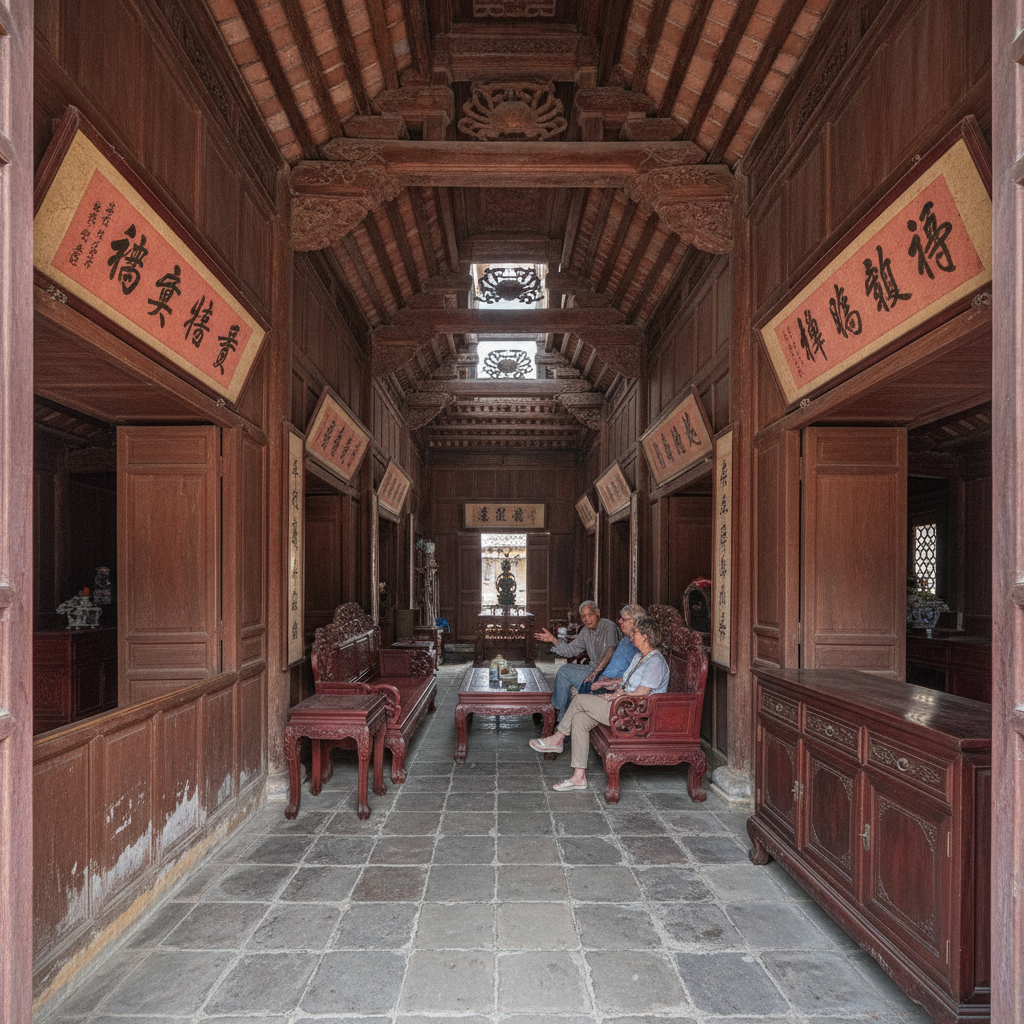
Hội An's Layers: 16th-Century Japanese Silver-for-Silk Trade, 844 Heritage Timber Houses With Flood-Lift Furniture & the 5.7 Million Visitors That Pushed 800 Resident Households Out
The shuinsen vermilion-seal ship records in the Japanese national archives documenting every Hội An trade voyage from 1573 to 1635—the most detailed 17th-century Asian trade documentation; the Tấn Ký house architecture combining Japanese crabs, Chinese calligraphy, and Vietnamese lacquer in a building adapted for the Thu Bồn River floods that painted high-water marks on interior walls since 1967; Trần Phú Street shopfront rents rising from USD 200 to USD 5,000/month between 2005 and 2019 while 800 resident households left their own Ancient Town; Thanh Hà village's rice-paper lanterns (the source of every Hội An paper lantern) accessible by boat for USD 5; Phước Kiều's lost-wax bronze bell casting for 400 years; and the Cơ Tu indigenous longhouses 2–3 hours by motorbike into the mountains.
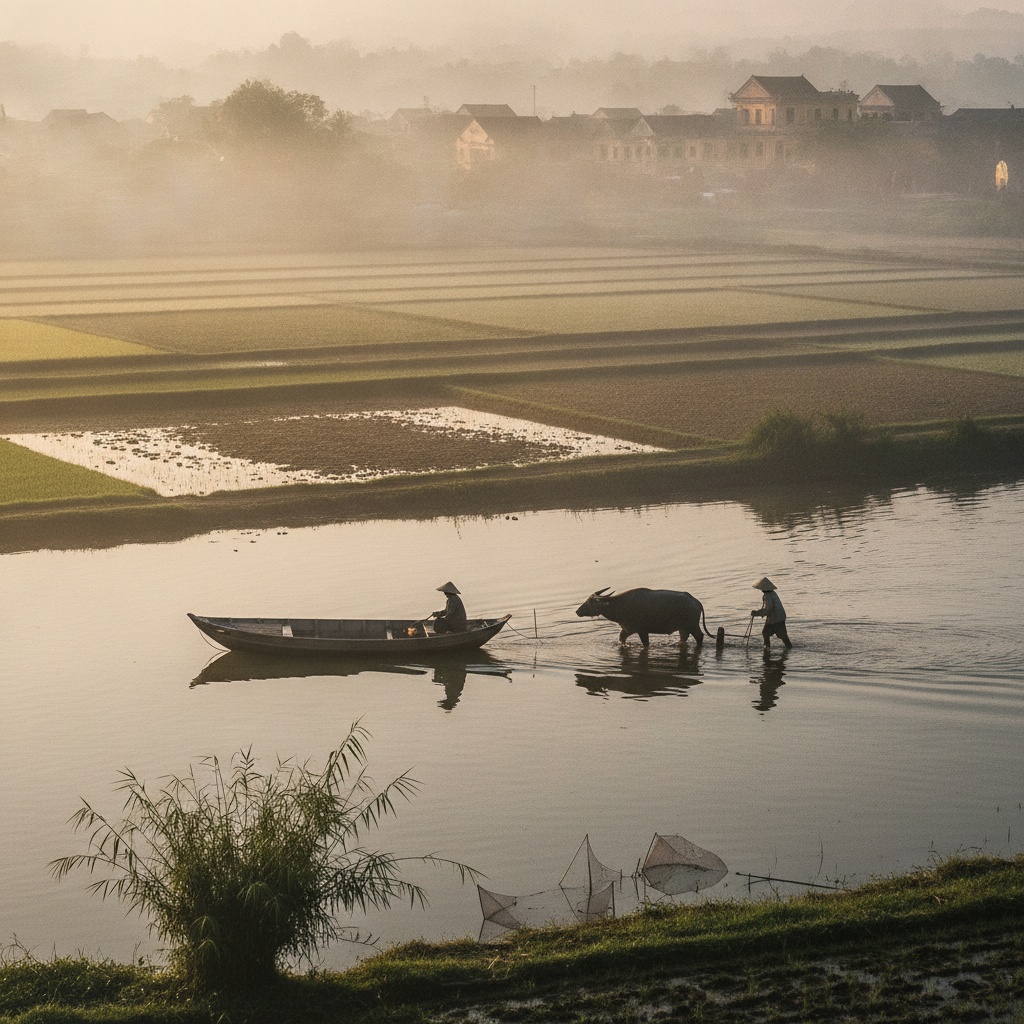
Hội An's Complete Story: Agent Orange in Quảng Nam's Forest, Water Buffalo Ploughing in Cẩm Nam & Why 30% of Visitors Return When Only 8% Return to Halong Bay
The Nam Hải Four Seasons' Three Paths to Wisdom spa programme versus USD 5 herbal steam bath at a riverside Vietnamese medicine clinic; bún bò Huế's 8-hour pork-bone lemongrass broth with pig's blood cubes as the most sophisticated noodle dish in Vietnam, 2.5 hours north by road; the Mỹ Lai massacre memorial 40 km south as the most visited American War site outside Ho Chi Minh City, in the same province as the Mỹ Sơn tower B52-bombed in 1969; Cẩm Nam's hand-buffalo paddy cultivation unchanged since the 17th century when these farms supplied the same trading port; and the 30% return-visit rate that reflects the accumulation of detail—the tailor still has your measurements, the cooking teacher still remembers your name.
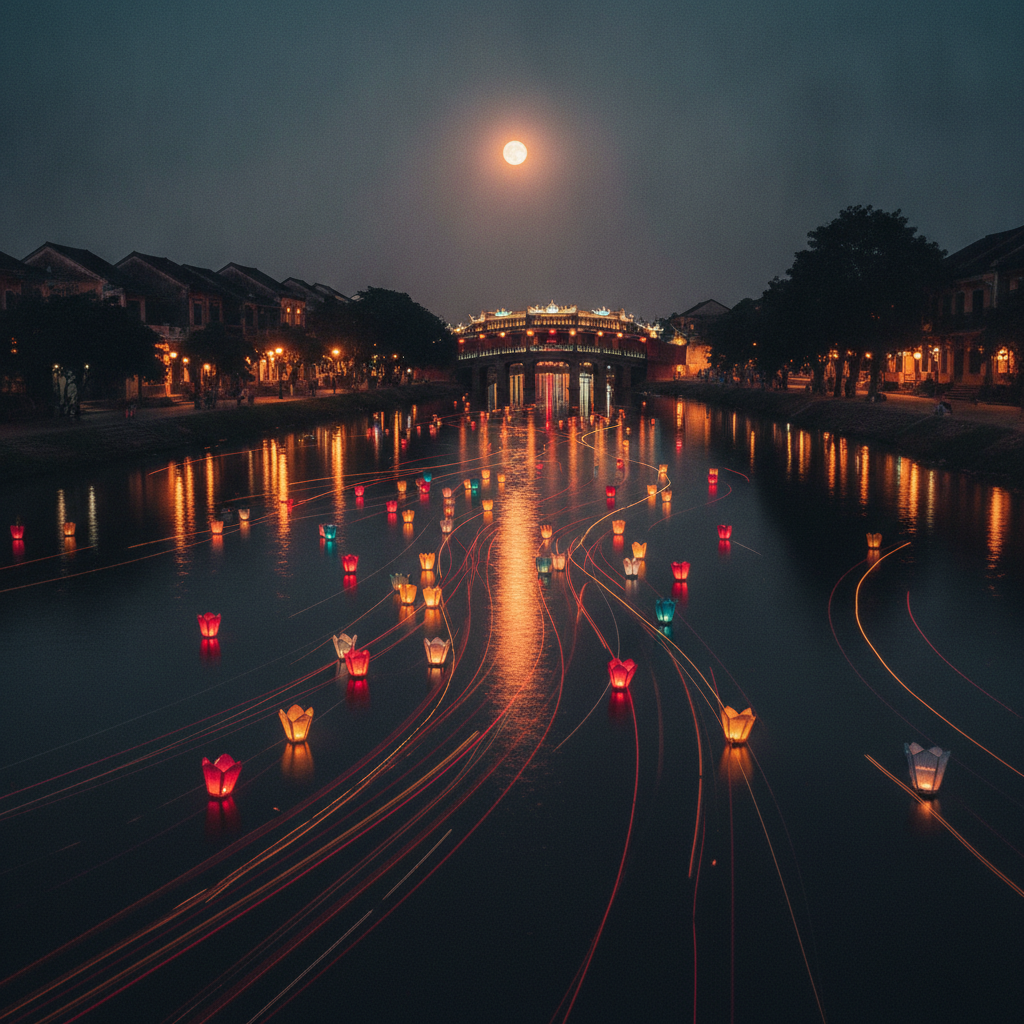
Hội An's Conservation & Crisis: USD 15M Japanese Restoration Fund Echoing the 1593 Japanese Bridge, 90-Metre Beach Erosion Since 2012 & the Lantern Photo That Appears 4–6 Times a Year Under the Right Conditions
The ironwood-and-lime-mortar conservation methodology using minimum intervention and community ownership—the owners maintain their own heritage buildings with professional structural support; Cửa Đại beach losing 90 metres of width since 2005 from reduced Thu Bồn sediment and increased storm energy, replaced as the primary beach by An Bàng; the Dutch VOC Rijksarchief and Japanese Osaka trade records together constituting the most complete 17th-century Asian trading port documentation in existence; the cao lầu in-house production test as the single most reliable indicator of overall restaurant kitchen quality; the Thu Bồn foot-rowing boatwomen using a balance technique requiring years of training; and the lantern photograph whose production conditions align only 4–6 times per year despite the permanent commercial lantern landscape that surrounds it.