Hội An's Conservation & Crisis: USD 15M Japanese Restoration Fund Echoing the 1593 Japanese Bridge, 90-Metre Beach Erosion Since 2012 & the Lantern Photo That Appears 4–6 Times a Year Under the Right Conditions
The ironwood-and-lime-mortar conservation methodology using minimum intervention and community ownership—the owners maintain their own heritage buildings with professional structural support; Cửa Đại beach losing 90 metres of width since 2005 from reduced Thu Bồn sediment and increased storm energy, replaced as the primary beach by An Bàng; the Dutch VOC Rijksarchief and Japanese Osaka trade records together constituting the most complete 17th-century Asian trading port documentation in existence; the cao lầu in-house production test as the single most reliable indicator of overall restaurant kitchen quality; the Thu Bồn foot-rowing boatwomen using a balance technique requiring years of training; and the lantern photograph whose production conditions align only 4–6 times per year despite the permanent commercial lantern landscape that surrounds it.
- 1
The Hội An Conservation Programme – Restoring the Ancient Town
The conservation of Hội An's Ancient Town—the most successful UNESCO World Heritage conservation project in mainland Southeast Asia—has involved a 25-year programme (from the inscription in 1999 to the present) of structural stabilisation, authentic material restoration, and community engagement that has produced a measurably better-preserved Ancient Town than existed at the time of inscription. The restoration methodology: the Hội An conservation programme (managed by the Hội An Centre for Monuments Management and Preservation in partnership with UNESCO, the Japanese Trust Fund, and the French government) uses the principle of minimum intervention—preserving original material where possible, replacing lost elements only with materials of the same type and quality (ironwood, traditional fired tile, lime mortar), and documenting every intervention. The Japanese contribution: the Japanese government's UNESCO Trust Fund has been the largest single donor to Hội An conservation (approximately USD 15 million across multiple project phases)—an echo of the historical Japanese community that built the town's most famous bridge. The community ownership: the conservation programme's most significant achievement is the community ownership model—the heritage buildings are privately owned by families who are legally obligated to maintain them to conservation standards but who also receive subsidised structural engineering assistance; the result is that the conservation work is done by the owners rather than by a government authority, with the professional support.
- 2
The Cửa Đại Beach Erosion Crisis – Climate Change in Action
Cửa Đại beach (the beach 5 km east of Hội An on the South China Sea—historically the primary beach destination for Hội An visitors) has been experiencing severe coastal erosion since 2012 that has become one of the most cited examples of climate change impact on a Southeast Asian tourism destination: the beach has lost approximately 90 metres of width (from approximately 130 metres in 2005 to 40 metres in 2020 at the most severely eroded sections), and several beachfront hotels have been destroyed or rendered unusable by the advancing sea. The cause: the erosion is attributed to the combination of reduced sediment supply from the Thu Bồn River (the result of upstream sand mining and dam construction reducing the sediment load) and increased storm wave energy (attributed to changed climate patterns in the South China Sea). The response: seawalls (constructed in 2019 by the Quảng Nam provincial government—the largest coastal protection intervention in central Vietnam—have stabilised some sections but created secondary erosion at adjacent unprotected stretches); beach nourishment (sand pumped from offshore deposited on the beach face—effective for 6–18 months before being eroded again); managed retreat (several hotels simply demolished their beachfront structures and rebuilt them 100 metres inland). The tourism impact: the An Bàng beach (5 km north of Cửa Đại, not directly affected by the same erosion pattern) has replaced Cửa Đại as the primary beach destination for Hội An visitors—the most visible tourism geography change in central Vietnam over the past decade.
- 3
The Quảng Nam Silk & the UNESCO Silk Road
Quảng Nam province's role in the global silk trade of the 15th–18th centuries—as both a silk production region (the mulberry cultivation and silkworm rearing in the Thu Bồn River valleys) and the trading port through which Asian and European silk commerce passed—makes Hội An one of the most significant nodes in the UNESCO Maritime Silk Road project (the international cooperation initiative documenting the historical sea trade routes that connected Asia, the Middle East, and Europe from the 2nd century BCE). The Hội An silk trade: the Japanese traders who dominated the 17th-century Hội An commerce were primarily interested in Vietnamese raw silk (for the Japanese weaving industry); the Chinese traders were primarily sellers of Chinese porcelain, copper, and manufactured goods; the Dutch and Portuguese were buyers of both Vietnamese and Chinese products for the European market. The silk trade documentation: the Japanese-held Hội An trading records (housed in the Nagasaki and Osaka trade archives) and the Dutch East India Company (VOC) trading records (housed in the Rijksarchief in The Hague) together constitute the most complete documentation of a 17th-century Asian trading port in existence—the specific products traded, the prices paid, the weights and measures used, and the seasonal patterns of the trade are all recorded in detail sufficient for academic reconstruction.
- 4
The Hội An Food & Wine Festival
The Hội An Food & Wine Festival (held biannually in March and October—the two most climate-favourable months—at the Ancient Town and the surrounding riverside areas) is the most significant culinary event in central Vietnam and one of the 10 most visited food festivals in Southeast Asia. The festival format: the main market (street food producers, restaurant pop-ups, and international food stalls in the Ancient Town squares and riverside areas); the master chef demonstrations (Vietnamese and international chefs presenting techniques and dishes); the cooking competitions (among Hội An restaurant chefs for the best cao lầu, best bánh mì, best white rose); the wine and craft beer section (the Vietnamese craft beer industry has expanded rapidly since 2015—the Pasteur Street Brewing Company, Heart of Darkness, and East West Brewing producing internationally regarded beers). The Hội An restaurant scene: the town's restaurant density (approximately 500+ restaurants for a population of 120,000—the highest restaurant-per-resident ratio in Vietnam) produces both the highest quality and the highest competition: the best restaurants (Morning Glory, Cargo Club, Madam Khanh bánh mì) maintain international standards; the worst are tourist traps recognisable by the laminated menus in 10 languages. The standard: the benchmark for Hội An restaurant quality is whether the cao lầu is made in-house or bought from a supplier—the authentic in-house production is the most reliable indicator of overall kitchen quality.
- 5
Hội An's Boat People – The Riverside Community
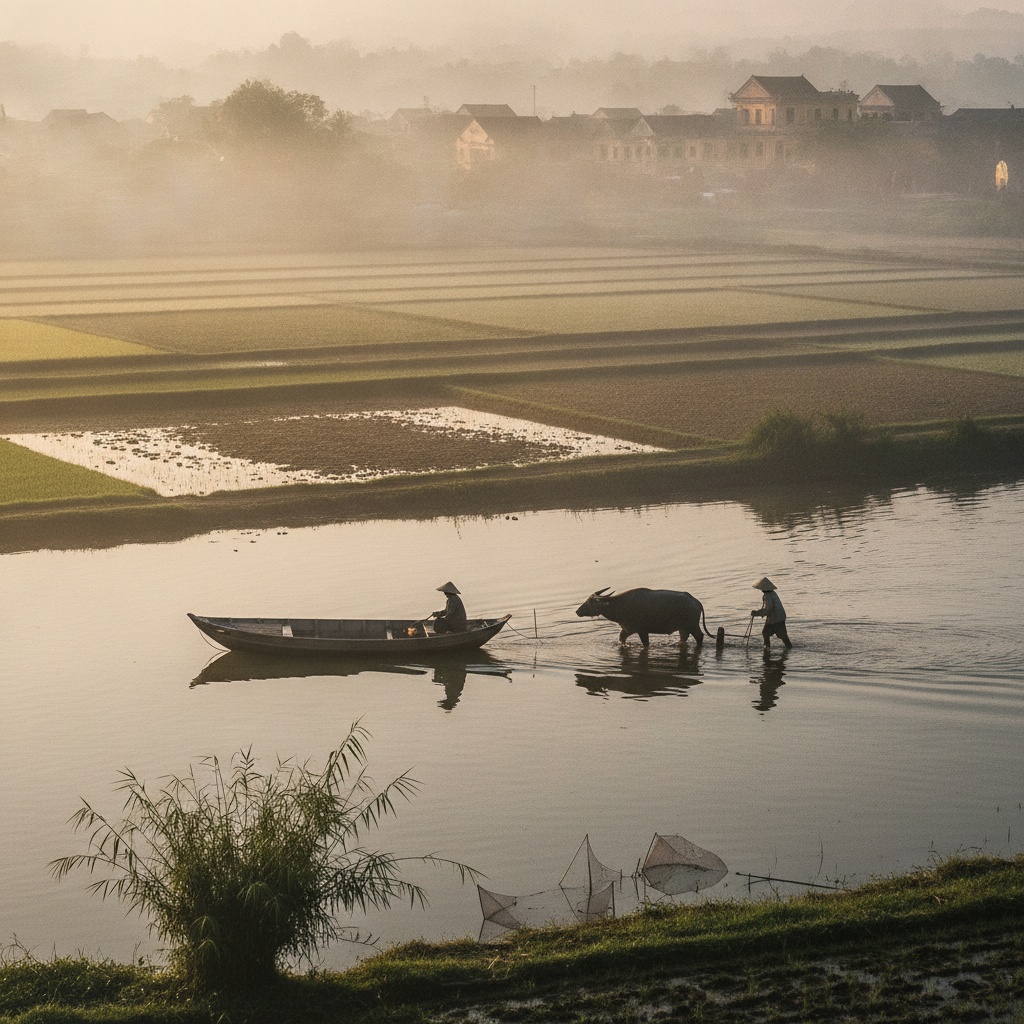
The boat community of Hội An—the families who live on, maintain, and operate the wooden boats moored on the Thu Bồn River—is the oldest continuously operating river transport community in central Vietnam and the most visible human element of the river economy. The boat types: the traditional Hội An river boat (the wooden flat-bottomed vessel with a curved prow and a covered passenger section amidships—used for tourist river rides and for the transport of market produce from the river farms); the cargo boat (larger, flat-bottomed, used to transport construction materials and agricultural products between the river farming communities and the town); the fishing boat (narrower, faster, the vessel of the Cửa Đại coastal fishers who operate in the South China Sea). The boatwoman: the tradition of female boat operation on the Thu Bồn River (the female-operated boats are the most common format for the tourist river ride—the women rowing with their feet at the stern and using a single oar in a sculling motion unique to the Thu Bồn) is a living folk tradition photographed by every visitor but understood by very few—the foot-rowing technique is specific to the shallow-draft river boats and requires years of balance training. The bamboo basket boat: the thuyền thúng (basket boat—a circular coracle woven from bamboo and waterproofed with a mixture of tar and dung; used in the shallow coastal surf zone for net retrieval) is the most unusual watercraft in Vietnam, native to central Vietnam and unique in the world.
- 6
The Hội An Photograph That Became the Town's Identity
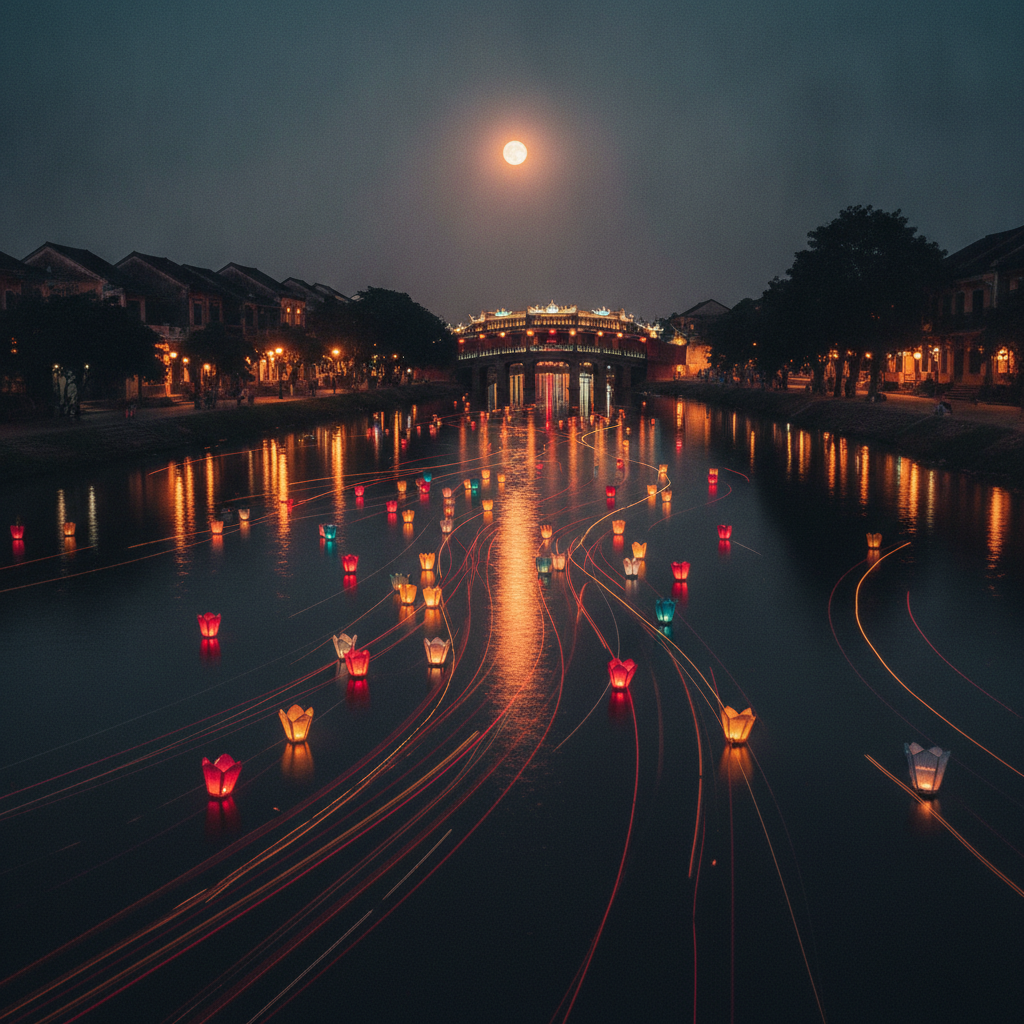
The single most reproduced image from Hội An—the paper lanterns reflected in the Thu Bồn River on the full moon night, with the silhouettes of the ancient rooftops against the night sky—has appeared in every major travel magazine and tourism campaign for Hội An since 2003 and has become the visual identity of not just the town but of Vietnam itself in international travel marketing. The photograph's production: the conditions required for the 'classic' Hội An lantern photograph are specific (full moon night—only once per month; no rain; arriving at the river dock at 18:30 for the best angle; using a long-exposure of 5–15 seconds for the river reflection; and avoiding the tourists in the foreground—which requires either a telephoto lens or arrival at the dock before the crowd); meeting all conditions simultaneously occurs approximately 4–6 times per year. The Instagram effect: the 'most instagrammable town in Vietnam' designation (applied to Hội An by multiple travel publications since 2015) has created a self-reinforcing feedback loop—more Instagram photographers come to produce the lantern image, creating a more lantern-focused commercial environment, which produces more of the image. The authenticity question: the paper lanterns that create the Hội An visual identity are a living craft tradition (the Thanh Hà lantern village has made lanterns for 300+ years) but their current ubiquity (the entire Ancient Town is festooned with lanterns in every shop, restaurant, and hotel entrance regardless of the lunar calendar) reflects a commercial expansion of a seasonal tradition into a permanent tourist décor—the authentic monthly full moon event surrounded by the permanent commercial landscape of which it has become a symbol.
Walk this route with audio
Stories play automatically as you reach each stop — no tapping needed.
More in Hội An
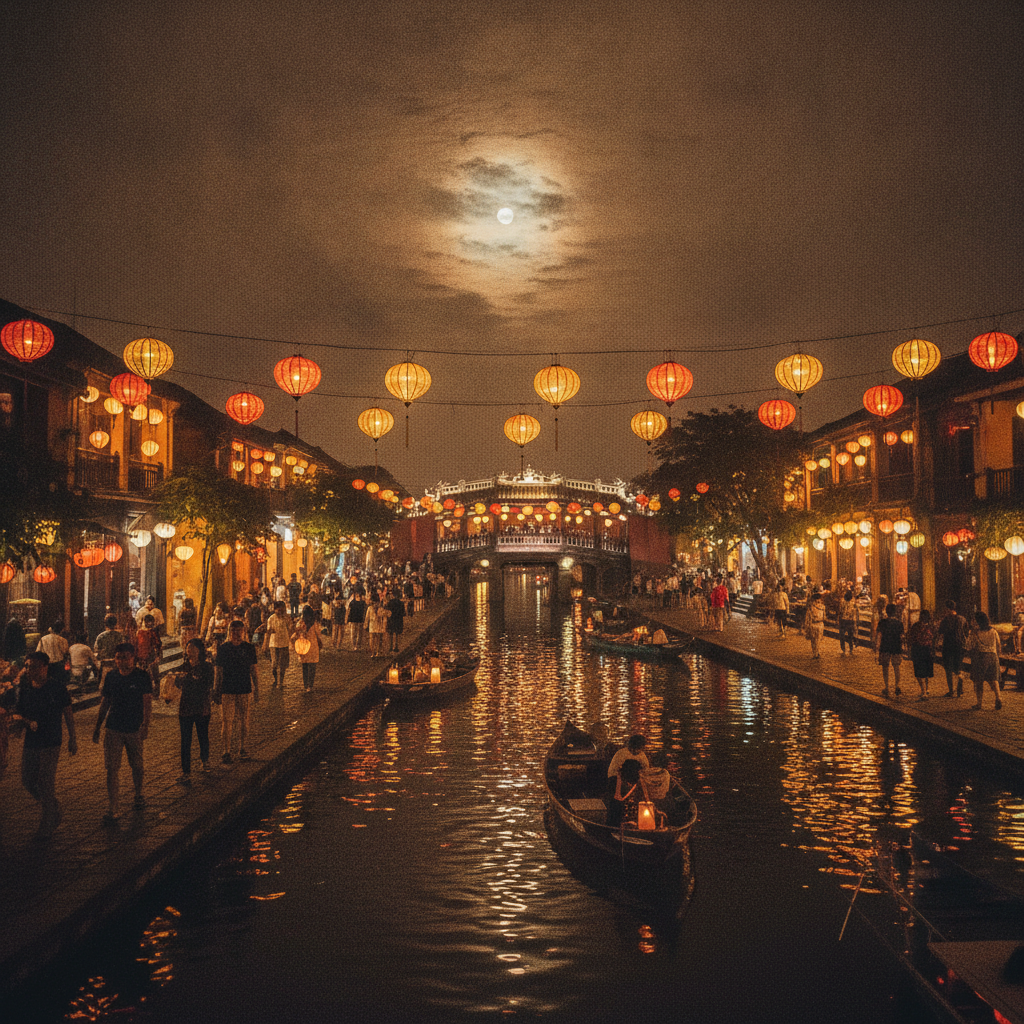
Hội An: The Japanese Bridge Built in 1593, the Cao Lầu Noodles Made from One Well's Water & the 500 Tailoring Shops That Produce Your Suit in 48 Hours
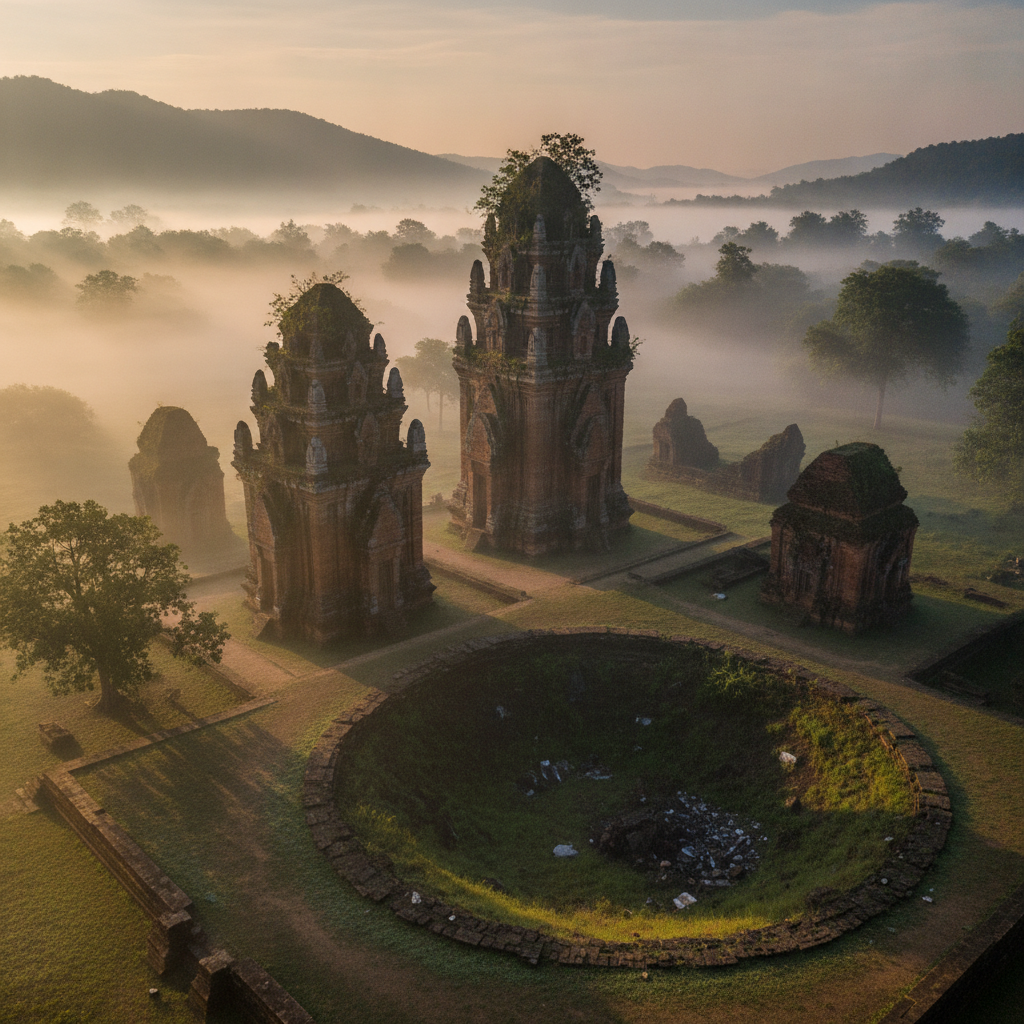
Hội An Beyond the Ancient Town: Cham Tower-Temples B52-Bombed in 1969, Cao Lầu Made from One Well's Water & the Mã Châu Silk Weavers Nobody Cycles To
Hội An's Full Day Cycle: 05:30 Vegetable Boats at the Market, the Bioluminescent Cham Islands After Dark & Why the Living Heritage Model Succeeds Where Angkor Failed
Hội An's Layers: 16th-Century Japanese Silver-for-Silk Trade, 844 Heritage Timber Houses With Flood-Lift Furniture & the 5.7 Million Visitors That Pushed 800 Resident Households Out