Hội An's Layers: 16th-Century Japanese Silver-for-Silk Trade, 844 Heritage Timber Houses With Flood-Lift Furniture & the 5.7 Million Visitors That Pushed 800 Resident Households Out
The shuinsen vermilion-seal ship records in the Japanese national archives documenting every Hội An trade voyage from 1573 to 1635—the most detailed 17th-century Asian trade documentation; the Tấn Ký house architecture combining Japanese crabs, Chinese calligraphy, and Vietnamese lacquer in a building adapted for the Thu Bồn River floods that painted high-water marks on interior walls since 1967; Trần Phú Street shopfront rents rising from USD 200 to USD 5,000/month between 2005 and 2019 while 800 resident households left their own Ancient Town; Thanh Hà village's rice-paper lanterns (the source of every Hội An paper lantern) accessible by boat for USD 5; Phước Kiều's lost-wax bronze bell casting for 400 years; and the Cơ Tu indigenous longhouses 2–3 hours by motorbike into the mountains.
- 1
The Hội An Ancient Houses – Living Heritage Architecture
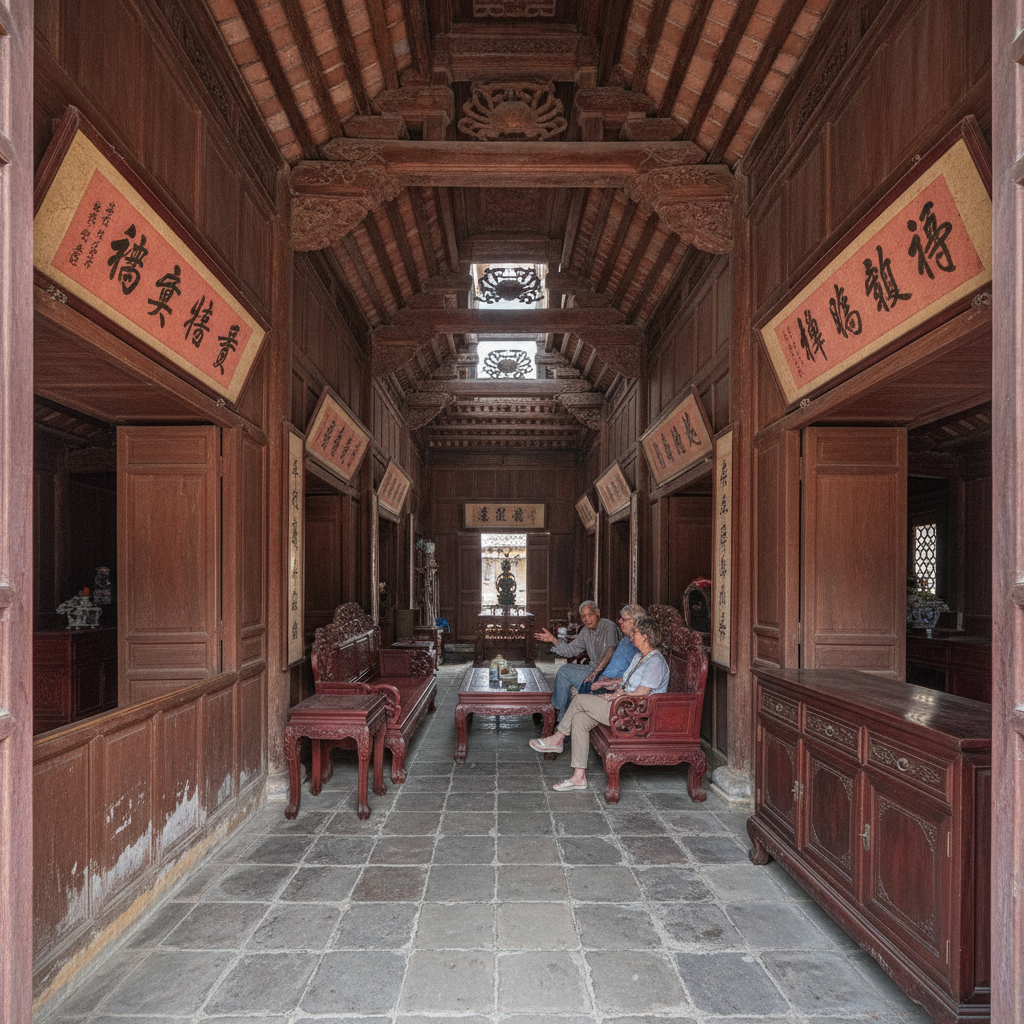
The private ancient houses of Hội An—the 844 timber-framed buildings classified as cultural heritage property by the Vietnamese Ministry of Culture—represent the most intact surviving collection of 17th–19th century merchant domestic architecture in Southeast Asia. The merchant house typology: the Hội An trường kỳ (the 'long house'—narrow frontage, extreme depth, the standard shophouse format of the trading port): the Tấn Ký House (101 Nguyễn Thái Học—the most famous open house in Hội An, built in the late 18th century; the current owner is the seventh generation of the Lê family; 22 metres long, 4 metres wide; decorated with Japanese interlocking crabs [for luck] in the woodwork, Chinese calligraphy [for wisdom and prosperity] on the walls, and Vietnamese lacquerwork [for durability] on the furniture). The Phùng Hưng House (4 Nguyễn Thị Minh Khai—2 storeys, built approximately 1780; the balcony is the only second-floor balcony in the Ancient Town that overhangs the street, creating the most Hội An-specific architectural element). The flood response architecture: the ancient houses have evolved specific adaptations to the annual flooding—the wooden furniture is mounted on high legs; the walls have internal anchor points for lifting the furniture to ceiling level; the front threshold is high; the interior staircase ascends to a second-floor storage area above the flood line.
- 2
Japanese Influence in Hội An – The 16th–17th Century Trade Settlement
The Japanese trading community of Hội An (operating in the town from approximately 1573, when the Nguyễn lords opened the port to Japanese trade, until 1635, when the Tokugawa shogunate's sakoku (closed country) policy closed Japan to overseas trade and recalled all Japanese subjects living abroad) was the most commercially significant foreign community in the port at the peak of the 17th-century trade. The Japanese settlement: the Japanese community (approximately 1,000 people at its peak) occupied the northern quarter of the town; their residential area, the Japanese bridge, and the two Japanese graves remaining in Hội An are the surviving physical evidence of a presence that shaped the town's commercial culture. The Japanese products: the most important Japanese import to Hội An was silver (from the Iwami Ginzan silver mine in Shimane Prefecture—the most productive silver mine in Asia in the 16th century); the most important Japanese export from Hội An was Vietnamese silk (used in Japan for the high-quality silk fabrics required for kimono and ceremonial clothing—the Japanese market was the primary driver of Vietnamese silk production in the 16th–17th centuries). The Shuinsen trade: the Hội An trade was conducted under the shuinsen (vermilion seal ship) system—Japanese merchant vessels authorised by the shogunate with a red-seal document; the 356 surviving red-seal ship records in the Japanese national archives provide the most detailed documentation of the 17th-century Hội An trade.
- 3
The Hội An Market – Central Chợ Hội An & the Vegetable Boats
The Hội An central market (Chợ Hội An—on the riverside of the Thu Bồn River, at the north bank directly in front of the Ancient Town's main commercial street) is the most visited traditional market in central Vietnam and the most photogenic food market in the country: the combination of the riverside setting, the diversity of produce (the market supplies both the Hội An restaurants and the domestic households), and the access by boat (the small wooden boats bringing vegetables from the Thu Bồn River farm villages arriving at the market dock at 05:30–07:00) creates a photographic and culinary tableau. The market produce: the Hội An market sells the specific produce of Quảng Nam province—the Trà Quế herbs (the restaurant-quality herb bundles of mint, perilla, and Vietnamese coriander grown in the certified-organic village 3 km north); the Quảng Nam pork (from the free-range black pigs of the mountain communities—used in the cao lầu pork); the Thu Bồn River fish (freshwater catfish, snakehead, and carp—the primary protein of the inland diet, distinct from the coastal seafood). The market eating: the food stalls along the market's eastern edge (operating 05:30–10:00) serve the market workers and the early-rising locals: mì Quảng (the Quảng Nam turmeric noodle soup—one of Vietnam's most regional dishes, not widely available outside the province), and the bánh mì breakfast options (different from the Phượng bánh mì—lighter, with fewer fillings, eaten as a morning snack rather than a meal).
- 4
Hội An's Sustainable Tourism Challenge – Over-Tourism & Gentrification
Hội An's success as a tourism destination has created the most acute over-tourism problem in Vietnam: the town received 5.7 million visitors in 2019 (47 visitors per resident per year—one of the highest ratios in Southeast Asia), and the commercial pressure on the Ancient Town has produced the most rapid and most visible gentrification of a UNESCO World Heritage Site in the region. The gentrification: in 2005, the Ancient Town had a resident population of approximately 1,200 households living above their ground-floor shops; by 2019, fewer than 400 households remained—the commercial pressure (the monthly rent for a shopfront in the prime section of Trần Phú Street rising from USD 200/month in 2005 to USD 3,000–5,000/month in 2019) had pushed the resident population out and replaced them with restaurants, tailor shops, and souvenir retailers. The resident displacement: the residents who left the Ancient Town moved to the newer neighbourhoods on the town's periphery (the Cẩm Châu and Cẩm Kim communes)—areas with modern housing but without the cultural life and community cohesion of the Ancient Town. The management response: UNESCO and the Vietnamese Ministry of Culture have implemented several measures—the entrance ticket system (2003), the traffic restriction (motor vehicles banned from the central Ancient Town in the evenings), and the heritage property regulations (which require approval for any modification to classified buildings)—but the gentrification pressure has not been effectively reversed.
- 5
Hội An Nights – The Lantern Villages & River Life After Dark
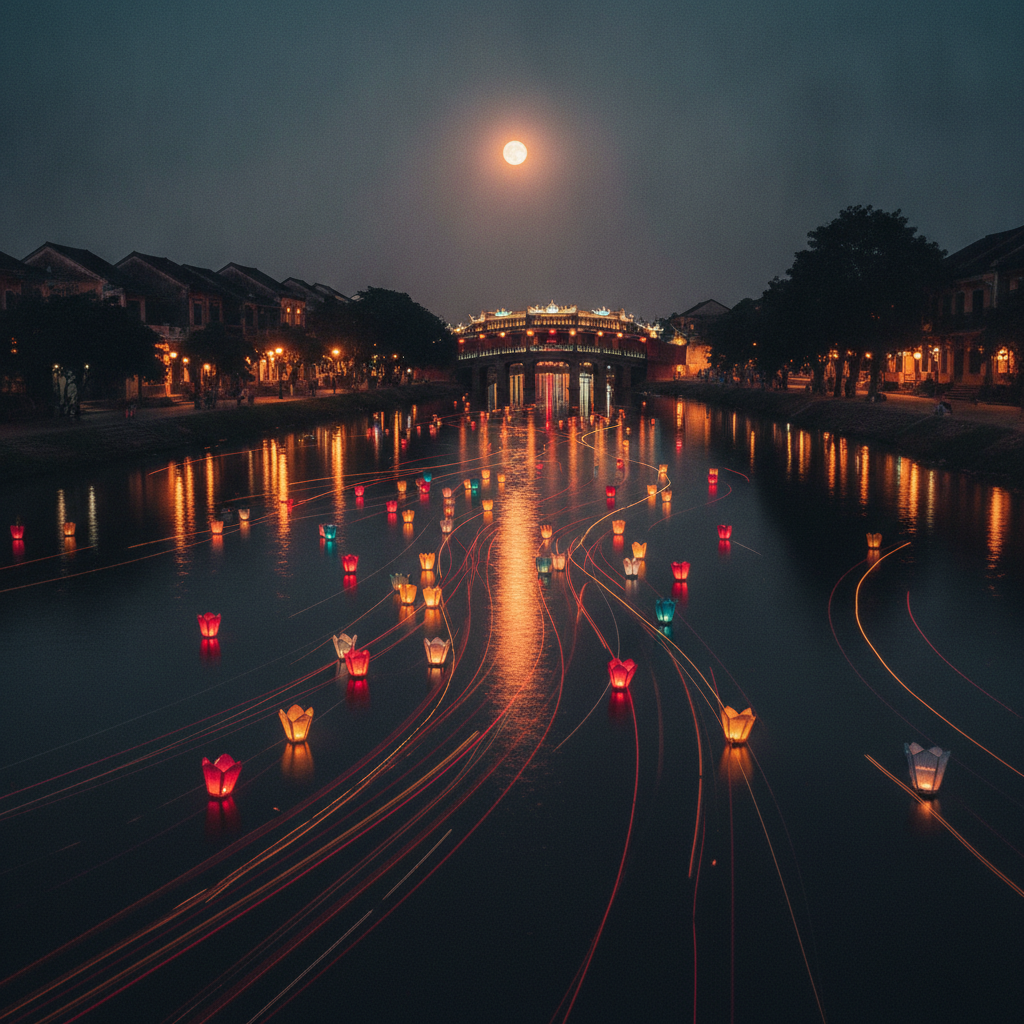
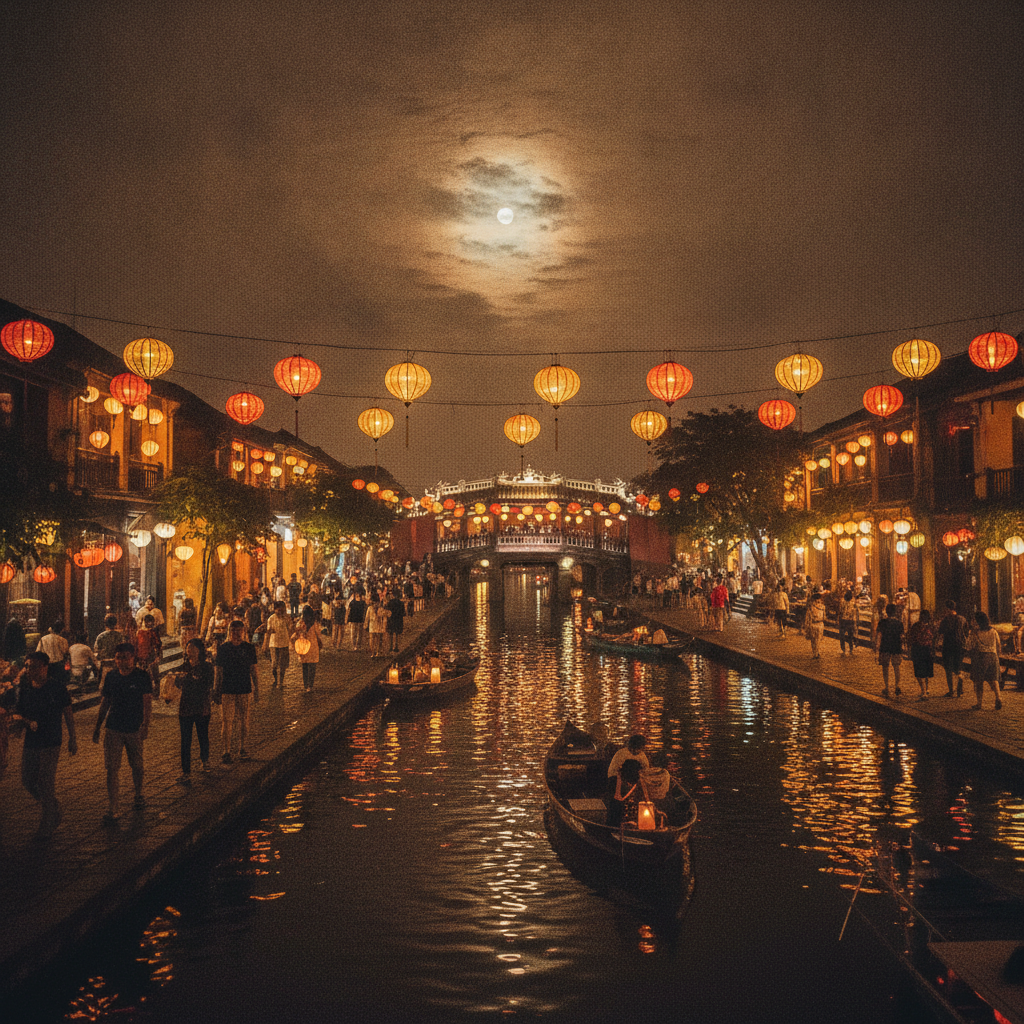
The Hội An evening experience—distinct from the daytime Ancient Town walking tour, structured around the river, the lanterns, and the food stalls that operate after sunset—is the experience that most consistently produces the strongest emotional response in visitors: the combination of the warm climate (average 25°C in the evening for most of the year), the absence of traffic noise (motor vehicles restricted after 18:00 in the central Ancient Town), the paper lanterns, and the riverside setting creates an urban atmosphere found nowhere else in Asia. The lantern-making village: Thanh Hà village (3 km west, accessible by bicycle or boat) is the village that produces the Hội An paper lanterns—the traditional craft (using rice paper, bamboo frames, and natural dyes) that has been transformed into a global export product; the village workshops are open to visitors for lantern-making workshops (USD 3–5 per person, 1 hour, take home your lantern). The river boat ride: the evening boat ride on the Thu Bồn River (departing from the market dock, 30 minutes, approximately USD 5 per boat—negotiated with the traditional wooden boat operators) is the most atmospheric way to see the Ancient Town at night from the water. The food court: the Hội An night food market (Bạch Đằng riverside—operating from 18:00 nightly; grilled seafood, rice paper rolls, and the full range of Hội An street food) is the most affordable eating experience in the Ancient Town and the most local in character.
- 6
Hội An's Hinterland – Phước Kiều Bronze Village & Mountain Cham Ruins
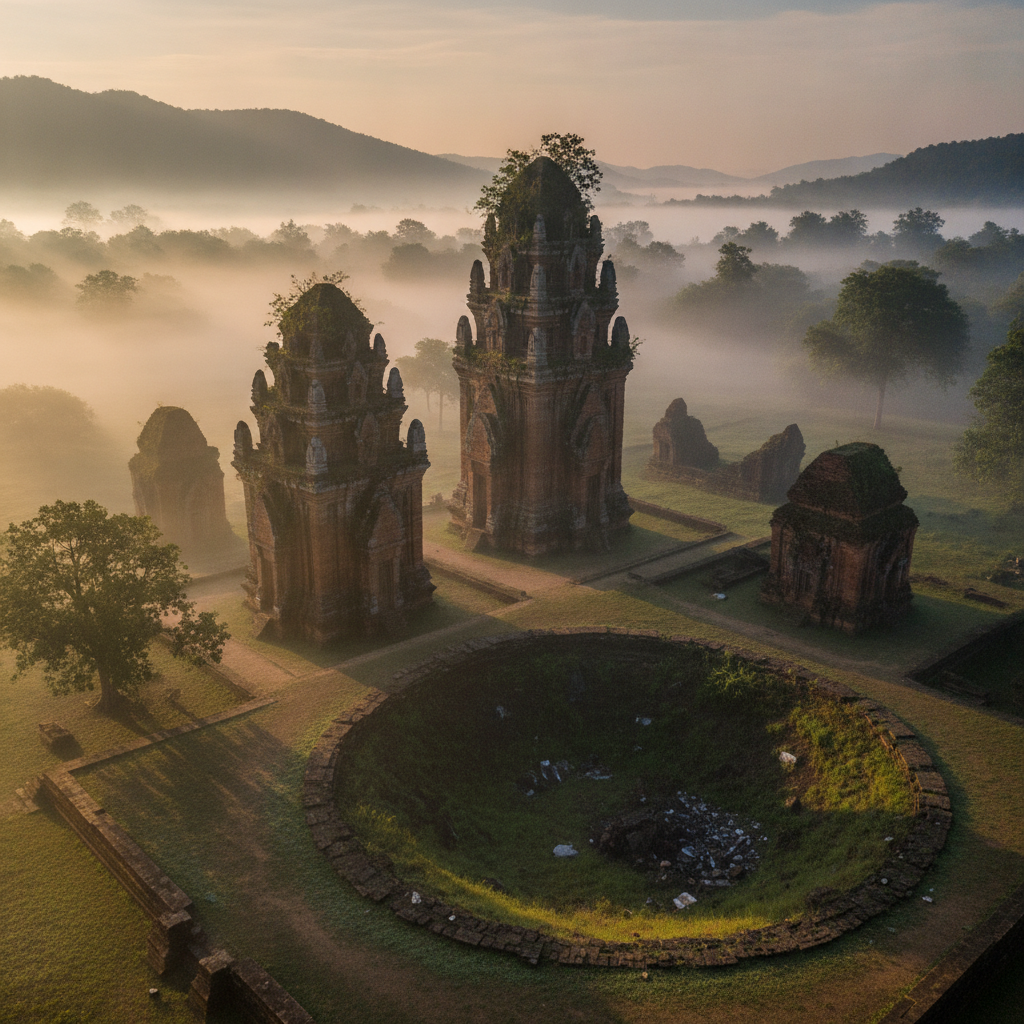
The Hội An hinterland—the villages and landscape within 30 km of the Ancient Town, accessible by motorbike or bicycle tour—contains cultural and natural heritage that the majority of Hội An visitors never encounter, remaining focused on the Ancient Town and its immediately adjacent beaches. Phước Kiều village (5 km south of Hội An on the Cổ Cò River): the bronze-casting village that has supplied the Buddhist temples and community shrines of Quảng Nam province with cast-bronze bells, drums, and ritual objects for 400+ years; the 15–20 remaining foundries in the village use the lost-wax casting technique (the cire perdue process that has been the primary bronze-casting method in Southeast Asia since the Đông Sơn bronze age, 500 BCE–100 CE); the foundries are open to visitors; the bell casting demonstration (when a commission allows it) is one of the most impressive traditional manufacturing processes viewable in Vietnam. The Champa stone sculpture trail: the rural landscape between Hội An and Mỹ Sơn contains isolated Cham tower remains (at Chiên Đàn, Bằng An—the only remaining Cham tower on the flat coastal plain rather than in the mountains) that are never included in standard tours but accessible by motorbike with a half-day and a map. The mountain community: the Cơ Tu people (the indigenous community of the Trường Sơn mountains west of Hội An—accessible via the Tây Giang district road, 2–3 hours by motorbike) maintain traditional longhouse architecture and the brocade weaving tradition that predates the Cham and Vietnamese settlements of the coastal plain.
Walk this route with audio
Stories play automatically as you reach each stop — no tapping needed.
More in Hội An
Hội An: The Japanese Bridge Built in 1593, the Cao Lầu Noodles Made from One Well's Water & the 500 Tailoring Shops That Produce Your Suit in 48 Hours
Hội An Beyond the Ancient Town: Cham Tower-Temples B52-Bombed in 1969, Cao Lầu Made from One Well's Water & the Mã Châu Silk Weavers Nobody Cycles To
Hội An's Full Day Cycle: 05:30 Vegetable Boats at the Market, the Bioluminescent Cham Islands After Dark & Why the Living Heritage Model Succeeds Where Angkor Failed
Hội An's Complete Story: Agent Orange in Quảng Nam's Forest, Water Buffalo Ploughing in Cẩm Nam & Why 30% of Visitors Return When Only 8% Return to Halong Bay