Hội An: The Japanese Bridge Built in 1593, the Cao Lầu Noodles Made from One Well's Water & the 500 Tailoring Shops That Produce Your Suit in 48 Hours
The five Chinese Assembly Halls of Hội An's Hokkien, Cantonese, Mandarin, Hainanese, and Chaozhou trading communities from the 15th–19th centuries; the full moon night when electric lights go out and the Thu Bồn River reflects hundreds of paper lanterns; the high-water marks painted inside ancient buildings recording every flood since 1967; cao lầu noodles whose authentic production depends on water from the Ba Lễ well and ash from Cham Island trees; Anthony Bourdain's 'best sandwich in the world' verdict on Bánh mì Phượng producing 1,000 sandwiches per day; and the Cham Islands marine biosphere 15 km offshore with 35% live coral cover accessible by a 20-minute speedboat.
- 1
The Ancient Town – UNESCO's Most Intact Trading Port in Asia
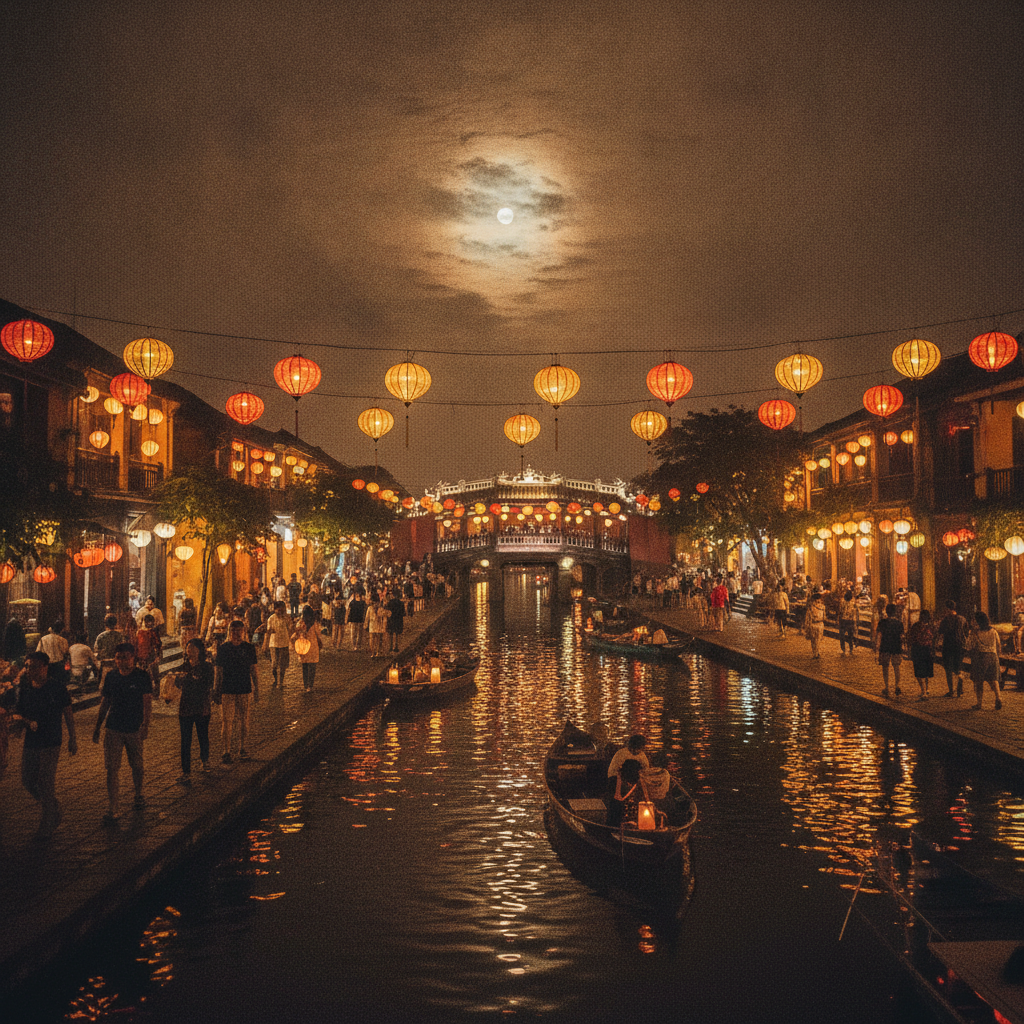
Hội An Ancient Town (the UNESCO World Heritage Site inscribed in 1999—a 30-hectare area on the Thu Bồn River in Quảng Nam province, central Vietnam; 30 km south of Đà Nẵng) is the most complete surviving example of a 15th–19th century Southeast Asian trading port, preserving the architectural and urban forms of a multi-ethnic merchant city at a level of integrity unmatched anywhere in the region. The trading history: from the 15th to the 19th centuries, Hội An (known to Western traders as Faifo) was the primary international trading port of the Nguyễn lords' southern Vietnamese territory—the point where Chinese, Japanese, Dutch, Portuguese, and Indian traders exchanged silk, ceramics, pepper, cinnamon, and lacquerware for the manufactured goods of the world economy. The Japanese Bridge: the Chùa Cầu (Covered Bridge Temple—built 1593 by the Japanese community to connect their quarter with the Chinese quarter; the most photographed structure in Hội An and the only covered bridge in Vietnam) is the most emblematic structure of the ancient town's multi-cultural commercial past. The Chinese Assembly Halls: the five Chinese Assembly Halls (Phúc Kiến—1697, the most important; Quảng Đông—1885; Trung Hoa—1741; Hải Nam—1875; Quảng Triệu—1885) are the social and religious centres of the five dialect communities (Hokkien, Cantonese, Mandarin, Hainanese, and Chaozhou) that dominated Hội An's trade.
- 2
The Thu Bồn River & the Lantern Festival
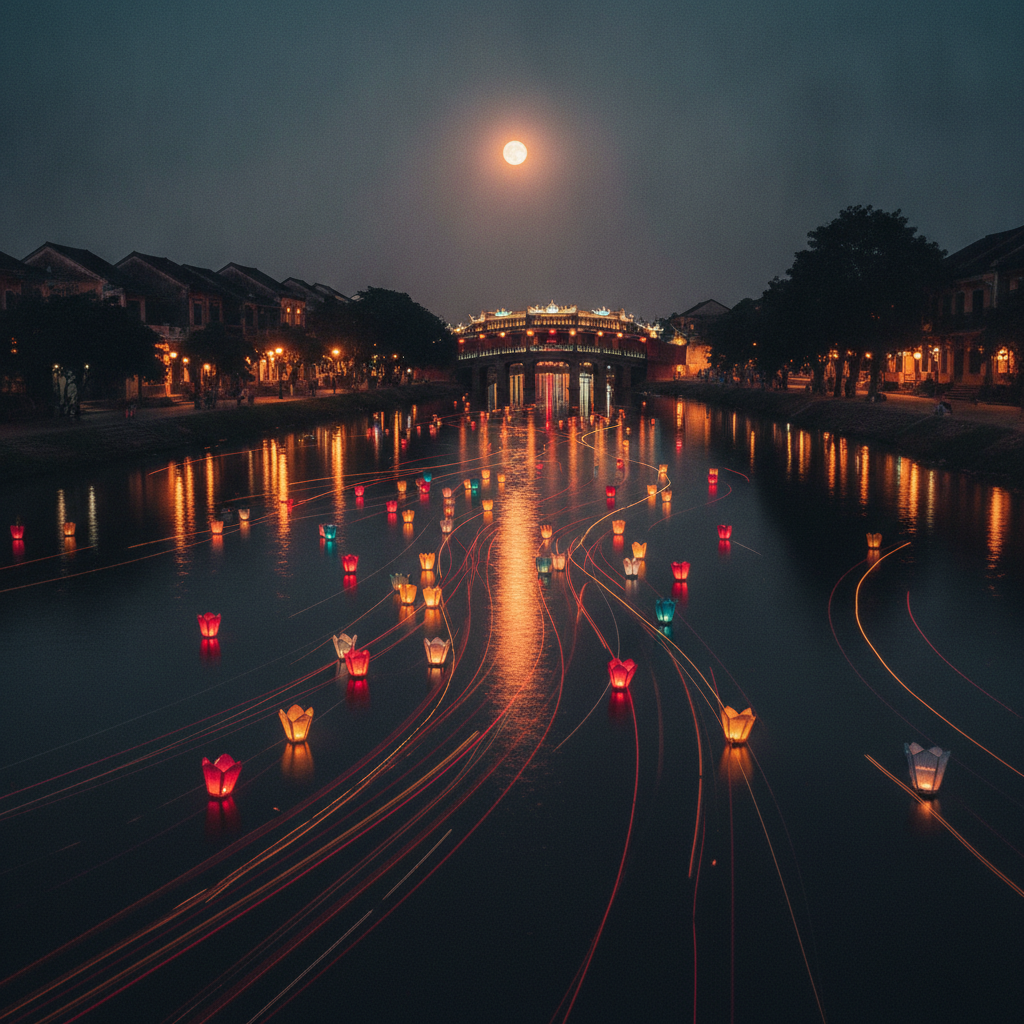
The Thu Bồn River (running through Hội An's southern edge, connecting the Ancient Town to the rice paddies of Quảng Nam province and the sea at Cửa Đại beach, 5 km east) is the ecological and commercial spine of Hội An's history—the river by which goods arrived, the boats from which traders operated, and the water that threatens the town with regular floods. The monthly lantern festival: on the 14th day of each lunar month (the full moon night), Hội An celebrates the Đêm Phố Cổ (Old Town Night Festival): all electric lights in the Ancient Town are extinguished from 18:00; the streets are lit exclusively by hundreds of coloured paper lanterns; traditional music performances occur at the Assembly Halls and in the streets; lanterns are released on the river. The photographic result: the combination of the lantern-lit streets, the river reflections, and the night-time absence of motor vehicles (traffic is restricted in the Ancient Town in the evenings) produces the most photographed single night event in Vietnam—the full moon night at Hội An has appeared in every major international travel photography competition. The flood history: the Thu Bồn River floods regularly (the ancient town is built at sea level, 5 km from the coast); the most destructive recent flood (October 1999—concurrent with the UNESCO inscription—flooded the ground floors of the ancient buildings to a depth of 1.5 metres); the town's historical response is to simply raise the threshold—the buildings have high-water marks painted inside recording the level of each significant flood since 1967.
- 3
Hội An's Tailoring Industry – The 48-Hour Suit Capital
Hội An is the most famous tailoring destination in Southeast Asia: an estimated 500+ tailoring shops operate in and around the Ancient Town (population 120,000), offering made-to-measure clothing in 24–48 hours—the most concentrated and internationally recognised custom tailoring industry in any tourist destination in the world. The origin: the tailoring industry grew from the existing silk trade and dressmaking tradition of Hội An (which had been supplying silk garments to the royal court and merchant class since the 17th century) to serve the backpacker tourism trade from the 1990s; by 2005, tailoring was the dominant commercial activity of the Ancient Town. The quality range: the Hội An tailoring market spans from the factory-production shops (taking measurements, sending orders to Đà Nẵng factories, delivering generic 'made to measure' goods after 24 hours) to the genuinely skilled independent tailors (working in-house, cutting patterns, fitting twice, producing genuine custom clothing in 48–72 hours). The recommended approach: spend the first afternoon inspecting fabric choices and discussing patterns; place an order in the evening; attend a fitting the next morning; final collection the following afternoon—this timeline allows for one correction round. The price: suits USD 80–250 (USD 150–200 for a reliable quality); dresses USD 30–80; the price-to-quality ratio is approximately 5–10× better than comparable European custom tailoring.
- 4
The Hội An Cuisine – Cao Lầu, White Rose & the Central Vietnamese Kitchen
The Hội An culinary tradition—one of the most distinctive and geographically specific in Vietnam (the combination of the central Vietnamese terrain, the Japanese and Chinese trading influences, and the local agricultural products of Quảng Nam province)—has produced several dishes that cannot be authentically replicated elsewhere and that serve as primary reasons for the culinary pilgrimages that bring food-focused visitors to Hội An. Cao lầu (the signature Hội An dish—thick rice noodles with pork, fresh herbs, and a small amount of broth; the distinctive feature: the noodles are traditionally made with water from a specific well in the Ancient Town (Ba Lễ well—its mineral content being cited as essential to the texture) and treated with lye ash from trees from the Cham Islands; the texture is chewy and firm, unlike any other Vietnamese noodle). Bánh mì Phượng (the Hội An bánh mì—the Vietnamese sandwich, using the French baguette imported by colonists and filled with pork, pâté, cucumber, carrot, and herbs—is argued by Anthony Bourdain, who featured the Phượng stall in his Hội An CNN episode, to be the 'best sandwich in the world'; the Phượng stall (at 2B Phan Châu Trinh) now has a second location and produces approximately 1,000 bánh mì per day). Bánh bao vạc ('White Rose'—shrimp dumplings in rice paper, the recipe owned exclusively by one family in Hội An and sold only through licensed restaurants).
- 5
The Cham Islands Marine Reserve – Snorkelling & Coral Reefs
The Cù Lao Chàm (Cham Islands—an archipelago of 8 islands 15 km east of Hội An in the South China Sea, designated a UNESCO Biosphere Reserve in 2009; accessible by speedboat in 20 minutes from Cửa Đại beach or by traditional wooden boat in 60 minutes) is the marine component of the Hội An visitor experience—a coral reef system in cleaner water than the coast, with the most accessible snorkelling and diving within day-trip distance of a major tourist town in central Vietnam. The marine environment: the Cham Islands biosphere covers 235 km² of marine area, protecting coral reefs, seagrass beds, and the nesting sites of sea turtles (green turtle and hawksbill); the coral reefs (concentrated on the north and east sides of the main island, Hon Lao) have approximately 35% live coral cover—significantly better than the degraded reefs of the mainland coast. The day trip: the Cham Islands boat trip (operating year-round but best from March to August—avoid the October–December storm season when the boats do not operate); snorkelling equipment included; lunch on the island; total package cost USD 15–25/person. The main island (Hon Lao): the fishing village of Bai Lang, accessible on the main island, has a small permanent population (approximately 3,000 people) producing the dried seafood (particularly squid and anchovy) that is the primary economic product; the local restaurants serve the freshest seafood available within day-trip distance of Hội An.
- 6
Practical Hội An – Access, Orientation & the Tourist Economy
Getting to Hội An: fly to Đà Nẵng International Airport (DAD—direct connections to Hanoi, Ho Chi Minh City, and major Asian cities including Singapore, Bangkok, and Seoul; no direct European connections—transit required, most commonly via Hanoi or Ho Chi Minh City); from Đà Nẵng, taxi to Hội An (30–45 minutes, approximately USD 12–18); or grab-bike (USD 5–8). Getting around: the Ancient Town is walkable in its entirety (30 hectares); bicycle rental (USD 1–2/day) for the beaches and surrounding rice paddies; the electric cart (tuk-tuk variant) for visitors with mobility limitations. The tourist economy: Hội An has one of the highest concentrations of tourist-oriented businesses per resident in Vietnam—approximately 1 hotel or guesthouse per 20 residents; the 8 km² Ancient Town has the highest commercial density; accommodation ranges from USD 10/night guesthouses to USD 300+/night heritage boutique hotels. The ticket system: the Ancient Town entrance ticket (VND 120,000 / approximately USD 5) provides access to 5 of the 22 heritage sites in the ancient town—the ticket is enforced at the perimeter but the streets themselves are free to walk. When to visit: February–April (the dry season peak—light rains, temperatures 20–25°C, the best weather combination); avoid October–November (typhoon season—the floods are a genuine risk).
Walk this route with audio
Stories play automatically as you reach each stop — no tapping needed.
More in Hội An

Hội An Beyond the Ancient Town: Cham Tower-Temples B52-Bombed in 1969, Cao Lầu Made from One Well's Water & the Mã Châu Silk Weavers Nobody Cycles To
Hội An's Full Day Cycle: 05:30 Vegetable Boats at the Market, the Bioluminescent Cham Islands After Dark & Why the Living Heritage Model Succeeds Where Angkor Failed
Hội An's Layers: 16th-Century Japanese Silver-for-Silk Trade, 844 Heritage Timber Houses With Flood-Lift Furniture & the 5.7 Million Visitors That Pushed 800 Resident Households Out
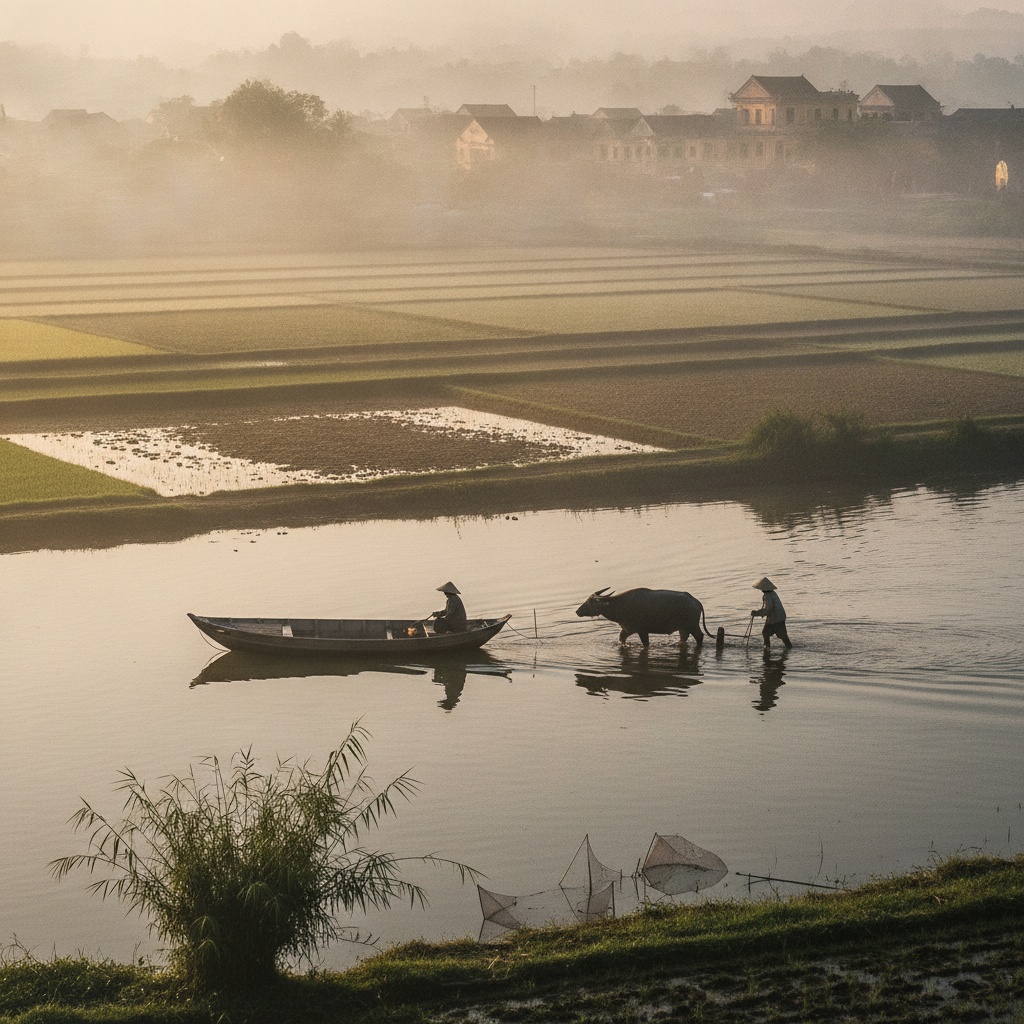
Hội An's Complete Story: Agent Orange in Quảng Nam's Forest, Water Buffalo Ploughing in Cẩm Nam & Why 30% of Visitors Return When Only 8% Return to Halong Bay