Hội An's Full Day Cycle: 05:30 Vegetable Boats at the Market, the Bioluminescent Cham Islands After Dark & Why the Living Heritage Model Succeeds Where Angkor Failed
Phúc Kiến Assembly Hall at 06:00 when only the temple keeper is present—before the incense seller sets up and before the UNESCO entrance ticket window opens; Noctiluca bioluminescence off the Cham Islands from March to May when squid fishing boats' lights cluster on the horizon; heritage warehouses converted to Anantara rooms with the courtyard now a swimming pool; lantern-frame bamboo bending at USD 5 versus silk floor-loom weaving at USD 15 versus wheel-thrown pottery at USD 10—the full Hội An craft day before the cooking class; the six cycling circuits all flat and all paved within a 20-km radius; and the 2030 question of whether the Ancient Town will still have resident families or be a fully commercial theme park with better food than Disneyland but the same hollow core.
- 1
The Hội An Sunrise – Temple Courts & Empty Streets
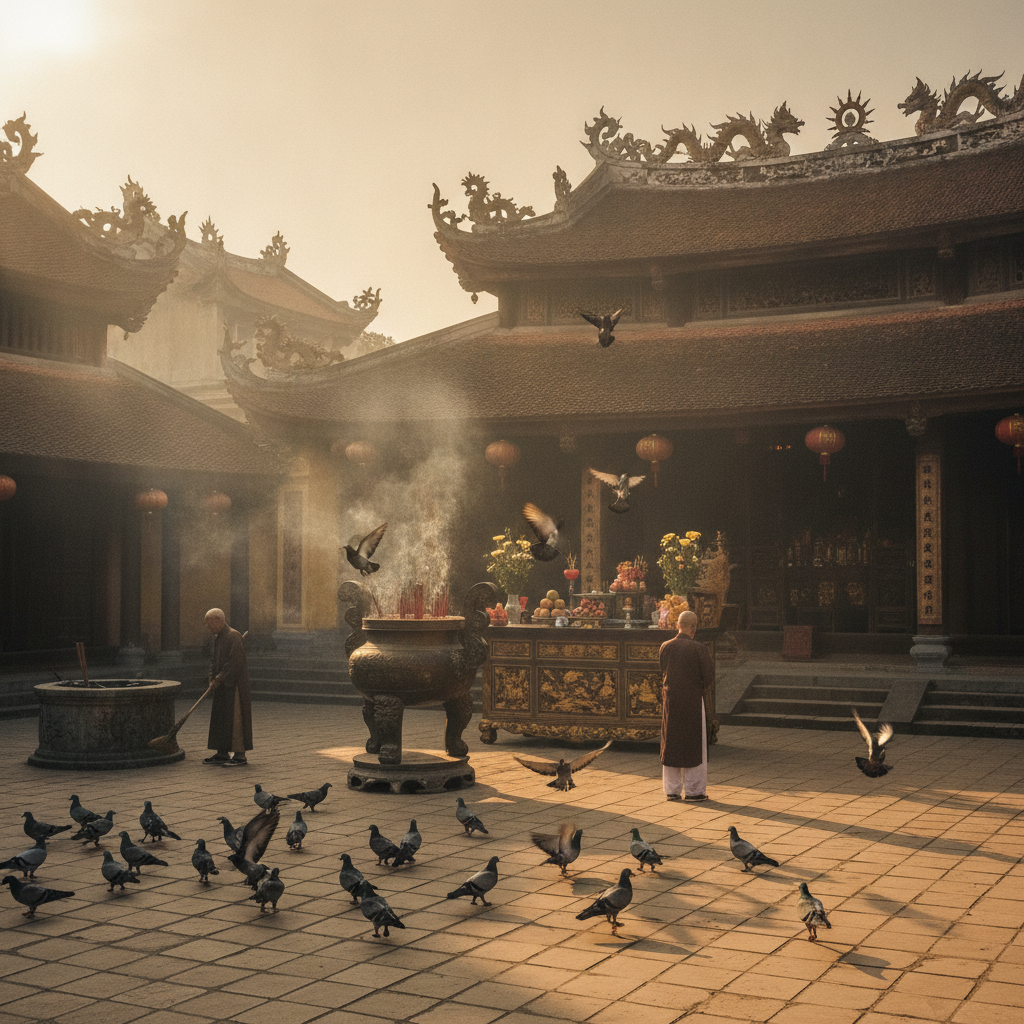
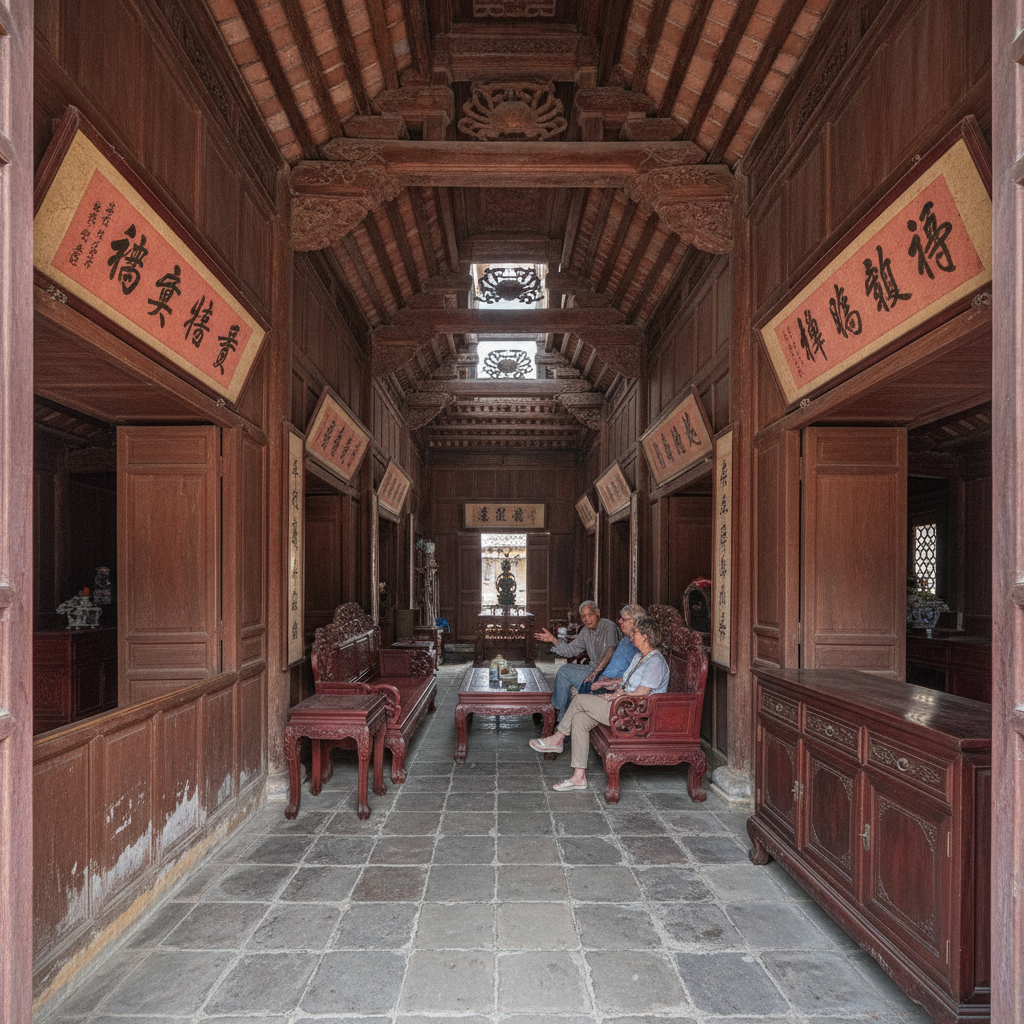
The Hội An dawn—before 07:00, before the street vendors arrive, before the restaurant menus are set out on the pavement—is the version of the Ancient Town that only early risers encounter, and it is qualitatively different from the daytime experience. The temple courts at dawn: the Phúc Kiến Assembly Hall (46 Trần Phú—the most important of the five Chinese Assembly Halls, built 1697 by the Hokkien community, the most elaborately decorated, and the most intensely active at dawn) opens at 06:00; the temple keeper arrives before 06:30 to light incense and arrange offerings; the resident pigeons descend to the courtyard; the sound of the morning invocation begins. The street texture: the Ancient Town streets at 06:00 have the quality of a film set between scenes—the yellow-painted walls glowing in the horizontal morning light, the lacquered wooden doors just opening, the flower seller placing fresh arrangements on the street-corner shrines. The market: the Hội An central market (Chợ Hội An, 3 minutes' walk from the Japanese Bridge on the riverside) receives the vegetable boat deliveries between 05:30 and 07:00—the most active and most photogenic 90 minutes of the market's day; the vegetable sellers arranging herbs and greens in the riverside light, the fish stalls receiving the overnight catch, the breakfast cooks beginning the bún bò setup.
- 2
The Hội An Night Sky & Dark Astronomy from the Cham Islands
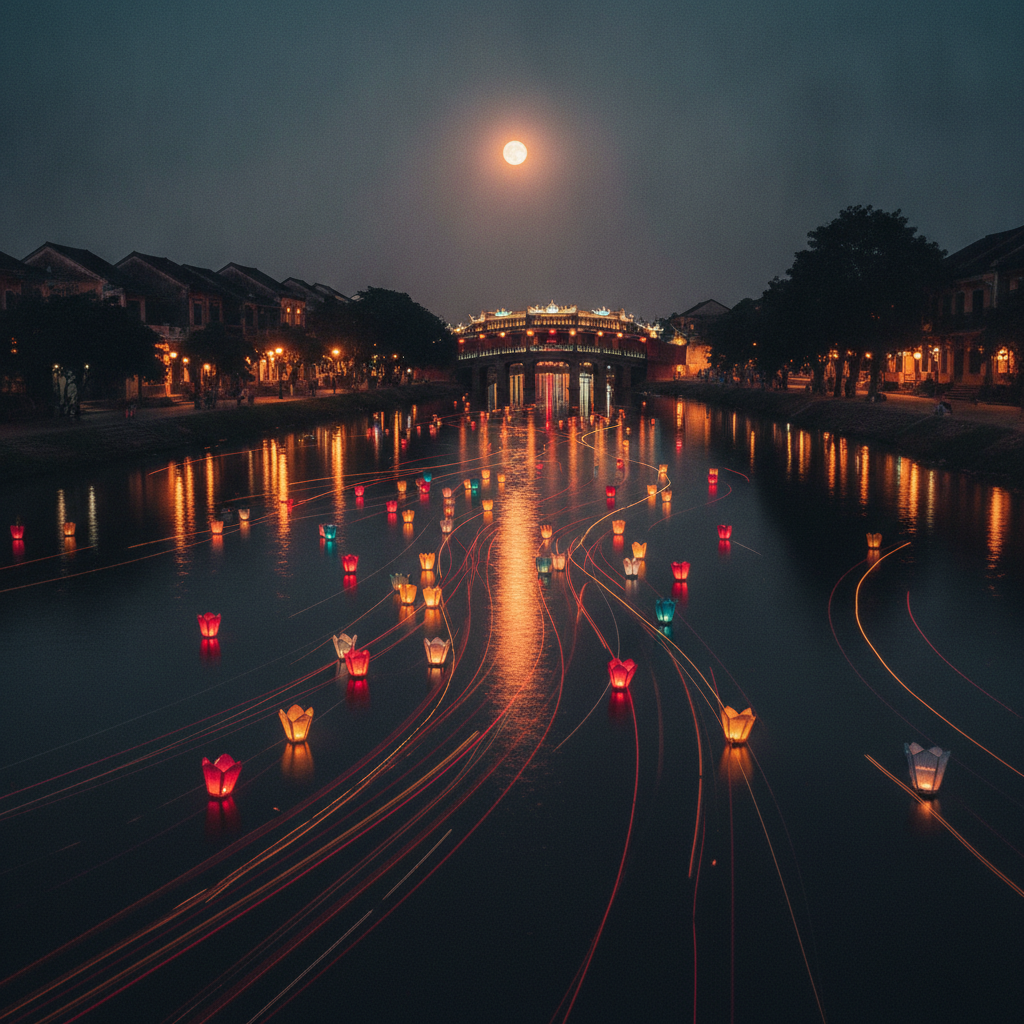
The astronomical conditions above Hội An—the light pollution of the Ancient Town creating a moderate glow over the immediate town area—improve dramatically once the visitor moves beyond the immediate tourist zone: the coastal waters off An Bàng beach (5 km from the Ancient Town, accessible by bicycle) have moderate star visibility, and the Cham Islands (15 km offshore, accessible by speedboat) offer the best dark sky conditions within day-trip distance of Hội An. The Cham Islands night sky: on the Cham Islands (where there is no permanent artificial lighting beyond the fishing village's minimal electricity supply), the night sky is sufficiently dark to observe the Milky Way, multiple star clusters, and the zodiacal light on clear nights from March to August. The bioluminescence: the Cham Islands waters are occasionally affected by the same Noctiluca scintillans bioluminescent bloom that produces the 'sea of stars' effect—the phenomenon is unpredictable, occurring most commonly from March to May when the plankton bloom conditions are right. The fishing boat night: the squid fishing boats (the brightly lit wooden vessels that cluster on the horizon off the Cham Islands on summer nights, using powerful lights to attract squid to the surface for dip-netting) provide the most atmospheric human element of the Cham Islands night seascape—the cluster of lights on the dark water visible from An Bàng beach on a clear night.
- 3
Hội An's Renovation Accommodation – Boutique Hotels in Heritage Buildings
The Hội An boutique hotel sector—hotels occupying or adjacent to the Ancient Town's heritage buildings—is the most developed concentration of heritage-converted accommodation in Southeast Asia, producing the unique experience of sleeping in a building that was a merchant warehouse in the 18th century or a Vietnamese official residence in the 19th century. The heritage hotel options: the Hội An Historic Hotel (the oldest hotel in the town, on Trần Hưng Đạo Street—the former French administrative headquarters, now a 150-room mid-range hotel retaining the colonial courtyard layout); the La Siesta Hội An Resort & Spa (on Đào Duy Từ—a new build in the traditional style, with the best rooftop pool view of the Ancient Town); the Anantara Hội An Resort (on the Thu Bồn riverside, occupying a colonial-era warehouse complex with the courtyard converted to a swimming pool—the most atmospheric heritage conversion in the town). The Ancient Town accommodation gradient: the most expensive accommodation is immediately inside the pedestrian zone of the Ancient Town itself (heritage houses converted to guesthouses at USD 80–200/night); the best value is immediately outside the 30-hectare heritage zone (new-build boutique hotels at USD 30–60/night with no qualitative difference in access to the Ancient Town).
- 4
Hội An Craft Workshops – Lantern-Making, Silk Weaving & Pottery
The Hội An craft workshop circuit—a series of participatory experiences offered by the town's artisan community, covering the principal crafts of the Ancient Town's historical trading economy—has become the most popular activity for visitors who want more than the walking tour. Lantern-making: the Hội An lantern workshop (available at most craft shops in the Ancient Town and at the Thanh Hà lantern village—USD 5–8 per person, 45–90 minutes, take home the lantern): the process of bending bamboo into the frame, cutting and attaching the rice paper, and adding the tassels and decorative elements; the skill level required is low, making it appropriate for children; the result is genuinely functional. Silk weaving: the Mã Châu silk weaving workshop (at the weaving village 5 km north—USD 15–25 per person, 2 hours): operating a traditional floor loom under the guidance of an experienced weaver; producing a small section of fabric using the hol ikat technique. Pottery: the Thanh Hà pottery workshop (at the pottery village 3 km west—USD 10–15 per person, 1 hour): wheel-throwing under instruction; kiln-firing requires an overnight stay or a second visit to collect the fired piece. The cooking class relationship: the craft workshops are most usefully combined with the cooking class into a full-day programme (pottery or lantern in the morning, market in the late morning, cooking class in the afternoon, Ancient Town at dusk) that produces the most productive single day available in Hội An.
- 5
The Hội An Bicycle Network – All Routes Explained
The Hội An bicycle network—the most developed urban cycling infrastructure around a UNESCO heritage town in Vietnam—extends in a 20-km radius from the Ancient Town through rice paddies, fishing villages, craft villages, and coastal road to the beach. The six standard routes: (1) Ancient Town to Trà Quế herb village (3 km north—the flat riverside path, 20 minutes, the most popular morning ride); (2) Ancient Town to Mã Châu silk village (5 km north—slightly longer, passing through rice paddies, 30 minutes); (3) Ancient Town to Cửa Đại beach via the coastal road (5 km east, 25 minutes, the most cycle-commuted route, now partly blocked by erosion structures); (4) Ancient Town to An Bàng beach via the back road through Cẩm Thanh village (5 km, 25 minutes, more scenic than the main road); (5) Ancient Town to Thanh Hà pottery village (3 km west along the Thu Bồn north bank, 15 minutes); (6) The island circuit via Cẩm Nam ferry (cross the river by ferry, cycle the island loop through the basket-weaving villages and river farms, return by ferry—12 km total, 1.5 hours). The condition: all routes are flat (the Ancient Town sits at 2 metres above sea level; the surrounding area is river delta); all routes are paved; all routes share the road with motorcycles (helmet recommended; the An Bàng route has the lightest traffic).
- 6
What Hội An Gets Right – The Living Heritage Model
Hội An's achievement—the preservation of a 30-hectare living heritage town through 25 years of UNESCO management, private ownership, community engagement, and careful commercial development—is the most successful example of the 'living heritage' model in Southeast Asia: a historical town that functions as a home for real residents, a commercial centre for a real economy, and a heritage site for international visitors, simultaneously. The comparison: compare with the failed models (Angkor—a heritage site with no resident community, managed entirely as a museum and tourism infrastructure; the Quảng Nam countryside—villages with surviving traditional architecture but no conservation programme and no income, so the buildings deteriorate); the successful model achieves the balance between preservation and livability. The Hội An tension: the 30% return-visitor rate and the high resident displacement rate exist simultaneously—the town is successful enough as a destination that it keeps pulling visitors back, but that very success drives the cost of living beyond the means of the residents who give it its character. The lesson: the Hội An model's transferable insight is that heritage conservation must be profitable for the owners of the heritage buildings—a heritage town that costs money to maintain will not be maintained. The threat: the critical question for Hội An in 2030 is whether the Ancient Town will still have resident families or whether the full gentrification will have completed, converting it into a theme-park heritage experience managed by commercial operators—the same fate as several European UNESCO sites where the residential community has been entirely replaced by tourism commerce.
Walk this route with audio
Stories play automatically as you reach each stop — no tapping needed.
More in Hội An
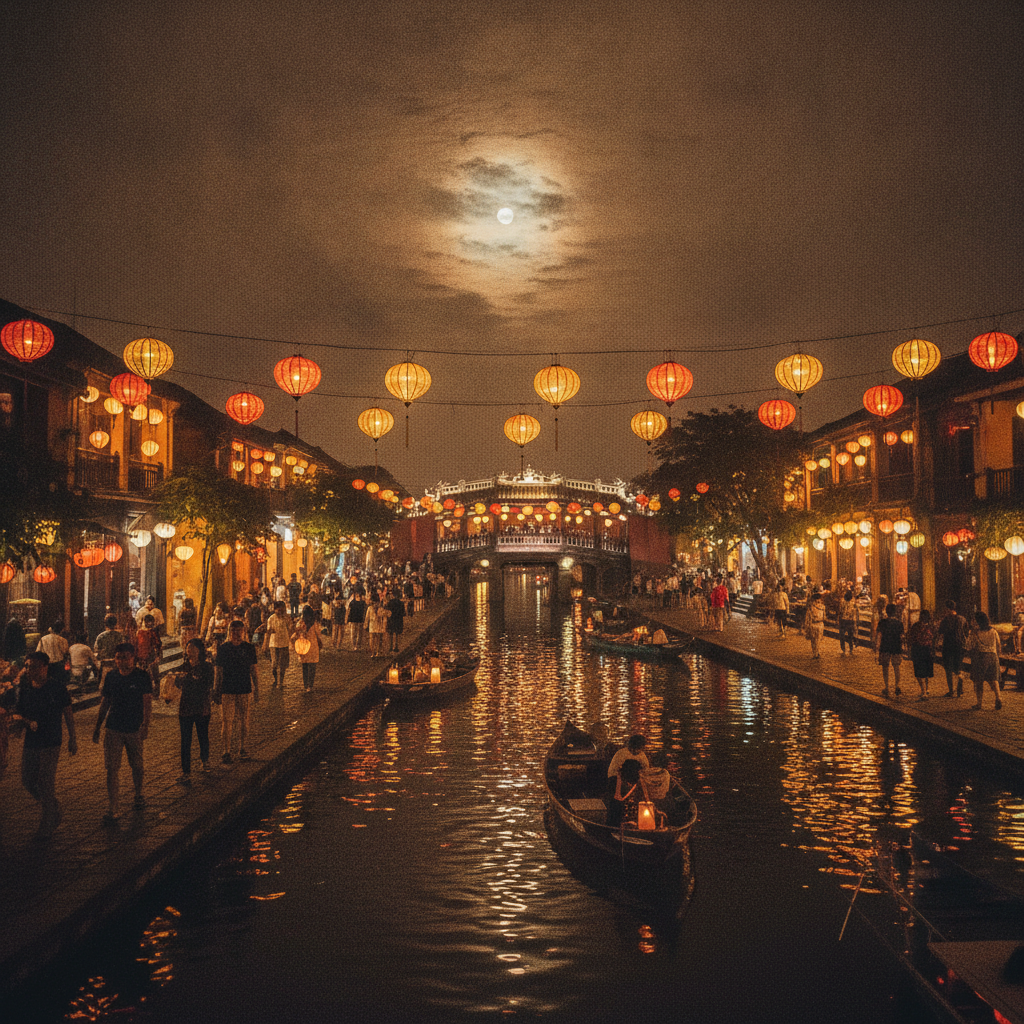
Hội An: The Japanese Bridge Built in 1593, the Cao Lầu Noodles Made from One Well's Water & the 500 Tailoring Shops That Produce Your Suit in 48 Hours
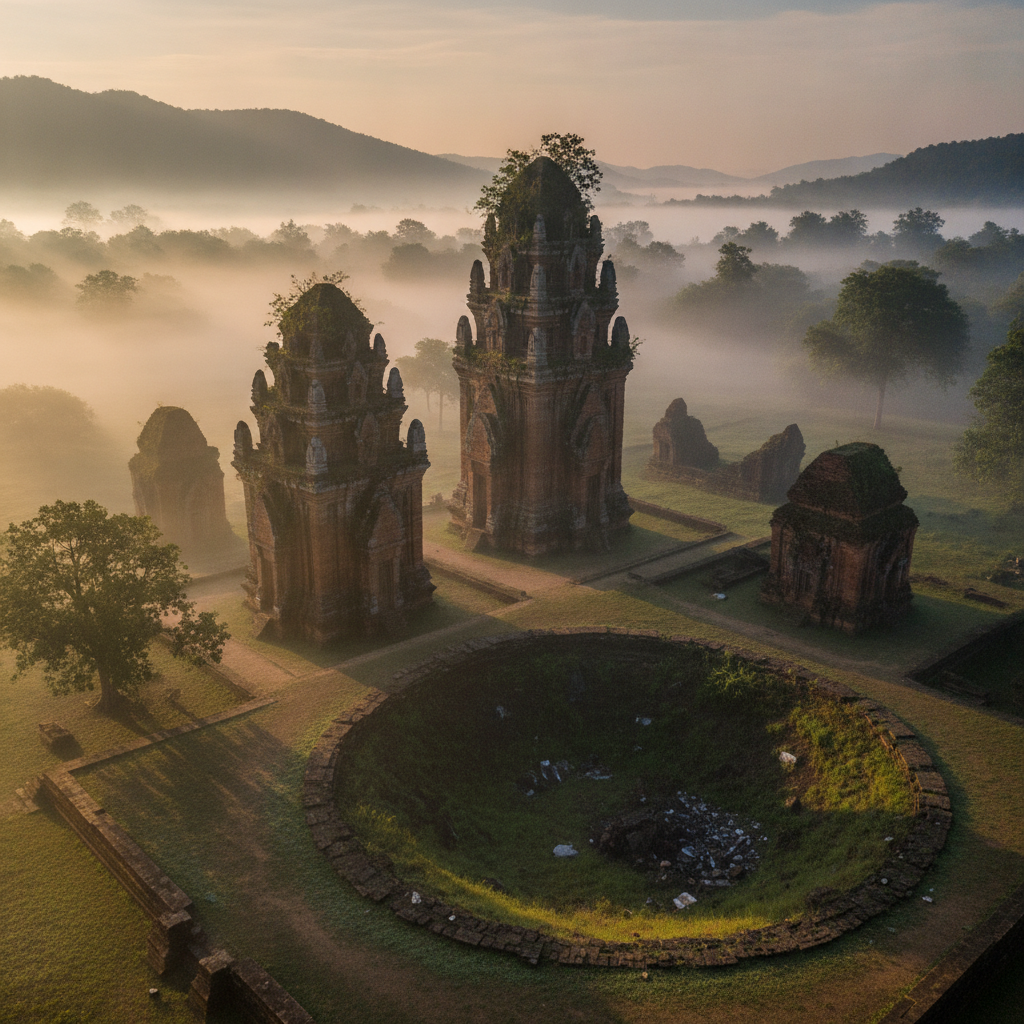
Hội An Beyond the Ancient Town: Cham Tower-Temples B52-Bombed in 1969, Cao Lầu Made from One Well's Water & the Mã Châu Silk Weavers Nobody Cycles To
Hội An's Layers: 16th-Century Japanese Silver-for-Silk Trade, 844 Heritage Timber Houses With Flood-Lift Furniture & the 5.7 Million Visitors That Pushed 800 Resident Households Out
Hội An's Complete Story: Agent Orange in Quảng Nam's Forest, Water Buffalo Ploughing in Cẩm Nam & Why 30% of Visitors Return When Only 8% Return to Halong Bay