Hội An's Complete Story: Agent Orange in Quảng Nam's Forest, Water Buffalo Ploughing in Cẩm Nam & Why 30% of Visitors Return When Only 8% Return to Halong Bay
The Nam Hải Four Seasons' Three Paths to Wisdom spa programme versus USD 5 herbal steam bath at a riverside Vietnamese medicine clinic; bún bò Huế's 8-hour pork-bone lemongrass broth with pig's blood cubes as the most sophisticated noodle dish in Vietnam, 2.5 hours north by road; the Mỹ Lai massacre memorial 40 km south as the most visited American War site outside Ho Chi Minh City, in the same province as the Mỹ Sơn tower B52-bombed in 1969; Cẩm Nam's hand-buffalo paddy cultivation unchanged since the 17th century when these farms supplied the same trading port; and the 30% return-visit rate that reflects the accumulation of detail—the tailor still has your measurements, the cooking teacher still remembers your name.
- 1
The Hội An Spa & Wellness Circuit
The wellness industry of Hội An—the most developed in central Vietnam—combines the Vietnamese traditional medicine tradition (thuốc Nam—Southern Medicine, the Vietnamese adaptation of Chinese medicine using locally available herbs, acupuncture points, and the cupping and coin-rubbing traditions) with international spa treatments adapted for the tourist market. The Vietnamese traditional: the herbal steam bath (tắm hơi thuốc—a small wooden cabinet filled with herbal steam produced by boiling a proprietary blend of aromatic herbs—lemongrass, ginger, turmeric—in a pot beneath the seat; the treatment opens pores, relieves muscle tension, and is the most accessible traditional treatment at USD 5–8); the hot stone massage (specifically the river stone massage—using smooth Thu Bồn River stones heated and used as massage tools along the spine and neck). The high-end option: the Anantara Hội An Resort and the Four Seasons Nam Hải (15 km north of Hội An on the Hà My Beach) offer the most internationally recognised spa experiences in central Vietnam—the Nam Hải's 'Three Paths to Wisdom' spa journey (using the spa's original Vietnamese healing programme combining breathing, movement, and touch) is the most awarded spa treatment in Vietnam. The accessible option: the Palmarosa Spa (on Đào Duy Từ in the Ancient Town—the recommended mid-range option among long-term Hội An residents).
- 2
The Hội An Wedding & Honeymoon Industry
Hội An has become the most popular destination in Vietnam for Western weddings and honeymoons: the combination of the Ancient Town aesthetic (the lanterns, the yellow walls, the riverside), the beach proximity, the food quality, and the accommodation options (from the budget boutique to the Four Seasons) positions the town as Vietnam's premium romance destination. The wedding format: outdoor ceremonies in the Ancient Town (the Phùng Hưng House garden, the Hội An riverside under lanterns) or at the beachfront resorts (the Nam Hải, the Victoria Hội An); the Vietnamese wedding tradition of the ao dài photoshoot (hiring traditional Vietnamese áo dài—the national garment for women, a fitted silk tunic worn over white trousers—for the wedding photography, available from the tailors and rental shops in the Ancient Town for USD 10–30 per day). The honeymoon geography: the Hội An honeymoon itinerary that the luxury travel agencies most commonly sell combines 2 nights in the Ancient Town (the La Siesta boutique hotel or the Anantara) with 2 nights at the Nam Hải beach resort, plus a half-day bicycle tour to Trà Quế and a cooking class. The cost: the complete Nam Hải honeymoon package (2 nights, breakfast, spa, airport transfers) starts at USD 800–1,200 total—significantly below comparable quality resorts in Thailand or Bali.
- 3
The Central Vietnam Culinary Trail – From Hội An to Huế
The central Vietnamese culinary tradition—the most complex and regionally specific in Vietnam, reflecting the influence of the Nguyễn royal court cuisine of Huế (elaborate, multi-course, aesthetically presented), the Cham culinary heritage (spice use, turmeric, the fermented fish paste tradition), and the trading port food culture of Hội An (foreign ingredient integration, the adaptation of Japanese and Chinese ingredients into Vietnamese cooking)—produces a cuisine that differs significantly from both the northern (Hanoi) and southern (Saigon) Vietnamese traditions. The Huế connection (120 km north by road—2.5 hours; or 3 hours by train): bún bò Huế (the spicy beef noodle soup of Huế—considered by many Vietnamese food writers to be the most sophisticated Vietnamese noodle dish; the broth is made from beef bones simmered for 8+ hours with lemongrass and fermented shrimp paste; the noodles are round (unlike the flat bánh phở of Hanoi); the garnish includes congealed pig's blood cubes, pork knuckle, and fresh herbs); bánh Huế (the diverse category of steamed and grilled Huế rice flour snacks—bánh bèo (water fern cakes), bánh nậm (flat dumplings), bánh ướt (steamed rice rolls)—served at the Huế street stalls that constitute the most distinctive street food culture in Vietnam). The Đà Nẵng middle: mì Quảng (the Quảng Nam province's signature turmeric noodle dish, available at every Đà Nẵng and Hội An market) is the geographical midpoint food between Hội An and Huế.
- 4
Hội An in the American War – Central Vietnam's Wartime History
The Quảng Nam province (of which Hội An is the provincial capital) was among the most heavily contested and most severely damaged areas of the American War (the Vietnam War, 1955–1975): the province was the location of some of the most significant battles and programs of the conflict, leaving a heritage that is present but not prominently displayed in the Hội An tourist experience. My Lai: the Mỹ Lai massacre (16 March 1968—the killing of 504 unarmed Vietnamese civilians by US Army soldiers of the 23rd Infantry Division in the hamlet of Mỹ Lai, Sơn Tịnh district, Quảng Ngãi province—40 km south of Hội An) remains the defining event of American military conduct in the war; the Mỹ Lai memorial and museum (the most visited American War site outside of Ho Chi Minh City) is accessible as a half-day excursion from Hội An. Operation Swift: the Battle of Que Son (November 1967—one of the most intense battles of the war, in the Quế Sơn valley southwest of Hội An; US Marines and NVA forces; 100+ US Marines killed, 700+ NVA soldiers killed) is the context for the Mỹ Sơn B52 bombing that destroyed the main Cham tower complex. The Agent Orange legacy: Quảng Nam province has one of the highest concentrations of Agent Orange contamination in Vietnam—the aerial spraying of dioxin-containing herbicide by the US Air Force from 1961–1971 affected approximately 8% of the province's forest area; the health effects (elevated rates of cancer, birth defects, and immune disorders in the affected communities) remain documented by Vietnamese and US medical researchers.
- 5
The Hội An River Farm Experience – Organic Agriculture & Water Buffalo
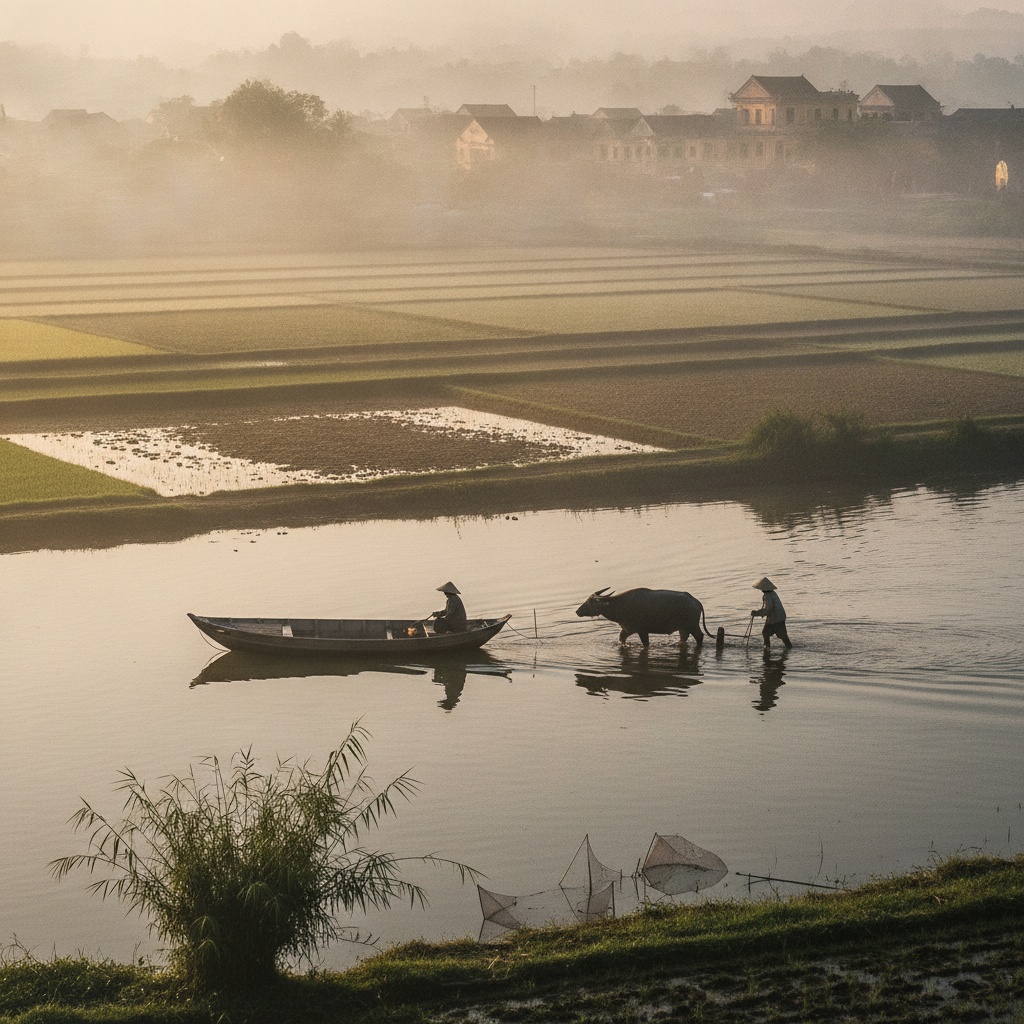
The Thu Bồn River farming landscape—accessible from Hội An by a 10-minute boat crossing or a 15-minute bicycle ride to the ferry—provides the most immersive agricultural experience available within walking or cycling distance of a major Vietnamese tourist town. The river farm villages: the agricultural communities on the south bank of the Thu Bồn River (the Cẩm Nam commune—a cluster of market garden farms producing vegetables for the Hội An restaurant market) use traditional hand-cultivation techniques (the water buffalo for field preparation, the hand-transplanting of rice seedlings, the basket-weave irrigation channels from the river) that have remained essentially unchanged since the 17th century when the same landscapes supplied the same trading port. The water buffalo ploughing: the sight of a Vietnamese farmer ploughing a rice paddy with a water buffalo (the most iconic image of the Vietnamese countryside) is actually increasingly rare in the mechanised agriculture of the Red River and Mekong deltas—but remains common in the smaller paddy plots of central Vietnam and available to observe year-round in the Cẩm Nam farms. The farm tour: the Hội An Eco Cooking School operates a morning farm tour (06:00–08:00, before the cooking class) that includes participation in the vegetable harvest, feeding the ducks, and the collection of eggs—the most interactive agricultural experience available from Hội An without an overnight stay.
- 6
Leaving Hội An – What the Ancient Town Leaves With You
The Hội An visit produces a specific and distinctive type of travel memory: not the dramatic landscapes of Halong Bay or the temple complexity of Angkor, but the accumulated texture of detail—the carved wood of a particular ceiling beam, the smell of a specific incense blend in a Chinese assembly hall, the weight of the silk ordered at a tailor and collected two days later. The leave-taking moment: the Hội An visitors who describe the place most vividly are those who stayed longer than planned—the 3-day visitor who extended to 5 because the cooking class led to a friendship with the teacher; the 5-day visitor who added 2 more days because the tailor needed another fitting and the additional days allowed a motorbike trip to Mỹ Sơn. The return rate: Hội An has among the highest return visitor rates of any tourism destination in Vietnam—approximately 30% of international visitors to Hội An have been before (a figure that compares with approximately 12% for Hanoi and 8% for Halong Bay). The quality of the return: the second Hội An visit differs from the first—the Ancient Town walks are replaced by the bicycle hinterland; the cooking class is replaced by the solo market expedition; the tailor shop from the first visit recognises the face and the measurements are still on file. The question: what Hội An asks of visitors who leave is whether the experience of a preserved historical environment—one that is simultaneously a tourist destination and a living community—can be visited without contributing to the pressures that make such environments unsustainable.
Walk this route with audio
Stories play automatically as you reach each stop — no tapping needed.
More in Hội An
Hội An: The Japanese Bridge Built in 1593, the Cao Lầu Noodles Made from One Well's Water & the 500 Tailoring Shops That Produce Your Suit in 48 Hours
Hội An Beyond the Ancient Town: Cham Tower-Temples B52-Bombed in 1969, Cao Lầu Made from One Well's Water & the Mã Châu Silk Weavers Nobody Cycles To
Hội An's Full Day Cycle: 05:30 Vegetable Boats at the Market, the Bioluminescent Cham Islands After Dark & Why the Living Heritage Model Succeeds Where Angkor Failed
Hội An's Layers: 16th-Century Japanese Silver-for-Silk Trade, 844 Heritage Timber Houses With Flood-Lift Furniture & the 5.7 Million Visitors That Pushed 800 Resident Households Out