Florence
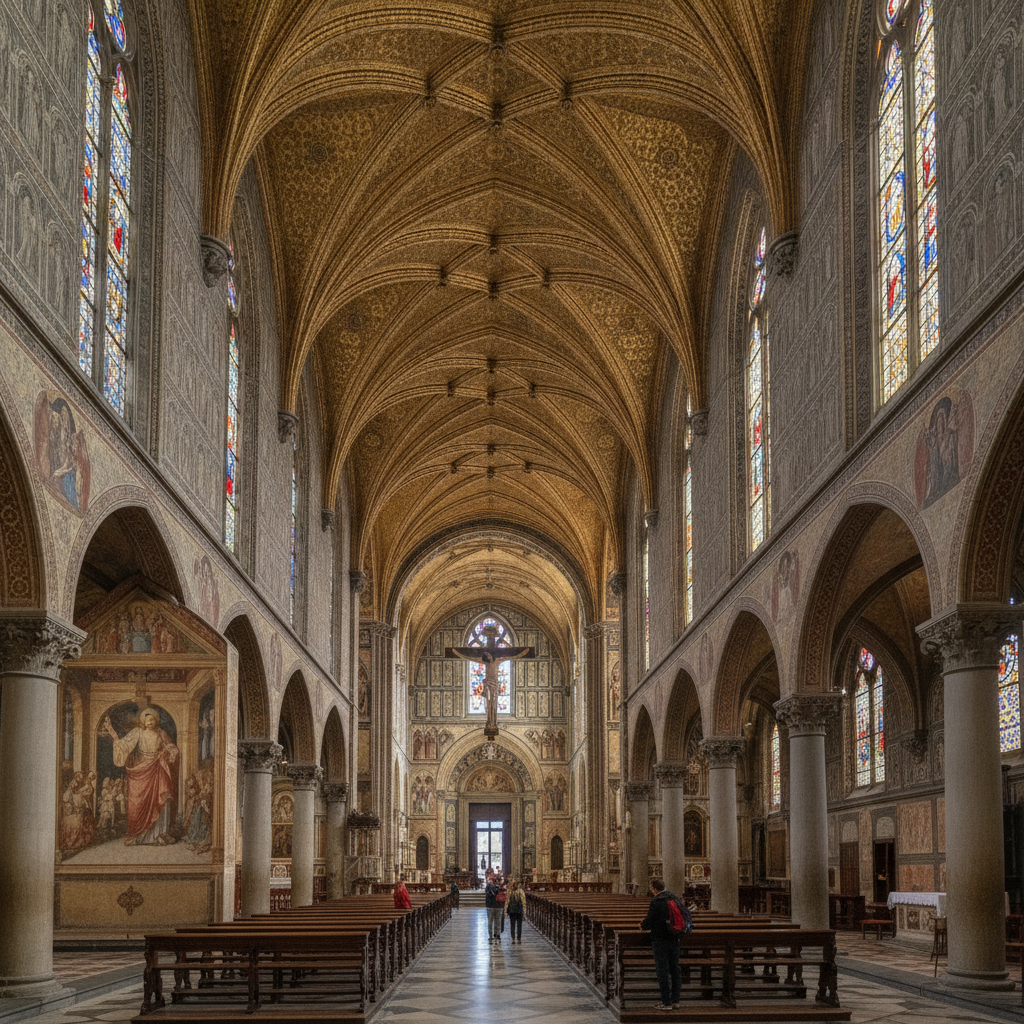
Santa Maria Novella, Via Tornabuoni & Ghirlandaio's Florence
The western quarter of Florence's historic centre, focused on the Dominican basilica of Santa Maria Novella and the luxury shopping street of Via Tornabuoni, represents a distinct layer of Florentine culture — the Church that contains Masaccio's 'Trinity' (the first painting using true linear perspective), Ghirlandaio's cycle of Florentine society portraits in the Tornabuoni Chapel, and the aristocratic urban fabric of the Palazzo Strozzi and the Via de' Tornabuoni banking district.
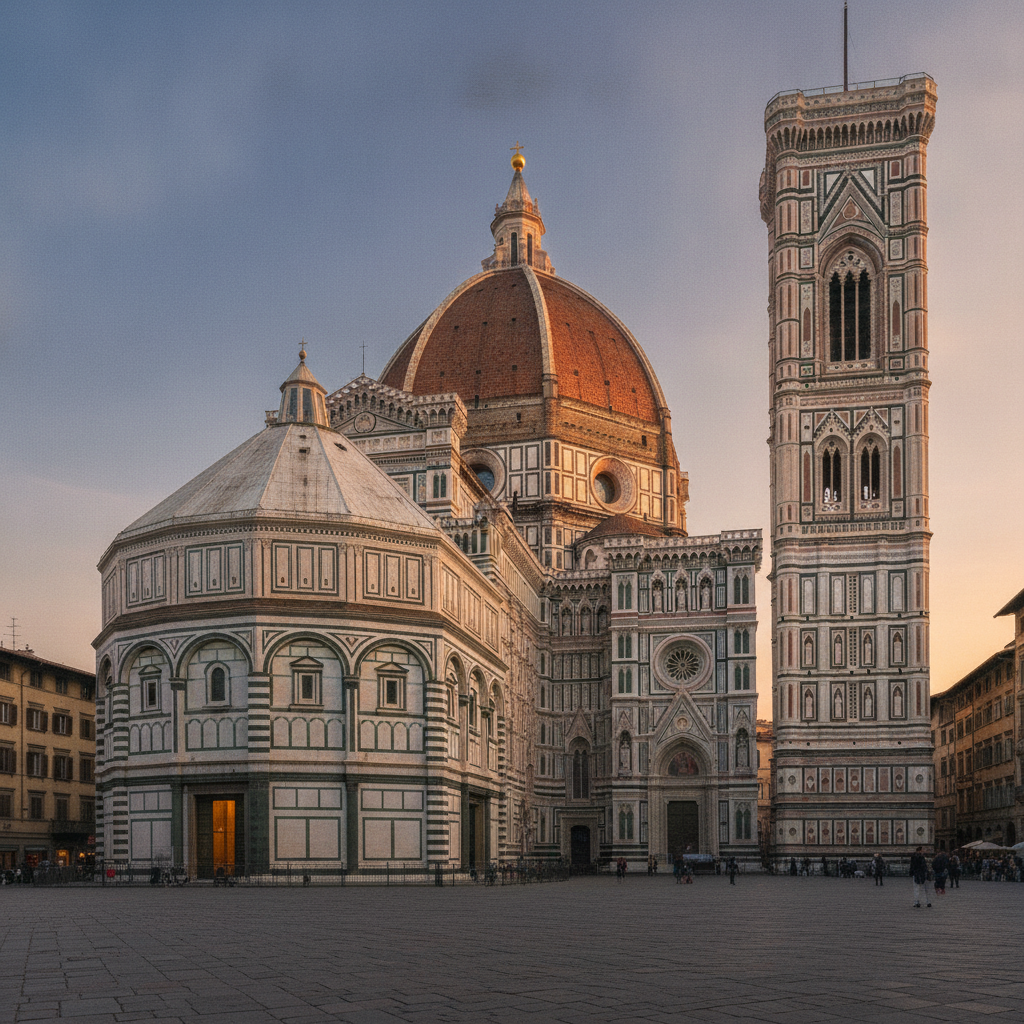
The Duomo, Baptistery & Giotto's Campanile — Piazza del Duomo
The Piazza del Duomo — the cathedral square of Florence, containing the three great monuments of medieval Florentine civic and religious architecture — is the physical and spiritual centre of the city and the ensemble that more than any other defines the visual identity of Florence: the Cathedral of Santa Maria del Fiore with Brunelleschi's dome (the largest masonry dome ever constructed, spanning 44 metres and rising 91 metres above the cathedral floor), the Baptistery of San Giovanni (one of the oldest buildings in Florence, dating in its current form to the 11th-12th centuries and containing Lorenzo Ghiberti's 'Gates of Paradise'), and Giotto's Campanile (the freestanding bell tower begun by Giotto di Bondone in 1334 and completed after his death by Andrea Pisano and Francesco Talenti).
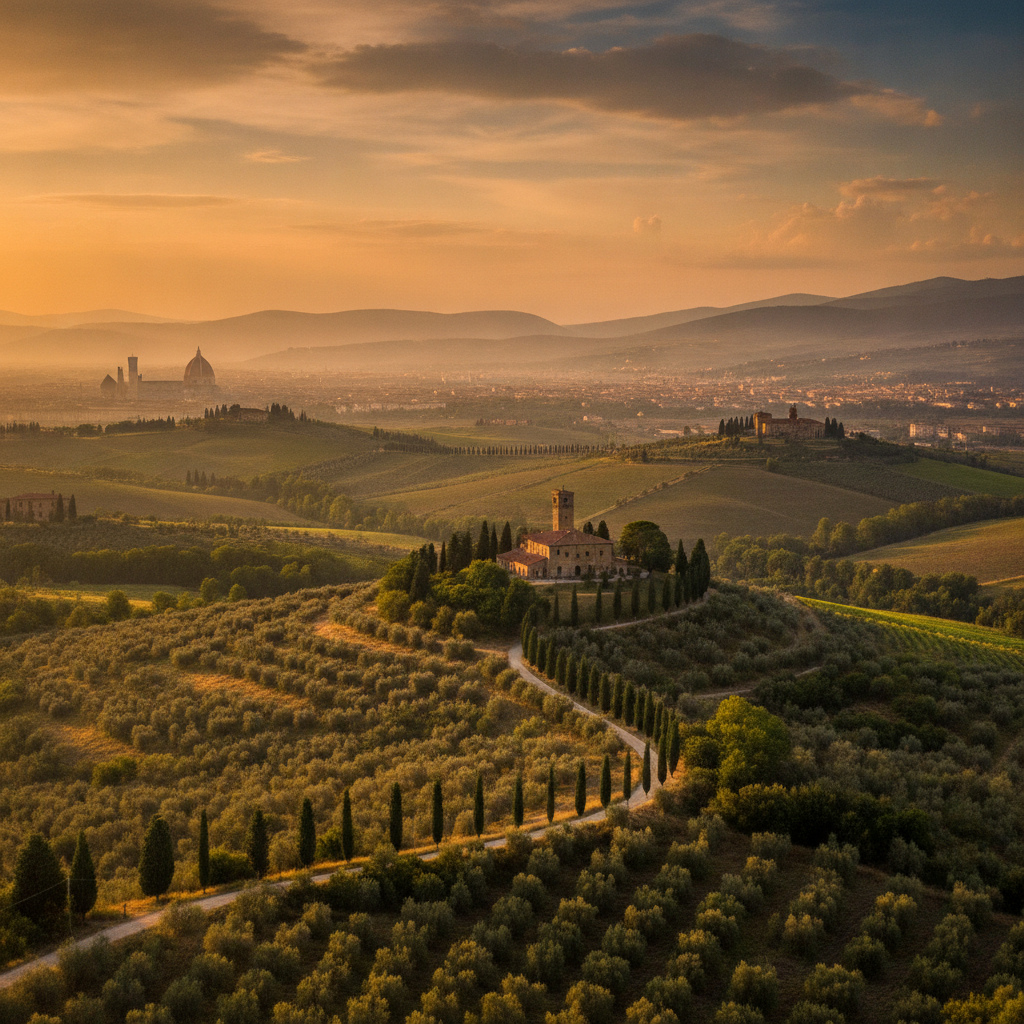
Fiesole, the Chianti Hills & the Tuscan Countryside above Florence
The hills immediately surrounding Florence — the Arno valley rim that defines the visual context of the city and that has been the preferred location of aristocratic and intellectual retreat since the Etruscan period — contain the ancient hilltop town of Fiesole (an Etruscan and Roman settlement predating Florence itself), the Chianti wine region stretching south through the hills toward Siena, and the legendary Tuscan landscape of cypresses, olive groves, and terracotta-roofed farmhouses that has shaped the Western imagination of rural beauty since the Renaissance.
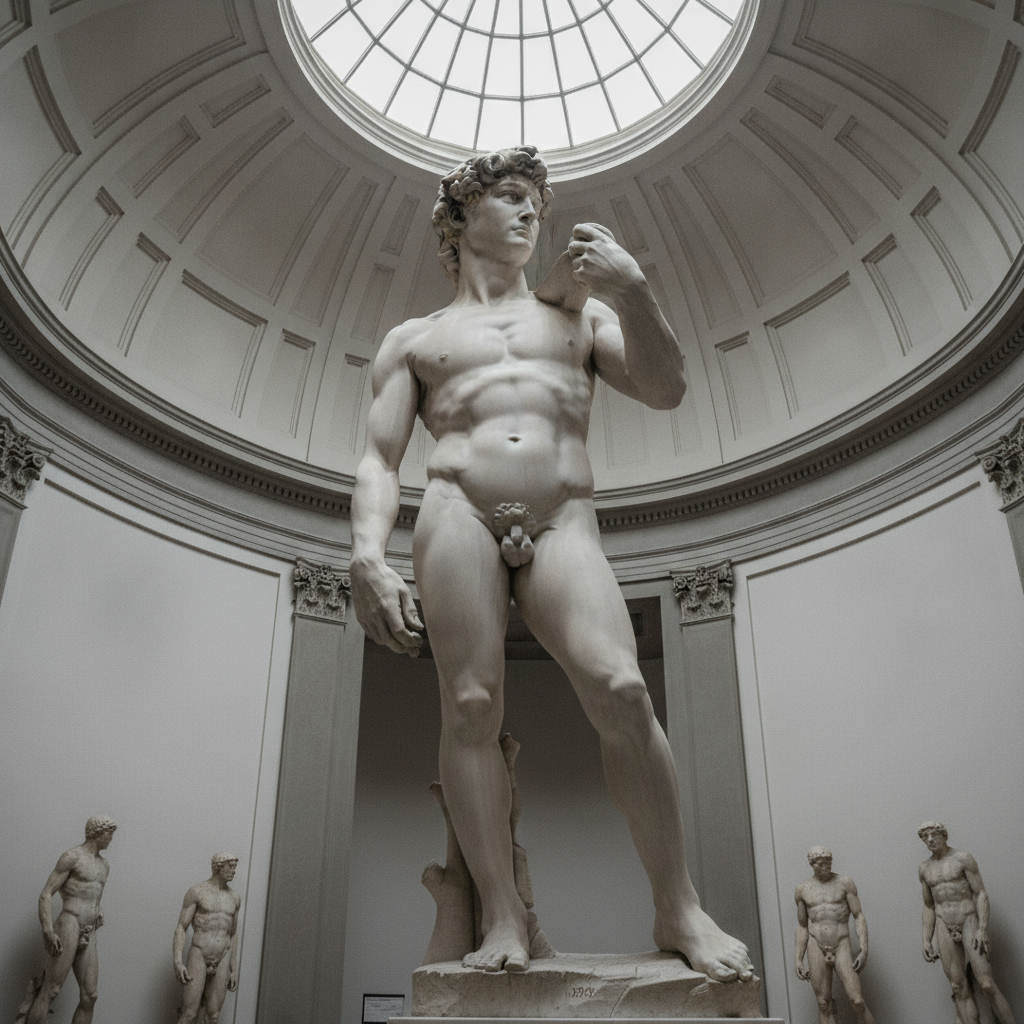
Galleria dell'Accademia, Michelangelo's David & the Convent of San Marco
The northern quarter of historic Florence, centred on the Via Ricasoli axis running north from the Duomo, contains two of the most important single artistic sites in the world: the Galleria dell'Accademia (housing Michelangelo's original 'David', the most famous sculpture in existence, along with his four unfinished 'Prisoners' and the 'St Matthew') and the Convent of San Marco (the 15th-century Dominican convent where Fra Angelico painted the cells and common spaces with the most important cycle of devotional fresco painting of the early Renaissance, and where Savonarola served as prior).
Museo Galileo, the Florentine Jewish Ghetto & the Via dei Benci
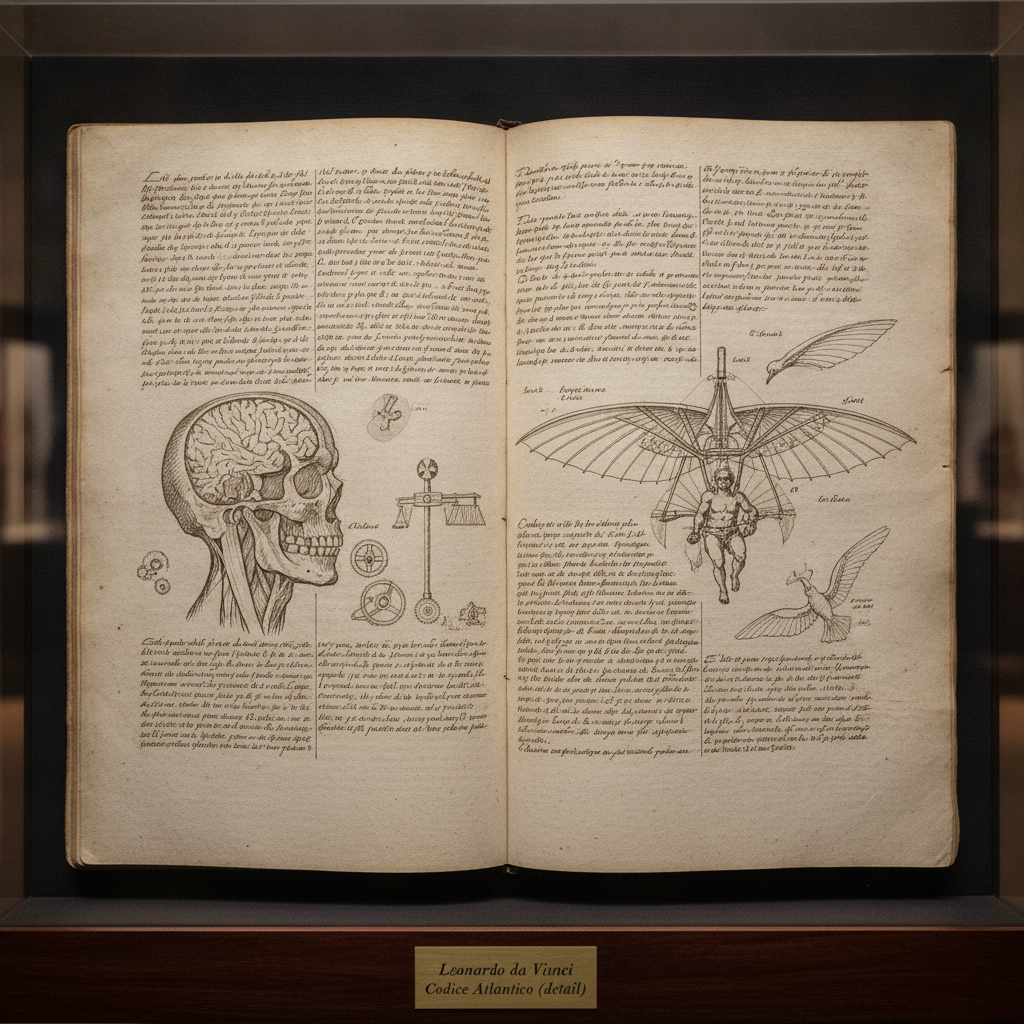
The area immediately east of the Uffizi and Piazza della Signoria — the stretch from the Museo Galileo (Italy's national science museum) south along the Arno to the Sant'Ambrogio quarter — contains some of the most important but least-visited institutions in Florence: the Museo Galileo (with Galileo's original telescopes and instruments), the Florentine Synagogue and Jewish Museum, and the daily food market of Sant'Ambrogio.
The Uffizi Gallery, Ponte Vecchio & Piazzale Michelangelo
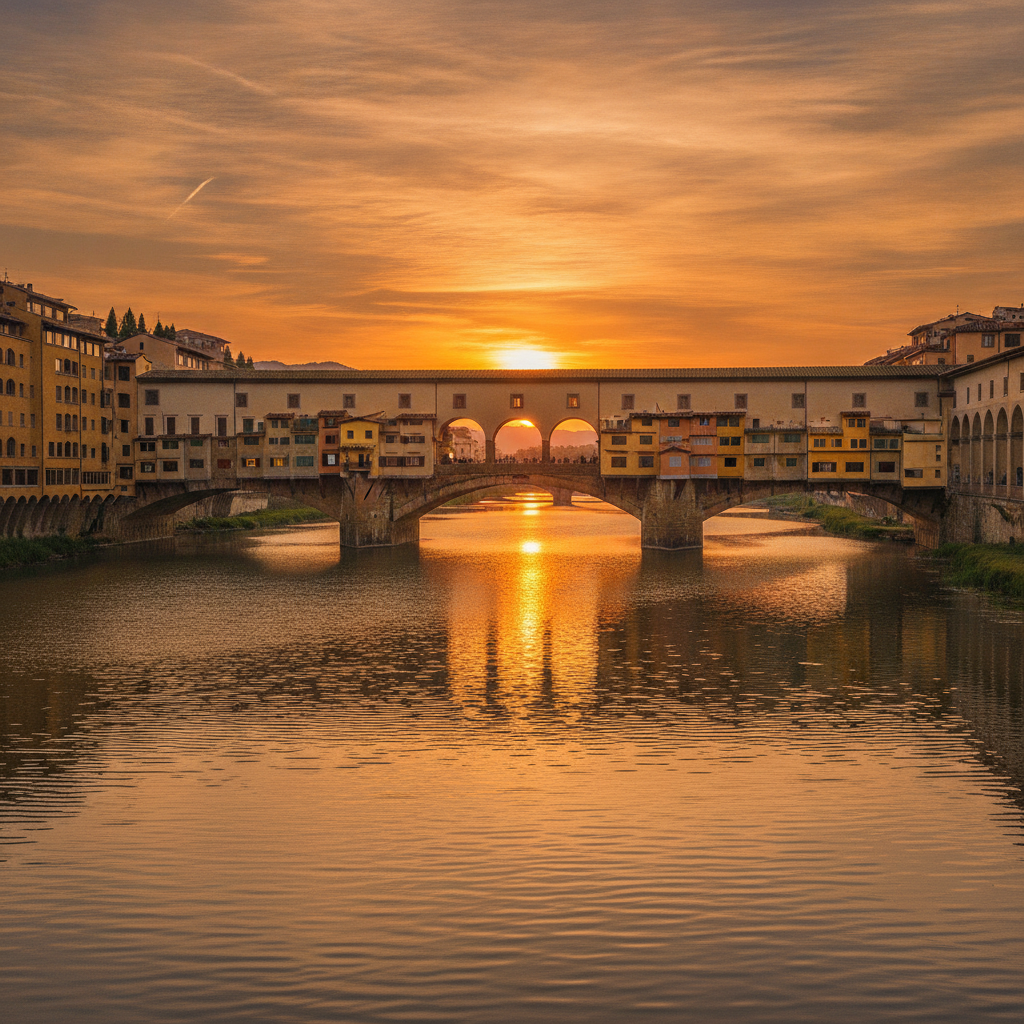
The arc from the Uffizi to Piazzale Michelangelo traces the two banks of the Arno River through Florence's most celebrated art and architectural corridor: the Galleria degli Uffizi (the most important collection of Italian Renaissance painting in the world, housed in Giorgio Vasari's 1560 administrative building for the Medici), the Ponte Vecchio (the medieval bridge of goldsmiths and jewellers dating in its current form to 1345), and the Piazzale Michelangelo (the panoramic terrace on the Oltrarno hillside above the city offering the most celebrated view of the Florentine skyline).
Santa Croce, the Medici Chapels & San Miniato al Monte
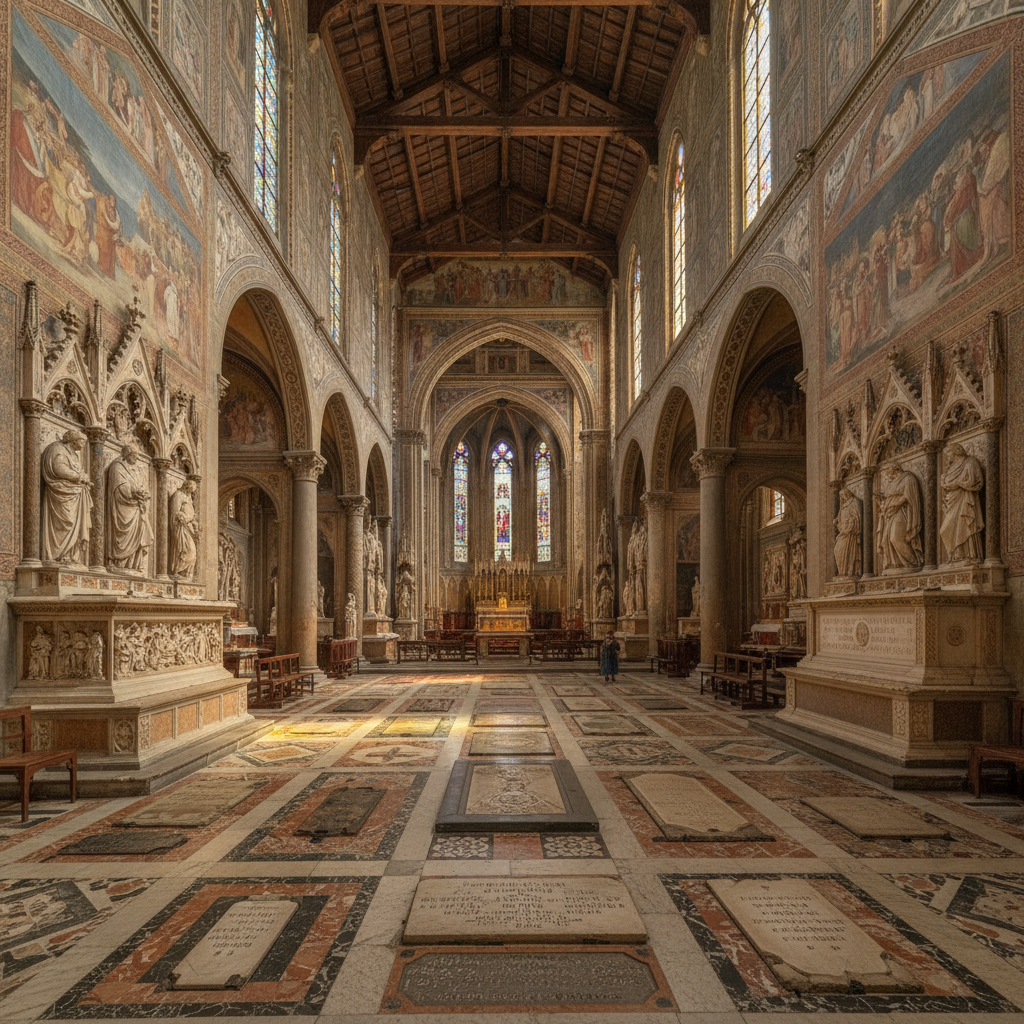
The eastern quarter of Florence's historic centre is anchored by Santa Croce — the Franciscan basilica that serves as Florence's principal monument to its own cultural legacy, containing the tombs of Michelangelo, Galileo, Machiavelli, Ghiberti and Rossini, and frescoes by Giotto — while the northern quarter contains the Medici Chapels (the funerary complex of the ruling dynasty, including Michelangelo's New Sacristy) and the southern hilltop contains the Romanesque gem of San Miniato al Monte.
Palazzo Vecchio, Piazza della Signoria & the Bargello
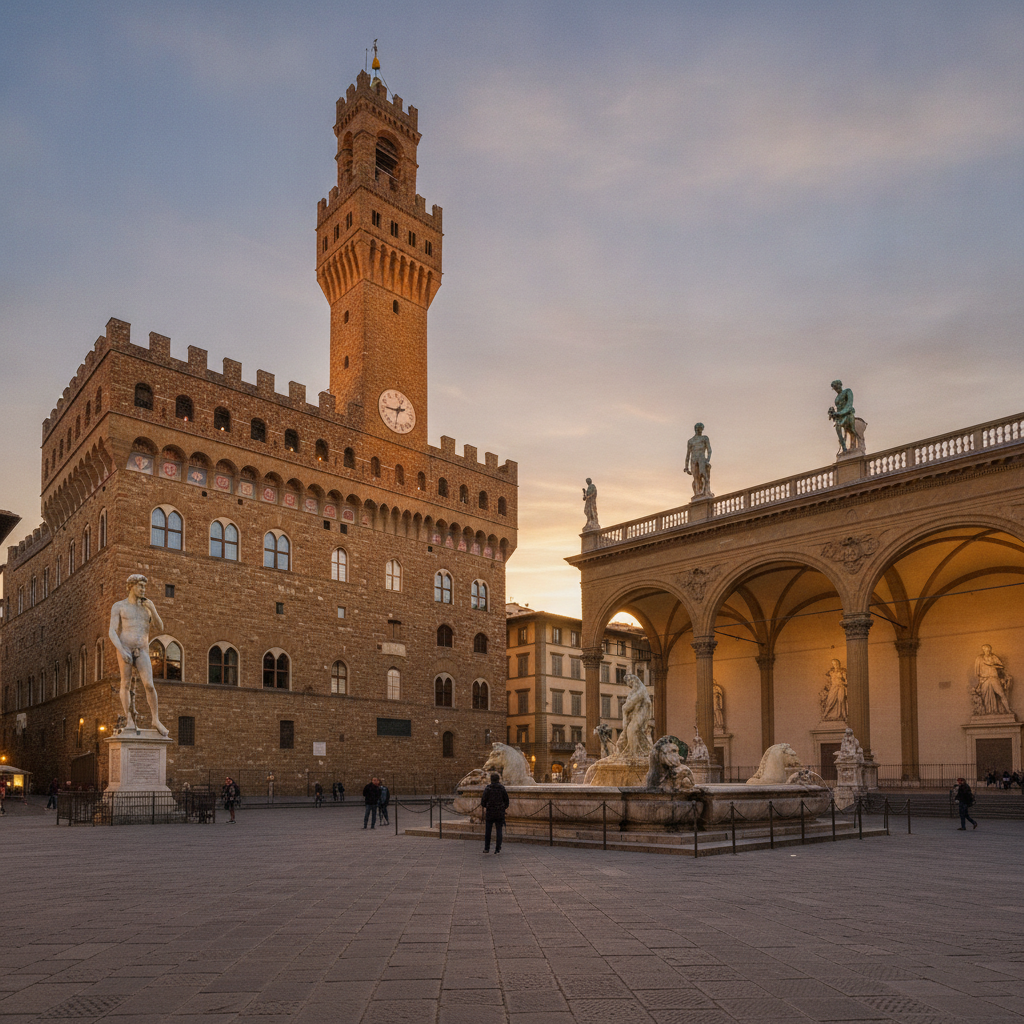
The Piazza della Signoria — the principal civic square of Florence, site of the medieval communal government and still the political and ceremonial heart of the city — is surrounded by the three most important civic monuments of medieval and Renaissance Florence: the Palazzo Vecchio (the 13th-14th century seat of Florentine government, still functioning as the city's town hall), the Loggia dei Lanzi (the 14th-century open-air sculpture gallery containing Cellini's 'Perseus' and Giambologna's 'Rape of the Sabine Women'), and the Bargello (the 13th-century civic palace that houses Florence's most important collection of Renaissance sculpture).