The Duomo, Baptistery & Giotto's Campanile — Piazza del Duomo
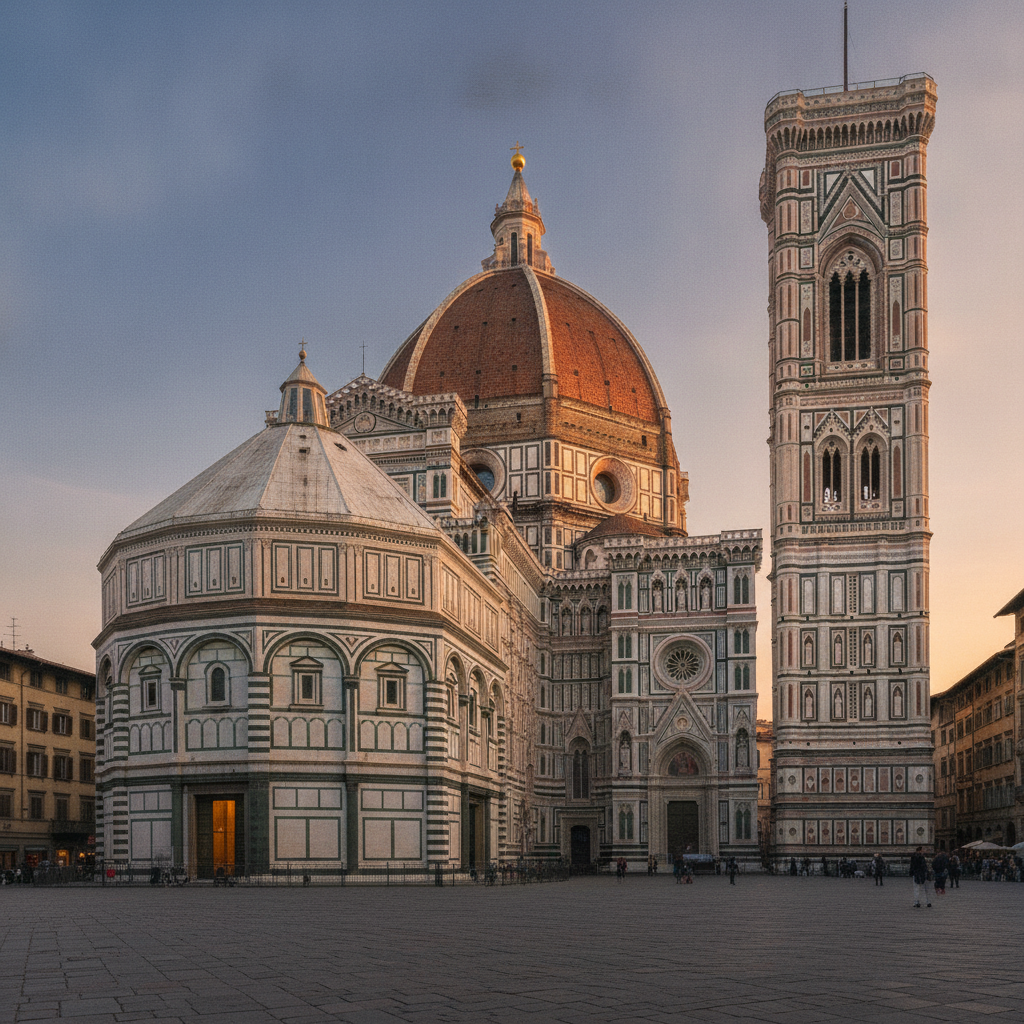
The Piazza del Duomo — the cathedral square of Florence, containing the three great monuments of medieval Florentine civic and religious architecture — is the physical and spiritual centre of the city and the ensemble that more than any other defines the visual identity of Florence: the Cathedral of Santa Maria del Fiore with Brunelleschi's dome (the largest masonry dome ever constructed, spanning 44 metres and rising 91 metres above the cathedral floor), the Baptistery of San Giovanni (one of the oldest buildings in Florence, dating in its current form to the 11th-12th centuries and containing Lorenzo Ghiberti's 'Gates of Paradise'), and Giotto's Campanile (the freestanding bell tower begun by Giotto di Bondone in 1334 and completed after his death by Andrea Pisano and Francesco Talenti).
- 1
Santa Maria del Fiore — The Cathedral Exterior
The Cathedral of Santa Maria del Fiore (construction begun 1296 by Arnolfo di Cambio, nave completed 1380s, dome added 1420-1436 by Filippo Brunelleschi, facade completed 1887 by Emilio De Fabris in Neo-Gothic style reusing the original green serpentine, white Carrara, and pink Maremma marble palette of the 14th-century design): the cathedral is the third-largest in the world by floor area (after Saint Peter's in Rome and St Paul's Cathedral in London) and the defining monument of 15th-century Florentine artistic ambition; the exterior polychrome marble facade — combining white Carrara marble, green serpentine from Prato, and pink marble from the Maremma — establishes the chromatic language of Florentine Gothic religious architecture that is repeated in Giotto's Campanile, the Baptistery, and the church of San Miniato al Monte; the cathedral's south flank (the left side as viewed from the Baptistery) contains the 14th-century Porta dei Canonici and the 'Mandorla Door' (1391-1422) with its marble relief of the Assumption of the Virgin by Nanni di Banco.
- 2
Brunelleschi's Dome — The Engineering Marvel of the Renaissance
The Cupola di Brunelleschi (designed and constructed by Filippo Brunelleschi between 1420 and 1436, with the lantern added 1446-1461 after Brunelleschi's death in 1446): the dome is the largest masonry dome in the world, spanning 44 metres at its base and rising to a total height of 116 metres from street level to the top of the lantern; it was constructed without the traditional wooden centering (the temporary framework normally used to support masonry during construction) through a revolutionary double-shell design in which two interlocking brick shells (outer and inner) provide mutual support during construction; the dome contains 4 million bricks laid in a herringbone (a spina di pesce) bonding pattern that Brunelleschi derived from his study of ancient Roman vaulting; the interior of the inner dome is decorated with Giorgio Vasari and Federico Zuccari's fresco of the 'Last Judgment' (1572-1579), visible from the cathedral floor 55 metres below; climbing the 463 steps to the lantern provides the most celebrated panoramic view of Florence.
- 3
Baptistery of San Giovanni — The Gates of Paradise
The Battistero di San Giovanni (the octagonal Baptistery of St John, dating in its current form to the 11th-12th centuries, though the site has been used for Christian worship since at least the 4th-5th centuries and was traditionally believed by Florentines — incorrectly — to have been a Roman temple of Mars): the Baptistery is one of the oldest and most revered buildings in Florence and the site where Dante, Petrarch, and every notable Florentine citizen of the medieval period was baptized; it is best known for its three sets of gilded bronze doors: the south doors (1336) and north doors (1403-1424) by Lorenzo Ghiberti, and most famously the east doors facing the cathedral (1425-1452) by Lorenzo Ghiberti, which Michelangelo reportedly called 'the Gates of Paradise' (Porte del Paradiso) — the east doors' ten gilded panels depicting Old Testament scenes in shallow relief (rilievo schiacciato) represent one of the founding achievements of Renaissance pictorial art; the original panels are in the Museo dell'Opera del Duomo, replaced by high-quality copies.
- 4
Giotto's Campanile — The Gothic Bell Tower
The Campanile di Giotto (begun 1334 by Giotto di Bondone, continued after his death in 1337 by Andrea Pisano 1337-1341, completed by Francesco Talenti 1348-1359): the freestanding bell tower adjacent to the cathedral south flank is one of the finest examples of Italian Gothic architecture, clad in the same white, green and pink marble as the cathedral and Baptistery but arranged in a more geometric pattern of hexagonal and diamond reliefs at the base; the tower is 84.7 metres tall with 414 steps to the top; the original marble reliefs decorating the hexagonal base panels (depicting the Works of Man — the arts, industries and sciences, following a programme designed by Giotto) are preserved in the Museo dell'Opera del Duomo (replaced by copies on the tower); the views from the top of the Campanile offer a distinctive perspective on Brunelleschi's dome from close range, revealing the drum and lantern at approximately the same height.
- 5
Museo dell'Opera del Duomo — The Cathedral Works Museum
The Museo dell'Opera del Duomo (the Cathedral Works Museum, Piazza del Duomo 9, admission included with the combined Duomo ticket which also covers the dome climb, Campanile, Baptistery, and Santa Reparata crypt): the museum houses the most important collection of medieval and Renaissance sculpture associated with the Duomo complex, assembled since the 14th century when the Cathedral Works department (Opera di Santa Maria del Fiore) began storing works removed from the buildings for preservation; the highlights include: Michelangelo's 'Pietà' (c.1547-1553, also known as the Bandini Pietà or the Florentine Pietà — the late work the artist intended for his own tomb and subsequently damaged by him in frustration before being restored by Tiberio Calcagni); Donatello's harrowing wooden 'Mary Magdalene' (c.1453-1455); the original gilded bronze panels of Ghiberti's 'Gates of Paradise'; and the two marble choir lofts (cantorie) by Luca della Robbia (1431-1438) and Donatello (1433-1439), presented face-to-face in the museum's magnificent central hall.
- 6
Santa Reparata Crypt & Brunelleschi's Tomb
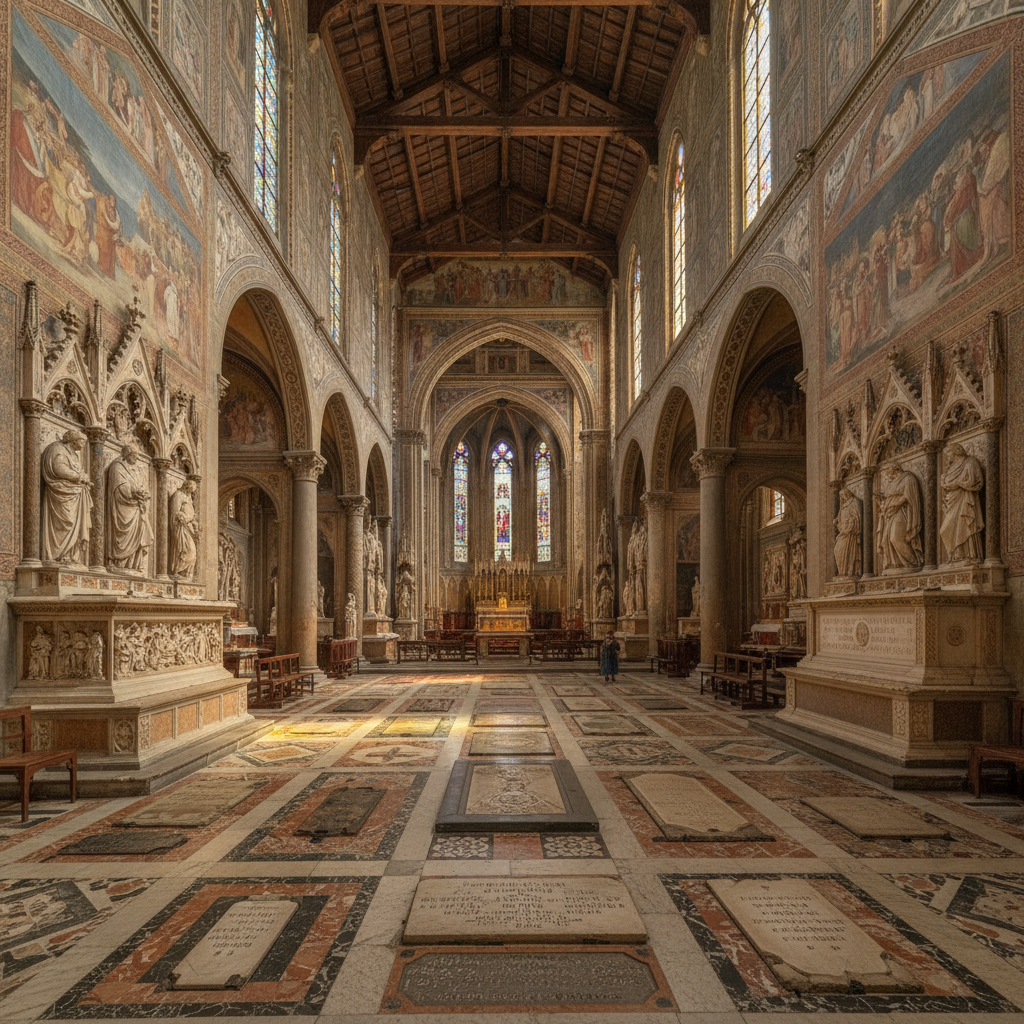
The Cripta di Santa Reparata (the excavated remains of the earlier cathedral of Florence, Santa Reparata, beneath the floor of the current cathedral of Santa Maria del Fiore, accessible via a stairway from inside the cathedral and included in the combined Duomo ticket): the excavations conducted in 1965-1974 revealed the remains of the earlier cathedral (4th-14th centuries) built on the site of a Roman-era building; the crypt contains the tomb of Filippo Brunelleschi — an extraordinary distinction, as Brunelleschi (1377-1446) was buried inside the cathedral itself in recognition of his incomparable achievement in constructing the dome; the tomb was discovered in 1972 during the excavations and confirmed by analysis of the remains; the crypt also preserves a remarkable series of mosaic floors from successive phases of the earlier church, ranging from late Roman to medieval periods.
Walk this route with audio
Stories play automatically as you reach each stop — no tapping needed.
More in florence
Santa Maria Novella, Via Tornabuoni & Ghirlandaio's Florence
Fiesole, the Chianti Hills & the Tuscan Countryside above Florence
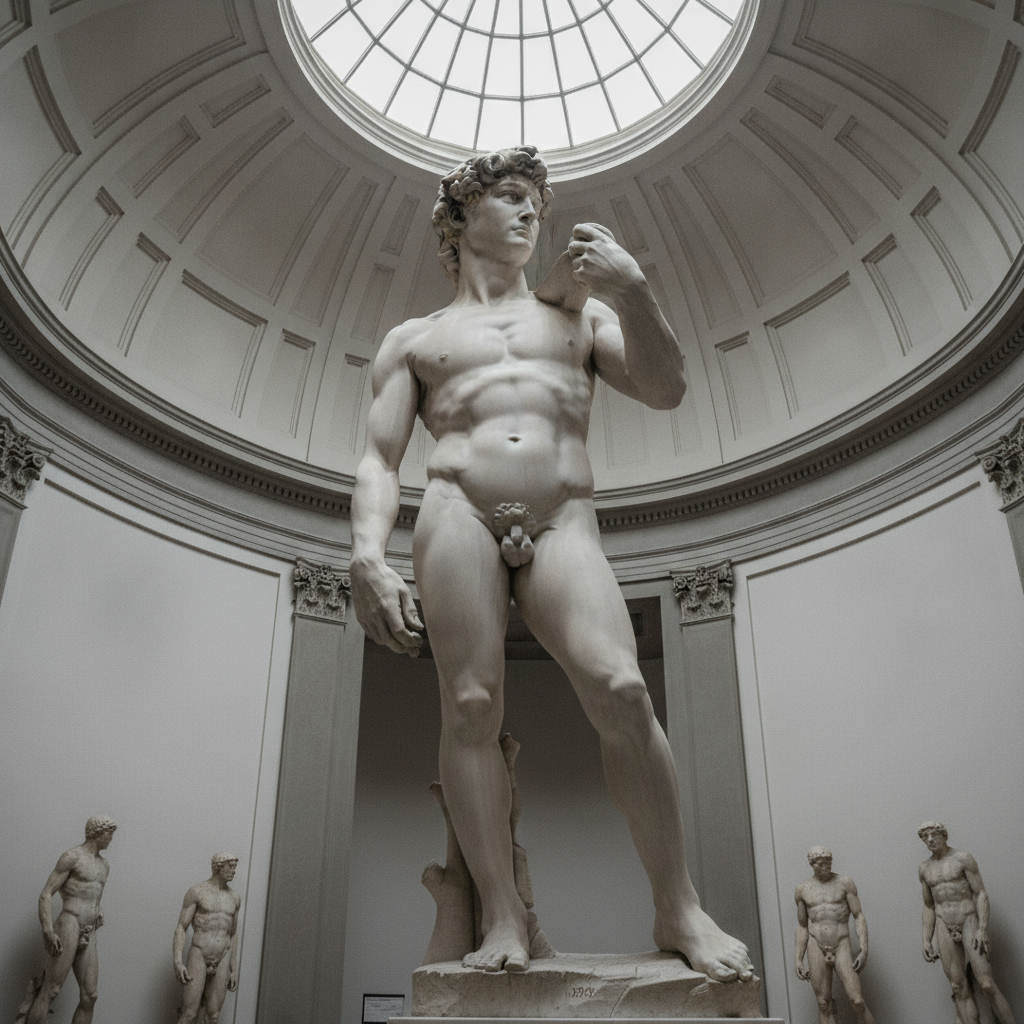
Galleria dell'Accademia, Michelangelo's David & the Convent of San Marco
Museo Galileo, the Florentine Jewish Ghetto & the Via dei Benci
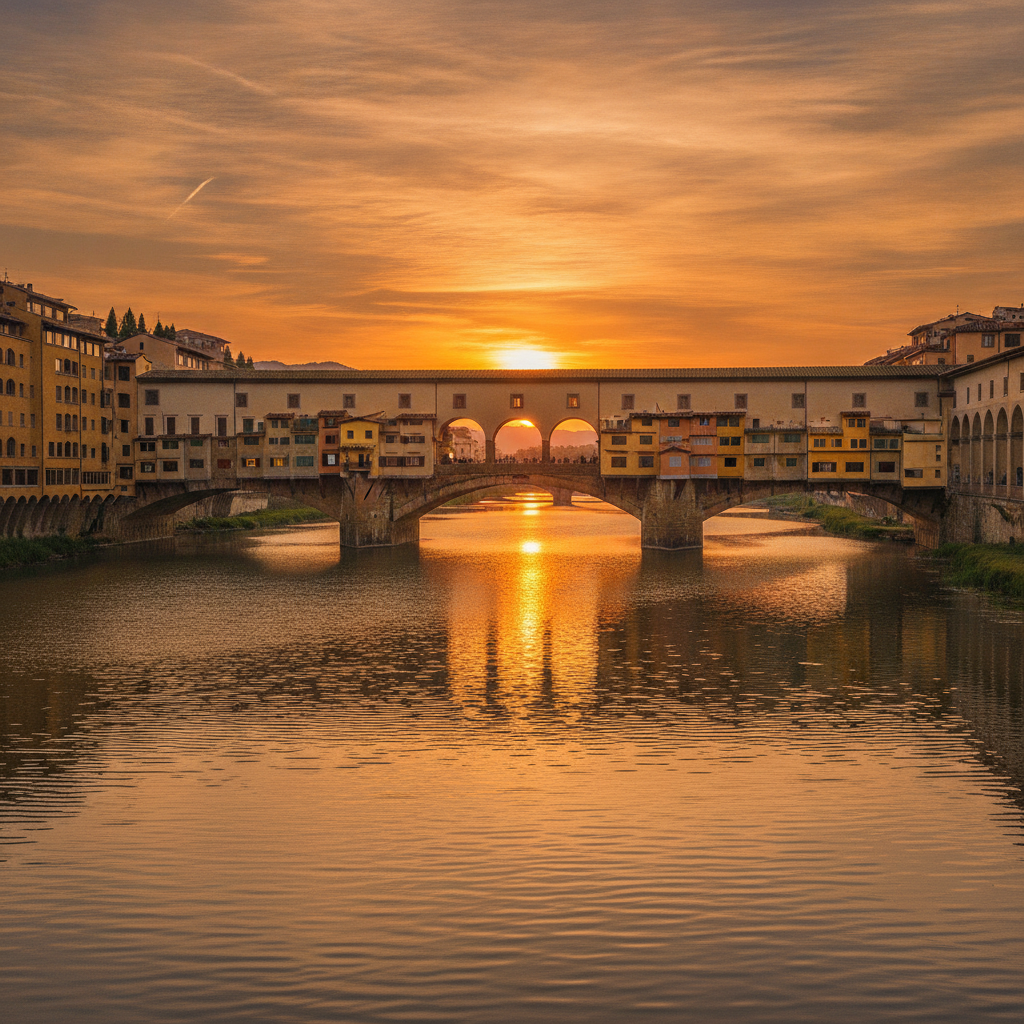
The Uffizi Gallery, Ponte Vecchio & Piazzale Michelangelo