Galleria dell'Accademia, Michelangelo's David & the Convent of San Marco
The northern quarter of historic Florence, centred on the Via Ricasoli axis running north from the Duomo, contains two of the most important single artistic sites in the world: the Galleria dell'Accademia (housing Michelangelo's original 'David', the most famous sculpture in existence, along with his four unfinished 'Prisoners' and the 'St Matthew') and the Convent of San Marco (the 15th-century Dominican convent where Fra Angelico painted the cells and common spaces with the most important cycle of devotional fresco painting of the early Renaissance, and where Savonarola served as prior).
1. Galleria dell'Accademia — Michelangelo's David
- 1
Galleria dell'Accademia — Michelangelo's David
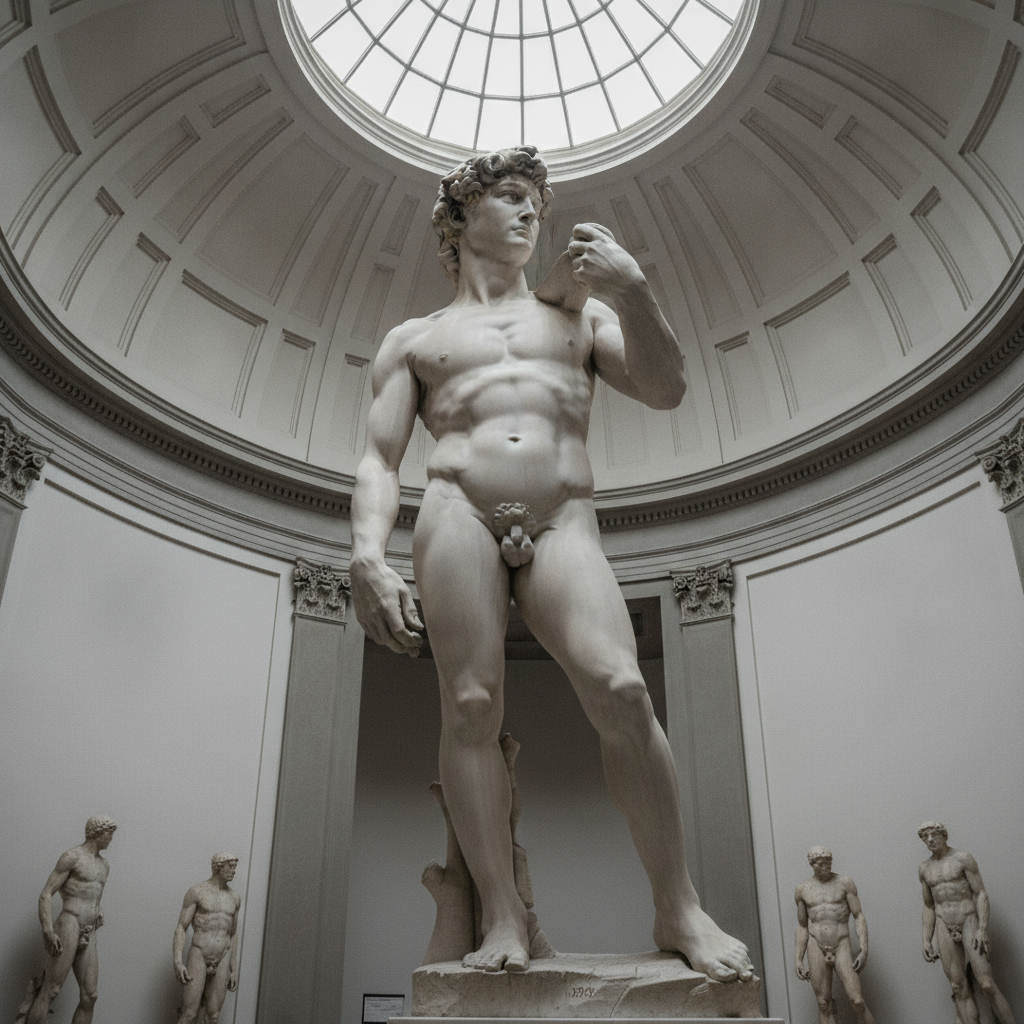
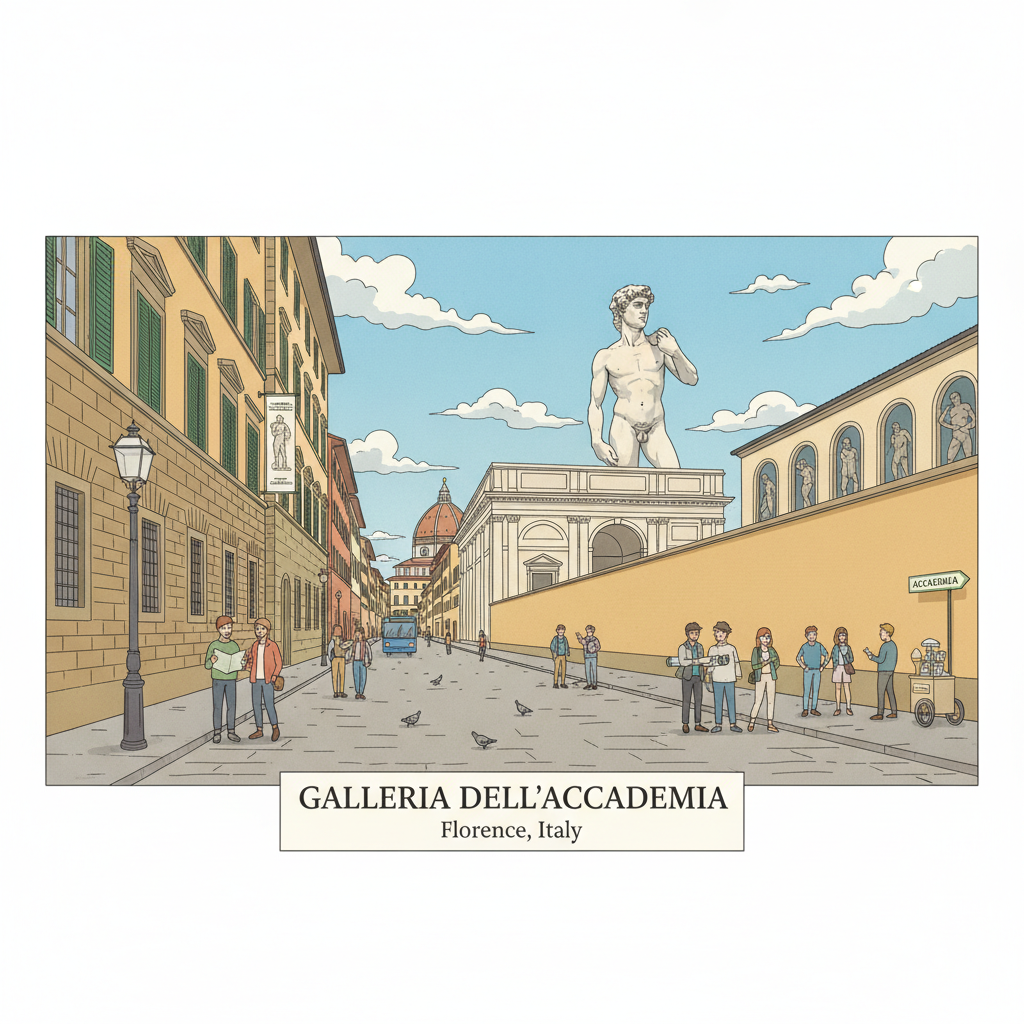
The Galleria dell'Accademia (Via Ricasoli 58-60, originally founded as a teaching collection for students of the Accademia di Belle Arti in 1784, with Michelangelo's 'David' transferred here from the Piazza della Signoria in 1873 and the rotunda (Tribune) specially constructed to house it): the museum is dominated entirely by one work — Michelangelo's 'David' (1501-1504, Carrara marble, 5.17 metres tall, commissioned by the Opera del Duomo as one of a series of prophet figures for the Cathedral but never installed there, instead placed in the Piazza della Signoria in 1504 where it served as a symbol of Florentine republican liberty); the 'David' is one of the two or three most famous individual artworks in existence (alongside the Mona Lisa and the Sistine Chapel ceiling) and seeing the original after a lifetime of photographic reproduction is consistently one of the most viscerally affecting art experiences available to any visitor; the museum also contains Michelangelo's four 'Prisoners' (Prigioni, c.1519-1534 — unfinished figures intended for the tomb of Pope Julius II in Rome, where the figures of men apparently struggling to emerge from the marble have been interpreted as emblems of the soul's struggle to free itself from matter) and the 'St Matthew' (1505-1506, also unfinished, also intended for the Cathedral).
- 2
Piazza della Santissima Annunziata — The Renaissance Square
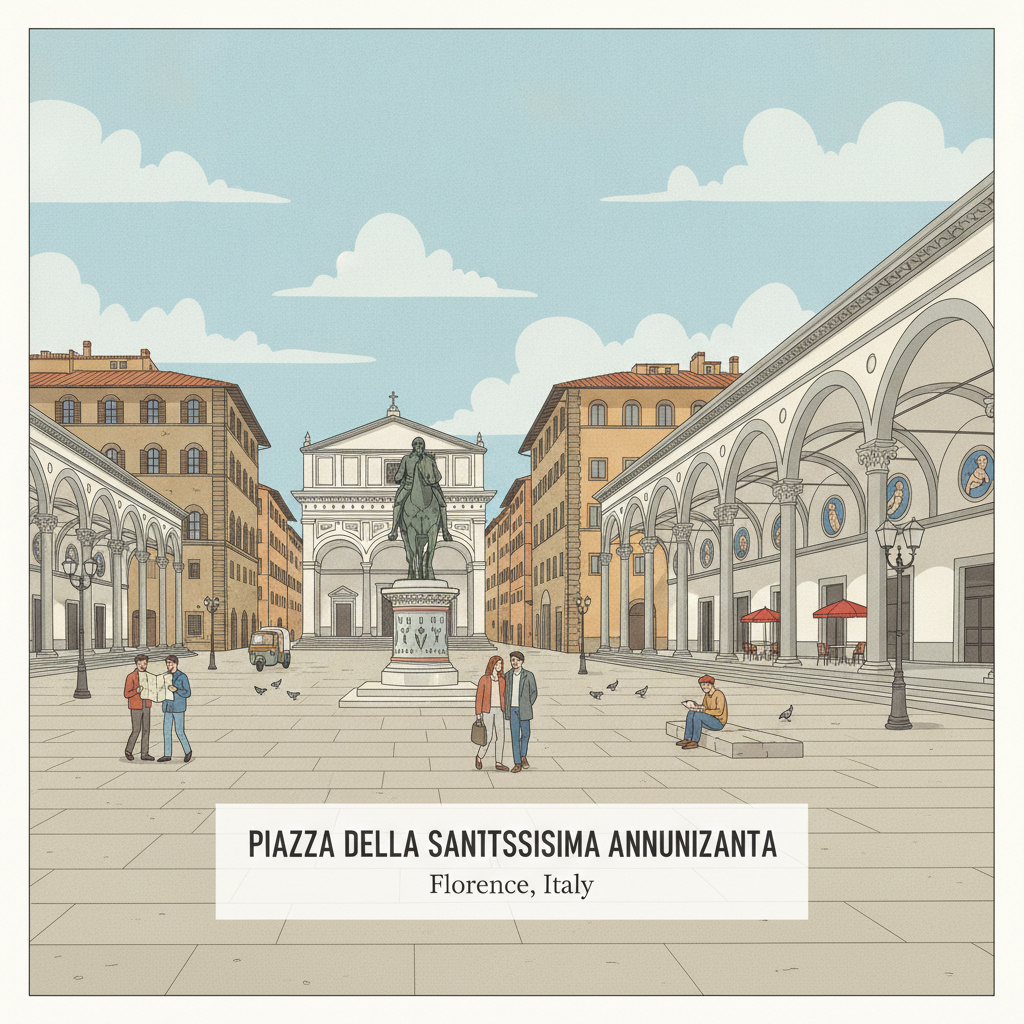
The Piazza della Santissima Annunziata (the square immediately north of the Galleria dell'Accademia, approximately 200 metres along Via Ricasoli): the piazza is widely considered the most harmonious and complete Renaissance urban square in Florence and arguably in Italy — its three sides are defined by three loggie of comparable scale and character: the Loggia dei Servi di Maria (1516-1525, built to complement the Ospedale degli Innocenti opposite), the Loggia dell'Ospedale degli Innocenti (1419-1427, the first building by Brunelleschi in which he developed his revolutionary new architectural vocabulary of thin Corinthian columns, arched bays and pale grey pietra serena articulation against white plaster — the founding work of Renaissance architecture), and the Loggia of the Santissima Annunziata church; the centre of the square contains an equestrian statue of Grand Duke Ferdinando I de' Medici by Giambologna (1608).
- 3
Ospedale degli Innocenti — Brunelleschi's Foundling Hospital & the Innocenti Museum
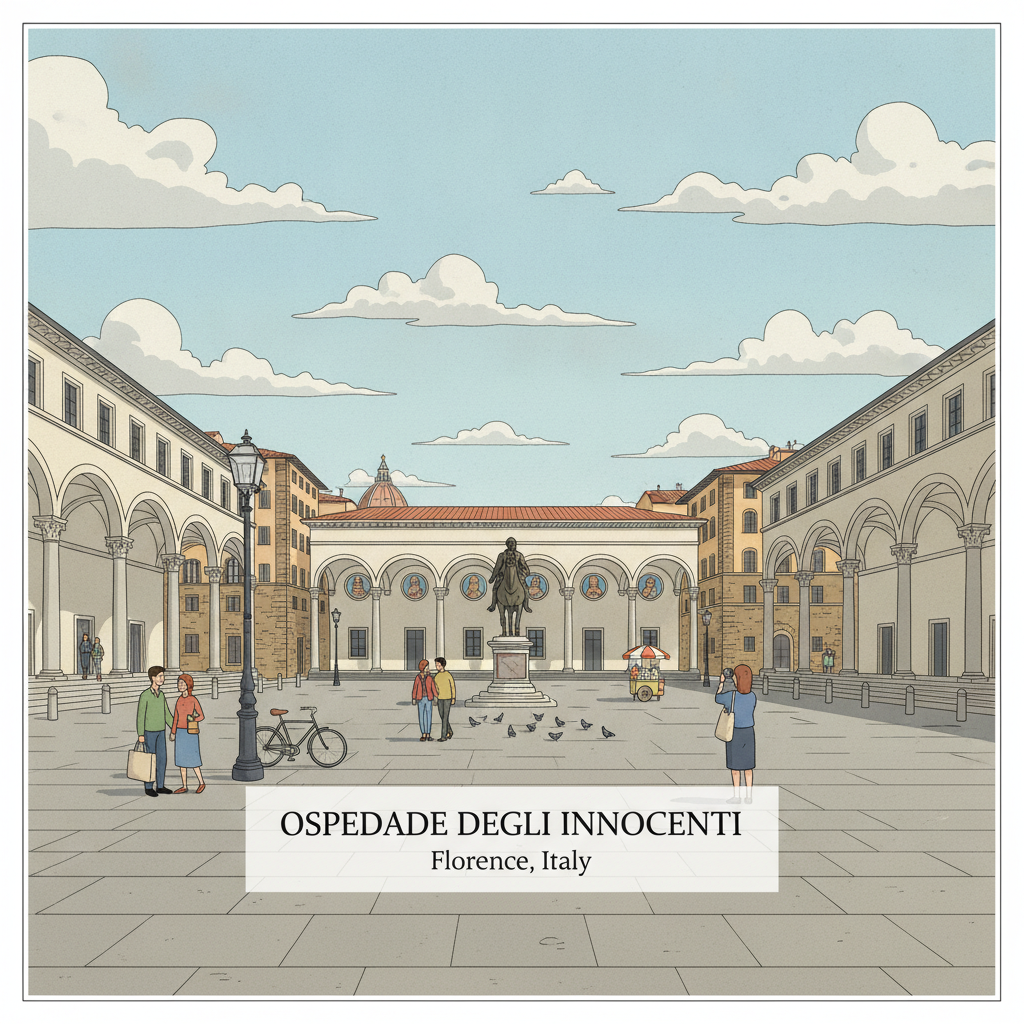
The Spedale degli Innocenti (the Foundling Hospital of the Innocents, Piazza della Santissima Annunziata 12, built 1419-1445 to the design of Filippo Brunelleschi as Europe's first purpose-built orphanage commissioned by the Arte della Seta (Silk Guild) of Florence — the nine-bay loggia with its Corinthian columns, arched bays and terracotta roundels of swaddled infants by Andrea della Robbia (c.1487) is the most influential single building of 15th-century Italy, establishing the architectural vocabulary of the Early Renaissance and providing the template for virtually all subsequent Renaissance civic building; the Innocenti Museum inside the building presents the history of the foundling hospital (which operated continuously from 1445 until 1875 when the institution was reformed as a modern orphanage) and contains an important collection of Renaissance art including Domenico Ghirlandaio's 'Adoration of the Magi' (1488) and a painting room of works associated with the hospital.
- 4
Convento di San Marco — Fra Angelico's Cell Frescoes
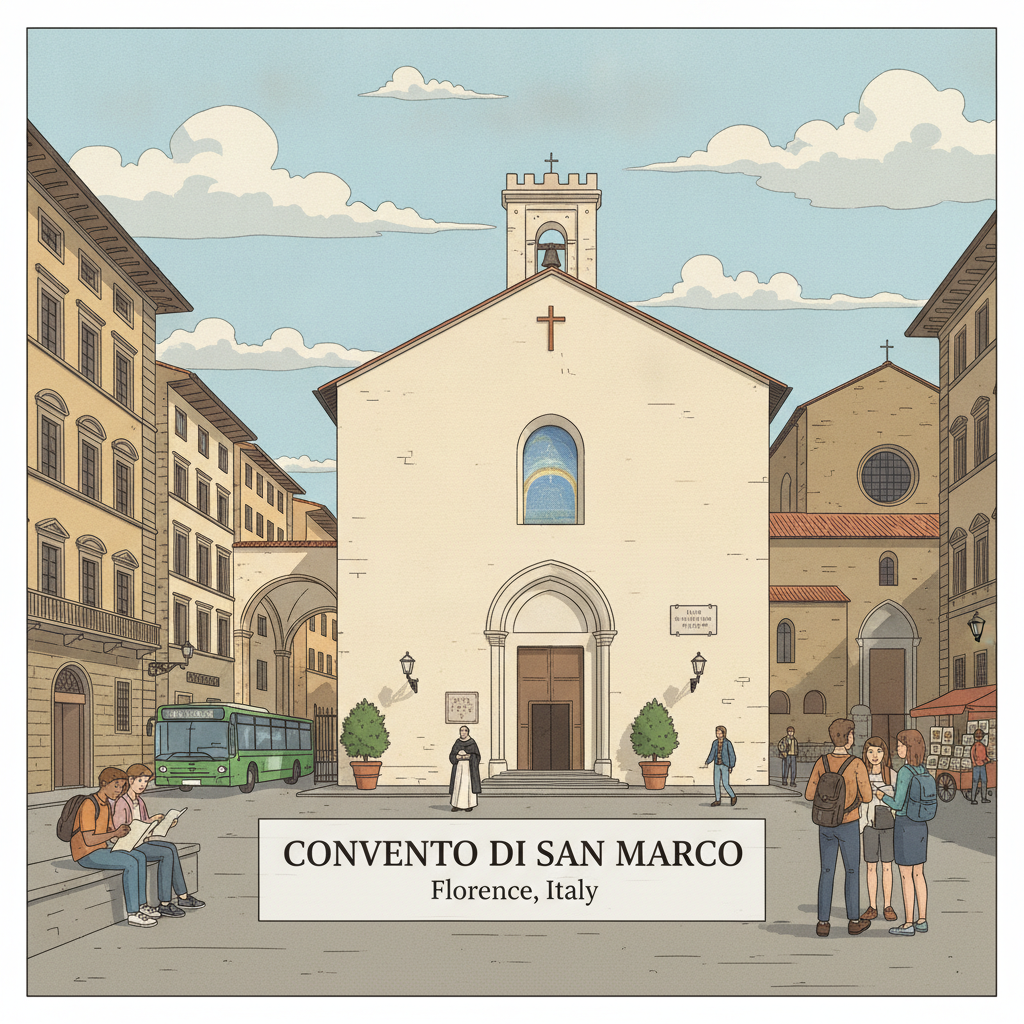
The Convento di San Marco (Piazza San Marco 3, the Dominican convent established in 1436 under the patronage of Cosimo de' Medici the Elder and decorated between 1438 and 1445 by Fra Giovanni da Fiesole, known as Fra Angelico (c.1395-1455): the convent is preserved as the Museo Nazionale di San Marco and is the finest surviving example of Fra Angelico's work in a complete architectural setting — the artist decorated the chapter house (with the 'Crucifixion with Saints' fresco), the corridors of the upper floor, and each of the approximately 44 individual monks' cells with devotional frescoes intended to assist the monks' private prayer; the cell frescoes are remarkably intimate in scale and contemplative in character — the most famous is the 'Annunciation' at the top of the stairs to the dormitory, a work of such luminous simplicity and spiritual intensity that it has been considered among the greatest paintings in European art since its creation; the convent also preserves the original cells of Savonarola and Fra Angelico himself, and the library designed by Michelozzo (1441-1444) for Cosimo de' Medici's collection.
- 5
Piazza San Marco & the Accademia di Belle Arti
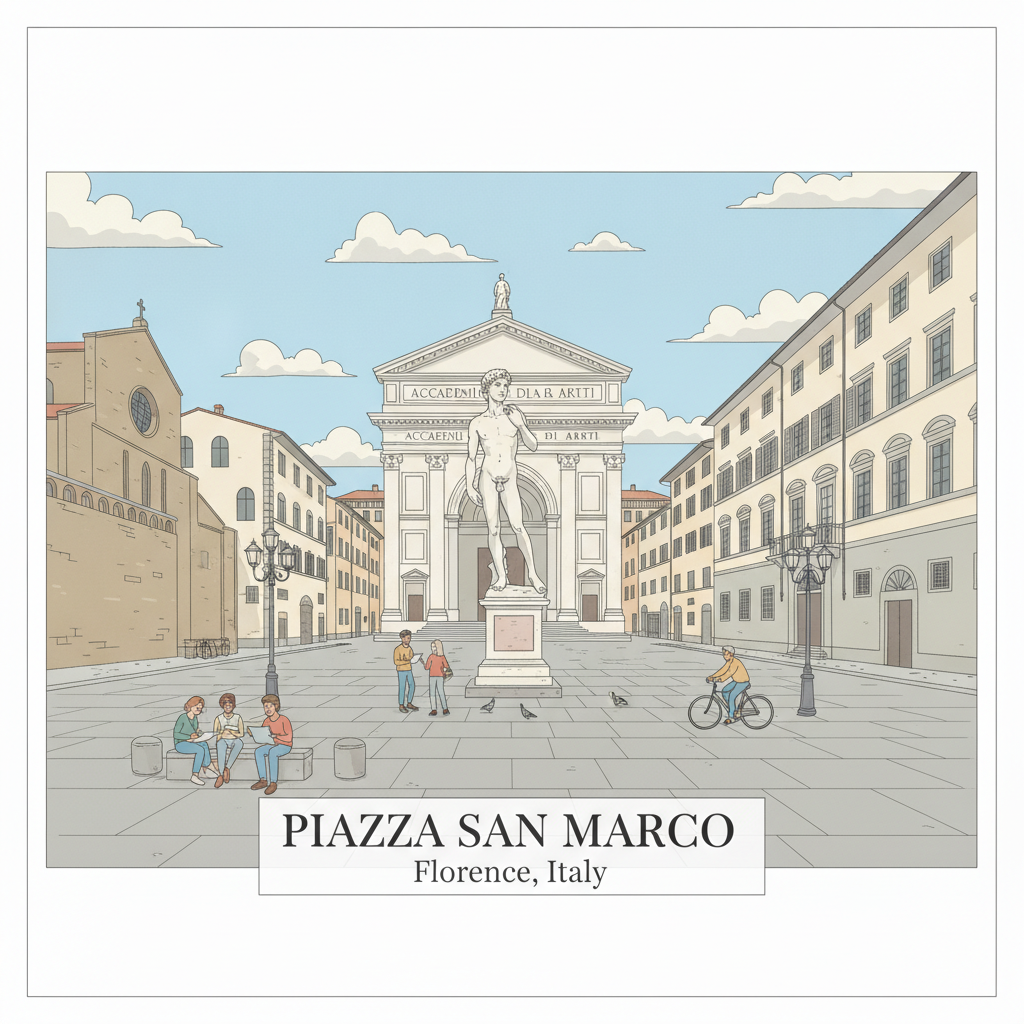
The Piazza San Marco (the large square in the northern quarter of the historic city, dominated by the facade of the church of San Marco and the adjacent Accademia di Belle Arti): the Accademia di Belle Arti (the Academy of Fine Arts, the institution from which the Galleria dell'Accademia was formed in 1784, still operating as one of the oldest art schools in Italy) occupies the buildings around the square; the cast of the 'David' standing outside the Accademia (placed there in 1910 to mark the location of the original before its transfer to the gallery) provides a useful orientation point and an opportunity to see the sculpture in the outdoor, eye-level context for which it was originally designed — Michelangelo designed the 'David' to be seen from below and at a distance in the open Piazza della Signoria, so the proportions (the oversized head and hands) are calculated for viewing from street level looking upward, which is apparent when seen at eye level outdoors.
- 6
Via Ricasoli — Florence's Art Corridor
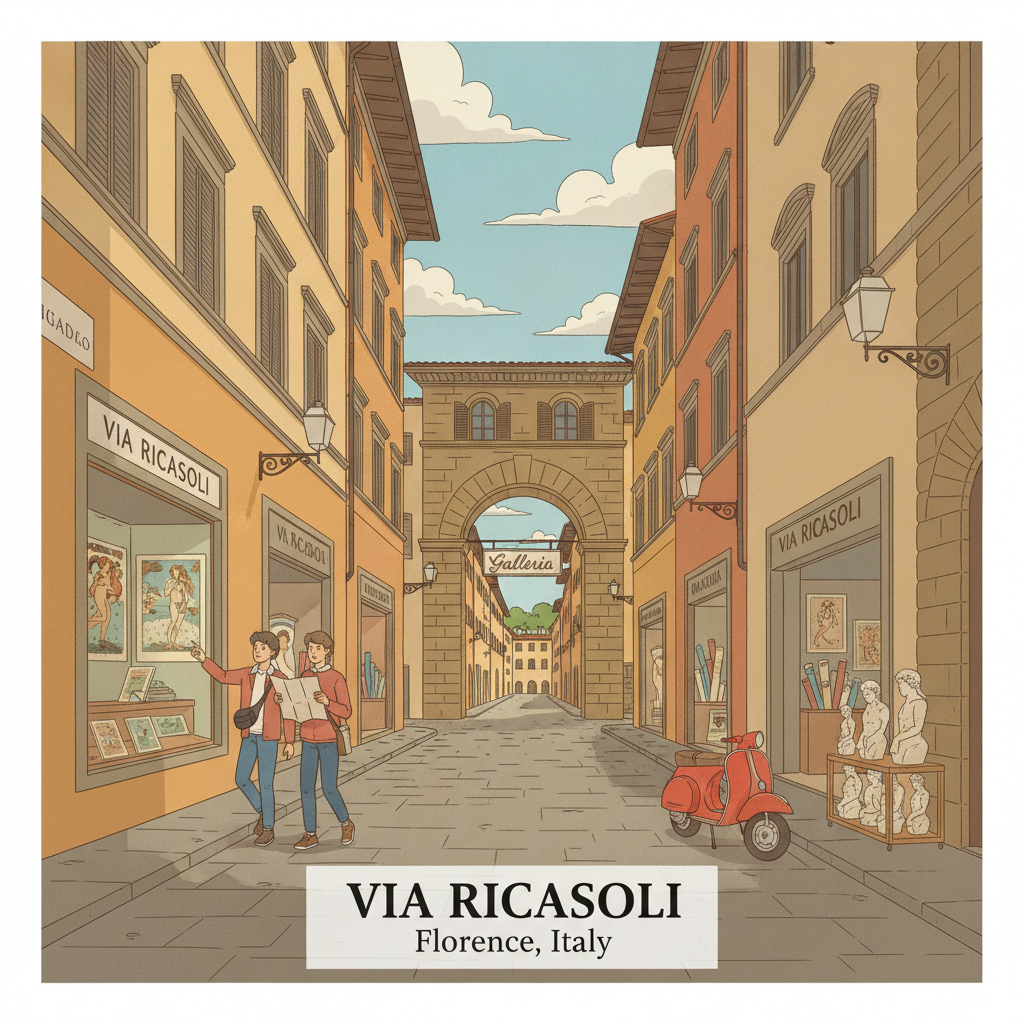
Via Ricasoli (the straight street running north from the Via de' Servi (behind the Duomo) to the Piazza San Marco, approximately 500 metres long, named after Baron Bettino Ricasoli the 19th-century statesman and second Prime Minister of unified Italy): the street is the principal art corridor of northern Florence, lined with the art studios, gallery shops, and reproduction print dealers characteristic of the area around the two major art institutions (the Accademia and the Museo di San Marco); at its northern end it opens into the Piazza San Marco; midway along its length, at No. 58-60, is the main entrance to the Galleria dell'Accademia; the street is particularly characteristic of the area behind the Duomo that has served as the artistic and intellectual quarter of Florence since the 15th century.
Walk this route with audio
Stories play automatically as you reach each stop — no tapping needed.
More in florence
Santa Maria Novella, Via Tornabuoni & Ghirlandaio's Florence
The Duomo, Baptistery & Giotto's Campanile — Piazza del Duomo
Fiesole, the Chianti Hills & the Tuscan Countryside above Florence
Museo Galileo, the Florentine Jewish Ghetto & the Via dei Benci
The Uffizi Gallery, Ponte Vecchio & Piazzale Michelangelo