The 42 Hotels Demolished to Protect a UNESCO Site, the 19-Meter Stalagmite in the Yellow Dragon Cave & the Complete Zhangjiajie Circuit for Under USD 100
The Chinese government's demolition of 42 hotels inside the Wulingyuan core zone as the largest heritage-protection demolition in Chinese history; the Yellow Dragon Cave's 19.2m-tall 'Oriental Stone Bamboo' stalagmite; the Aizhai Bridge's 355m deck-to-ground height as the world's highest highway bridge; the Wulong Natural Three Bridges as the world's most spectacular natural arch sequence; the Suoxiyu Valley's Shentang Bay restricted gorge as the most technically challenging Zhangjiajie hiking; and the 3-day Zhangjiajie visit for approximately USD 100 total.
- 1
The Wulingyuan World Heritage Site – Conservation
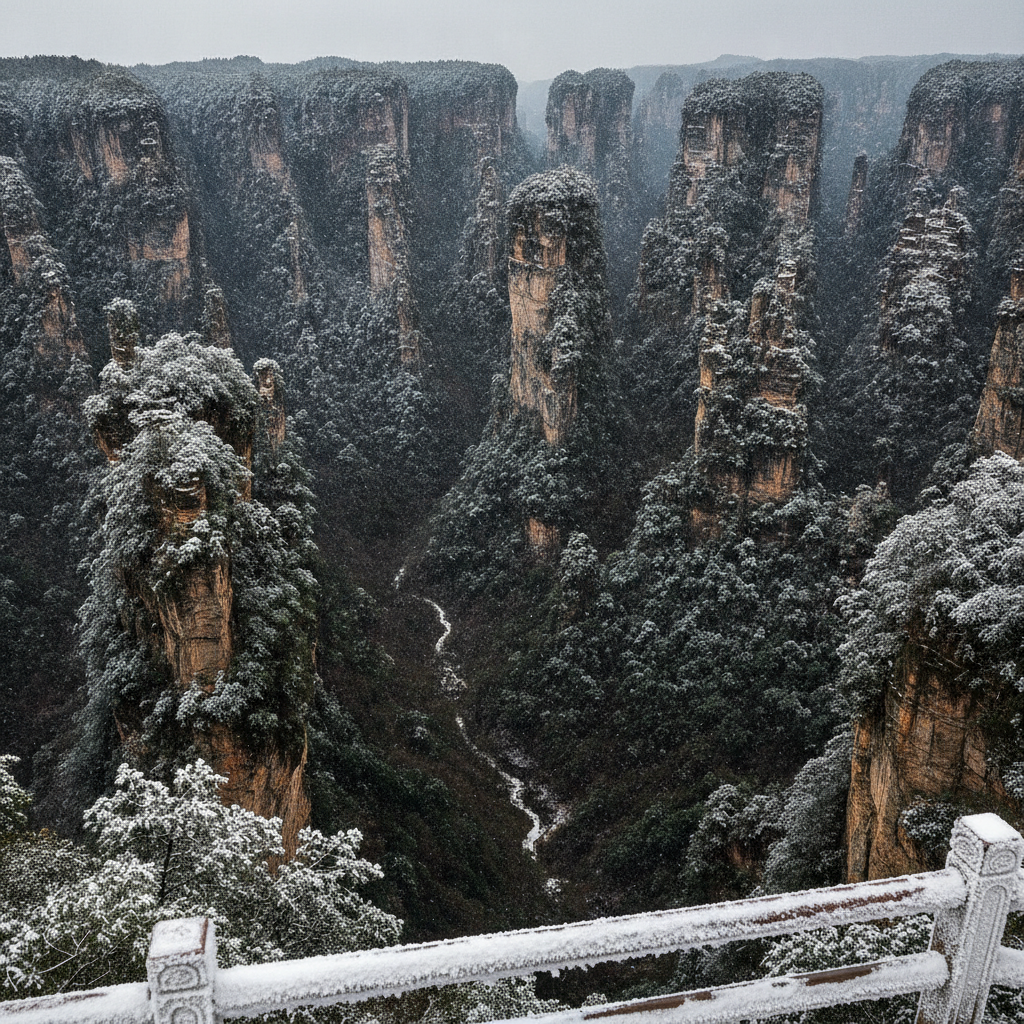
The Wulingyuan Scenic and Historic Interest Area (武陵源风景名胜区—UNESCO World Heritage Site, inscribed 1992): the conservation story of the landscape that became China's most internationally famous natural site. The UNESCO inscription (the Wulingyuan area was inscribed in 1992 as a World Heritage Natural Site for its 'outstanding universal value' under criteria (iii) and (iv)—the geological and aesthetic criteria): the committee description ('an area of superlative natural beauty...due to the unique geological features of sandstone pillar formations'—the most frequently cited geological UNESCO inscription in China). The early conservation (the Zhangjiajie National Forest Park was the first national forest park established in China (1982)—the designation was specifically to protect the sandstone pillar ecosystem from logging and agriculture that had already cleared the valley floors). The overtourism challenge (the Wulingyuan area received 46 million visitor-days in 2019 (pre-COVID peak)—the UNESCO monitoring committee issued a formal warning in 2007 that hotel and visitor facility construction within the World Heritage zone was threatening the Outstanding Universal Value (OUV): the response (the Chinese government demolished 42 hotels and other structures inside the core protection zone between 2007 and 2012—the largest heritage-protection demolition of tourism infrastructure in Chinese history).
- 2
Zhangjiajie's Accommodation – Valley to Summit
The Zhangjiajie accommodation guide (the hotels and guesthouses across the price spectrum and the strategy for choosing where to sleep within reach of the park). The Wulinhuyuan town guesthouses (the town immediately adjacent to the park main entrance): the budget guesthouses (¥80–200/night—the most economical option for multiple days in the park, with the walking-distance access to the Wulinhuyuan gate and the town evening food street): the recommended approach (the guesthouses on the Zhangjiajie Road immediately north of the park gate are the most convenient). Mid-range hotels (¥400–800/night): the Pipaxi Hotel (琵琶溪宾馆—the park-authority hotel within the park boundaries at the Golden Whip Brook trailhead—the only mid-range accommodation within the park itself): the location advantage (inside the park after 18:00 when day visitors have left—access to the pillar landscape at dawn before the park opens to ticket holders). Luxury: the Wanda Vista Zhangjiajie (万达文华酒店—the luxury hotel in Wulinhuyuan developed by the Wanda Group as part of the Grand Canyon complex): the amenity (the rooftop infinity pool facing the sandstone pillar landscape—the most visually spectacular hotel pool setting in mainland China). The budget alternative: the camping areas within the park (the Zhangjiajie National Forest Park has 4 designated camping areas—the camping permit (¥50/night) must be obtained at the park headquarters).
- 3
The Suoxiyu Valley – The Least Visited Sector
The Suoxiyu Valley (索溪峪—the eastern sector of the Wulingyuan World Heritage area): the least visited of the 3 main scenic zones and the one with the most varied non-pillar landscape. The Suoxiyu River (the river flowing through the valley, accessible by small whitewater raft from the Suoxiyu Valley entrance): the Shentang Bay (神堂湾—the restricted deep gorge within the Suoxiyu sector accessible only with a licensed guide): the most technically challenging hiking terrain in the Zhangjiajie area (the trail descends 800m on a narrow path cut into the gorge wall). The Yellow Dragon Cave (黄龙洞—the stalactite cave in the Suoxiyu Valley): the cave specifications (120,000 m² interior area, with the largest stalagmite in China (the 'Oriental Stone Bamboo' 定海神针—19.2m tall, 0.1m diameter)): the cave tour (60–90 minute guided tour by boat on the underground lake + walking through 4 gallery levels: the most tourist-accessible cave in the Zhangjiajie region). The Suoxiyu access (the Suoxiyu Valley has its own park entrance gate and its own visitor center—the 3-day combined Wulingyuan ticket includes access to all 3 sectors (National Forest Park + Tianzi Mountain + Suoxiyu Valley) and the shuttle buses between them).
- 4
Zhangjiajie's Suspension Bridges – A Network
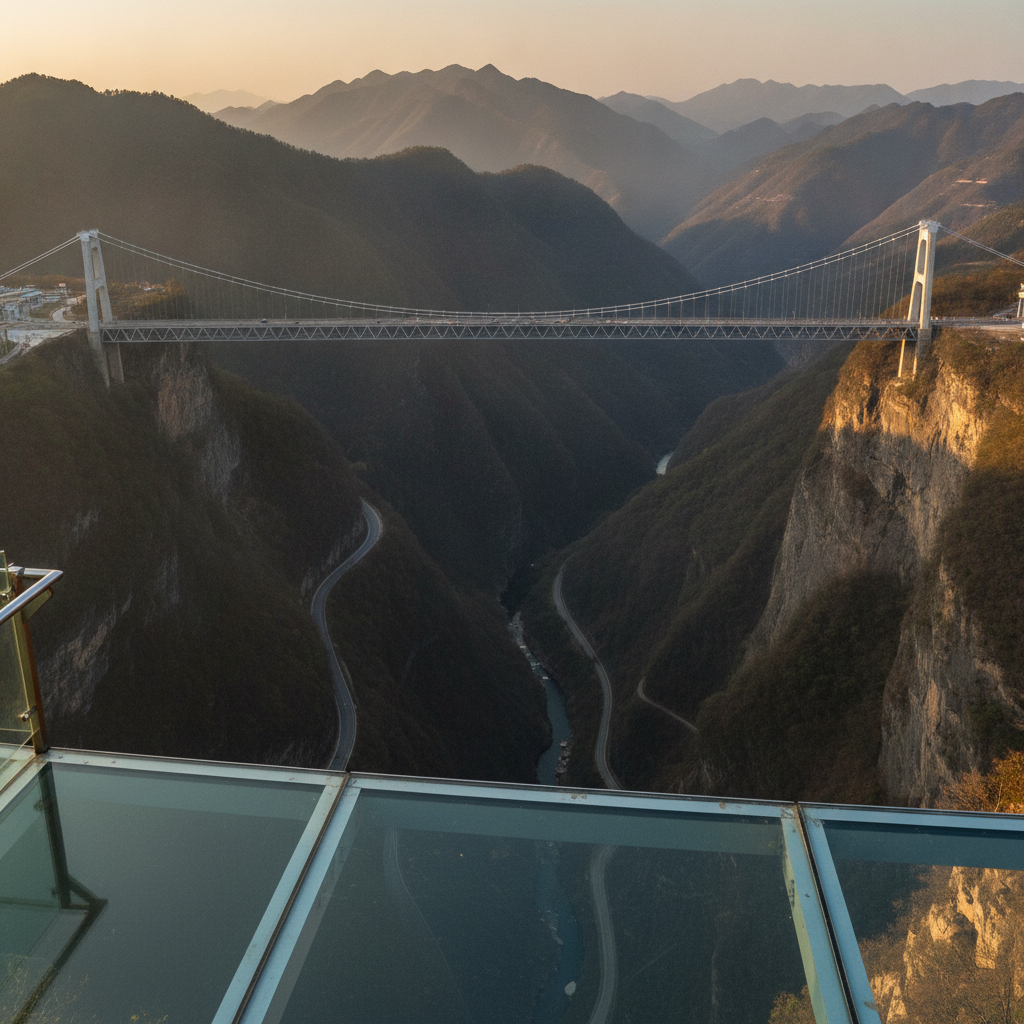
The suspension bridge network of western Hunan (the collection of high-altitude suspension bridges within 150 km of Zhangjiajie that constitute the world's highest concentration of tourist suspension bridges): the guide to the multiple bridges. The Zhangjiajie Grand Canyon Glass Bridge (430m span, 300m high—the most famous): the Aizhai Suspension Bridge (矮寨大桥—the Aizhai Highway Suspension Bridge, 100 km south of Zhangjiajie near Jishou): the engineering (1,176m main span—the longest highway suspension bridge span in China at the time of construction (2012); the towers sit atop cliffs 330m above the valley floor—the deck-to-ground height of 355m is the greatest of any highway bridge in the world): the viewing platform (the glass-floored viewing deck on the west cliff at the tower base—the most dramatic highway bridge viewing experience in China). The Tujia style footbridges (the traditional Tujia wind-and-rain bridges (风雨桥—covered wooden footbridges across the mountain streams): the most complete example in the Zhangjiajie area is at the Pujizhai Scenic Area (普济寨) east of the National Forest Park—a 40m covered Tujia bridge across the Suoxiyu River. The Zhangjiajie to Chongqing bridge circuit (the tourist route from Zhangjiajie through Jishou (Aizhai Bridge) to Wulong (武隆—the natural karst arch and the Wulong bridge cluster) forms the most suspension-bridge-dense travel circuit in Asia).
- 5
Zhangjiajie to Chongqing – The Gorge & Bridge Circuit
The Zhangjiajie–Wulong–Chongqing circuit (the extended travel route that connects the Zhangjiajie sandstone pillars with the Wulong natural arch and the Yangtze Three Gorges): the most nature-architecture-intensive 5-day circuit in inland China. Zhangjiajie to Wulong (武隆—the Chongqing municipality district with the Natural Three Bridges (天生三桥), the Furong Cave, and the Longshuixia Fissure Gorge—3 UNESCO World Heritage elements in 1 location): travel (Zhangjiajie city to Wulong: 4h30m by bus via Jishou or 6h by bus via Sanhe): the Wulong Natural Bridges (天生三桥—3 natural karst arches in sequence in a single valley—the largest of the 3 (Tianlong Bridge—天龙桥) spans 235m with a 281m internal height—the 3 bridges together form the most spectacular natural arch sequence in Asia): the 'Transformers: Age of Extinction' filming location (the Wulong site was the location of the final battle sequence). The Three Gorges extension (Wulong to Chongqing: 2h by HSR—the Yangtze Three Gorges (三峡) cruise from Chongqing downstream to Yichang: 3 days, the most immersive river journey in China—the combination of the Zhangjiajie pillar geology + Wulong arch geology + Three Gorges canyon geology as the world's most geologically varied 5-day nature circuit).
- 6
Zhangjiajie Budget Guide – Free Trails & Smart Savings
The Zhangjiajie budget guide (how to experience Zhangjiajie's most dramatic landscapes at the minimum possible cost): the smart traveler's cost breakdown. The park ticket (the 3-day Wulingyuan ticket (¥245) is the main expense—the ticket includes the 3 scenic areas and the shuttle buses between them): the free alternatives (the Tianmen Mountain approach road (the 99-turn road by bus from the Tianmen Mountain cable car base) is free to walk—the road offers the same altitude gain as the cable car without the ¥258 cable car cost—the road walk takes 3 hours): the free valley views (the panoramic view of the National Forest Park from the external viewing platform at the Tianmen Mountain cable car upper terminal (accessible without entering the park): the most complete overview of the pillar landscape available without a park ticket). Budget accommodation (¥80–120/night in the Wulinhuyuan town guesthouses vs. ¥800–2,000 at the Wanda Vista): the food saving (the Wulinhuyuan morning market (06:00–08:00) provides the cheapest breakfast in the Zhangjiajie area—baozi (包子), congee (粥), and the Tujia rice cake (糍粑) for ¥10–15 total): the complete budget (3 days in Zhangjiajie with park ticket, budget guesthouse (3 nights × ¥100 = ¥300), and local food (3 days × ¥60 = ¥180): total ¥725 (approximately USD 100 at 2024 exchange rates)—the most affordable UNESCO World Heritage visit in China by cost-per-visual-impact ratio).
Walk this route with audio
Stories play automatically as you reach each stop — no tapping needed.
More in Zhangjiajie
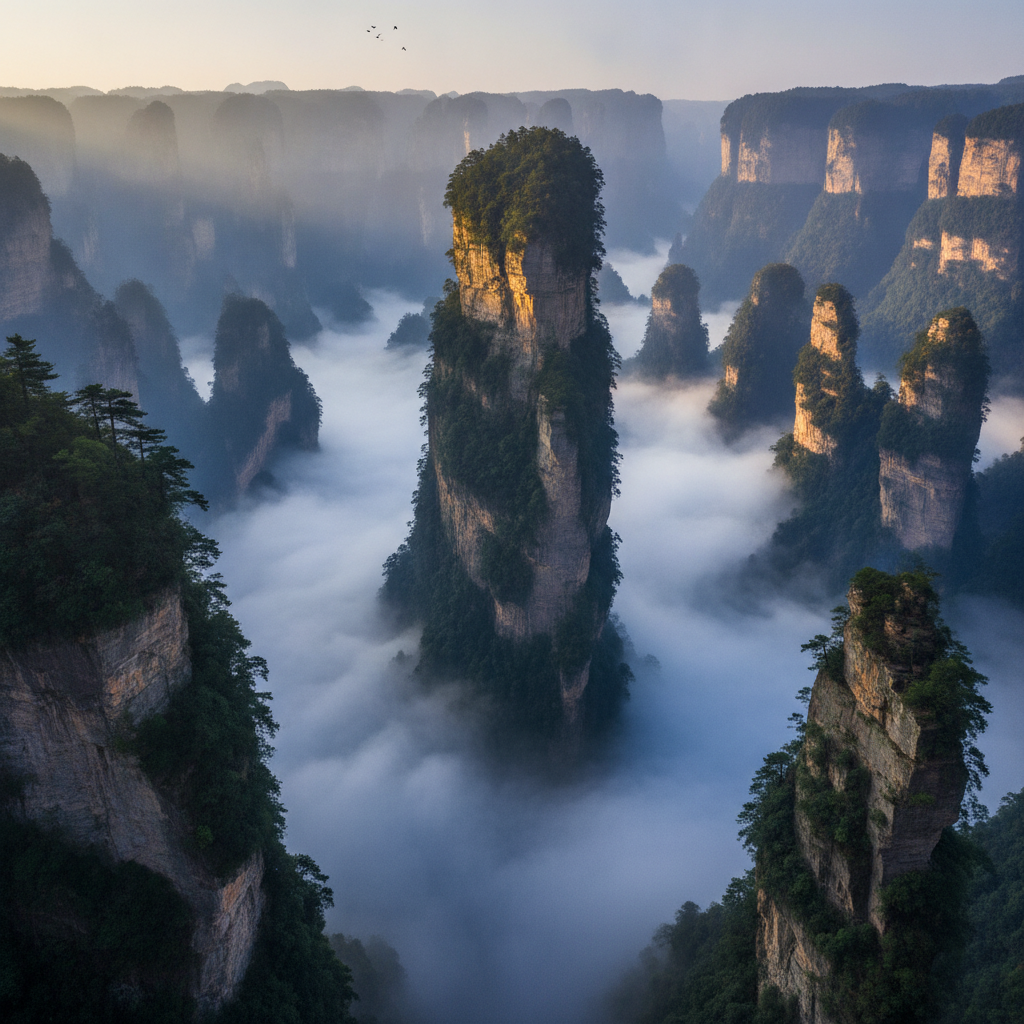
The 357-Meter Rock Pillar That Inspired Avatar's Pandora, the World's Tallest Outdoor Elevator on a Cliff Face & the Tujia Brocade With 100 Traditional Patterns
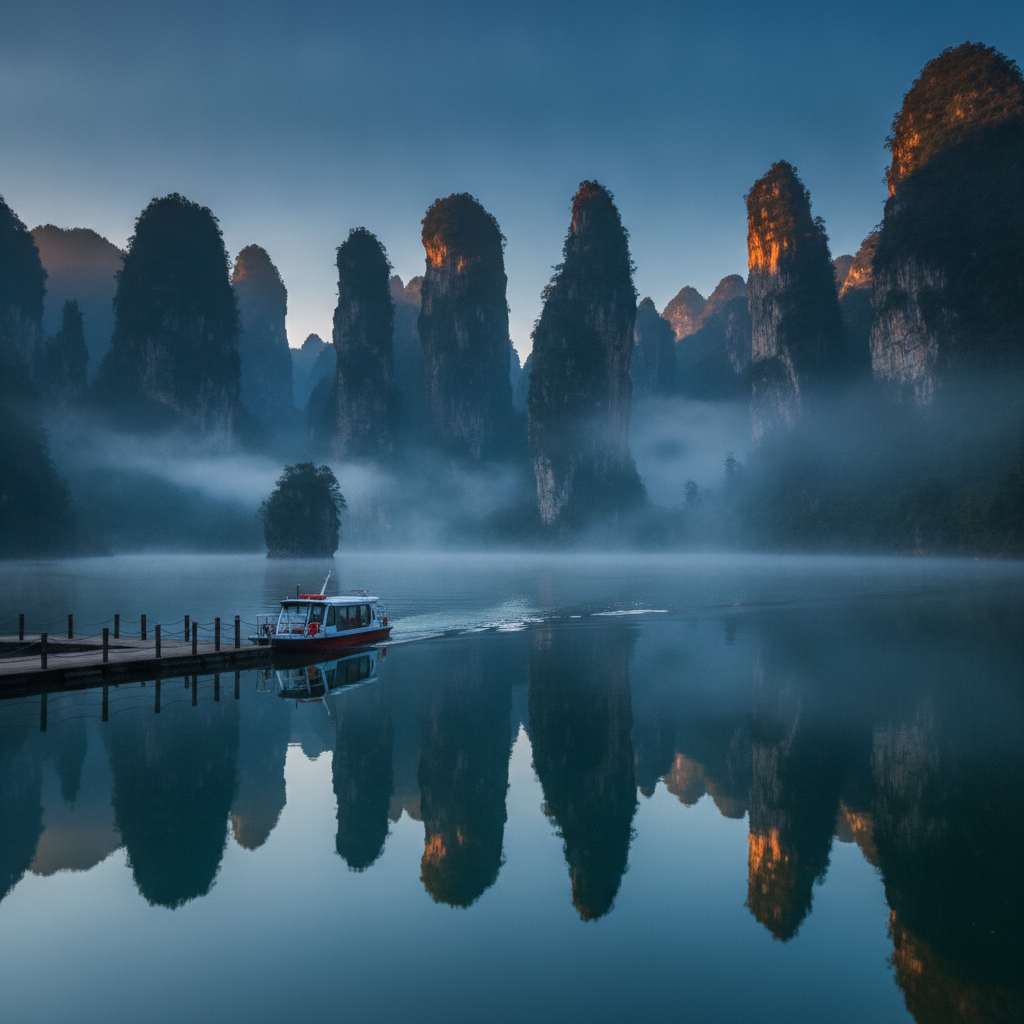
The Vine Tea That Isn't Tea, the World's Largest Cave Chamber Bigger Than Any Sports Stadium & Why Zhangjiajie Beats Every Other Chinese Nature Destination for a First-Time Visitor
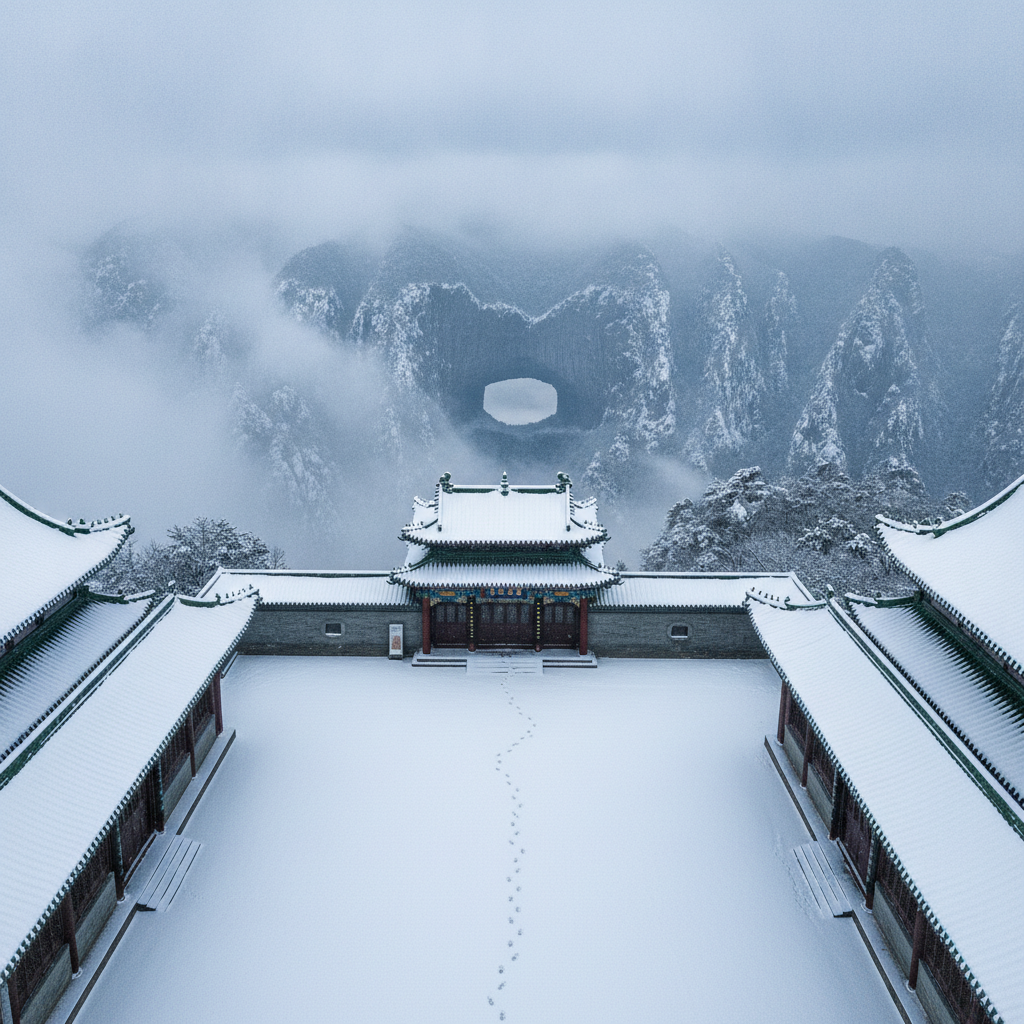
The 1,800-Year Pilgrimage to the Temple on the Summit, the Avatar Effect That Increased International Visitors 9× & the Trail Behind the Widest Waterfall in Asia
The Pillar That Was Renamed After a Movie, the Living-Fossil Tree Discovered in the Park in 1941 & the Red Bull Wingsuit Pilots Flying Through a 30-Meter Rock Arch at 200 km/h