The 1,800-Year Pilgrimage to the Temple on the Summit, the Avatar Effect That Increased International Visitors 9× & the Trail Behind the Widest Waterfall in Asia
The Tianmen Mountain Temple's 1,800-year occupation of the limestone summit as the longest continuously inhabited site in Zhangjiajie; Zhangjiajie's GDP 20× growth from ¥3.5 billion to ¥72 billion in 23 years driven by tourism; the Avatar effect increasing international visitors from 2% to 18% of the total; the 150,000-visitor peak day causing a 4-hour Bailong Elevator queue; the Huangguoshu behind-the-waterfall cave trail as the only major Asian waterfall with a trail behind the full-width falls; and the Detian Waterfall as the largest transnational waterfall in Asia.
- 1
Zhangjiajie Art & Creative Response
The artistic response to the Zhangjiajie landscape (the visual artists, photographers, and filmmakers who have used the pillar formations as their primary subject): the creative guide. The traditional Chinese ink-wash painting tradition (the Zhangjiajie pillar formations have been the subject of ink-wash painting (水墨画) by Hunan school painters since the Qing Dynasty—the painter Qi Baishi (齐白石, 1863–1957—born in Xiangtan, Hunan, 300 km from Zhangjiajie) is the most celebrated Hunan-school painter but did not specifically paint the Zhangjiajie formations): the contemporary ink-wash response (the contemporary painter Cai Xiaoli (蔡小力) is the most cited modern ink-wash painter of the Zhangjiajie landscape—the artist's work in the 水墨张家界 exhibition (2015) represents the most sustained contemporary engagement with the pillar formations in traditional media). The photography community (the Zhangjiajie National Forest Park hosts the annual 'Zhangjiajie International Photography Festival' (张家界国际摄影大赛) in October—the competition attracting 30,000+ submissions from 60+ countries and the largest landscape photography competition focused on a single site in China). The film studio (the Zhang Yimou Impression Cultural Tourism Zone (张艺谋·印象文旅) adjacent to the National Forest Park is developing a permanent film studio facility in the Wulinhuyuan area that will be the largest open-air film production facility in central China when completed (target 2026)).
- 2
The Stele Forest & Zhangjiajie Cultural Heritage
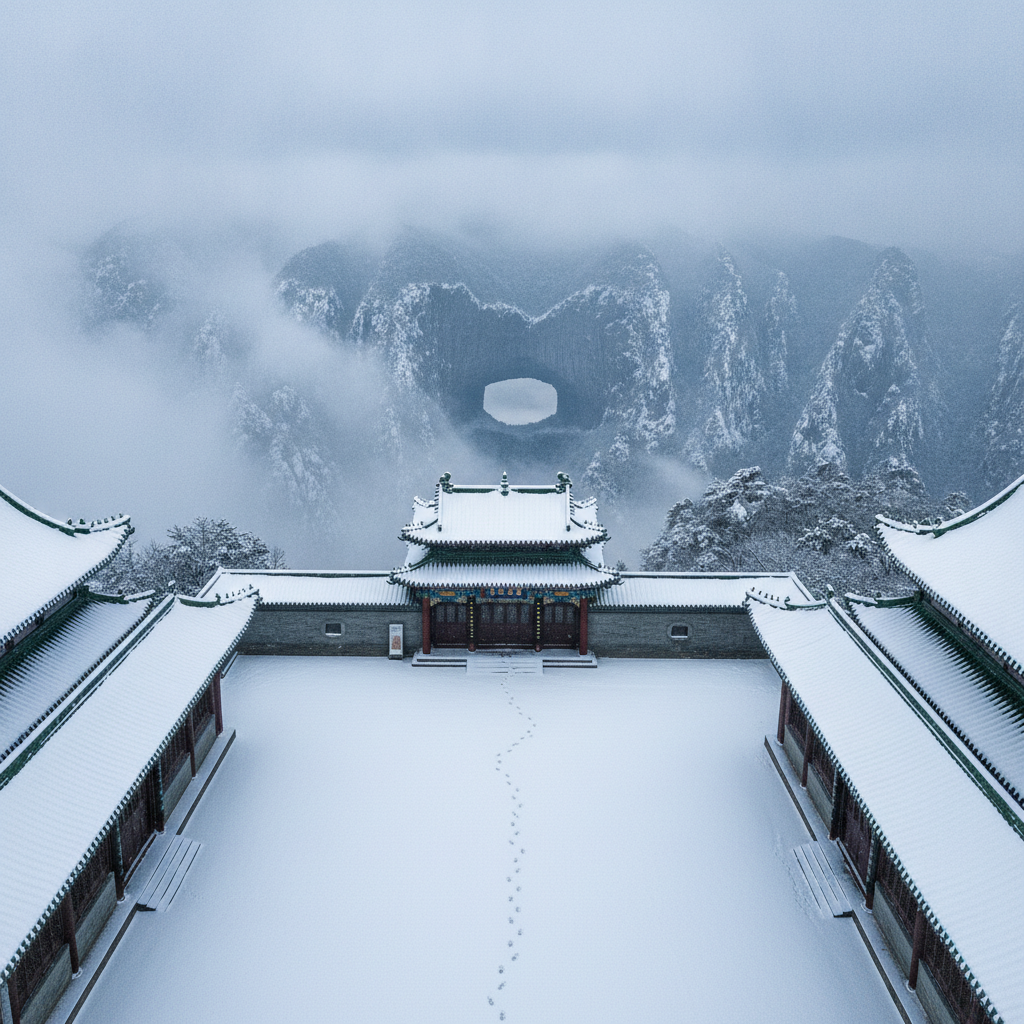
The cultural heritage sites within and adjacent to the Zhangjiajie National Forest Park (the sites of historical significance that are least frequently visited by the landscape-focused visitor): the cultural heritage guide. The Pujizhai (普济寨) Tujia heritage village (the traditional Tujia stilt-house village 8 km from the park main entrance—the most intact traditional Tujia village architecture in the Wulinhuyuan area): the stele collection (the stone inscription (碑刻) collection within the village—the Ming and Qing Dynasty administrative and commemorative steles recording the tusi governance system of the western Hunan frontier). The Tianmen Mountain Taoist Temple (天门山寺—the Buddhist temple on the summit plateau of Tianmen Mountain): history (the original temple was established during the Wu Kingdom period (222–280 CE) of the Three Kingdoms era—the temple that has occupied this dramatic limestone summit for 1,800 years): the Tianmen Mountain pilgrimage (the walk from the Tianmen arch along the ridge to the Tianmen Mountain Temple has been a Taoist/Buddhist pilgrimage route for 1,800 years—the most historically embedded walking route at Zhangjiajie). The Zhangjiajie Municipal Museum (张家界市博物馆—the regional history museum in Zhangjiajie city center): the Tujia artifact collection (the most comprehensive collection of Tujia material culture in any museum in China, including the original brocade patterns and tusi-period administrative objects).
- 3
Zhangjiajie in Winter – The Snow Season
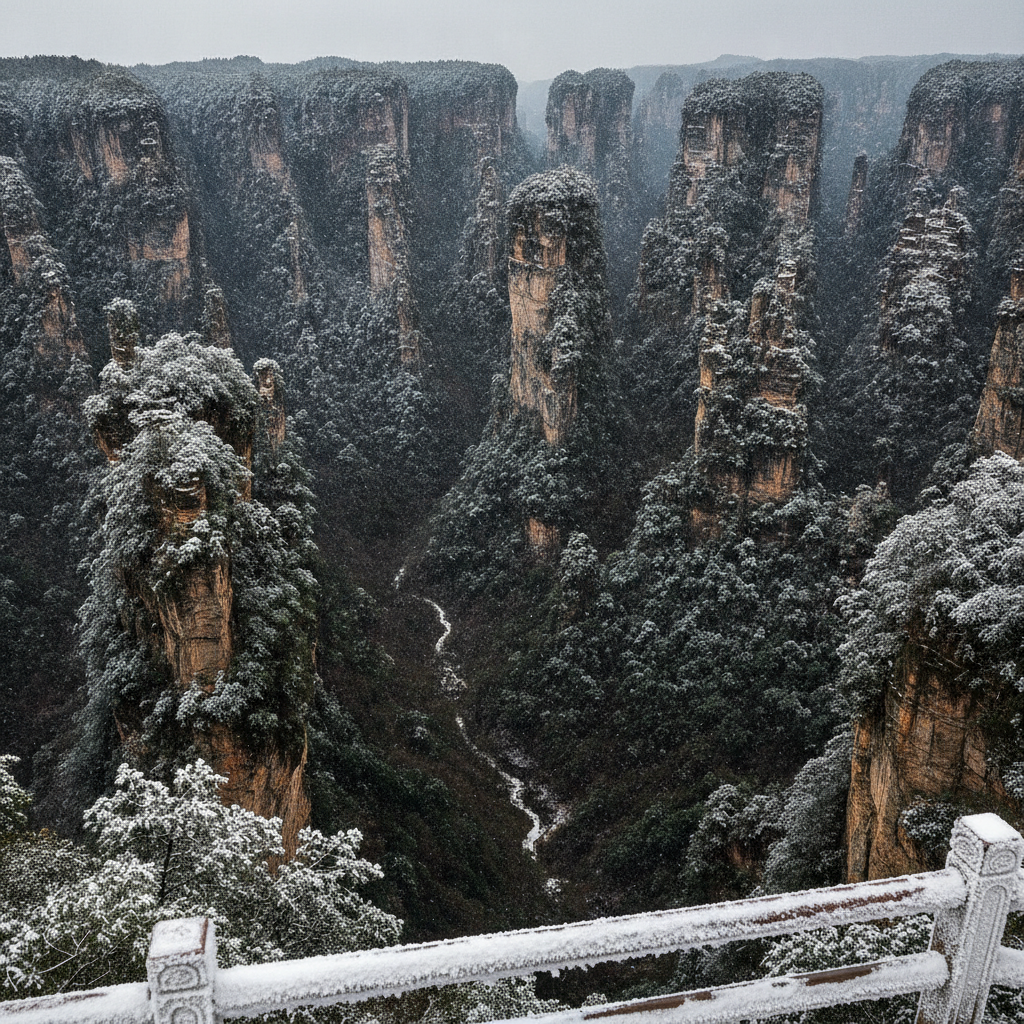
The Zhangjiajie winter experience (December–February): the season that transforms the landscape most dramatically and that is experienced by the smallest proportion of the total visitor flow (approximately 8% of annual visitors arrive in winter). The snow event (Zhangjiajie receives an average of 15–20 snow days per year—the heaviest snowfall typically in January): the snow landscape (snow accumulates on the flat pillar tops, creating white caps above the dark pillar faces—the visual effect is more dramatic than any other season because the snow defines the horizontal pillar-top geometry against the winter sky): the accessibility in snow (the glass bridges and the Bailong Elevator are closed during snowfall for safety—the cable cars operate in light snow with reduced capacity—the park remains accessible on foot via the valley floor trails during snowfall). The winter wildlife (the reduction in visitor numbers in winter makes winter the best season for wildlife observation—the pillar-top raptors (the Mountain Hawk-Eagle and Changeable Hawk-Eagle) are most visible in winter when the deciduous trees on the lower pillar faces lose their leaves, opening the canopy above the valley floor). The winter accommodation discount (the Wulinhuyuan guesthouses offer 40–60% discounts from December through February—the ¥200/night mid-range rooms typically cost ¥80–120 in January). The winter food (the Tujia winter specialty: the preserved pork (腊肉—làrou—the Hunan-style cold-smoked preserved pork) is the most distinctive seasonal food in the Zhangjiajie area in winter).
- 4
Zhangjiajie's Economy – From Timber to Tourism
The economic transformation of Zhangjiajie (the shift from a logging economy to a tourism economy over 40 years—the most dramatic rural economic transformation driven by natural landscape protection in China): the economic story. The logging era (the Wuling Mountains were extensively logged from the 1950s through the early 1980s—the Zhangjiajie National Forest Park's establishment in 1982 ended commercial logging within the protected area): the transition (the 1982 park designation displaced approximately 1,200 logging workers—the Chinese government provided retraining subsidies for the forest workers to transition to tourist services (guides, porters, guesthouse operators)): the economic growth (Zhangjiajie city GDP grew from ¥3.5 billion (2000) to ¥72 billion (2023)—a 20× increase in 23 years, the fastest GDP growth of any Hunan Prefecture-level city in the same period): the visitor numbers (Zhangjiajie received 97 million visitor-days in 2023 (2024 data forthcoming)—the highest visitor count per local resident ratio (58:1) of any Chinese destination city). The film economy multiplier (the Avatar effect: Zhangjiajie's international visitor share increased from 2% of total visitors (2009, pre-Avatar) to 18% (2019, post-Avatar)—the highest international visitor percentage increase driven by a single film in the history of Chinese tourism).
- 5
The Zhangjiajie Challenge – Sustainable Tourism
The sustainability challenge at Zhangjiajie (the tension between the economic benefits of mass tourism and the conservation requirements of a UNESCO World Heritage Site): the analysis of the current situation and the management responses. The carrying capacity (the Wulingyuan daily carrying capacity is officially set at 80,000 visitors—the capacity is regularly exceeded on Chinese national holidays (the 'Golden Week' holidays in October and May): the peak day record: 150,000 visitor-days in a single October Golden Week day (2018)—the queue for the Bailong Elevator extended 4 hours during this event): the conservation impacts (the high visitor density has caused: soil compaction on the hiking trails (the Golden Whip Brook trail requires annual resurfacing); air quality degradation from tourist shuttle bus exhaust (the shuttle buses were switched from diesel to electric between 2018 and 2022); noise pollution on the Yuanjiajie plateau (the pillar-top hawk-eagle population has retreated from the 3 most popular viewpoints since 2015)). The management responses: the electronic ticketing and timed entry system (mandatory since 2020): the 'green' cable cars (the Tianmen Mountain cable car and the Bailong Elevator were both retrofitted with regenerative braking systems to recover the energy generated during descent): the buffer zone enforcement (the UNESCO-required 5 km buffer zone around the World Heritage core area is now enforced against new construction after the 2007 warning).
- 6
Zhangjiajie to Asia's Largest Waterfalls – The Circuit
The Zhangjiajie waterfall circuit (the connection from Zhangjiajie to the 2 largest waterfall systems accessible within a 2-day extension): the circuit for those combining the pillar landscape with the most dramatic water features in Asia. The Huangguoshu Waterfall (黄果树瀑布, Guizhou—the largest waterfall in China: 77.8m high, 101m wide): access from Zhangjiajie (Zhangjiajie city to Guiyang by HSR (2h), then bus to Huangguoshu (2h)—4 hours total): the Huangguoshu in context (the waterfall is fed by the Baihe River from the Guizhou Plateau—the water falls through a sequence of 18 subsidiary falls in the Huangguoshu waterfall cluster): the behind-the-waterfall (the trail running through the cave (水帘洞) behind the main falls—the only major waterfall in Asia where a trail passes behind the full width of the falls). The Detian Waterfall (德天瀑布, Guangxi—the largest transnational waterfall in Asia: 200m wide on the China-Vietnam border, 78m high): access from Zhangjiajie (Zhangjiajie to Guilin by HSR (3h), then bus to Detian (4h)): the transnational experience (the waterfall falls partially on the Chinese side and partially on the Vietnamese side—the viewing platform on the Chinese side provides the full-width panorama): the best combined circuit (Zhangjiajie 3 days → Guilin 2 days → Detian Waterfall 1 day → Nanning HSR return).
Walk this route with audio
Stories play automatically as you reach each stop — no tapping needed.
More in Zhangjiajie
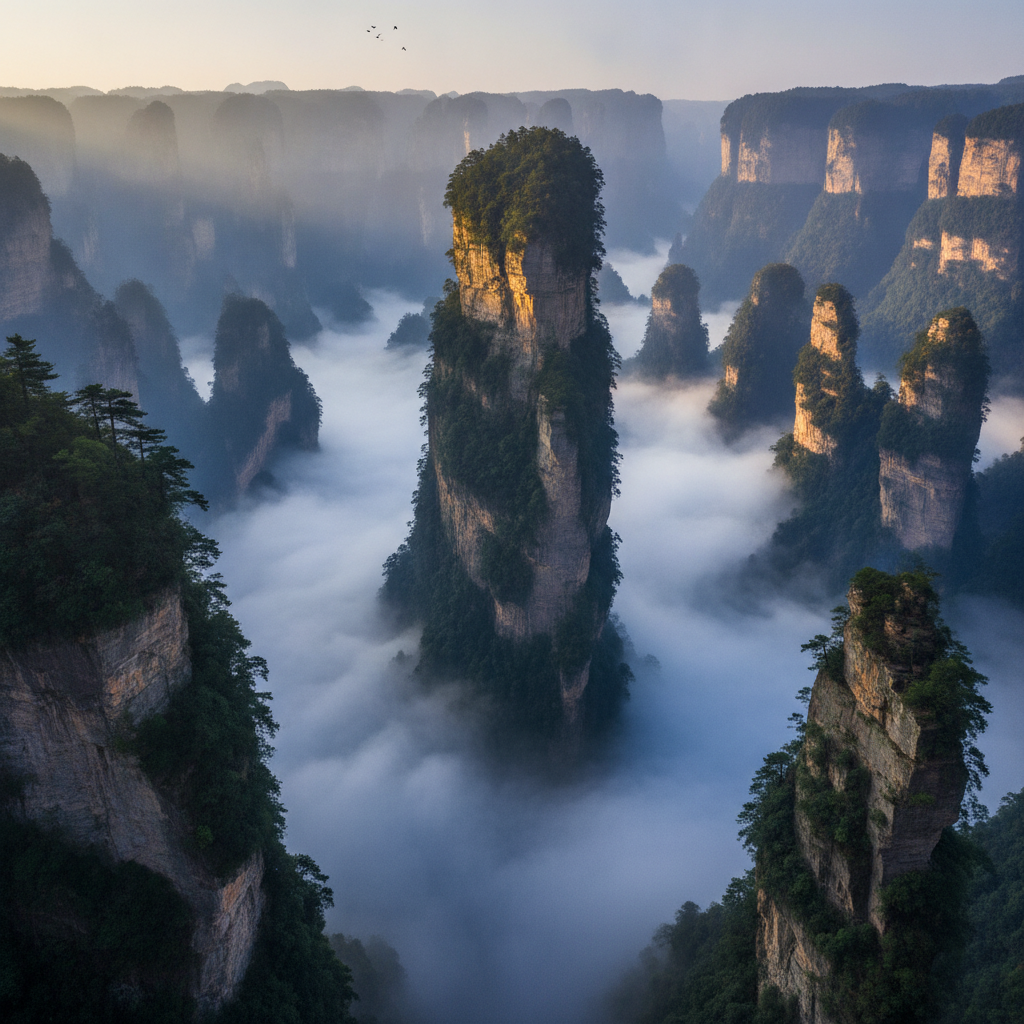
The 357-Meter Rock Pillar That Inspired Avatar's Pandora, the World's Tallest Outdoor Elevator on a Cliff Face & the Tujia Brocade With 100 Traditional Patterns
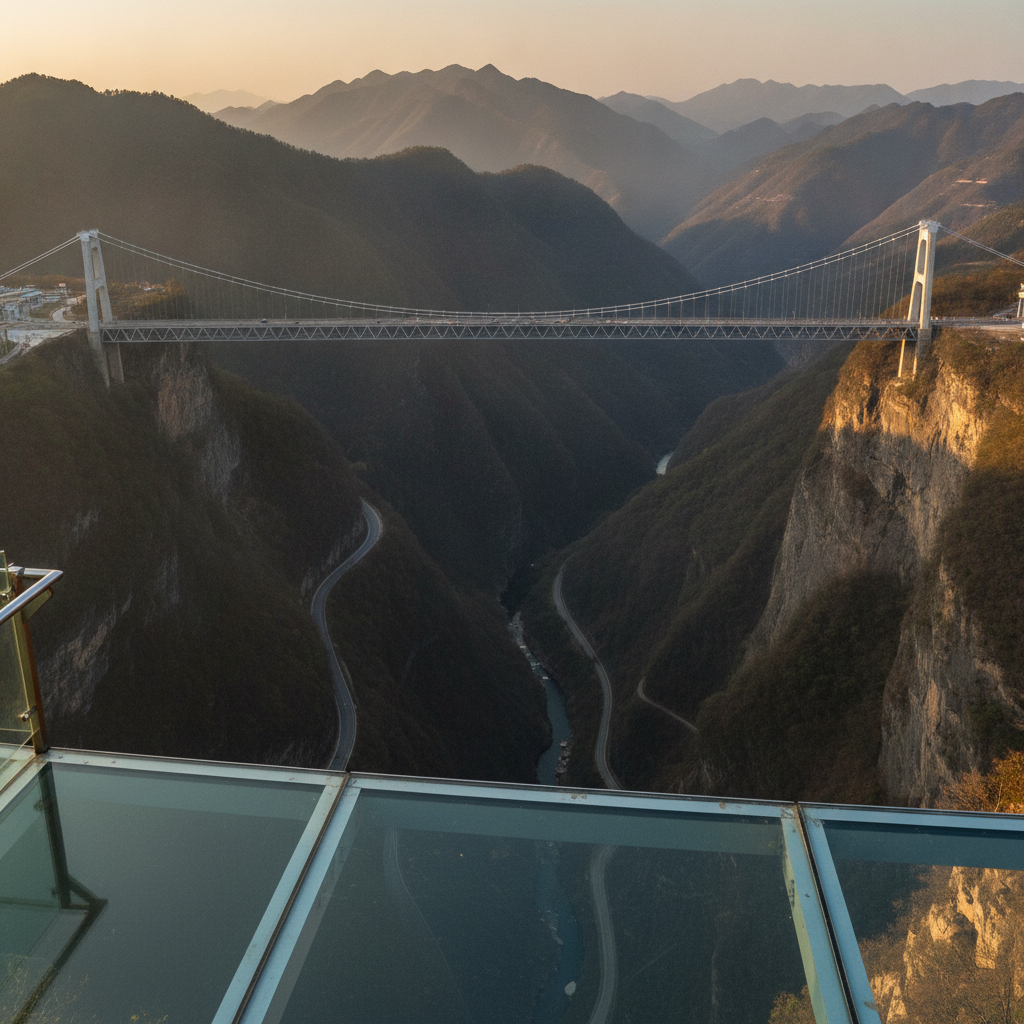
The 42 Hotels Demolished to Protect a UNESCO Site, the 19-Meter Stalagmite in the Yellow Dragon Cave & the Complete Zhangjiajie Circuit for Under USD 100
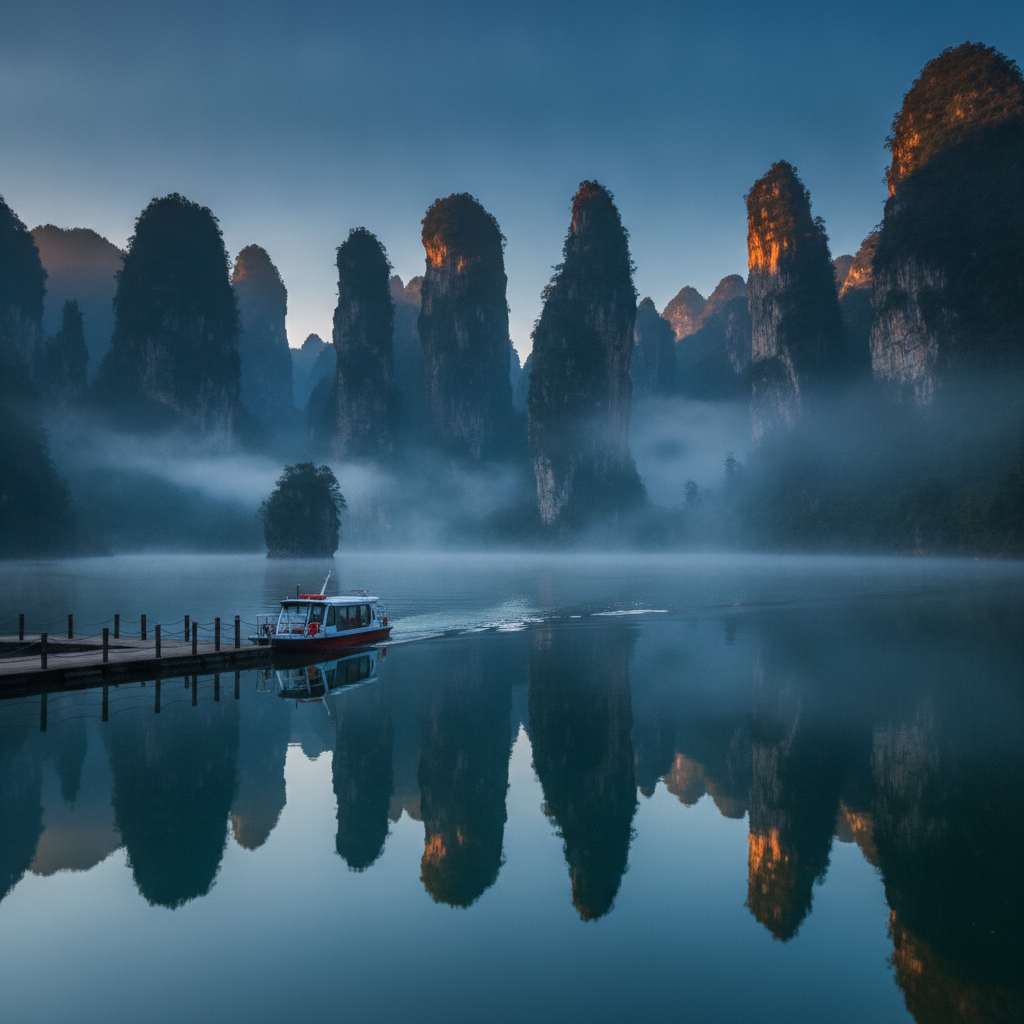
The Vine Tea That Isn't Tea, the World's Largest Cave Chamber Bigger Than Any Sports Stadium & Why Zhangjiajie Beats Every Other Chinese Nature Destination for a First-Time Visitor
The Pillar That Was Renamed After a Movie, the Living-Fossil Tree Discovered in the Park in 1941 & the Red Bull Wingsuit Pilots Flying Through a 30-Meter Rock Arch at 200 km/h