The 80-MPa Sandstone That Resisted 25 Million Years of Erosion to Form 3,000 Pillars, the Scaly-Sided Merganser in the River Below & the Red Army That Lost Half Its Soldiers in the Xiang River Battle
Zhangjiajie's quartzite sandstone at 80-100 MPa compressive strength as the erosion resistance that preserved the pillars; the scaly-sided merganser as one of the world's most endangered ducks in the Mao Yan River below the park; the Tusi indirect-rule system governing the Tujia lords from 1369 to 1735; the Xiang River battle reducing the Red Army from 86,000 to 30,000; the glass bridge's 800-person simultaneous capacity with 6x design safety factor; and the drone photography 5-7 day advance approval requirement.
- 1
The Sandstone Pillar Science – How Zhangjiajie Formed
The geology of the Zhangjiajie pillar landscape (the science of how 3,000 individual quartzite sandstone columns formed from a flat sedimentary plateau): the complete geological explanation. The sequence: 380 million years ago (Devonian period)—the Zhangjiajie area was a shallow tropical sea; sand and gravel from the surrounding continent accumulated on the seafloor in horizontal beds, compressed over millions of years into the Devonian quartzite sandstone that forms the pillar rock. The uplift (approximately 25 million years ago—the Himalayan orogeny (the Indian plate collision with Eurasia) created regional uplift across southern China, raising the Zhangjiajie plateau from sea level to its current 500–1,000m elevation above the surrounding lowlands): the vertical jointing (as the sandstone was uplifted, the rock developed a grid of vertical fracture planes (joints)—the joints created by the tensional stresses of the uplift divided the originally continuous plateau into blocks): the erosion (over the past 25 million years, rainwater infiltrated the vertical joints, progressively widening the gaps by chemical dissolution and mechanical erosion, isolating the individual blocks—the blocks that survived erosion are the pillars; the widened joint spaces are the valleys between them). The weathering resistance (the quartzite sandstone of Zhangjiajie has a compressive strength of 80–100 MPa—hard enough to resist erosion for millions of years while the surrounding rock eroded away).
- 2
Zhangjiajie's Bird Life – Eagles Above the Pillars
The Zhangjiajie bird life (the avifauna of the Wulingyuan National Heritage Site—the birds that inhabit the pillar-top forest communities isolated by 300m of cliff face from the valley floor): the birdwatcher's guide. The rare species: the Chinese Monal (中华秋沙鸭—Mergus squamatus, the scaly-sided merganser—one of the world's most endangered ducks—the Mao Yan River (茅岩河) below Zhangjiajie hosts one of the most accessible populations): the Chinese Egret (黄嘴白鹭—Egretta eulophotes): the Crested Serpent Eagle (蛇雕—Spilornis cheela): the pillar-top raptors (the Changeable Hawk-Eagle (林雕—Nisaetus cirrhatus) and the Mountain Hawk-Eagle (鹰雕—Nisaetus nipalensis)—both visible from the Yuanjiajie plateau soaring at pillar-top level): the most dramatic bird-watching moment in Zhangjiajie (a hawk-eagle visible at eye level from the Yuanjiajie plateau observation decks, soaring below the observer through the pillar canyon while the mist fills the valley 500m below). The dawn chorus (the Wulingyuan forest at 05:30–06:30 before the park opens produces the most complex bird soundscape of any Chinese national park—the isolation of the pillar-top ecosystems has allowed divergent evolution of bird song in the separated communities).
- 3
The Xiangxi Region – Hunan's Frontier History
The historical context of western Hunan (Xiangxi—西湘—the frontier region of which Zhangjiajie is the most visited point): the history of the most culturally diverse and least-integrated frontier of the Han Chinese civilization. The frontier history (the Wuling Mountains (武陵山) marked the western boundary of Han Chinese settlement from the Han Dynasty (206 BCE) through the Qing Dynasty (1644–1912 CE)—the Ba, Tujia, and Miao peoples of the western Hunan mountains maintained political autonomy from the Chinese empire for 1,500 years through a combination of geographical inaccessibility and military resistance). The Tusi system (土司制度—the indirect-rule system used by the Ming and Qing Dynasties to administer frontier regions through indigenous lords (土司—tǔsī): the Zhangjiajie area was governed by the Tujia Tusi lords (the Sangzhi Tusi (桑植土司) and the Yongshun Tusi (永顺土司)) under the Ming tusi system from 1369 to 1735 CE—the tusi lords exercised full judicial, military, and administrative power within their territories while nominally submitting to the Ming court). The Long March connection (the Red Army Long March (红军长征, 1934–1935) passed through the western Hunan frontier—Mao Zedong's forces crossed the Xiangxi highlands in the most dangerous phase of the Long March in November–December 1934, fighting the Nationalist (KMT) forces at the Xiang River battle (湘江战役) that reduced the Red Army from 86,000 to 30,000 soldiers).
- 4
Zhangjiajie for Families – The Adventure Safety Guide
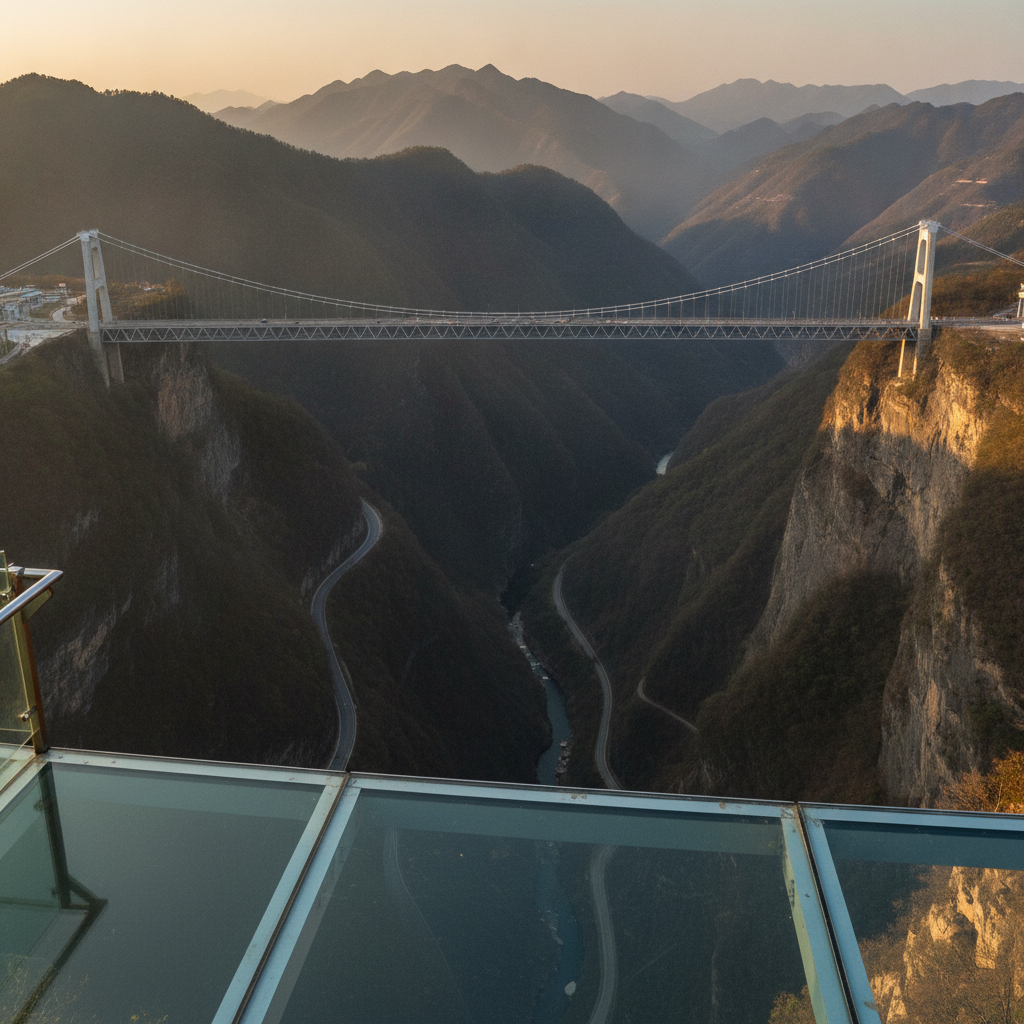
Zhangjiajie family travel guide (the destination with more age-appropriate adventure activities than any other Chinese national park): the guide for families with children aged 6–16. The Bailong Elevator (the world's tallest outdoor elevator—the most child-friendly adrenaline experience in Zhangjiajie—the 1-minute 32-second glass-walled ascent at 330m on the cliff face: safe for all ages, the most dramatic 92-second experience available in any Chinese national park). The glass bridge age limit (the Zhangjiajie Grand Canyon Glass Bridge: minimum age 6 years, minimum height 1.2m, maximum weight 120 kg—the bridge safety spec is 800 persons simultaneously on the 430m span, with a design load 6× the maximum expected live load): the child psychology of glass floors (most children under 8 years experience significant anxiety on the glass floor—the strategy: walk to the middle of the bridge before looking down, rather than looking down at the first glass panel). The Tianmen Mountain cable car (28 minutes, 7.5 km—the longest cable car journey in China): the family strategy at Tianmen Mountain (the cable car + the 99-turn winding road bus down (the road bus is more exciting than the cable car for most children: the hairpin turns and the views from the bus windows produce the stronger visceral response). The Tujia culture village (the interactive activities at the Tujia Folk Culture Village: the hand-waving dance participation, the bow-and-arrow shooting, the traditional cooking class—the most structured child-friendly cultural activity in Zhangjiajie).
- 5
Photography in Zhangjiajie – The Technical Guide
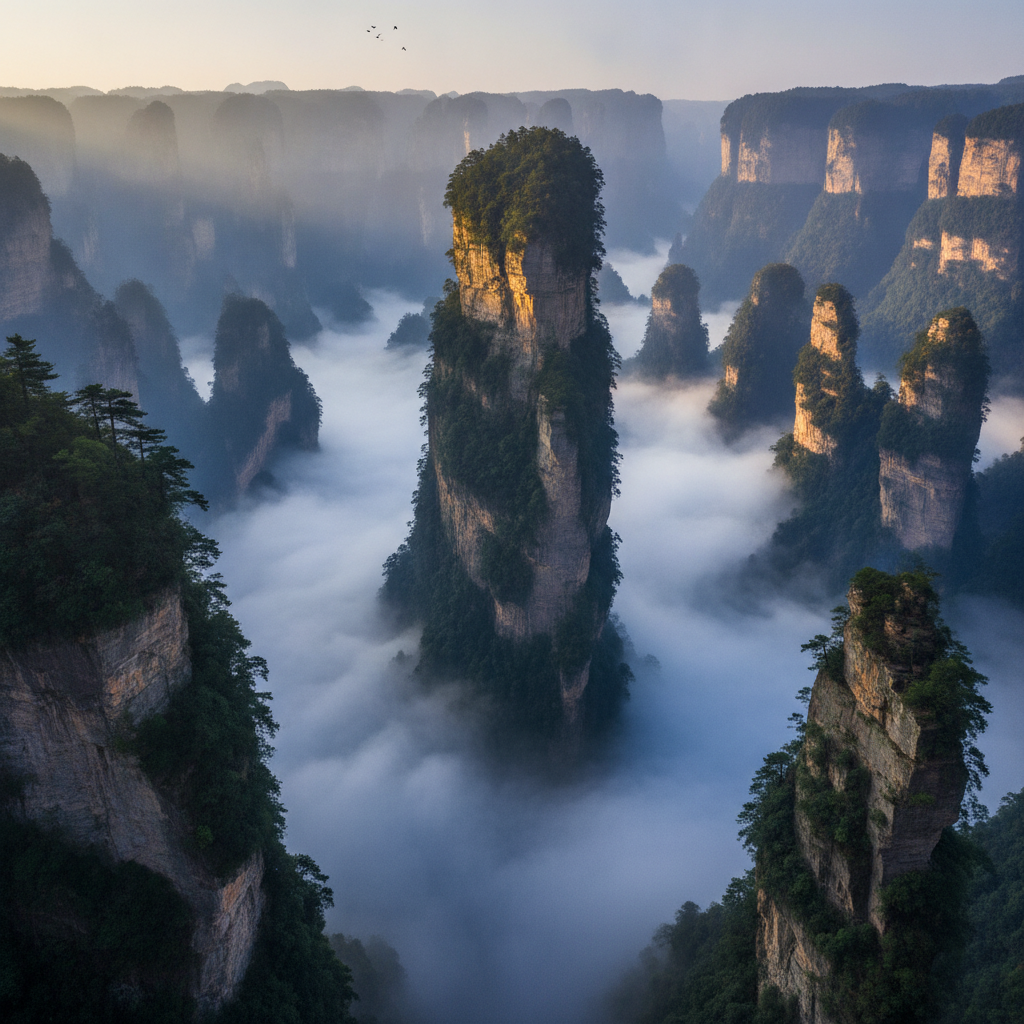
The Zhangjiajie photography technical guide (the equipment, settings, and positioning required to photograph the pillar landscape in a way that does justice to its scale and visual impact): the professional-level technical guide. Equipment (the most important equipment for Zhangjiajie: a wide-angle lens (16–35mm equivalent) for the valley floor pillar compositions; a telephoto (200–400mm equivalent) for the pillar-top detail and the isolated pillar faces; a neutral density filter (6-stop or 10-stop) for the glass bridge and glass skywalk slow-shutter photography to blur movement; a stable tripod for the dawn mist photography from the plateau viewpoints). Settings for mist photography (the dawn mist condition: ISO 200, f/8, shutter speed 1/60–1/250 depending on mist movement—the mist moves faster than it appears and requires faster shutter than expected to avoid blurring the pillar edges). The Avatar reference shot (the Hallelujah Mountain viewed from the No. 1 Scenic Spot (第一奇观) platform on the Yuanjiajie plateau: the specific framing (the tall narrow pillar in the center-left of the frame with the valley depth below and the mist filling the middle distance): the standard 24mm composition that appears in every Avatar promotional image derived from this viewpoint). Drone regulations (drones require prior approval from the Zhangjiajie National Forest Park authority—the approval takes 5–7 business days and requires deposit of the drone serial number).
- 6
Zhangjiajie 3-Day Itinerary & Seasonal Calendar
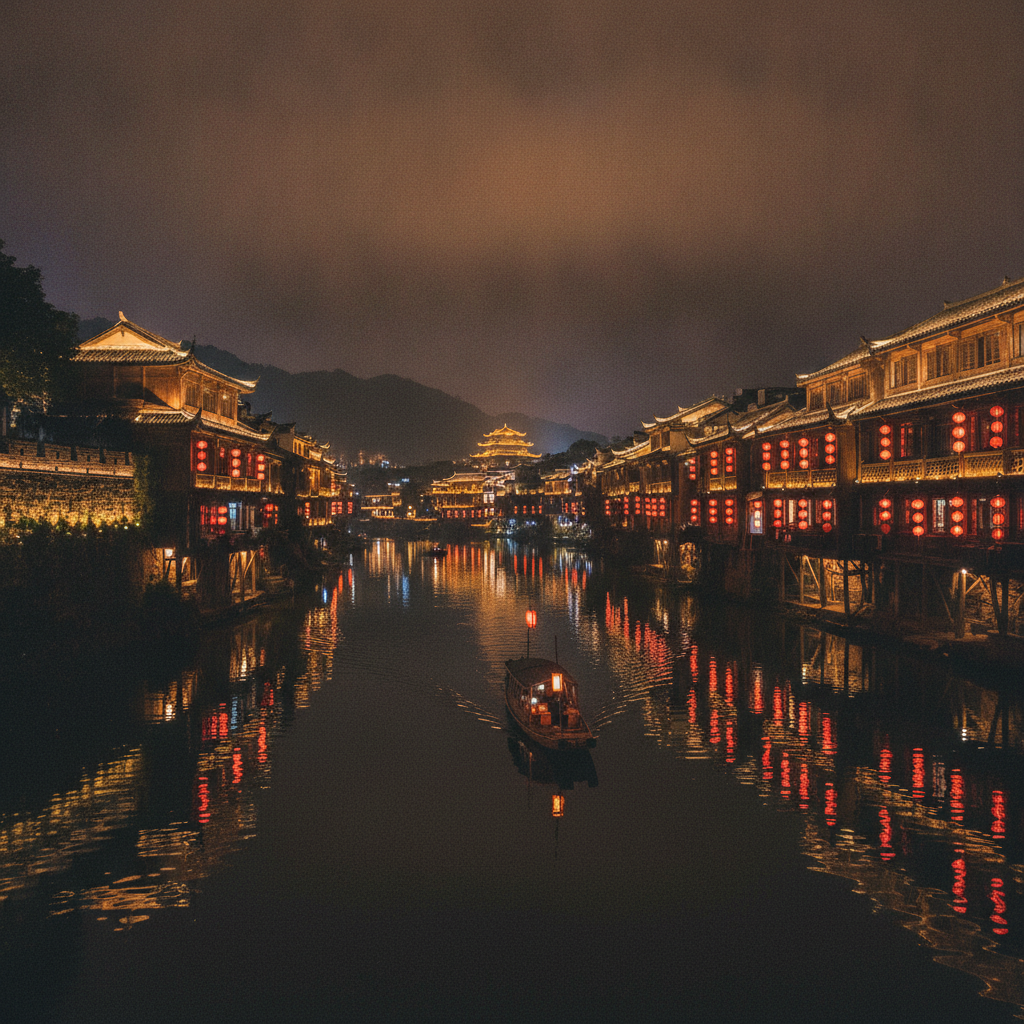
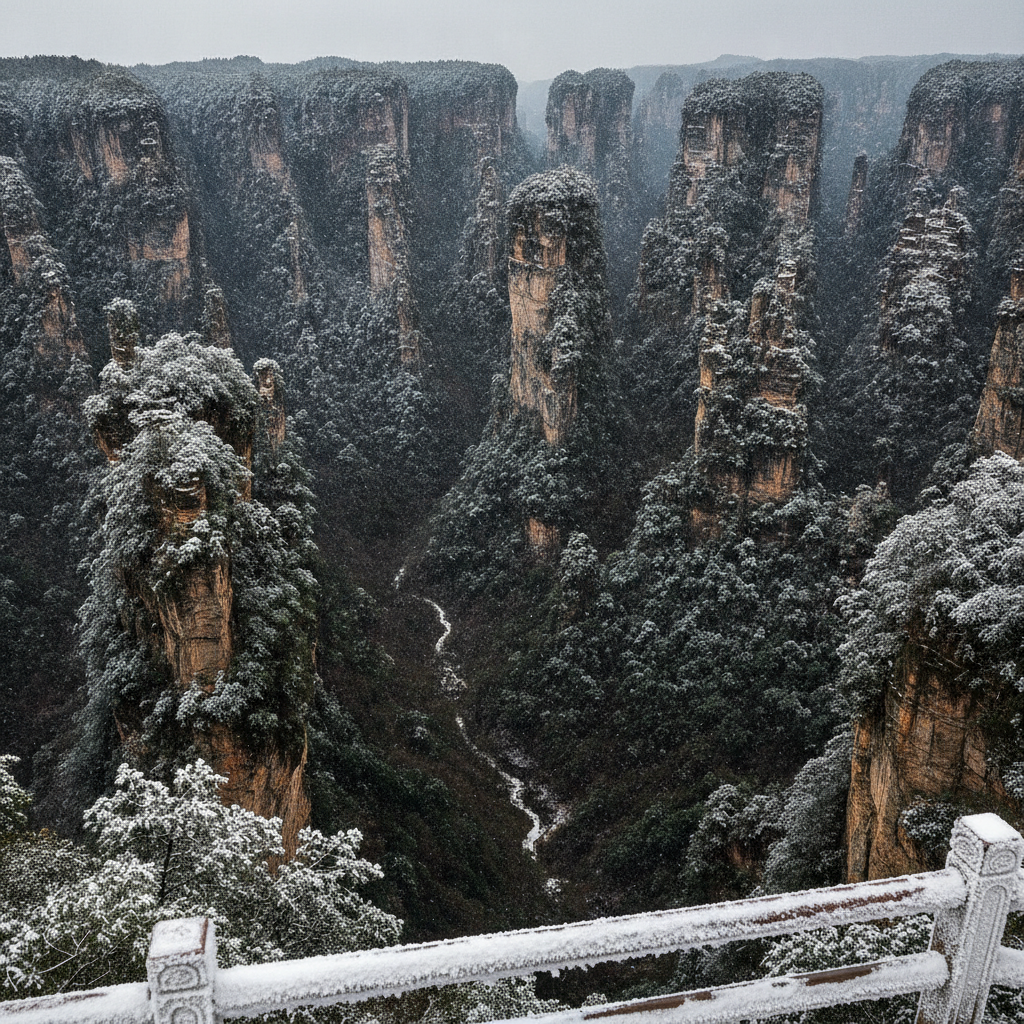
The optimal 3-day Zhangjiajie itinerary and seasonal calendar: Day 1 (National Forest Park + Bailong Elevator): arrive at Wulinhuyuan by 08:00—enter National Forest Park through the Wulinhuyuan gate—Golden Whip Brook trail (valley floor, 7.5 km, 2.5 hours)—Bailong Elevator ascent (arrive before 09:00 to avoid the queue)—Yuanjiajie plateau: Hallelujah Mountain viewpoint, No. 1 Scenic Spot, First Bridge Under Heaven—shuttle bus to Tianzi Mountain—Imperial Brush Peak viewpoint—descend by cable car (Tianzi Mountain cable car, down, less crowded than the Bailong ascending queue)—Wulinhuyuan town evening food. Day 2 (Tianmen Mountain + Glass Bridge): Tianmen Mountain cable car (first cable car: 07:30)—Tianmen arch + 99-turn road—afternoon: Zhangjiajie Grand Canyon + Glass Bridge (book 14:00–16:00 time slot to avoid peak midday crowd). Day 3 (Buffer or Fenghuang): if weather was bad on Days 1–2, repeat the priority sites on Day 3; if both Days 1–2 were good, take the 5-hour bus to Fenghuang for the afternoon and evening. Seasonal calendar: April–May (spring mist—optimal): June–August (hot, crowded, afternoon thunderstorms): September–October (autumn foliage, partial mist, second-best season): November–March (clear views, coldest, fewest visitors, snow on pillars in January).
Walk this route with audio
Stories play automatically as you reach each stop — no tapping needed.
More in Zhangjiajie
The 357-Meter Rock Pillar That Inspired Avatar's Pandora, the World's Tallest Outdoor Elevator on a Cliff Face & the Tujia Brocade With 100 Traditional Patterns
The 42 Hotels Demolished to Protect a UNESCO Site, the 19-Meter Stalagmite in the Yellow Dragon Cave & the Complete Zhangjiajie Circuit for Under USD 100
The Vine Tea That Isn't Tea, the World's Largest Cave Chamber Bigger Than Any Sports Stadium & Why Zhangjiajie Beats Every Other Chinese Nature Destination for a First-Time Visitor
The 1,800-Year Pilgrimage to the Temple on the Summit, the Avatar Effect That Increased International Visitors 9× & the Trail Behind the Widest Waterfall in Asia