The Pillar That Was Renamed After a Movie, the Living-Fossil Tree Discovered in the Park in 1941 & the Red Bull Wingsuit Pilots Flying Through a 30-Meter Rock Arch at 200 km/h
Avatar's confirmed Zhangjiajie reference and the ¥5 million naming fee recouped immediately in international bookings; the Dawn Redwood discovery in Wulingyuan in 1941 as a living Mesozoic relic; Fenghuang as the birthplace of the unawarded Nobel candidate Shen Congwen; the First Bridge Under Heaven as a natural sandstone arch connecting 2 pillar tops; Zhangjiajie's 245 mist days per year as the highest of any Chinese national park; and the Red Bull Wingsuit Championship's precision flight through the 30x57m Tianmen arch.
- 1
Zhangjiajie in Film – Beyond Avatar
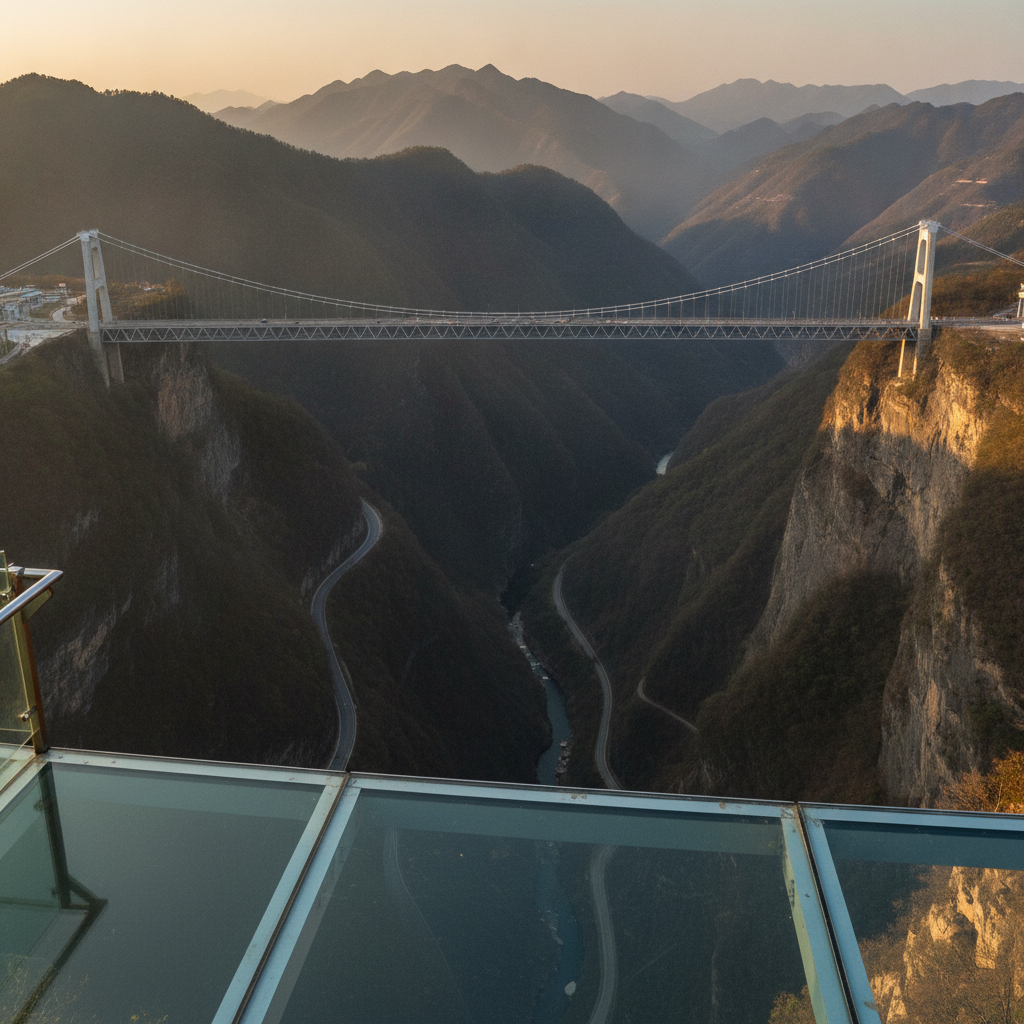
Zhangjiajie in world cinema (the landscape that has appeared in more international film and television productions since Avatar than any other Chinese natural landscape): the complete film connection. Avatar (2009—James Cameron): the primary reference. 'Iron Man 3' (2013): the extended sequence set in Tony Stark's Malibu home was partly composited with Zhangjiajie pillar imagery. 'Transformers: Age of Extinction' (2014): the Lockdown spaceship hovering above the Zhangjiajie pillars. 'Monster Hunt' (中国奇幻电影, 2015—the highest-grossing Chinese film of 2015): the pillar formations as the mythical monster village backdrop. 'The Great Wall' (张艺谋, 2016): the CGI extension of the Great Wall over the Zhangjiajie-type pillar formations. The film economy (the Zhangjiajie tourism authority's arrangement with Avatar (the park paid ¥5 million for the Avatar association and immediately recouped the investment in the surge in international bookings in 2010): the Wanda Group (万达集团) investment in the Zhangjiajie Grand Canyon and Glass Bridge (2016) that turned Zhangjiajie from a domestic-primarily destination into an international one). The photography tourism (the pillar formations at Yuanjiajie are the most photographed landscape in China by international visitors since 2010—surpassing even the Li River at Guilin in international photography licensing revenue).
- 2
The Wuling Mountains – The Broader Landscape
The Wuling Mountains (武陵山脉—the mountain range of which the Zhangjiajie formations are the most dramatic visual component): the broader natural context of the destination. The Wuling Mountains extent (the mountain range occupies approximately 170,000 km² across the provinces of Hunan, Hubei, Chongqing, and Guizhou—the most ecologically diverse mountain block in south-central China). The Zhangjiajie National Forest Park ecological zones (the park (4,811 hectares) lies within the Wulingyuan World Heritage Site (武陵源风景名胜区—UNESCO World Heritage, 1992)—the 369 km² Wulingyuan scenic area comprising the forest park plus Tianzi Mountain and the Suoxiyu Valley): the biodiversity (the Wulingyuan area contains: 116 tree species including the Dawn Redwood (水杉—Metasequoia glyptostroboides)—the 'living fossil' tree (the genus was thought extinct until a population was discovered in Wulingyuan in 1941); 56 reptile species; 116 bird species). The Suoxiyu Valley (索溪峪—the valley connecting the park's main entrance to the Tianzi Mountain area): the Suoxiyu river rafting (the whitewater raft trip down the Suoxiyu River from the Suoxiyu Valley through the pillar-flanked canyon—the most adventurous water activity in the Zhangjiajie area).
- 3
Fenghuang – The Ancient Town Nearby
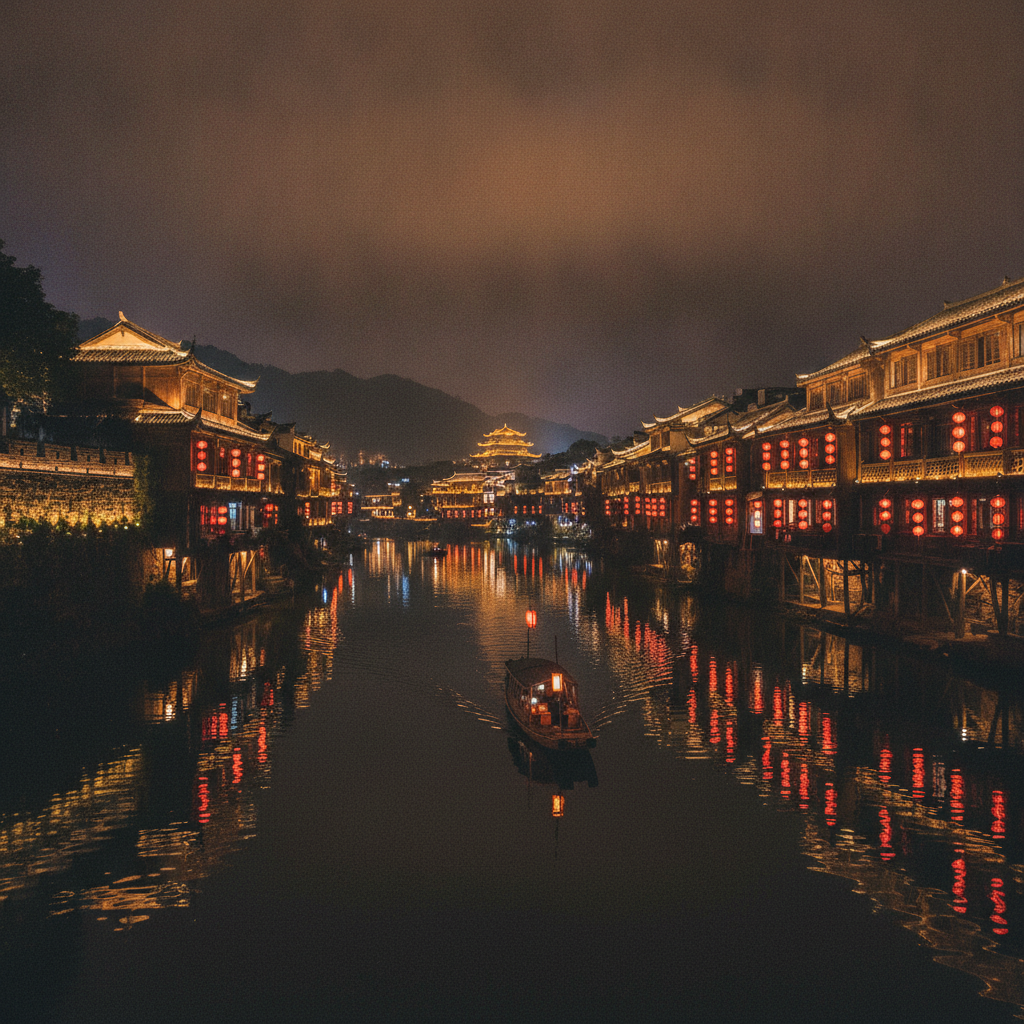
Fenghuang (凤凰—'Phoenix'): the ancient walled town 280 km southwest of Zhangjiajie city (5h by bus or 3h by combination of local bus and taxi via Jishou): the most intact Qing Dynasty riverside trading town in Hunan Province and the birthplace of the writer Shen Congwen (沈从文, 1902–1988—the Chinese author nominated for the Nobel Prize in Literature in 1988 (he died before the announcement was made and the prize was not awarded)). The Fenghuang townscape (the Tuo River (沱江) flowing through the town center, the Qing Dynasty stilt houses (吊脚楼) built on stilts directly over the river bank, the City Walls (凤凰古城城墙—the Ming Dynasty wall sections on the north bank), the red lanterns reflected in the river at night): the most photographed small-town scene in China, appearing in more Chinese travel photography than any other historic town. The Fenghuang economy (the town shifted from a Qing Dynasty military garrison for the western Hunan frontier to a tourism destination in the late 1990s—the 2001 UNESCO Intangible Heritage listing of the Miao silver jewelry craft drove the initial tourism surge): the Miao minority culture (Fenghuang is within the Xiangxi Tujia and Miao Autonomous Prefecture—the silver headdress-wearing Miao women selling crafts at the Fenghuang market represent the most commercially developed Miao culture accessible from eastern China).
- 4
Cloud-Level Hiking – The High Plateau Trails
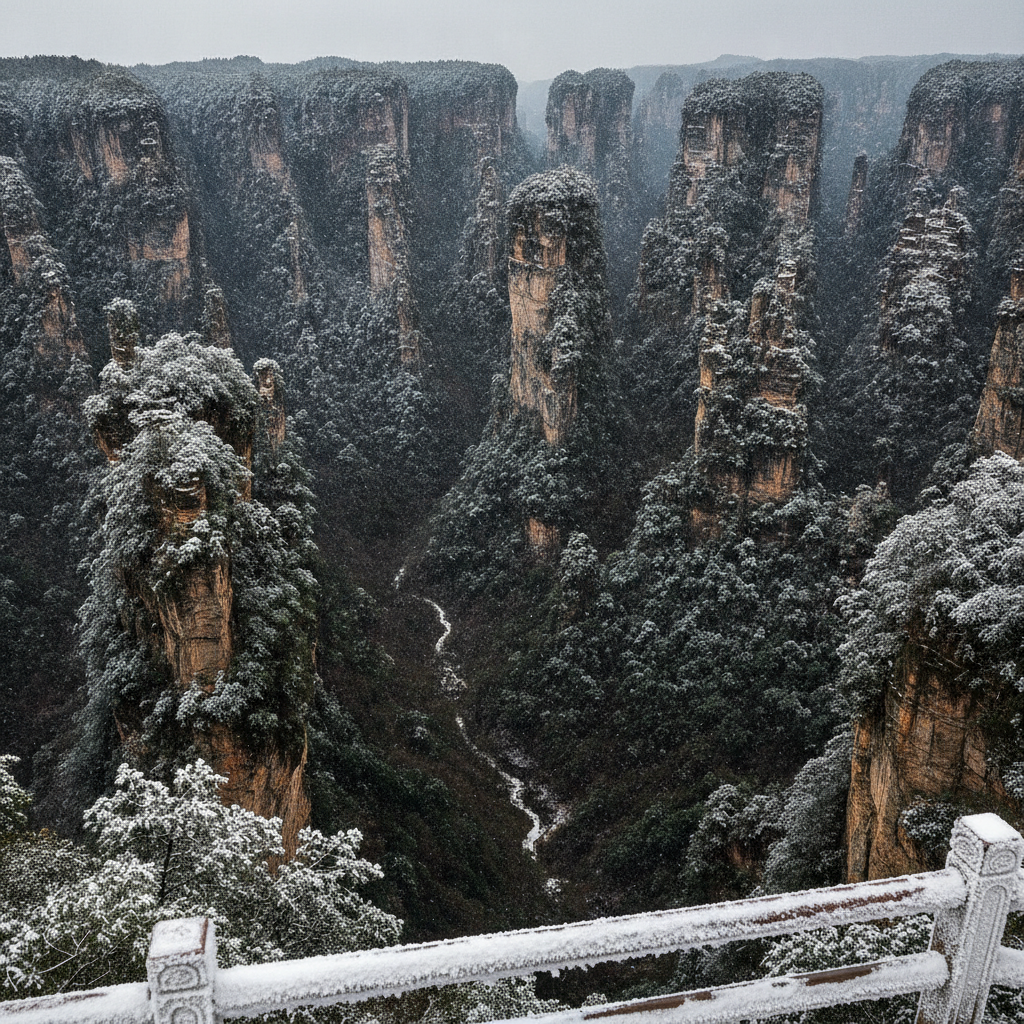
The Zhangjiajie high plateau hiking guide (the trails on the Yuanjiajie and Tianzi Mountain plateaus at 1,000–1,260m elevation—the trails above the mist layer that provide the most dramatic pillar-top views): the comprehensive hiking guide. The Yuanjiajie loop (袁家界环形路—the plateau loop trail of 4.5 km at 1,048m elevation, passing the Hallelujah Mountain viewing platform, the First Bridge Under Heaven (天下第一桥—the natural sandstone arch connecting 2 pillar tops above the valley), and the No.1 Scenic Spot (第一奇观—the viewpoint directly above the Avatar film-reference pillar)): the Tianzi Mountain circuit (天子山景区—the highest plateau in the park at 1,262m): the 4 primary viewpoints on the Tianzi plateau (the Imperial Brush Peak (御笔峰—the 4 needle-like pillars clustered together at the north edge of the plateau—the most distinctive formation on the Tianzi plateau)). Hiking logistics: the park's shuttle buses connect the 3 main areas (buses every 10–20 minutes, included in the 3-day park entrance ticket): the inter-area hiking (the Zhangjiajie National Forest Park's valley floor trails are the most accessible without steep ascents—the Tianzi Mountain and Yuanjiajie plateau trails require the Bailong Elevator or cable car ascent, then are relatively flat).
- 5
Zhangjiajie in Mist vs. Clear Weather
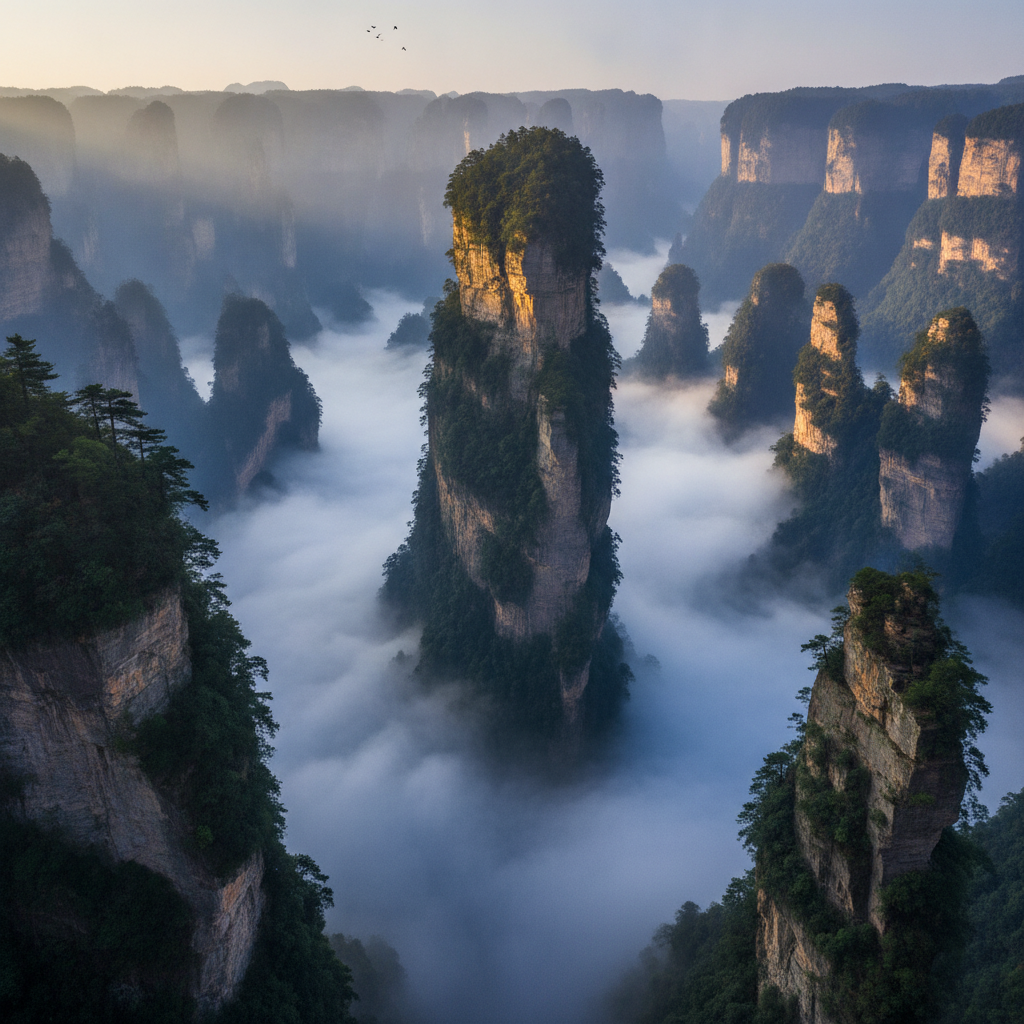
The Zhangjiajie weather guide (the most important single variable in a Zhangjiajie visit—the landscape's appearance changes more dramatically with weather than any other major Chinese destination). The mist (Zhangjiajie averages 245 mist/fog days per year—the highest of any major Chinese national park—the quartzite pillars create orographic uplift (the mist forms as warm, humid air from the valleys rises against the pillar faces and cools): the mist season (the peak mist season is April–June (spring) and September–October (autumn)): the mist photography (the partial-mist condition (the mist filling the lower valleys while the pillar tops are clear) is the most celebrated image of Zhangjiajie—the condition typically occurs for 1–3 hours after dawn and 1–2 hours before sunset in the transitional seasons). The clear weather alternative (clear-sky days (typically November–January and parts of September) provide the sharpest pillar detail and the clearest views from the glass bridges and sky walks—the glass floor is most dramatic with a clear valley below): the rain (heavy rain (June–August peak): the waterfalls that activate on the pillar faces during heavy rain are the least-photographed but most dramatic Zhangjiajie condition). The visitor strategy: book 4 days for the park (2 days as buffer for fog/mist conditions that close the cable cars or glass bridge).
- 6
Zhangjiajie Adventure Activities
The Zhangjiajie adventure activity catalogue (the non-hiking adventure options that use the dramatic vertical terrain for experiential tourism): the most adrenaline-concentrated tourist destination in China. Rock climbing (the sandstone pillar faces provide the most dramatic multi-pitch rock climbing in China—the Zhangjiajie National Forest Park's Qianli Xiangpeng (千里相逢) route on the face of the 358m Shentang Wan (神堂湾) pillar: the only route in China with a 300m+ single pitch above the forest canopy). The zip line (the Zhangjiajie Grand Canyon zip line: 720m long, 200m above the canyon floor, at 80 km/h—the fastest zip line in Hunan Province): the bungee jump (the bungee jump platform at the Tianmen Mountain glass skywalk: the 999m elevation bungee (the specific height chosen for the Chinese lucky number (9))). The wingsuit flying (Zhangjiajie has hosted the Red Bull Wingsuit Flying World Championship annually since 2013—the competition uses the Tianmen Mountain arch as a precision flying target—the wingsuit pilots fly through the 30m × 57m arch at 200+ km/h): the Zhangjiajie adventure tourism economy (the adventure sports sector generates approximately 15% of Zhangjiajie's total tourism revenue (2023)—the highest adventure-sport share of any Chinese national park destination).
Walk this route with audio
Stories play automatically as you reach each stop — no tapping needed.
More in Zhangjiajie
The 357-Meter Rock Pillar That Inspired Avatar's Pandora, the World's Tallest Outdoor Elevator on a Cliff Face & the Tujia Brocade With 100 Traditional Patterns
The 42 Hotels Demolished to Protect a UNESCO Site, the 19-Meter Stalagmite in the Yellow Dragon Cave & the Complete Zhangjiajie Circuit for Under USD 100
The Vine Tea That Isn't Tea, the World's Largest Cave Chamber Bigger Than Any Sports Stadium & Why Zhangjiajie Beats Every Other Chinese Nature Destination for a First-Time Visitor
The 1,800-Year Pilgrimage to the Temple on the Summit, the Avatar Effect That Increased International Visitors 9× & the Trail Behind the Widest Waterfall in Asia