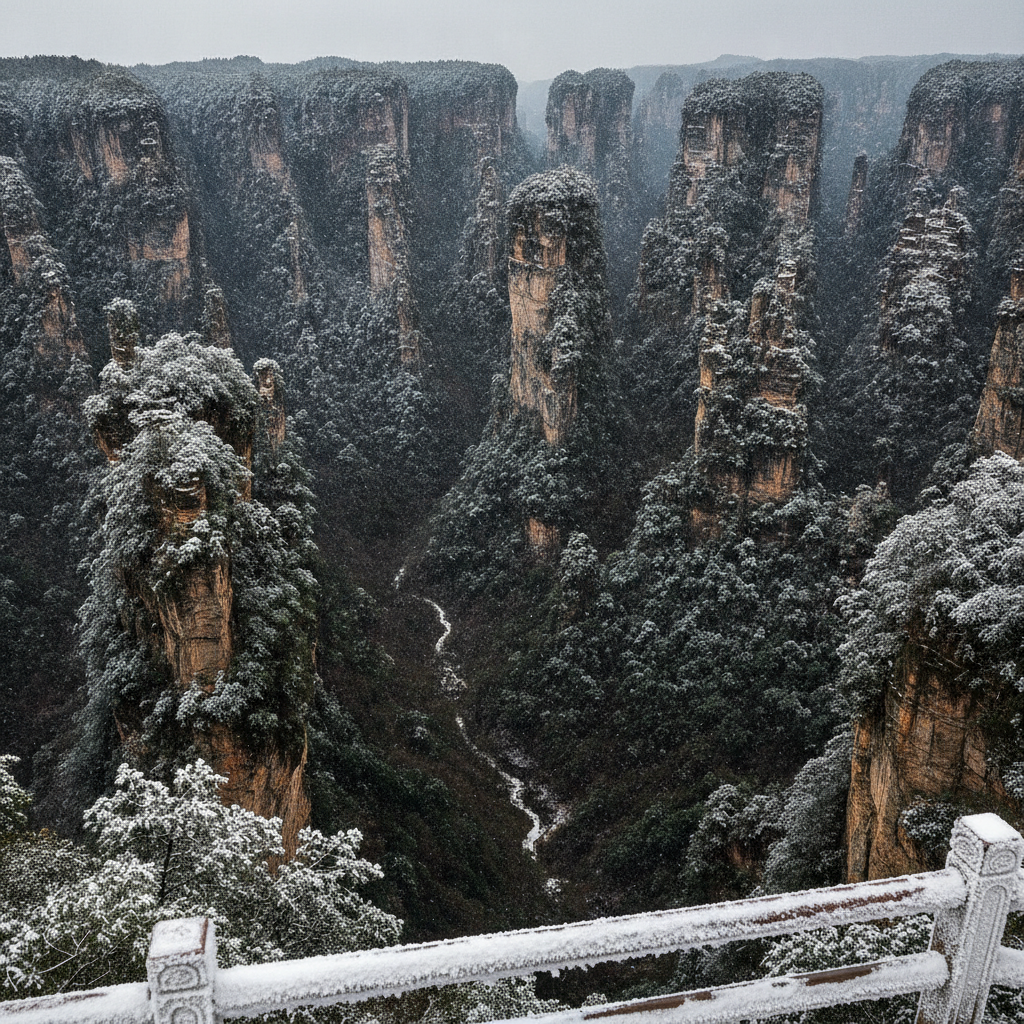
The Vine Tea That Isn't Tea, the World's Largest Cave Chamber Bigger Than Any Sports Stadium & Why Zhangjiajie Beats Every Other Chinese Nature Destination for a First-Time Visitor
The Zhangjiajie 'strawberry tea' made from the Ampelopsis vine rather than any tea plant; the Jiutian Cave's No. 1 hall at 1100x100x60m as the world's largest cave chamber; the Mao Red Braised Pork eaten daily by Mao Zedong now as Hunan's signature dish; the Zhang Yimou outdoor performance using pillar faces as projection screens; the Zhangjiajie Grand Canyon Glass Bridge at night with LED illumination as far less crowded than the daytime crossing; and the comparative analysis of Zhangjiajie vs. Guilin, Jiuzhaigou, and Huangshan.
- 1
Zhangjiajie's Water Features – Rivers, Gorges & Falls
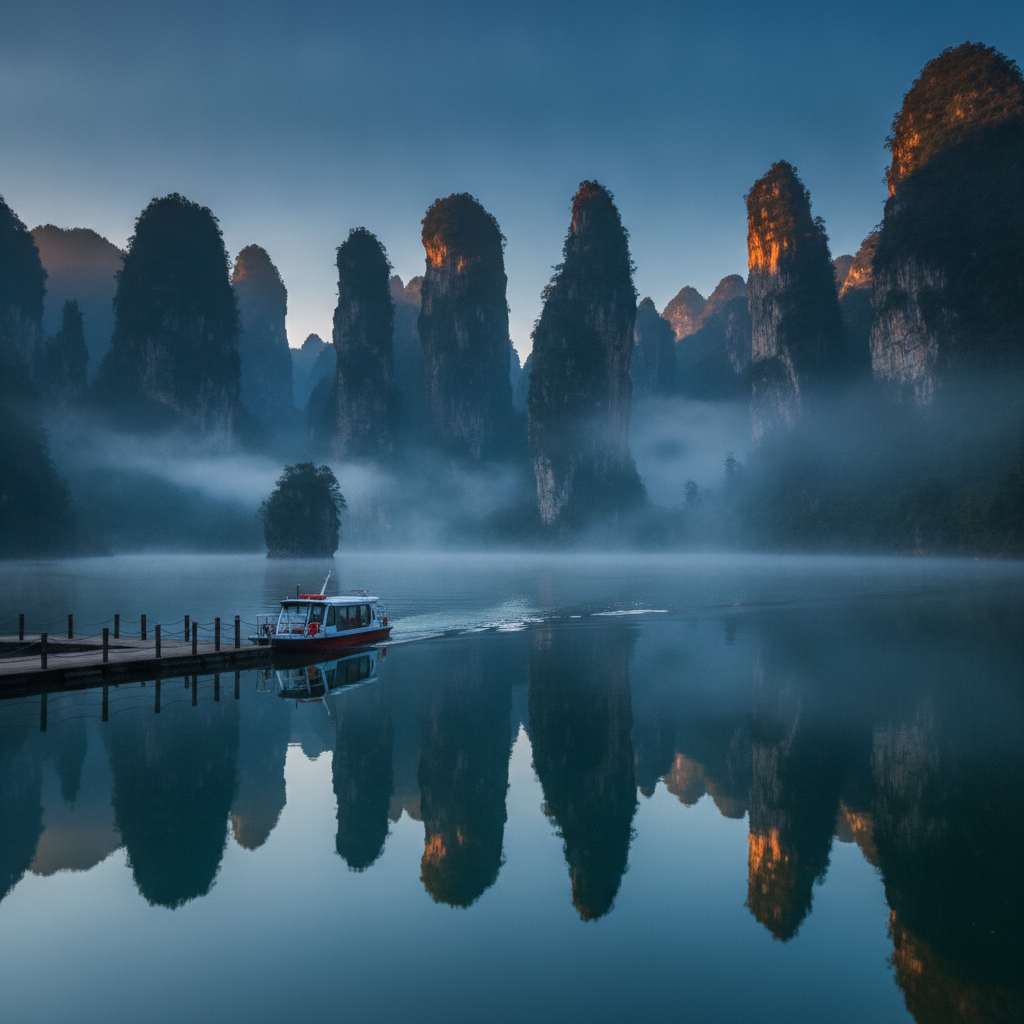
The water features of the Zhangjiajie landscape (the rivers, gorges, and waterfalls that are the least-documented dimension of the Zhangjiajie experience): the water guide. The Lishui River (澧水—one of the 4 major tributaries of Dongting Lake, originating in the Wuling Mountains near Zhangjiajie): the river gorges (the Zhangjiajie Grand Canyon (张家界大峡谷—the gorge cut by the Mao Yan River (茅岩河) through the sandstone plateau, 15 km from the National Forest Park entrance)): the waterfall circuit (the waterfalls within the Tianzi Mountain area—the most dramatic are activated by rainfall and visible from the plateau overlooks). The Baofeng Lake (宝峰湖—the artificial lake 7 km from the National Forest Park main entrance): the lake boat tour (the 30-minute motorized boat circuit of the lake, surrounded on all sides by sandstone pillars): the most accessible water-based perspective on the Zhangjiajie pillar landscape (the pillar reflections in the still lake surface at dawn are among the most photographed Zhangjiajie images—accessible by electric boat at 07:00 before the main day visitors arrive). The Jiutian Cave (九天洞—'Nine Heaven Cave'—140 km from Zhangjiajie city near Longshan County): the world's largest cave hall (the No. 1 cave hall is 1,100m × 100m × 60m—larger than any other cave chamber in the world by volume): accessible as a half-day add-on from Zhangjiajie city.
- 2
Zhangjiajie Food – Hunan Heat & Mountain Flavors
The Zhangjiajie food culture (the regional cuisine combining the spice tradition of Hunan Province with the mountain foraging culture of the Tujia and Miao minorities): the food guide. Hunan cuisine (湘菜—Xiāng cài—one of China's 8 great regional cuisines): the heat source (the Hunan spice tradition uses dried chili peppers (干辣椒) and fermented black bean chili paste (豆豉辣椒) rather than the Sichuan numbing pepper (花椒)—the Hunan heat is sharper and more direct than Sichuan heat). The signature dishes (Mao's Red Braised Pork (毛氏红烧肉—the pork belly braised with red sugar, soy, and shaoxing wine that Mao Zedong reportedly ate daily—now the signature dish of Hunan Province): the Zhangjiajie mountain mushrooms (野生菌—the foraged fungi from the Wuling Mountain forests, stir-fried with chili and garlic—the most distinctive ingredient available only in the mountain area): the Tujia sour soup (酸汤—the fermented vegetable broth with chili and ginger used as both a condiment and a soup base in Tujia cooking—the single most distinctive flavor of Zhangjiajie mountain cuisine). Wher to eat: the guesthouses in Wulinhuyuan town serve the most authentic local food (the family guesthouses (农家乐—'farm family happiness' restaurants) where the cook is also the farmer who foraged the mushrooms that morning).
- 3
Zhang Yimou & the Zhangjiajie Outdoor Performance
The Impressions performance series in Zhangjiajie (the outdoor performance at Tianmen Mountain): the extension of Zhang Yimou's (张艺谋) outdoor performance art to the Zhangjiajie landscape. The Impression Zhangjiajie (印象·张家界): the outdoor theatrical performance directed by Zhang Yimou on the natural amphitheater of the Tianzi Mountain area, using live performers, light projection on the pillar faces, and the natural pillar formations as stage set—the most technically complex outdoor performance in Zhangjiajie. The Zhang Yimou outdoor performance tradition (Zhang Yimou pioneered the form with 'Impression Liu Sanjie' at Guilin (2004), followed by 'Impression West Lake' at Hangzhou (2007) and 'Impression Lijiang' at Lijiang (2006)): the Zhangjiajie version is the most topographically dramatic of the 4. The broader performance culture (the Tujia cultural performance at the Tujia Folk Village—the nightly show combining Tujia Hand Waving Dance, Miao silver headdress ceremony, and Xiangxi folk music (the erhu and bamboo flute music of western Hunan)). The timing (both performances run from 19:30; book 2 days in advance in peak season; the Zhang Yimou performance is canceled in heavy rain as the projection surfaces become wet).
- 4
Zhangjiajie's Tea – The Mountain Tea Culture
The Zhangjiajie tea culture (the mountain tea tradition of Hunan Province and the Wuling Mountains): the tea guide for the Zhangjiajie area. The Hunan tea tradition (Hunan Province is the 3rd largest tea-producing province in China by volume (after Fujian and Yunnan)—Hunan tea is dominated by: the Junshan Silver Needle (君山银针—the white-hair yellow tea from Junshan Island in Dongting Lake—one of China's Top 10 Famous Teas): the Anhua Dark Tea (安化黑茶—the compressed dark tea (普洱-style) from Anhua County (安化), 200 km east of Zhangjiajie—the tea compressed into bamboo tubes and aged for 5–10 years): the Zhangjiajie mountain tea (张家界莓茶—the wild vine tea (草莓茶, incorrectly translated as 'strawberry tea')—actually made from the vine Ampelopsis grossedentata, not a tea plant—the local health drink consumed by the Tujia people for centuries, now marketed as an antioxidant beverage). The tea plantation visit (the Wuling mountain tea plantations south of Zhangjiajie city—the most accessible tea plantation visit in Hunan Province is the Zhangjiajie Jinxia Tea Plantation (金霞茶园, 35 km south of Zhangjiajie city): the plantation's location in the mist-covered Wuling foothills produces the growing conditions associated with the most complex flavor profiles in Chinese mountain tea).
- 5
Zhangjiajie at Night – Stargazing & Light Shows
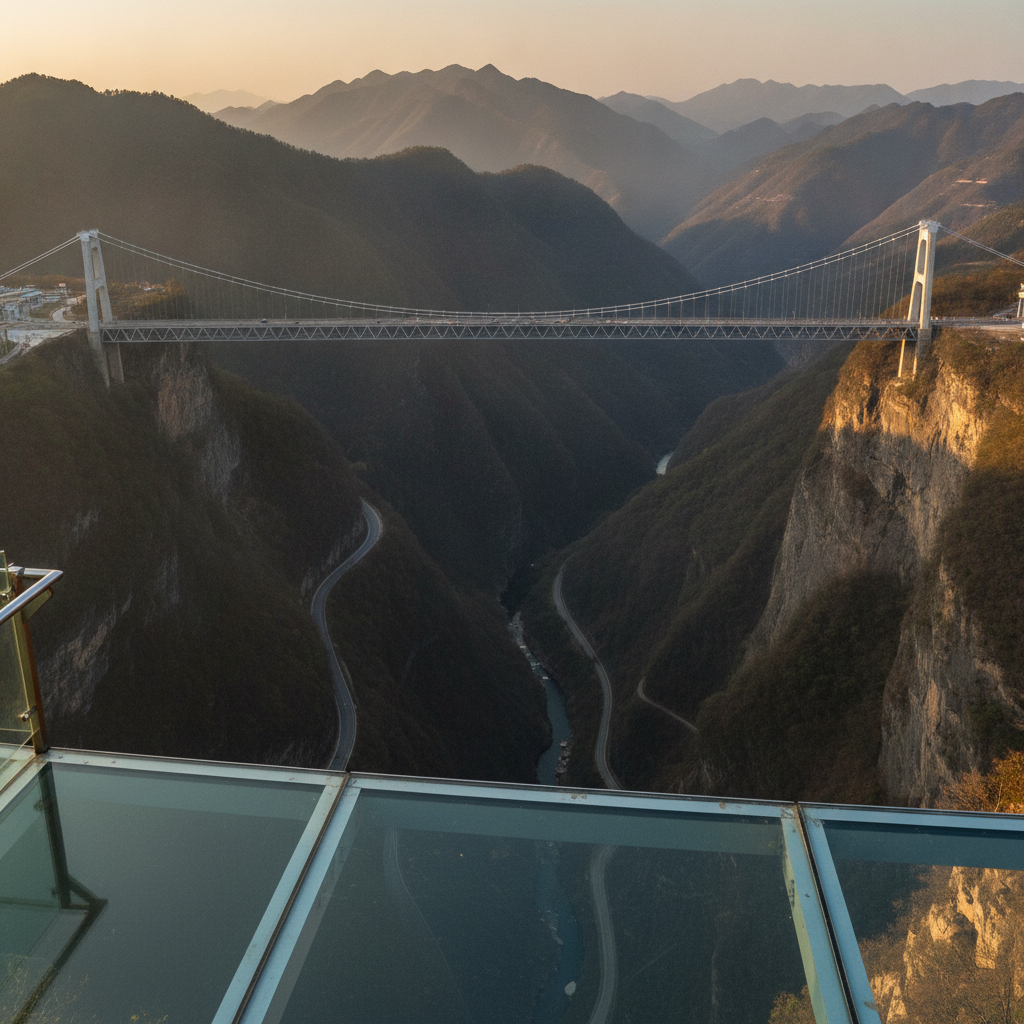
Zhangjiajie at night (the nocturnal dimension of the park that is the least accessed by most visitors—the majority of visitors leave the park by 17:00): the night guide. The Wulinhuyuan town night food street (the evening food market in Wulinhuyuan—the most active street food environment in the Zhangjiajie area from 18:00–23:00, with Tujia grilled meat (烤肉), spicy crayfish (小龙虾), and the fermented tofu (臭豆腐—the fermented stinky tofu famous in Hunan Province)). The park night photography (the Zhangjiajie National Forest Park is technically closed after 18:00 but some guesthouses adjacent to the park boundaries offer nighttime access from their properties—the pillar silhouettes against a clear night sky on moonless nights are the rarest and most dramatic Zhangjiajie photograph). The stargazing (the Wuling Mountains' elevation and distance from major urban centers creates the lowest light pollution of any tourist area in Hunan Province—the Bortle scale rating for the Zhangjiajie plateau: Class 3–4 (rural sky)—sufficient for naked-eye Milky Way photography). The light shows (the Zhangjiajie Grand Canyon Glass Bridge is illuminated by programmable colored LED lighting after dark (19:00–21:00)—the bridge crossing at night is included in the ¥198 combined ticket and is far less crowded than the daytime crossing).
- 6
Zhangjiajie vs. Other Chinese Nature Destinations
The Zhangjiajie comparison guide (how Zhangjiajie compares to the other major Chinese nature destinations—the analysis for travelers choosing between them). Zhangjiajie vs. Guilin (the 2 most internationally known Chinese landscape destinations): Guilin (water + karst + cultural depth + food culture + ease of access): Zhangjiajie (vertical rock + mist + film association + adventure activities): the combination recommendation (the Zhangjiajie–Guilin circuit by HSR via Changsha and Guilin is the most complete China nature circuit—4–5 days in each is sufficient for the primary sites). Zhangjiajie vs. Jiuzhaigou (both are UNESCO World Heritage natural sites): Jiuzhaigou (colored lakes + waterfalls + Tibetan culture + altitude (2,500–4,000m)): Zhangjiajie (vertical pillars + adventure + more accessible altitude). Zhangjiajie vs. Huangshan (Yellow Mountain—安徽—the pine-and-granite mountain most associated with Chinese landscape painting): Huangshan (the more culturally embedded landscape in Chinese art history—5,000 poems written about Huangshan): Zhangjiajie (the more dramatic vertical landscape, the more infrastructure, the more international film recognition). The overall position: Zhangjiajie is the best single nature destination in China for international visitors on a first visit—the Avatar association provides the strongest single recognition point in any international market, and the glass bridge and Bailong Elevator provide the strongest adventure elements of any Chinese national park.
Walk this route with audio
Stories play automatically as you reach each stop — no tapping needed.
More in Zhangjiajie
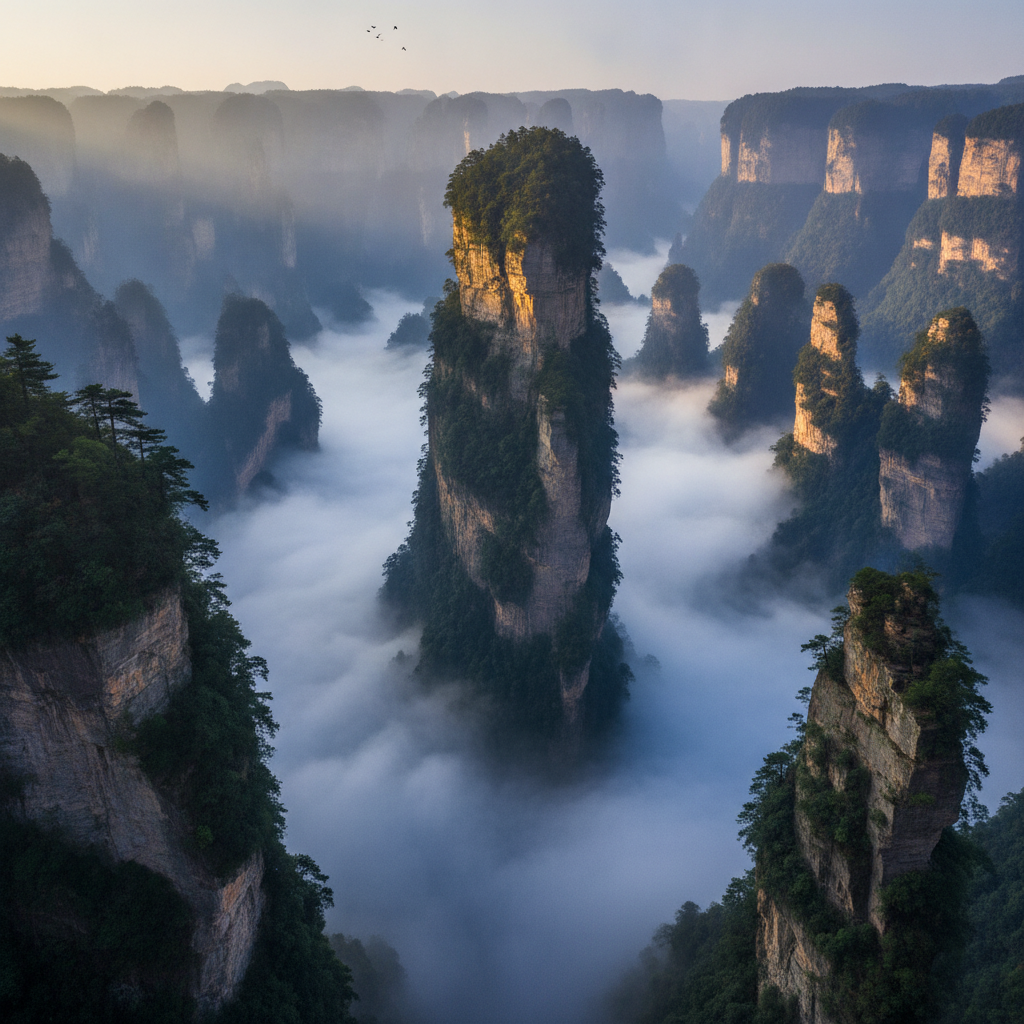
The 357-Meter Rock Pillar That Inspired Avatar's Pandora, the World's Tallest Outdoor Elevator on a Cliff Face & the Tujia Brocade With 100 Traditional Patterns
The 42 Hotels Demolished to Protect a UNESCO Site, the 19-Meter Stalagmite in the Yellow Dragon Cave & the Complete Zhangjiajie Circuit for Under USD 100
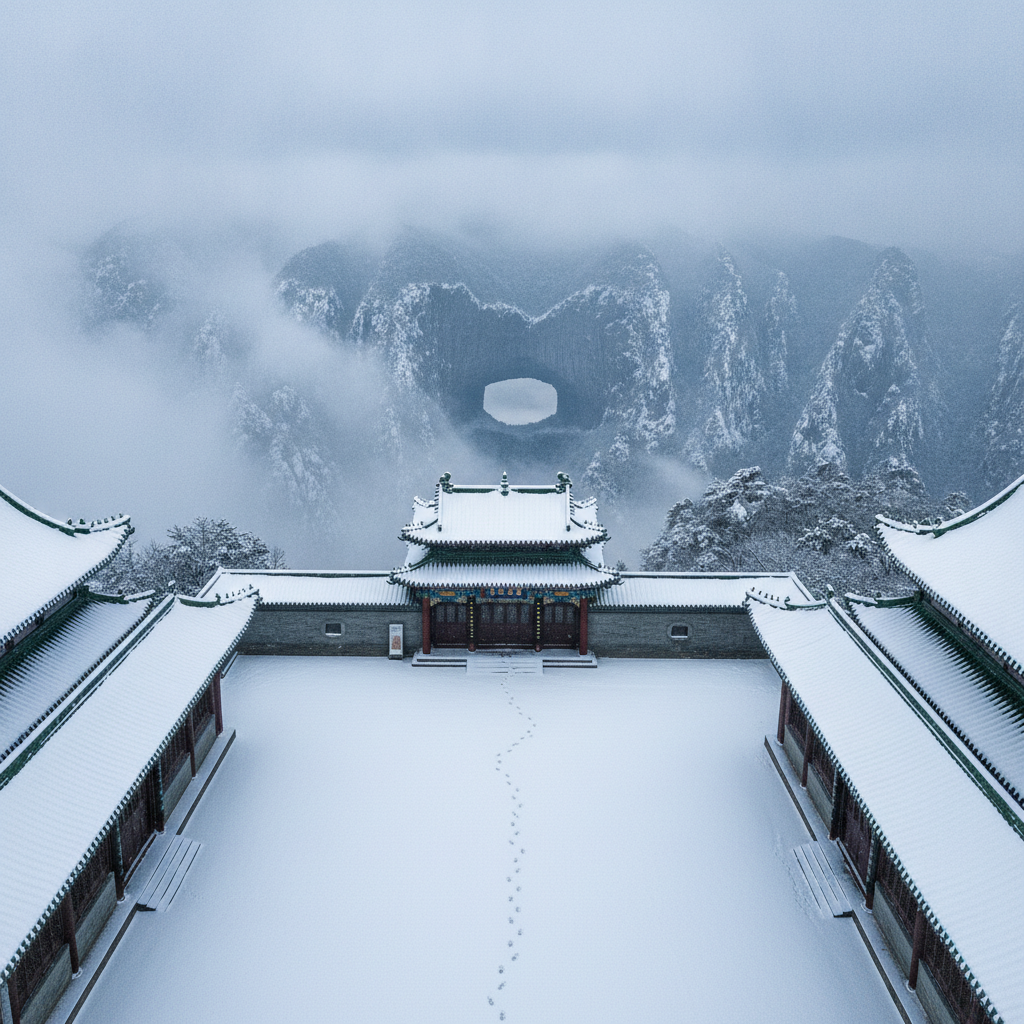
The 1,800-Year Pilgrimage to the Temple on the Summit, the Avatar Effect That Increased International Visitors 9× & the Trail Behind the Widest Waterfall in Asia
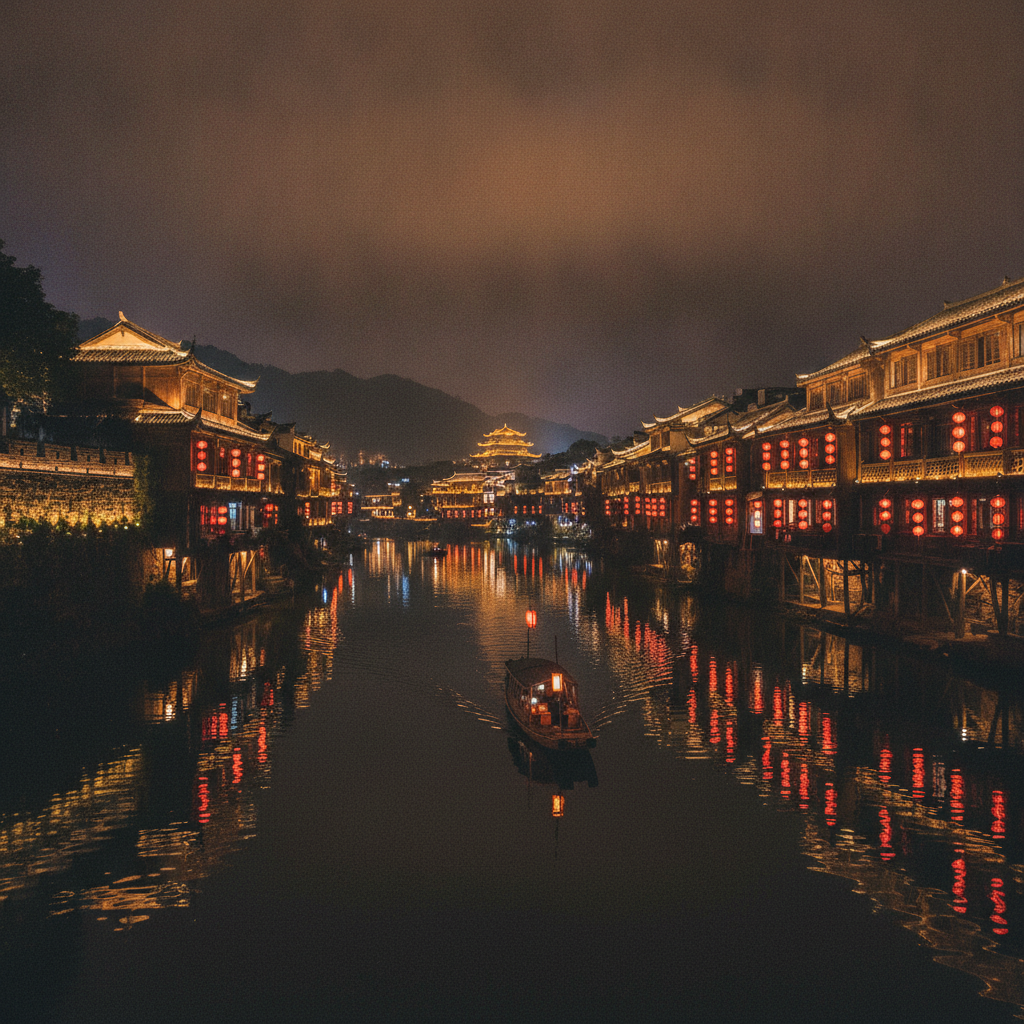
The Pillar That Was Renamed After a Movie, the Living-Fossil Tree Discovered in the Park in 1941 & the Red Bull Wingsuit Pilots Flying Through a 30-Meter Rock Arch at 200 km/h