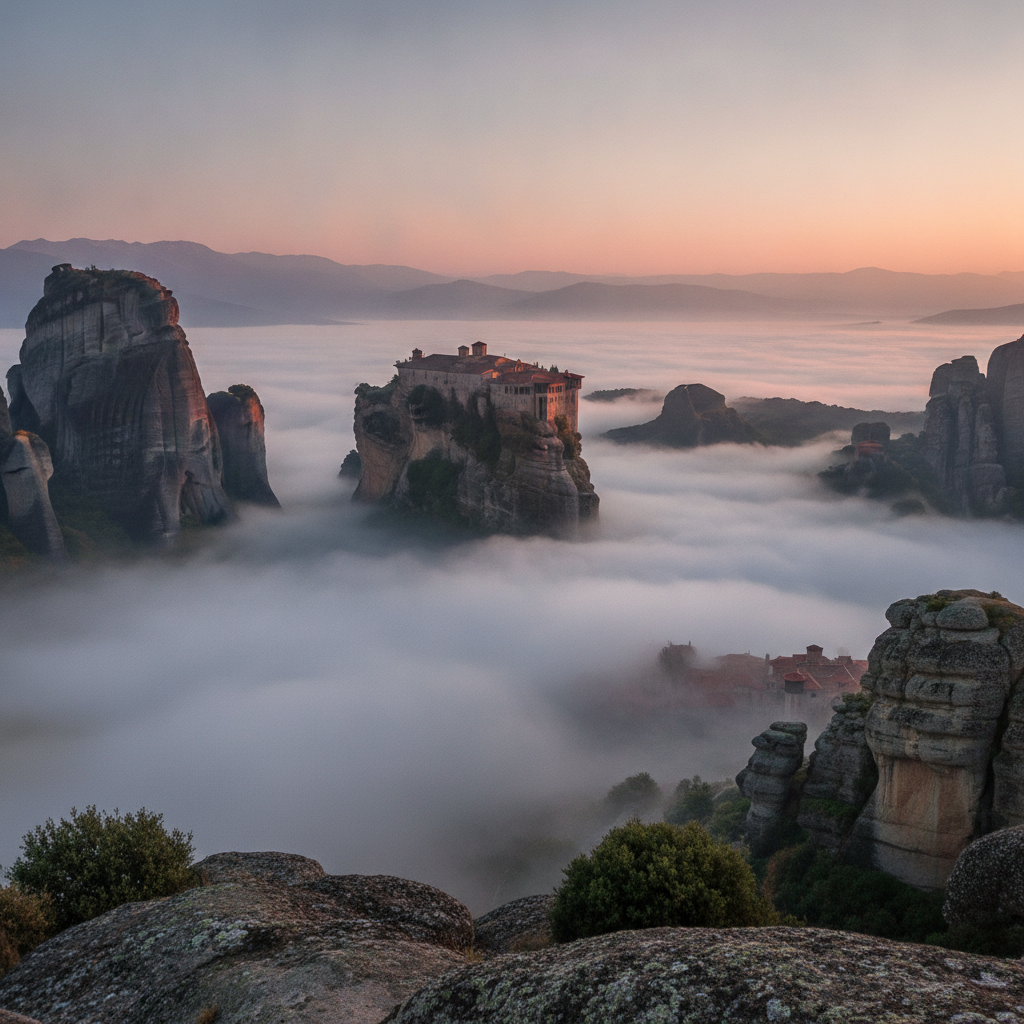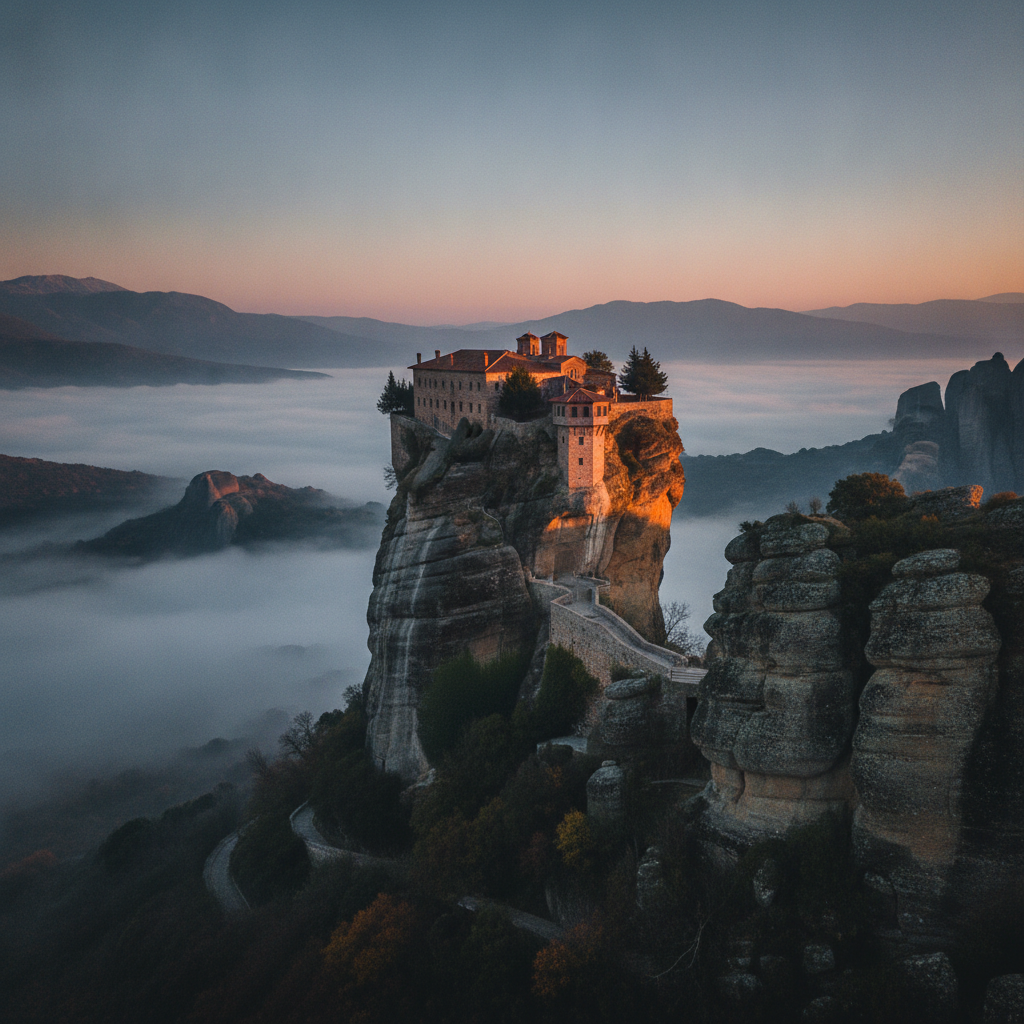
Meteora Film and Art: Agias Triadas Bond Film Location, Theophanes Cretan Frescoes, Roussanou Nunnery, Modern Rock Climbing, Thessaly Plain View, and Practical Information
The Meteora art and adventure route covers the James Bond film location monastery, the earliest Cretan school frescoes in mainland Greece, the only nunnery at Roussanou, the 700 rock climbing routes on the same pillars the monks scaled, the aerial Thessaly plain view, and practical transport information.
- 1
Agias Triadas: The Bond Film Location
Agias Triadas monastery, perched on an isolated pillar connected to the main rock mass only by 130 steps cut into the narrow rock bridge, served as the filming location for the James Bond film For Your Eyes Only in 1981 and the subsequent international recognition transformed Meteora from an Orthodox pilgrimage site into a globally recognized film location. The monastery with the 17th century frescoes and the isolated position that the film exploited is the most dramatically positioned of the smaller Meteora monasteries.
- 2
Agios Nikolaos Anapafsas: The Theophanes Frescoes
Agios Nikolaos Anapafsas, the smallest of the active Meteora monasteries on a narrow pillar reached by the 90-step staircase, contains the fresco cycle painted by the Cretan master Theophanes in 1527 - the earliest major work of the Cretan School of painting in mainland Greece. The Theophanes frescoes show the mature Cretan Byzantine style with the naturalistic faces, deep blue backgrounds, and the architectural precision that distinguishes the Cretan School from the earlier Macedonian tradition.
- 3
Roussanou: The Nunnery on the Natural Bridge
Roussanou monastery, founded in 1388 and rebuilt in 1545 on a pillar that the natural rock bridge connects to the surrounding terrain, is the only nunnery in the Meteora complex and the monastery with the most accessible approach for visitors with limited mobility. The Roussanou 16th century frescoes and the location on the natural rock bridge, with the sheer drops visible from all windows, create the most vertiginous architectural experience in the Meteora complex.
- 4
Rock Climbing Meteora: The Modern Vertical Sport
The Meteora pillars, which the monks first climbed using wooden pegs and rope ladders in the 14th century, have been developed since the 1970s as one of the premier rock climbing destinations in Europe, with over 700 established routes on the sandstone pillars that attract climbers from across Europe and Japan. The encounter between the rock climber ascending the pillar and the monk observing from the monastery terrace above is the most visually distinctive juxtaposition in modern Greek outdoor sport.
- 5
Thessaly Plain: The Agricultural View from Above
The Thessaly plain visible from the Meteora heights, the largest agricultural plain in Greece stretching 150 kilometers from the Pindus to the Pelion peninsula, provides the geographical context for understanding why the Meteora pillars appear so dramatically. The Thessalian plain is the most productive agricultural zone in Greece and the landscape that the Meteora monks surveyed from their rock for 700 years as the agricultural civilization worked below.
- 6
Meteora Practical: Timing and Transport
Meteora is accessible from Athens in 4.5 hours by train to Kalabaka via Larissa, or 3.5 hours by car. The monasteries keep different opening hours on a rotating schedule to ensure at least 4 are open daily, with Monday the most restricted day. The April to October season provides the best weather and all 6 monasteries open, while the November to March period offers the dramatic winter light and the empty monastery courtyards that reward the winter visitor.
Walk this route with audio
Stories play automatically as you reach each stop — no tapping needed.
More in Meteora
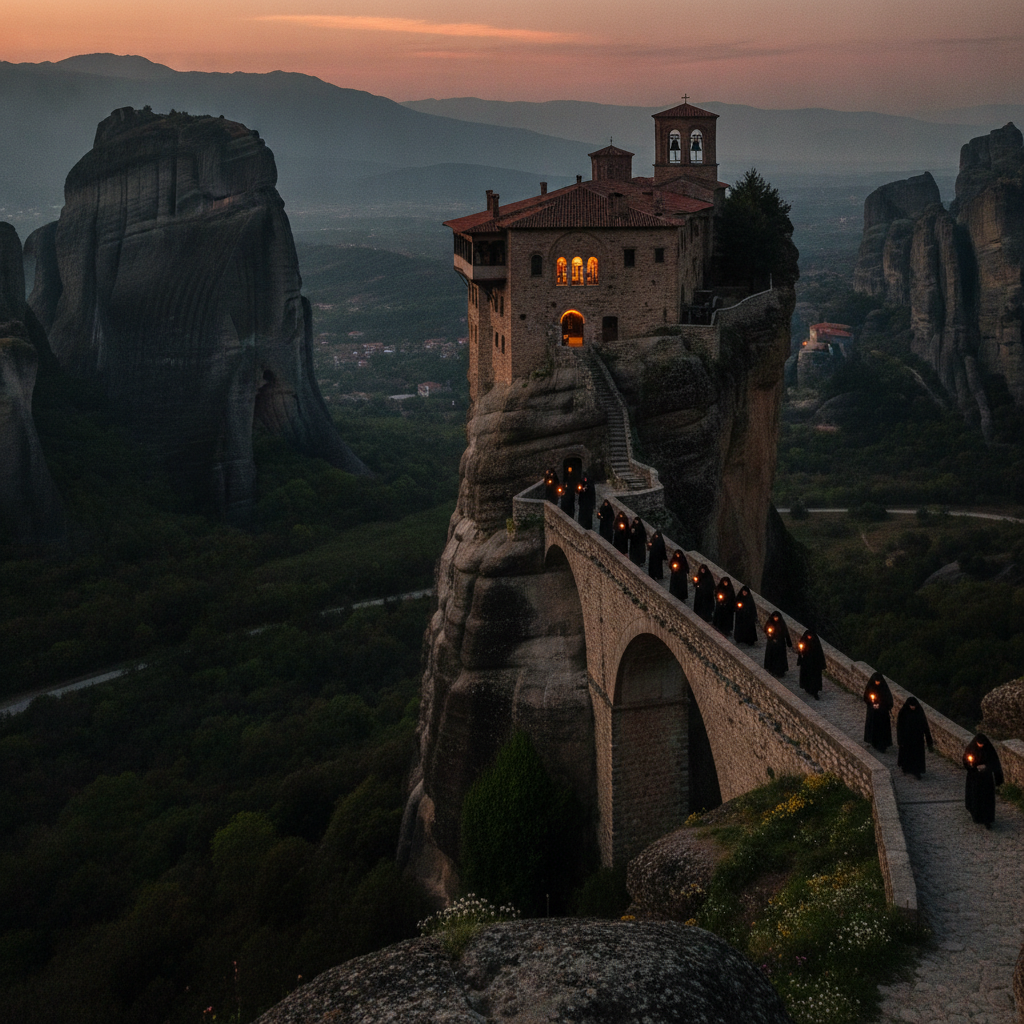
Meteora Orthodox Calendar: Holy Week Easter Vigil, Annunciation and Greek Independence Day, Panegyri Saint Festivals, Canonical Hour Bells, Dormition Pilgrimage, and the Living Tradition
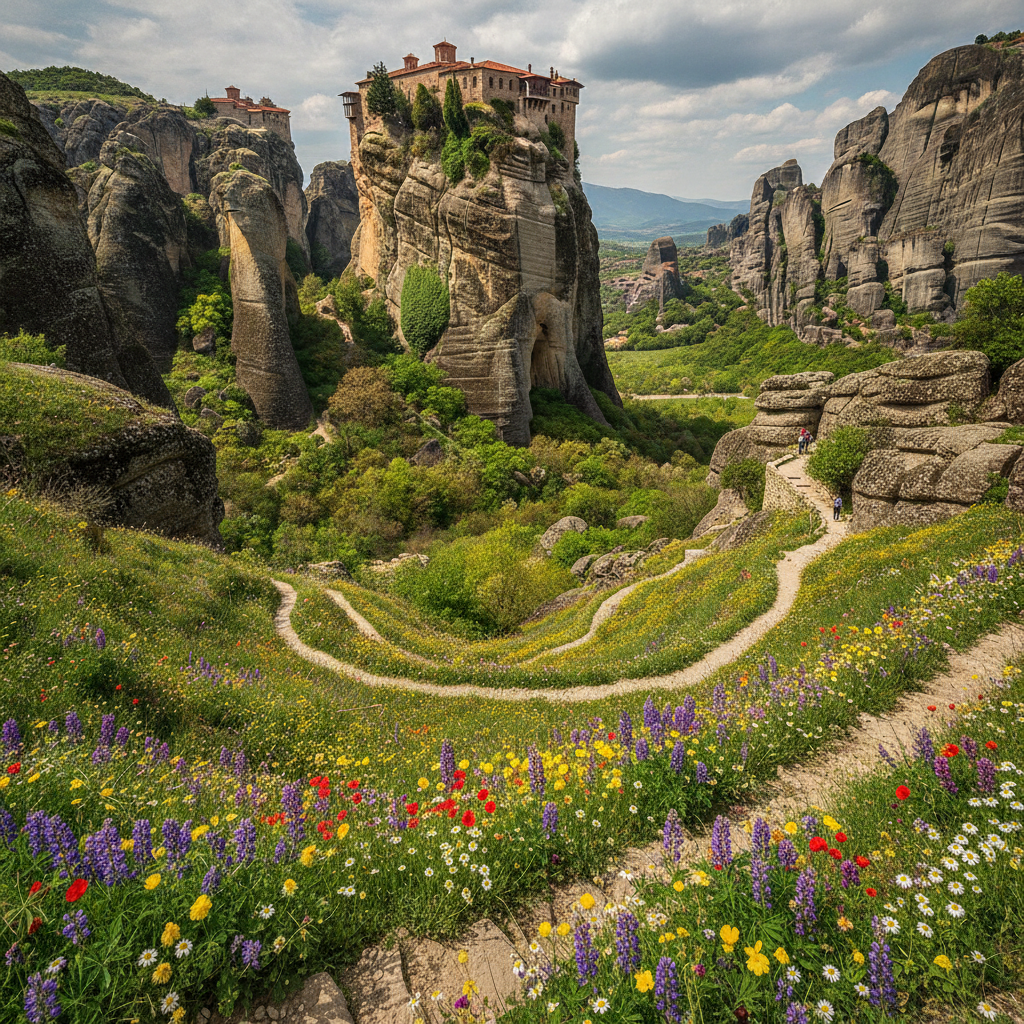
Meteora Active and Departure: Cycling the Valley Circuit, Hiking the Monastery Trail, Sunrise Photography, Four Seasons Guide, Delphi Day Trip, and the Farewell Silhouette
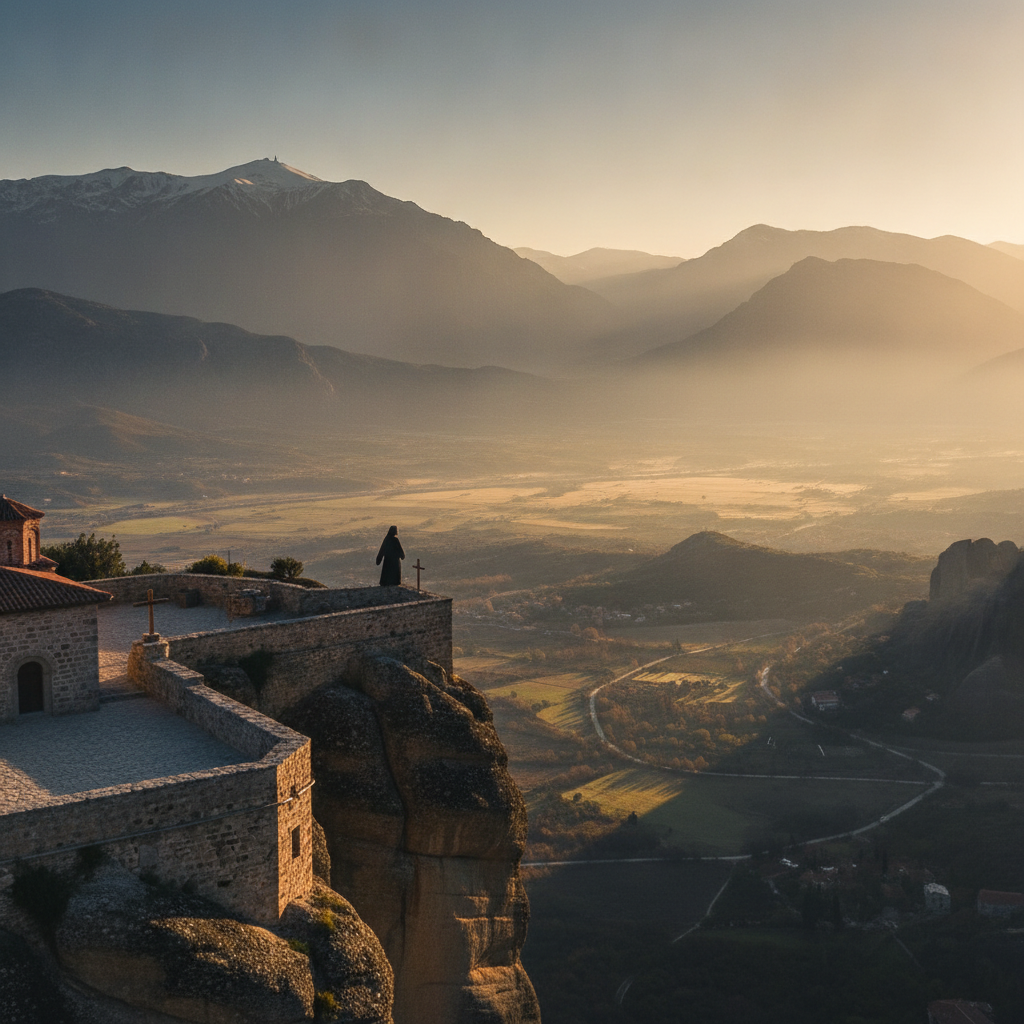
Meteora Food and Summary: Thessalian Cuisine, Trikala Wine, Agios Stefanos Accessible Nunnery, Diavolorachis Devil Ridge View, Night Soundscape of Bells and Owls, and the Sacred Vertical Summary
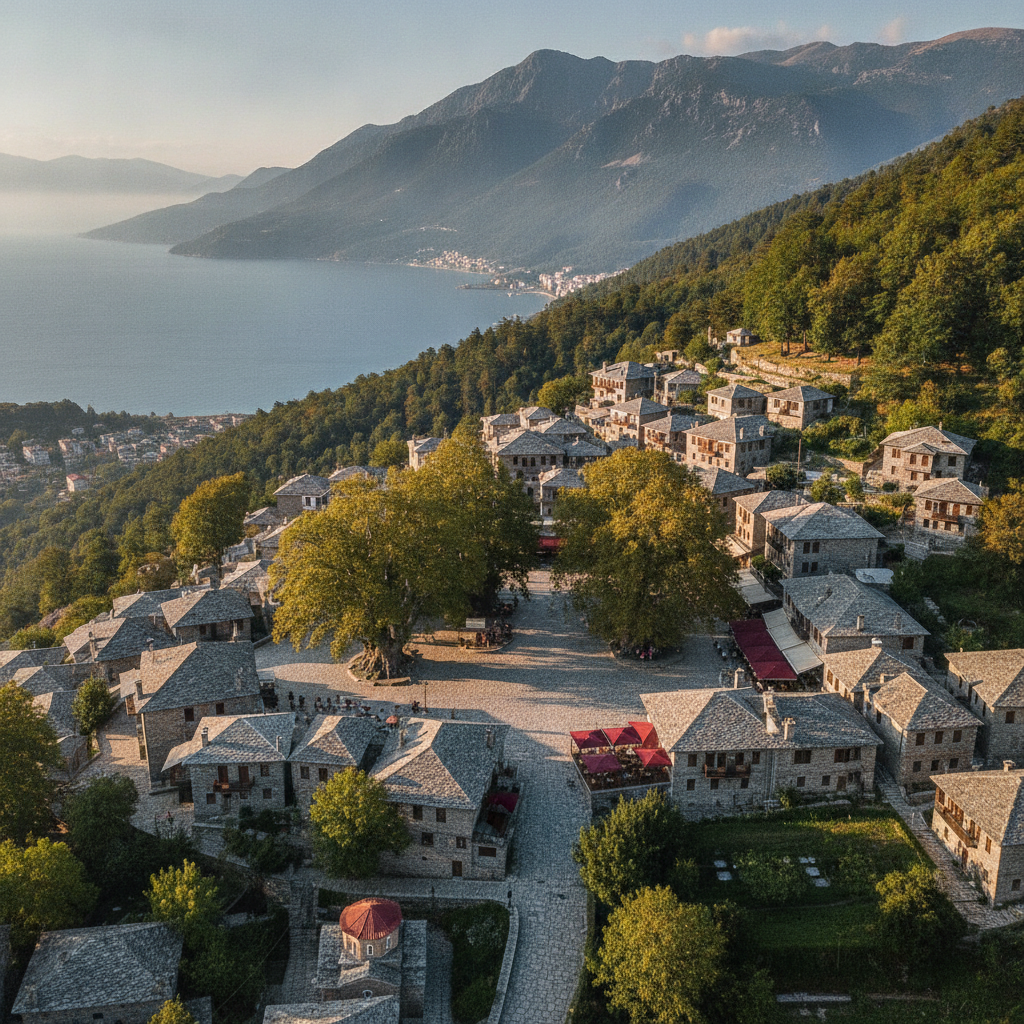
Meteora Region and Context: Mount Athos Hesychast Tradition, Kalabaka Byzantine Cathedral, Trikala Thessalian City, Pelion Mythological Mountains, Thessaly Region Overview, and the Wider Greece Connection
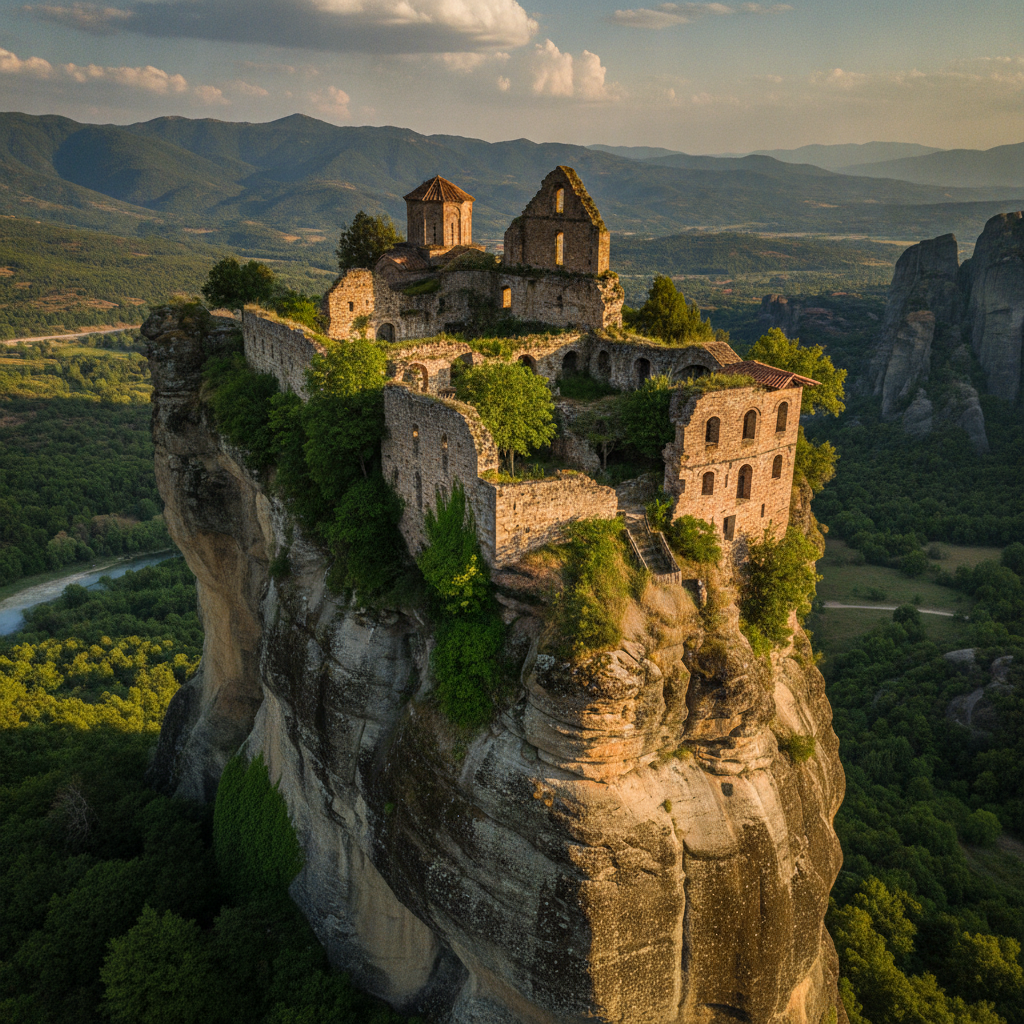
Meteora History: Theopetra Prehistoric Cave, 9th Century Hermit Settlement, 14th-16th Century Golden Age, Monastery Decline and Abandoned Ruins, UNESCO Status, and Kastraki Village