Meteora Active and Departure: Cycling the Valley Circuit, Hiking the Monastery Trail, Sunrise Photography, Four Seasons Guide, Delphi Day Trip, and the Farewell Silhouette
The Meteora active and farewell route covers the 15-kilometer bicycle valley circuit, the 4-hour monastery-to-monastery hiking trail, the five canonical sunrise photography positions, the four seasonal experiences, the Delphi 2-day circuit combination, and the departure reflection on why the Meteora silhouette is the most enduring image in the Greek travel experience.
- 1
Meteora by Bicycle: The Valley Road Circuit
The Meteora valley road circuit by bicycle from Kalabaka, covering the 15-kilometer loop beneath the pillars that passes the monastery access roads and the viewpoints from the valley floor, provides the most physically engaged perspective on the Meteora landscape at the speed that reveals the changing geometry of the pillar groupings as the rider moves through the valley. The bicycle rental from Kalabaka and the flat valley floor section before the monastery road climbs make the Meteora cycling circuit accessible to all fitness levels.
- 2
Sunrise Photography: The Five Golden Hour Positions
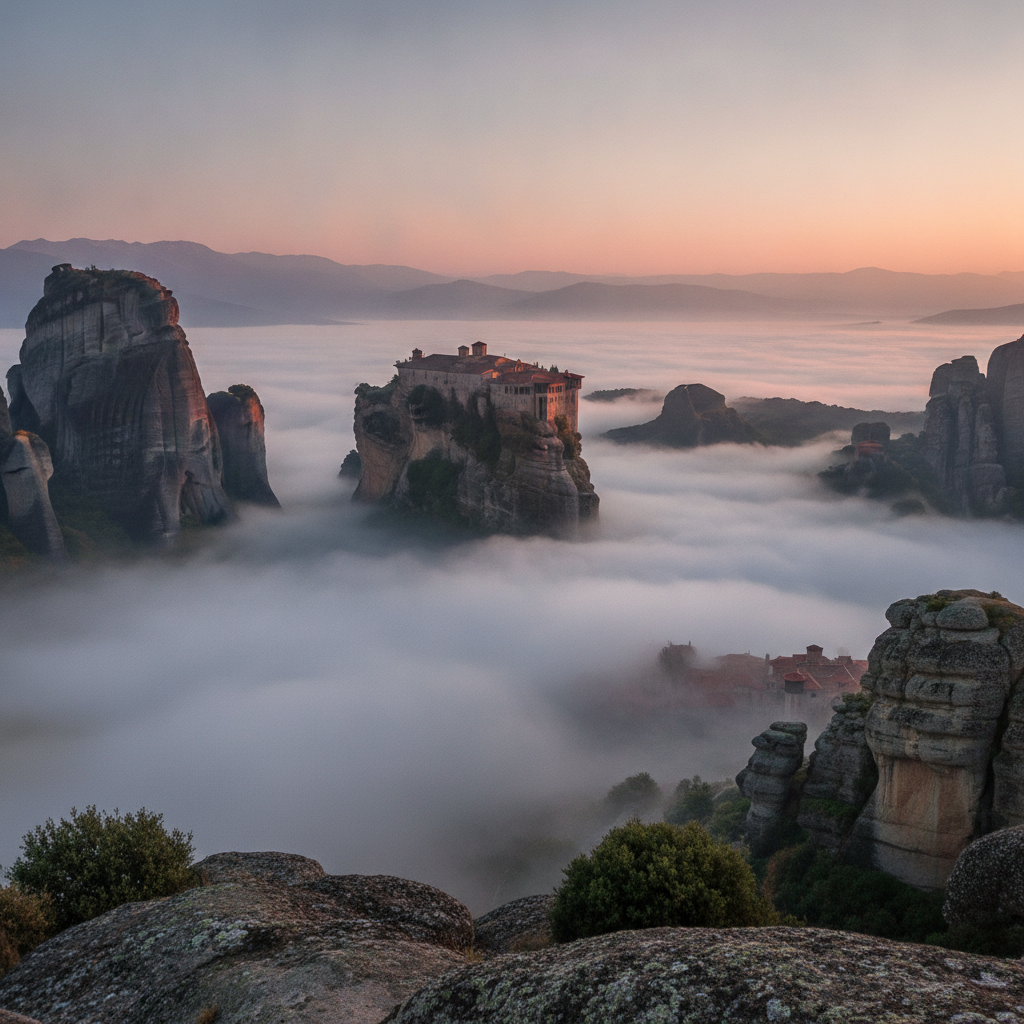
The Meteora sunrise photography circuit, beginning at the road above the Roussanou monastery 30 minutes before dawn, covers the five classic viewpoints that landscape photographers have established as the canonical Meteora compositions: the Roussanou sunrise, the Varlaam-Great Meteoron pair, the Agias Triados isolated pillar, the valley panorama from the main road, and the last light on the west-facing Kalabaka pillar at sunset. The Meteora golden hour light is the most dramatic natural light event in the Greek landscape.
- 3
Meteora Hiking: The Monastery to Monastery Trail
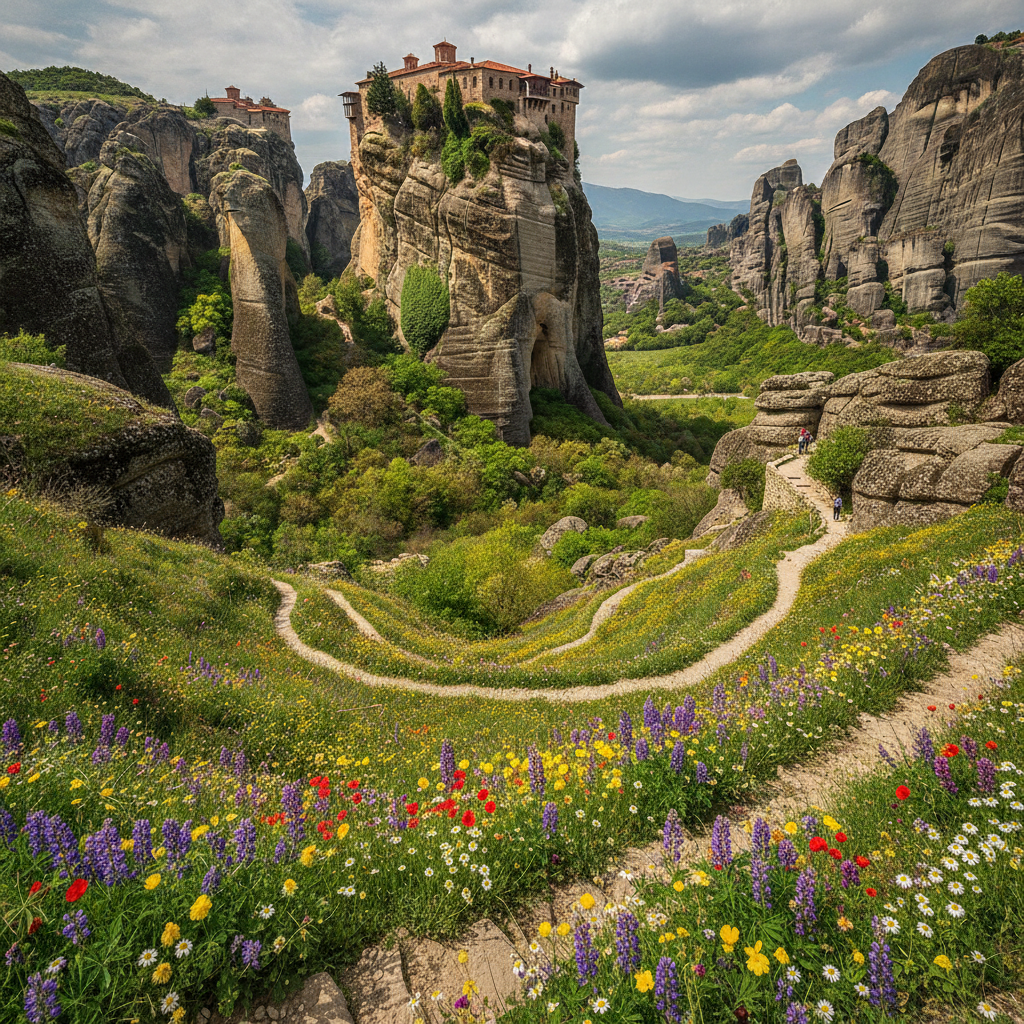
The hiking trail network between the Meteora monasteries, maintained by the Kalabaka municipality and marked with the European E4 long distance trail waymarks, provides the most complete ground-level exploration of the Meteora landscape on foot. The 4-hour loop from Kalabaka through the valley, up to the Agias Triadas monastery, across the ridge to the Great Meteoron, down to the Varlaam, and back to Kalabaka covers all major monastery viewpoints and the rock channel passages between the pillar bases.
- 4
Meteora Weather: The Four Seasons
Meteora in spring from April to May, when the orchids and the wildflowers bloom in the rock crevices and the snow occasionally dusts the highest pillars, is the season that the botanical visitor and the hiking visitor find most rewarding. The Meteora in winter, most dramatically in January and February when the snow covers the monastery roofs and the mist fills the valley floor creating the most photographically spectacular condition in the Greek landscape, is the experience the winter visitor is rewarded with.
- 5
Delphi Day Trip: The Oracle and the Monastery
The Delphi archaeological site 180 kilometers south of Meteora via the Lamia-Amfissa road creates the most spiritually loaded 2-day itinerary in Greece - the Byzantine monasteries on the inaccessible rocks paired with the ancient oracle sanctuary where the Pythia delivered the pronouncements of Apollo. The Delphi museum containing the Charioteer of Delphi and the Meteora monasteries containing the Byzantine fresco cycles are the two most complete artistic collections in the central Greek landscape.
- 6
Meteora Departure: The Unforgettable Silhouette
The Meteora silhouette - the monastery buildings on the pillar summits against the evening sky - is the image that survives the visit and returns without prompting in the months and years after the trip. No other site in Greece creates the same combination of geological spectacle, architectural audacity, spiritual continuity, and artistic achievement in a single viewable landscape, and no other site generates the same universal response of disbelief from the visitor seeing it for the first time from the road approaching Kalabaka.
Walk this route with audio
Stories play automatically as you reach each stop — no tapping needed.
More in Meteora
Meteora Orthodox Calendar: Holy Week Easter Vigil, Annunciation and Greek Independence Day, Panegyri Saint Festivals, Canonical Hour Bells, Dormition Pilgrimage, and the Living Tradition
Meteora Food and Summary: Thessalian Cuisine, Trikala Wine, Agios Stefanos Accessible Nunnery, Diavolorachis Devil Ridge View, Night Soundscape of Bells and Owls, and the Sacred Vertical Summary
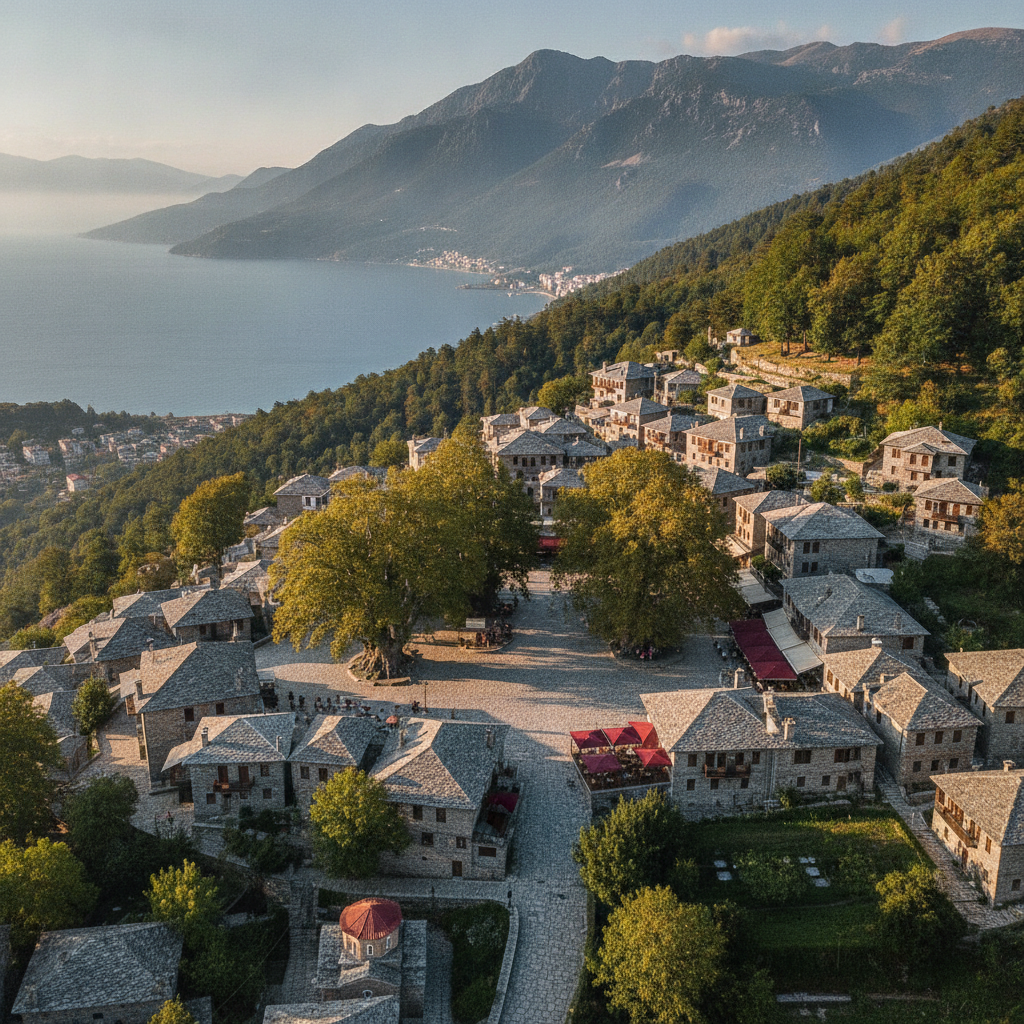
Meteora Region and Context: Mount Athos Hesychast Tradition, Kalabaka Byzantine Cathedral, Trikala Thessalian City, Pelion Mythological Mountains, Thessaly Region Overview, and the Wider Greece Connection
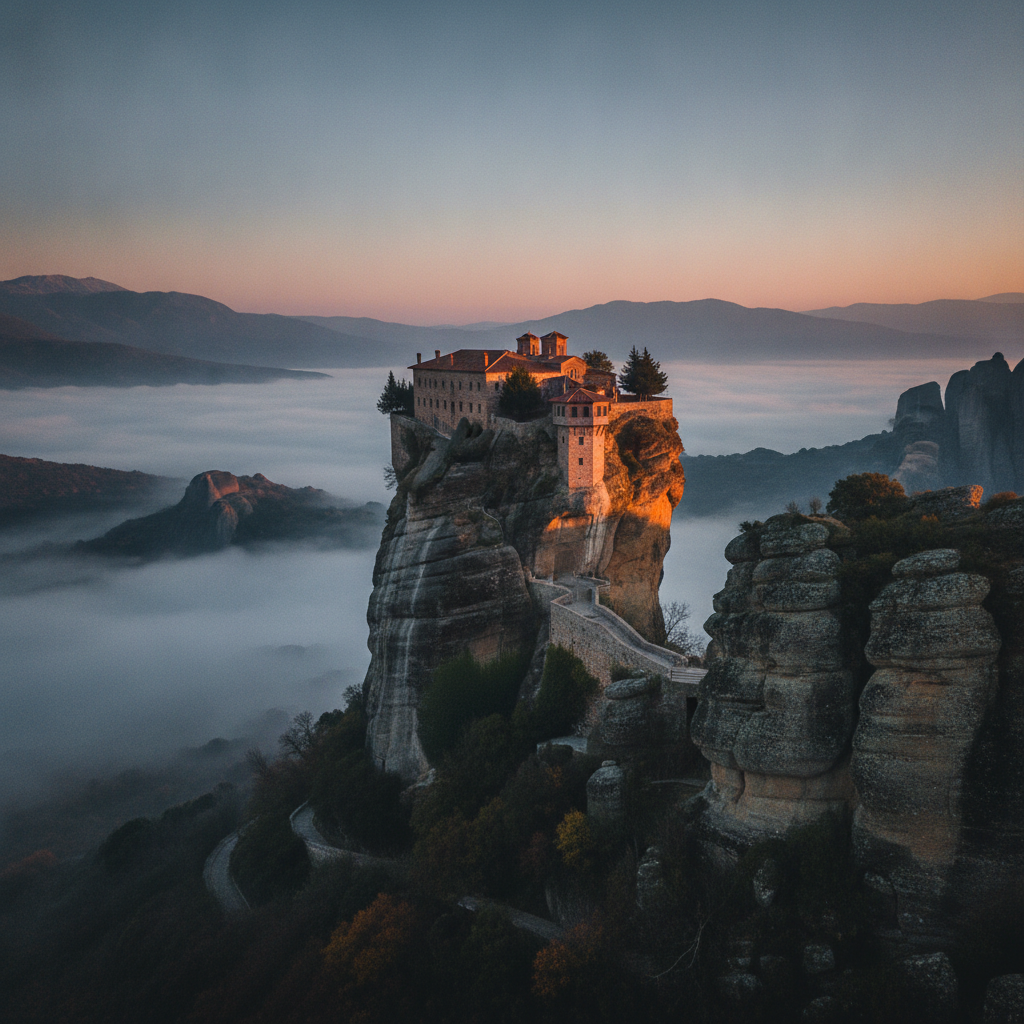
Meteora Film and Art: Agias Triadas Bond Film Location, Theophanes Cretan Frescoes, Roussanou Nunnery, Modern Rock Climbing, Thessaly Plain View, and Practical Information
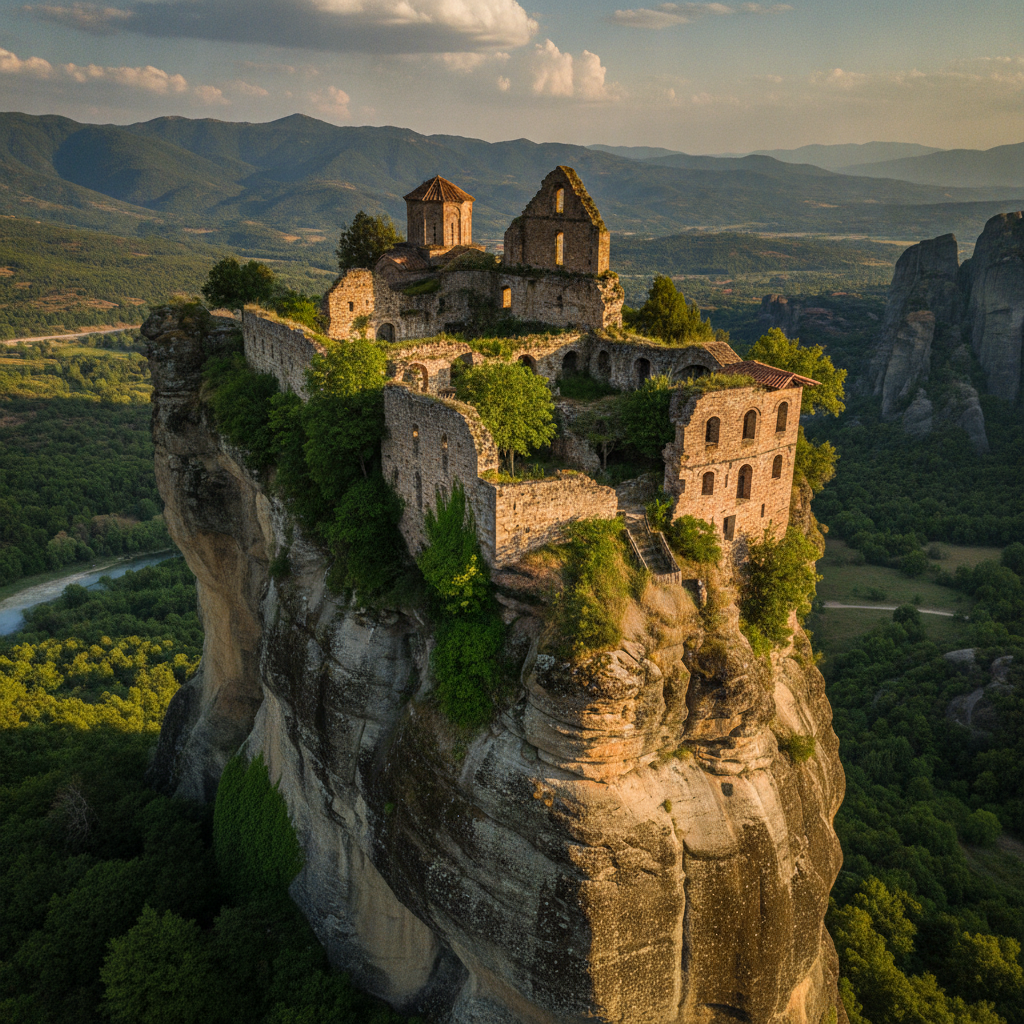
Meteora History: Theopetra Prehistoric Cave, 9th Century Hermit Settlement, 14th-16th Century Golden Age, Monastery Decline and Abandoned Ruins, UNESCO Status, and Kastraki Village