Meteora Orthodox Calendar: Holy Week Easter Vigil, Annunciation and Greek Independence Day, Panegyri Saint Festivals, Canonical Hour Bells, Dormition Pilgrimage, and the Living Tradition
The Meteora Orthodox calendar route covers the Holy Week Easter services at the six monasteries, the Annunciation and Greek Independence Day combined feast at the Great Meteoron, the patron saint panegyri festivals, the daily canonical hour bell ringing, the Dormition pilgrimage day, and the complete Orthodox year as experienced from the Meteora rocks.
- 1
Holy Week at Meteora: The Easter Vigil Service
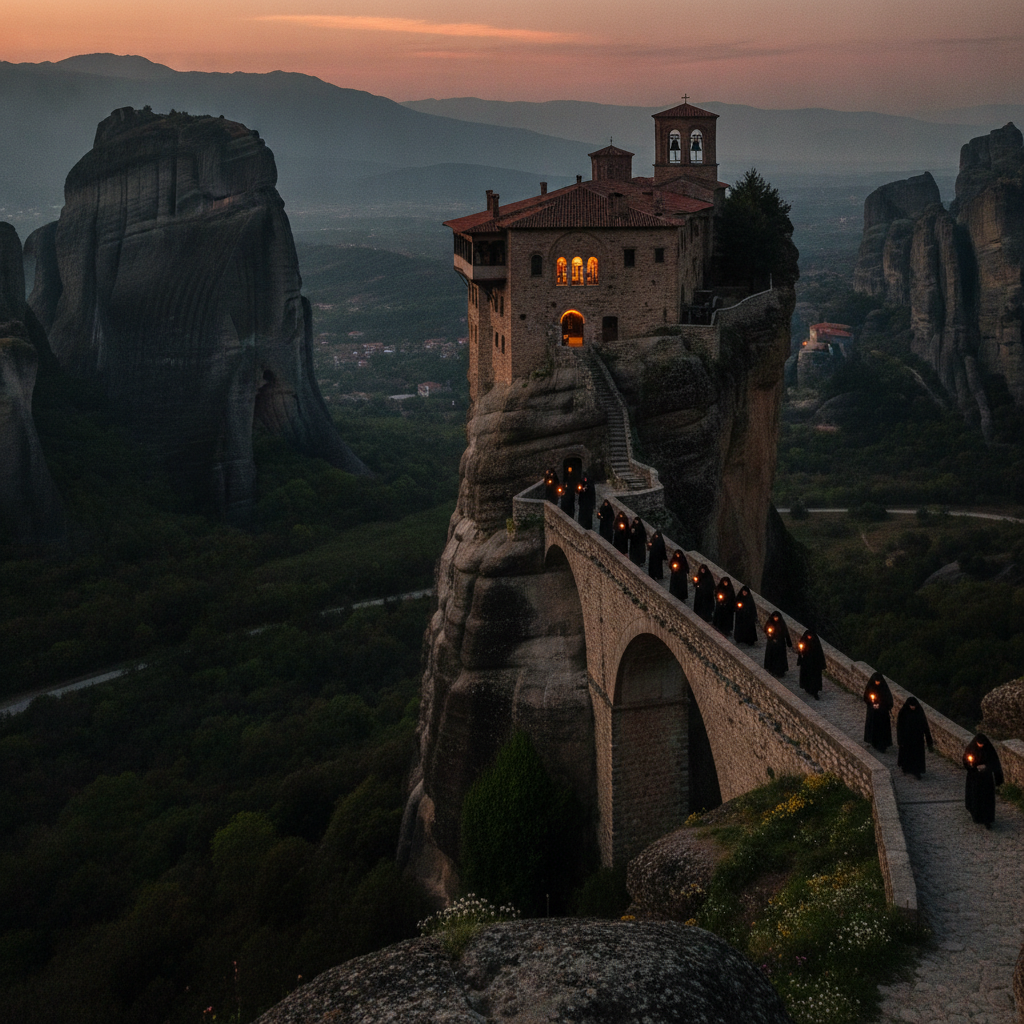
The Holy Week services at the Meteora monasteries, from the Palm Sunday procession to the Good Friday epitaphios lament and the Easter Saturday midnight Resurrection service, are the most complete expression of the Orthodox liturgical year available to the visitor in a setting where the liturgy has been performed continuously since the 14th century. The Easter Saturday midnight service at the Roussanou nunnery, when the nuns process across the rock bridge with candles in the absolute darkness before the Resurrection announcement, is the most dramatically atmospheric Easter celebration in mainland Greece.
- 2
Annunciation: The Great Meteoron Double Feast
The Annunciation of the Virgin on 25 March, the feast day of the Great Meteoron monastery and simultaneously the Greek Independence Day commemorating the 1821 revolution, is the double celebration that makes it the most significant feast day in the Meteora calendar. The liturgy at the Great Meteoron on 25 March, when the independence ceremony and the religious feast converge in the monastery with the largest community, creates the most complete expression of Greek Orthodox and national identity in the Meteora annual cycle.
- 3
Panegyri Festivals: The Patron Saint Days
Each of the six active Meteora monasteries celebrates the feast day of its patron saint with the panegyri festival that the neighboring village communities attend, combining the liturgy in the monastery church with the outdoor meal, the folk music, and the dancing on the monastery approach road. The panegyri at the monastery is the most direct social connection between the monastic community and the lay population and the most authentic Greek Orthodox festival experience available to the Meteora visitor who times the visit accordingly.
- 4
Canonical Hours: The Monastery Bell Schedule
The daily rhythm of the Meteora monasteries follows the canonical hours established in the 4th century desert father tradition: the midnight office, the morning lauds at sunrise, the third, sixth, and ninth hours through the day, and the vespers at sunset. The monastery bells of Meteora, audible across the valley from the Kalabaka hotels and the Kastraki guesthouses, mark the canonical hours with the distinctive Byzantine bell-ringing patterns that the bell-ringer monk maintains as the oldest continuously practiced art in the Meteora community.
- 5
Dormition: The August 15th Pilgrimage Day
The Dormition of the Virgin on 15 August, the most important feast day in the Orthodox calendar after Easter and Christmas, is celebrated at the Roussanou and Agios Stefanos nunneries with the most elaborate liturgical ceremony of the summer season. The Dormition feast is the peak pilgrimage day of the Meteora year, when the largest number of Greek Orthodox Christians make the monastery visit as a religious act rather than a tourism activity, restoring the Meteora to its primary identity as a living pilgrimage site on the one day when the pilgrims outnumber the tourists.
- 6
The Orthodox Year at Meteora: The Living Tradition
The Orthodox liturgical year at Meteora, from the midnight Easter Resurrection through the summer patron saint festivals to the winter Christmas vigil and back to Lent, provides the complete framework within which the monastic community has organized its collective life for 700 years. The visitor who understands this framework, even without sharing the Orthodox faith, experiences the Meteora not as a geological and architectural spectacle but as a living community whose members have found in the most inaccessible rocks in Greece the most durable expression of the search for the sacred in the Christian tradition.
Walk this route with audio
Stories play automatically as you reach each stop — no tapping needed.
More in Meteora
Meteora Active and Departure: Cycling the Valley Circuit, Hiking the Monastery Trail, Sunrise Photography, Four Seasons Guide, Delphi Day Trip, and the Farewell Silhouette
Meteora Food and Summary: Thessalian Cuisine, Trikala Wine, Agios Stefanos Accessible Nunnery, Diavolorachis Devil Ridge View, Night Soundscape of Bells and Owls, and the Sacred Vertical Summary
Meteora Region and Context: Mount Athos Hesychast Tradition, Kalabaka Byzantine Cathedral, Trikala Thessalian City, Pelion Mythological Mountains, Thessaly Region Overview, and the Wider Greece Connection
Meteora Film and Art: Agias Triadas Bond Film Location, Theophanes Cretan Frescoes, Roussanou Nunnery, Modern Rock Climbing, Thessaly Plain View, and Practical Information
Meteora History: Theopetra Prehistoric Cave, 9th Century Hermit Settlement, 14th-16th Century Golden Age, Monastery Decline and Abandoned Ruins, UNESCO Status, and Kastraki Village