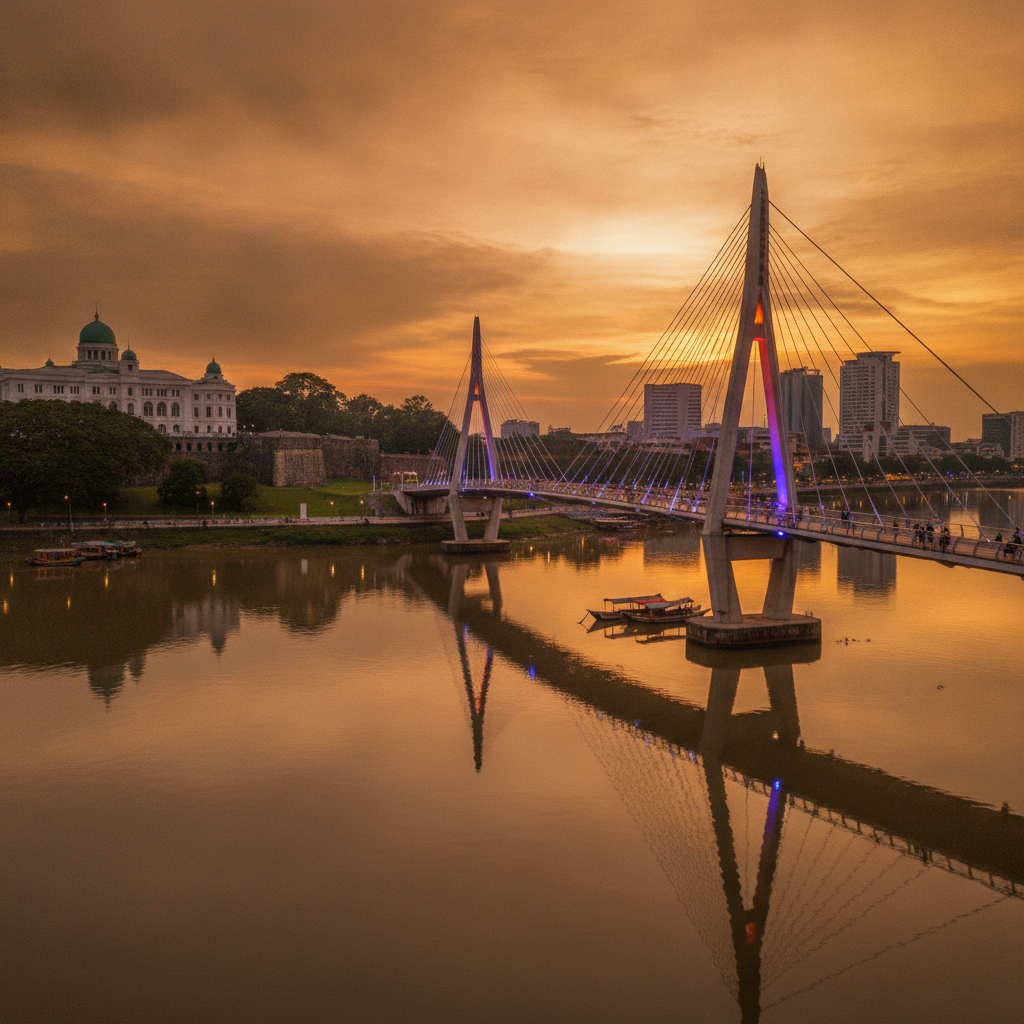
Kuching Waterfront & Old Town Walk
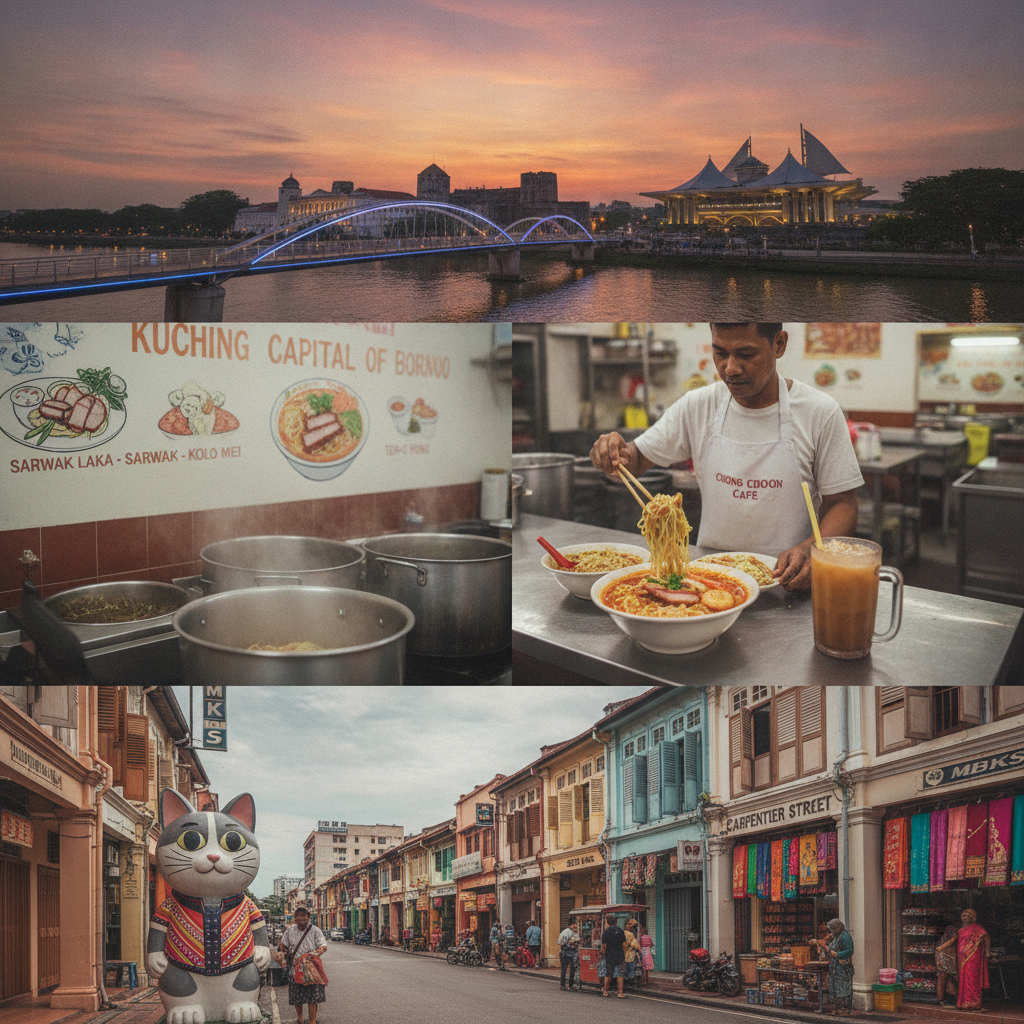
Walk Kuching's charming waterfront — the capital of Sarawak on the banks of the Sarawak River is one of the most liveable and walkable cities in Malaysian Borneo, with a colonial waterfront, Chinatown, the Astana palace, and the cat statues that reflect the city's name (kuching means 'cat' in Malay).
- 1
Kuching Waterfront Promenade
The Kuching Waterfront is the most pleasant public promenade in Sarawak — the 1km walkway along the southern bank of the Sarawak River facing the Astana palace and Fort Margherita on the opposite shore provides the most complete view of Kuching's layered history, with the colonial buildings of the Brooke era Rajah period, the Chinese shop-houses behind, and the graceful Astana across the river. The waterfront is liveliest in the evening when the riverside restaurants open, the promenade fills with joggers and families, and the traditional tambang (wooden ferry boats) carry passengers between the banks.
- 2
The Astana Palace
The Astana (palace) on the north bank of the Sarawak River was built in 1870 by the second White Rajah, Charles Brooke, as the official residence of the Brooke family who ruled Sarawak as the 'White Rajahs' from 1841 to 1946 — the elegant colonial building with its three white-painted colonial bungalows connected under a single roof is now the official residence of the Yang di-Pertua Negeri (governor) of Sarawak and is not open to the public, but its position facing the Kuching waterfront across the river makes it the most photographed building in the city.
- 3
Fort Margherita
Fort Margherita on the north bank of the Sarawak River was built in 1879 by Charles Brooke and named after his wife Ranee Margaret — the white fort with its crenellated towers overlooking the river approach to Kuching was built to defend the settlement from pirate attacks, which were a significant security concern throughout the Brooke era. The fort has been converted into a police museum documenting law enforcement history in Sarawak, and its towers provide the best views of the Sarawak River and the Kuching waterfront.
- 4
Old Courthouse Complex
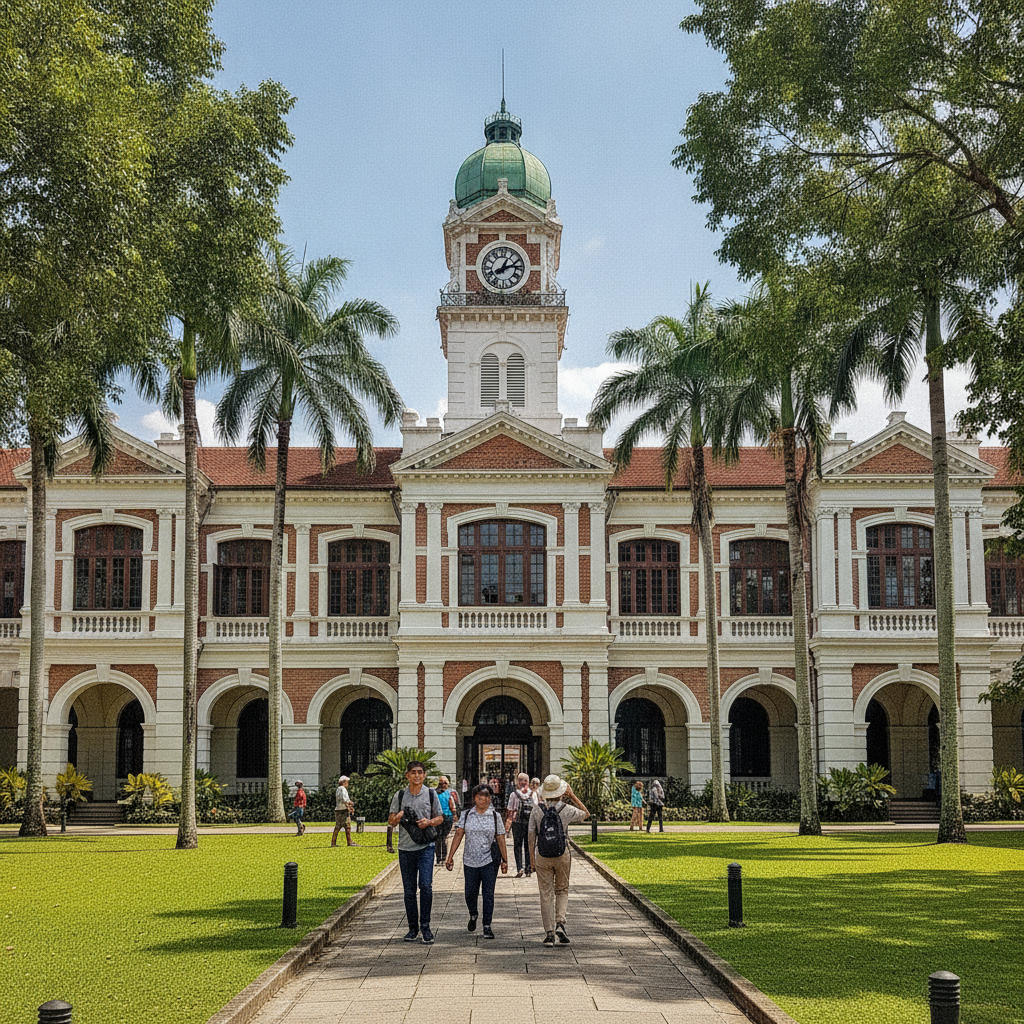
The Old Courthouse (now converted into arts and event spaces) is one of Kuching's finest colonial buildings — the complex including the main courthouse building, the colonnade, and the Charles Brooke Memorial statue in front documents the administrative ambitions of the Brooke Rajah era in its grandest colonial public building. The complex now hosts galleries, restaurants, and cultural events, and the restoration of the colonial structure as a cultural venue represents one of Southeast Asia's most successful adaptive reuse projects.
- 5
Kuching Sunday Market
The Kuching Sunday Market (Pasar Minggu) at the Satok area is one of the most extraordinary weekly markets in Malaysian Borneo — the Sunday gathering of traders from the Iban, Bidayuh, Orang Ulu, Malay, and Chinese communities of the Sarawak interior and coast brings wild honey, jungle ferns (paku), wild boar meat, freshwater fish, exotic jungle fruits (the mangosteen, the durian, the tarap, the breadfruit), traditional medicines, and handicrafts to the market in a commercial gathering that is simultaneously a practical economic event and a cultural performance of Sarawak's extraordinary ethnic diversity.
- 6
Kuching Cat Museum
The Cat Museum in Kuching is the world's largest cat museum — the museum celebrating felines in art, culture, and history reflects the city's name (kuching = cat in Malay) and the cat statues and artworks that have become distinctive elements of Kuching's streetscape. The museum's collection of cat figurines, artworks, photographs, and cultural objects from around the world is more extensive than its niche premise suggests, and the museum's existence as a sincere civic institution rather than a tongue-in-cheek tourist gimmick reflects Kuching's affectionate relationship with its own unlikely city identity.
Walk this route with audio
Stories play automatically as you reach each stop — no tapping needed.