Kuching Food Capital of Borneo Walk
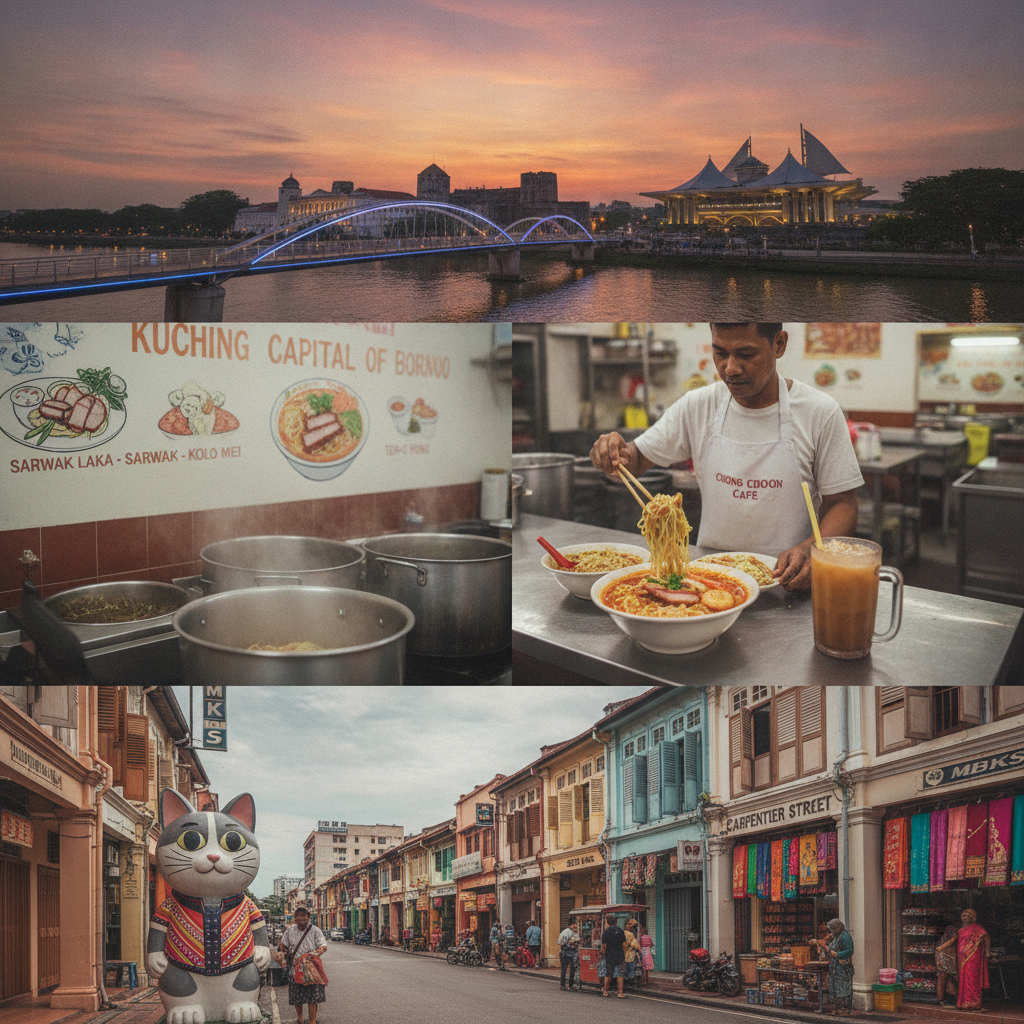
Eat through Kuching — consistently ranked as Malaysia's best food city by local food enthusiasts, Kuching's combination of Sarawak Malay, Foochow Chinese, Iban jungle food, and the specific Sarawak laksa that is the most beloved dish in Malaysian Borneo creates a food culture that many argue surpasses even Penang.
- 1
Sarawak Laksa Morning Stall
Sarawak Laksa is the most celebrated dish in Sarawak's food culture — the coconut milk and tamarind soup base with thin vermicelli noodles, prawn, shredded chicken, omelette strips, and bean sprouts, garnished with coriander and lime and spiced with a specific sambal of blended dried chilli, lemongrass, galangal, and other aromatic ingredients, is served at morning stalls that open at 6am and typically sell out by 10am. The Top Spot stalls and the old-city morning laksa shops serve the dish that Anthony Bourdain described as 'breakfast of the gods', and the specific flavour combination of the Sarawak laksa base is considered by Sarawakians as untransferable — no version outside Sarawak tastes the same.
- 2
Kolo Mee Noodle Breakfast
Kolo mee is Kuching's most popular noodle dish — the springy egg noodles served dry (not in soup) with a dressing of lard, spring onion, and the char siu (barbecued pork) or wonton dumpling that are the standard accompaniments represent the Foochow Chinese (Fujianese) noodle tradition that the Foochow immigrants who came to Sarawak in the early 20th century established as the dominant Chinese food culture of the state. The kolo mee served in Kuching's Chinese kopitiam (coffee shops) from early morning is considered by many food writers to be superior to the versions served elsewhere in Malaysia, due to the specific noodle texture and the quality of the rendered lard dressing.
- 3
Top Spot Food Court Seafood
Top Spot Food Court on the rooftop of a parking structure in central Kuching is the most celebrated outdoor seafood restaurant complex in Sarawak — the hawker centre with its multiple Chinese seafood stalls serving the midin jungle fern (a uniquely Sarawak vegetable), the butter prawn, the chilli crab, and the fresh fish from the South China Sea and Sarawak's rivers has become one of the most written-about food destinations in Malaysian Borneo. The combination of the casual hawker centre format with the high quality of Sarawak's river and sea produce makes Top Spot the definitive Kuching dining experience.
- 4
Midin Jungle Fern Dish
Midin (Stenochlaena palustris) is the signature vegetable of Sarawak cuisine — the curling jungle fern harvested from the wild forests of the Sarawak interior and coastal mangroves is stir-fried with belacan (shrimp paste), garlic, and chilli to create the most distinctively Sarawakian vegetable dish available. Midin is found only in Borneo and has not been successfully cultivated commercially, making it genuinely unavailable outside Sarawak and a dish that food visitors specifically seek out as the most authentically local ingredient in Kuching's food culture. The best midin is eaten at the Chinese seafood restaurants and at the hawker centres where it arrives fresh from the morning market.
- 5
Laksa Paste Market
The Sarawak laksa paste sold at Kuching's markets is the most sought-after food souvenir from Sarawak — the commercial paste that allows the Sarawak laksa to be prepared outside the state (sold in the red packaging from the Original Sarawak Laksa Paste producer) is carried home in luggage by every departing Sarawakian and Kuching visitor. The paste market at the central market demonstrates the commercial significance of the dish that has become Sarawak's most powerful culinary cultural export.
- 6
Kuching Chinese Kopitiam Culture
Kuching's Chinese kopitiam (traditional coffee shop) culture is one of the most intact in Malaysia — the old-style coffee shops with their marble-top tables, ceiling fans, and the resident hawker stalls selling noodles, rice dishes, and the kaya (coconut jam) toast that accompanies the traditional half-boiled eggs and black coffee breakfast represent a breakfast culture that has changed little since the Foochow immigrants established these shops in the early 20th century. The kopitiam culture of Kuching's old town provides the most atmospheric morning dining experience in the city, combining coffee, noodles, and the rhythms of the old commercial district's daily routine.
Walk this route with audio
Stories play automatically as you reach each stop — no tapping needed.