Kuching White Rajah & Brooke History Walk
Explore the extraordinary history of the Brooke dynasty — the Brooke family who ruled Sarawak as an independent kingdom for over a century (1841-1946) created one of the most unusual polities in colonial history, with James Brooke arriving as an adventurer and leaving his family as the kings of a territory the size of England.
- 1
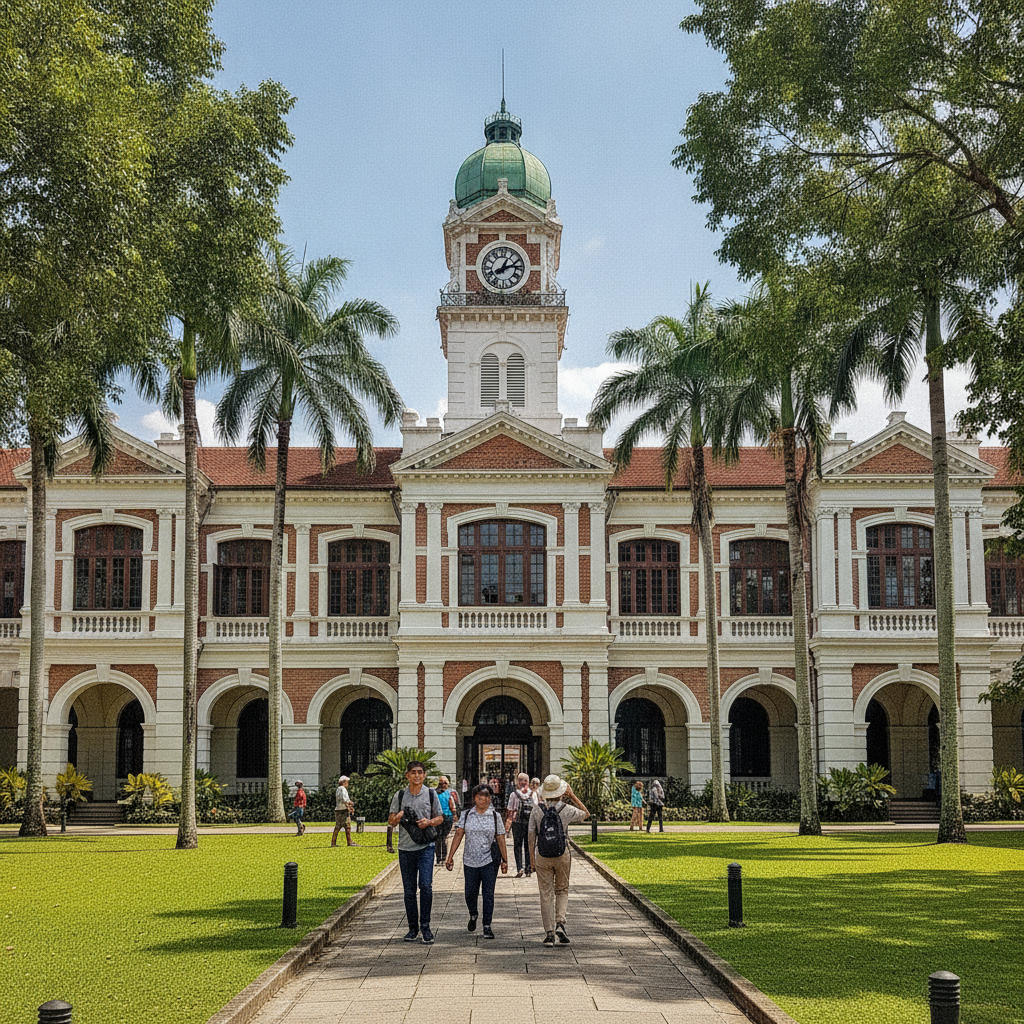
Sarawak Museum Old Wing
The Sarawak Museum (Old Wing, 1891) is one of the finest colonial-era museums in Southeast Asia — built during the reign of the second White Rajah Charles Brooke with the advice of naturalist Alfred Russel Wallace (who had conducted his evolutionary research in Sarawak), the museum's collections of Sarawak ethnography, natural history, and colonial-era artefacts reflect the intellectual ambitions of the Brooke dynasty. Alfred Russel Wallace, whose 1855 Sarawak Law formulated the principle of evolution by natural selection independently of Darwin, features prominently in the museum's history.
- 2
James Brooke Story
James Brooke (1803-1868) arrived in Sarawak in 1839 as a private adventurer on his yacht Royalist and left as the first White Rajah of Sarawak — his assistance to the Brunei Sultanate in suppressing a rebellion earned him the governorship of Sarawak in 1841, and his subsequent 25 years of rule established a remarkably paternalistic colonial state that prohibited slavery, suppressed the headhunting tradition, maintained indigenous land rights, and developed Kuching into a prosperous trading town. Brooke's story, combining Victorian adventure with genuine political achievement, remains one of the most remarkable individual careers in 19th-century Asia.
- 3
Brooke Rajah Era Buildings
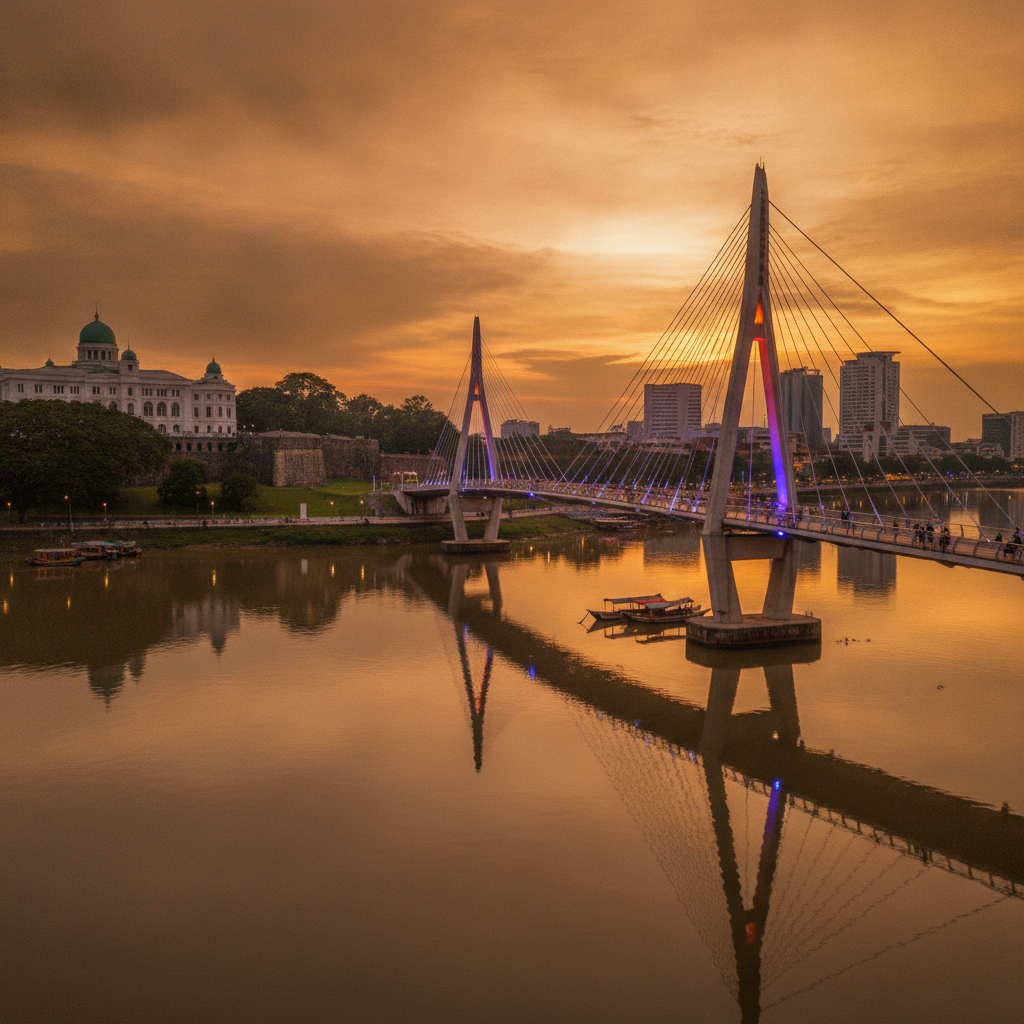
Kuching's colonial-era buildings cluster around the waterfront and the main square, representing the physical infrastructure of the Brooke Rajah state — the post office, the General Post Office, the courthouse, the Fort, and the Astana were all built during the 1841-1946 Rajah period and reflect the architectural ambitions of a colonial administration that intended its rule to be permanent. The Brooke family's commitment to Sarawak as a personal kingdom rather than a commercial enterprise produced a more restrained colonial built environment than the Dutch commercial cities of the East Indies.
- 4
Rajah Charles Vyner Brooke Legacy
Charles Vyner Brooke (1874-1963), the third and last White Rajah, ceded Sarawak to the British Crown in 1946, ending the 105-year Brooke family rule — the cession, controversial within Sarawak's political community (many Sarawakians preferred continued Rajah rule to becoming a British Crown Colony), led to the incorporation of Sarawak into Malaysia in 1963. The transition from Rajah territory to British colony to Malaysian state is documented in the Sarawak Museum's historical collections and represents the most compressed colonial history of any Southeast Asian territory.
- 5
St Thomas's Cathedral
St Thomas's Cathedral (Anglican) near the waterfront was built during the Brooke era and reflects the moderate Christian influence on Sarawak's colonial society — the Brooke Rajahs were Anglicans who supported Christian missionary work among Sarawak's indigenous communities while maintaining a policy of non-interference with Islam in the Malay communities. The cathedral's continuation as an active Anglican congregation in contemporary Malaysian Muslim-majority Sarawak documents the religious plurality that the Brooke legacy established and Malaysian constitutional guarantees protect.
- 6
Kuching Colonial Heritage District
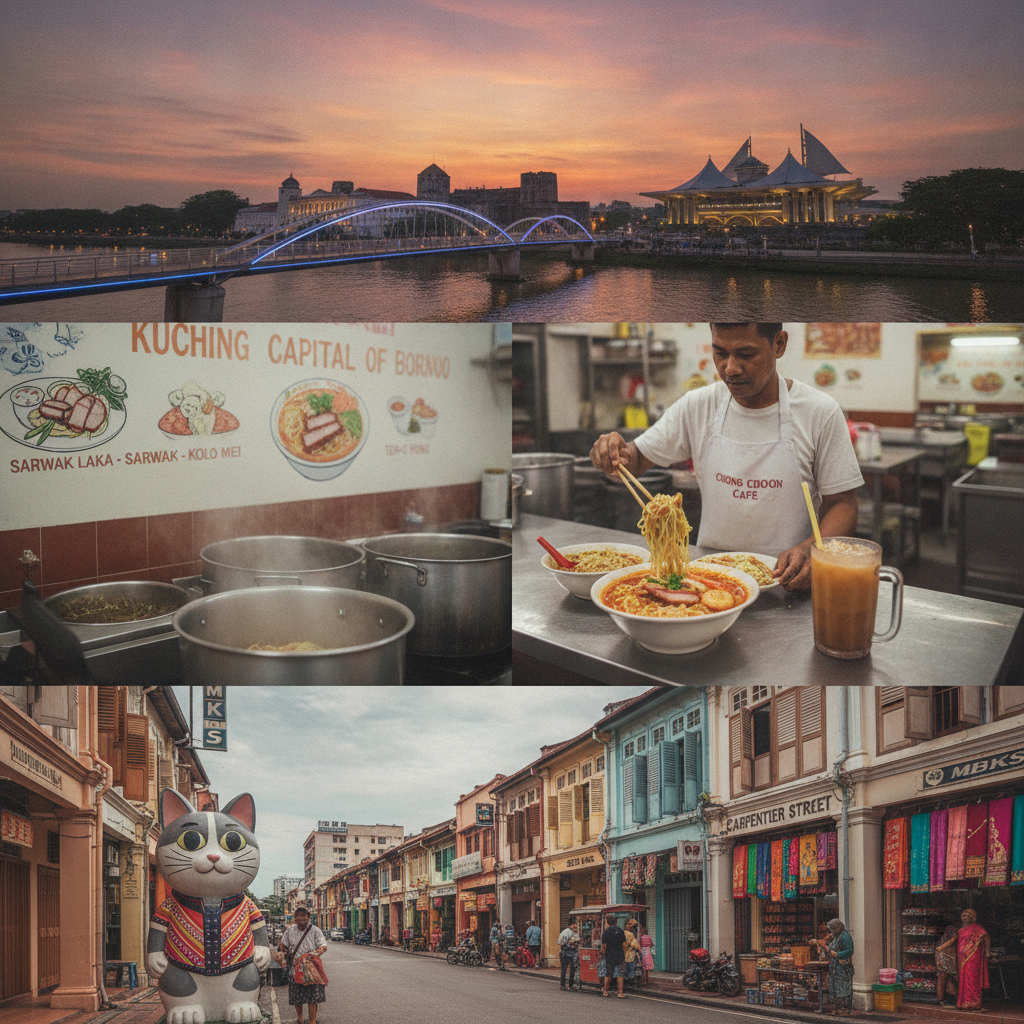
The colonial heritage district around the waterfront and the main square contains the most complete collection of Brooke-era public buildings in Sarawak — the combination of the waterfront promenade, the Charles Brooke Memorial, the courthouse, the General Post Office, and the surrounding Chinese shop-houses creates a heritage precinct that documents both the British colonial public building tradition and the Chinese commercial architecture that developed in the shadow of the Brooke administration. Kuching's designation as a heritage city and the conservation efforts protecting its historic buildings represent Malaysia's growing investment in architectural heritage protection.
Walk this route with audio
Stories play automatically as you reach each stop — no tapping needed.