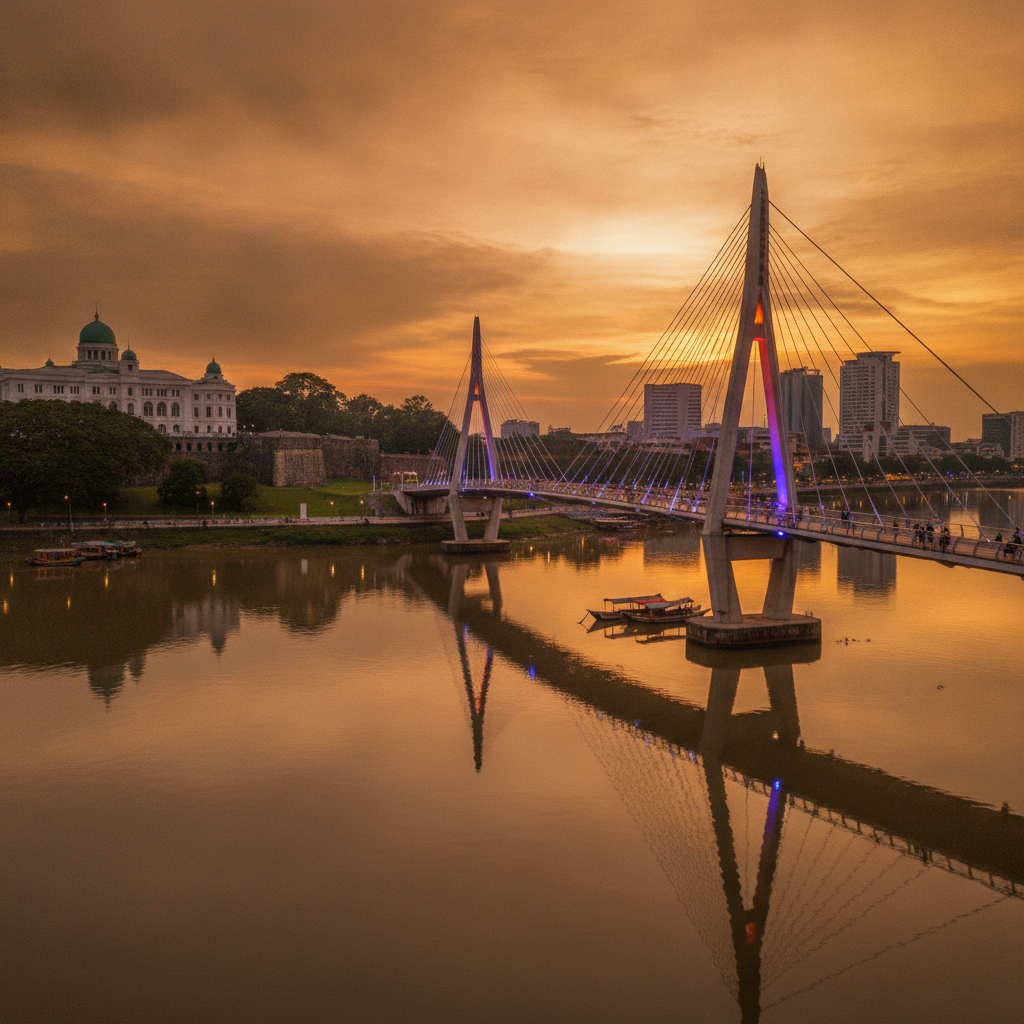
Kuching Malay Heritage & Mosque Walk
Explore Kuching's Malay quarter and Islamic heritage — the Sarawak Malay community forms the largest ethnic group in Sarawak and their distinctive architecture, cuisine, and Islamic cultural practice around the golden dome of the State Mosque is most visible in the kampung areas of the city.
- 1
Kuching State Mosque
The Sarawak State Mosque (Masjid Negeri Sarawak) with its golden dome is the most prominent religious building in Kuching — the modern mosque completed in 1968 and expanded subsequently serves as the main Friday mosque for Kuching's Muslim community and as the venue for state Islamic ceremonies. The mosque's position beside the Sarawak River with its golden dome reflected in the water at certain angles creates the most iconic religious building image in Sarawak, visible from the waterfront promenade and the Fort Margherita viewpoint across the river.
- 2
Kampung Boyan Malay Village
Kampung Boyan on the north bank of the Sarawak River is the oldest Malay settlement in Kuching — the riverside village with its traditional Malay wooden houses on stilts above the river, the small mosque, and the community life organised around the river and the fishing traditions that have been maintained for generations provides the most authentic encounter with Sarawak Malay culture available from the city centre. The tambang (wooden ferry) that still operates between Kampung Boyan and the Kuching waterfront is the traditional water transport link between the Malay village and the commercial city.
- 3
Malay Craft Textiles
Sarawak Malay craft traditions include the songket weaving using gold and silver thread (similar to the Peninsular Malaysian songket but with Sarawak-specific patterns), the silver and gold jewellery work associated with the Malay royal court tradition, and the batik printing that has developed in Sarawak using local motifs alongside the Javanese tradition imported from the peninsula. The Malay crafts of Sarawak, distinct from both the Dayak crafts of the indigenous communities and the Chinese commercial crafts, represent the cultural production of a community whose identity is defined by Islam and the Malay world's connection to the wider Islamic civilisation.
- 4
Kuching Malay Food
Sarawak Malay cuisine is distinct from peninsular Malaysian Malay food in its use of the jungle produce and river fish of Borneo — the sago (from the sago palm), the linut (a sago porridge), the tutong (a freshwater fish preparation), and the various fern and jungle vegetable preparations used by Melanau and Malay communities along Sarawak's rivers create a regional Malay food culture that cannot be replicated outside the Sarawak environment. The Malay food stalls in Kuching's markets serve the full range of Sarawak Malay cooking alongside the nasi lemak and nasi padang that are common to Malaysian food culture throughout the country.
- 5
Dewan Suarah Hall Heritage
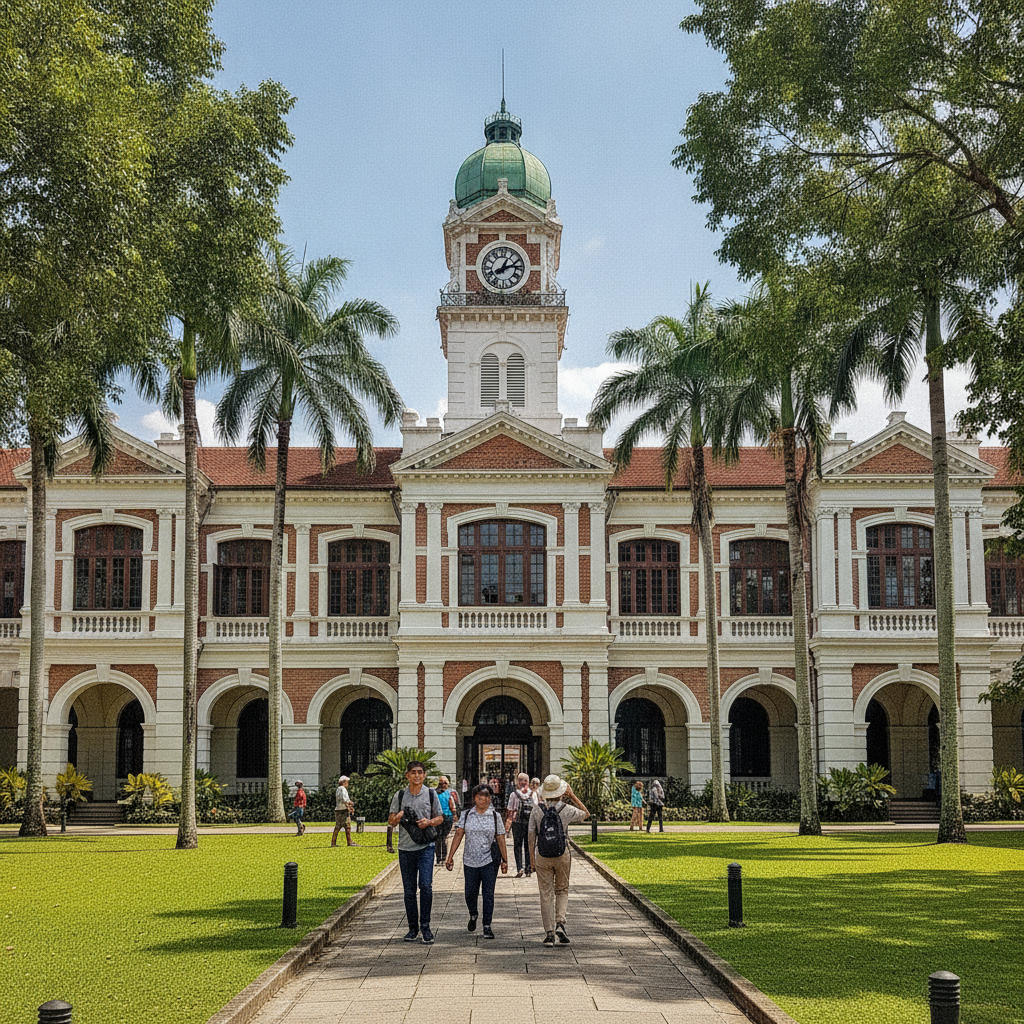
Kuching's civic buildings document the Malay community's political leadership of Sarawak in the post-independence period — the transition from the Brooke Rajah administration to the British colonial government to Malaysian statehood created a new political framework in which the Malay community has provided most of the political leadership while the Chinese community has maintained commercial dominance. The civic buildings of post-independence Sarawak around the waterfront and the government quarter represent the aspirations of a state government navigating the complex ethnic politics of a society with no ethnic majority.
- 6
Kuching Multiculturalism
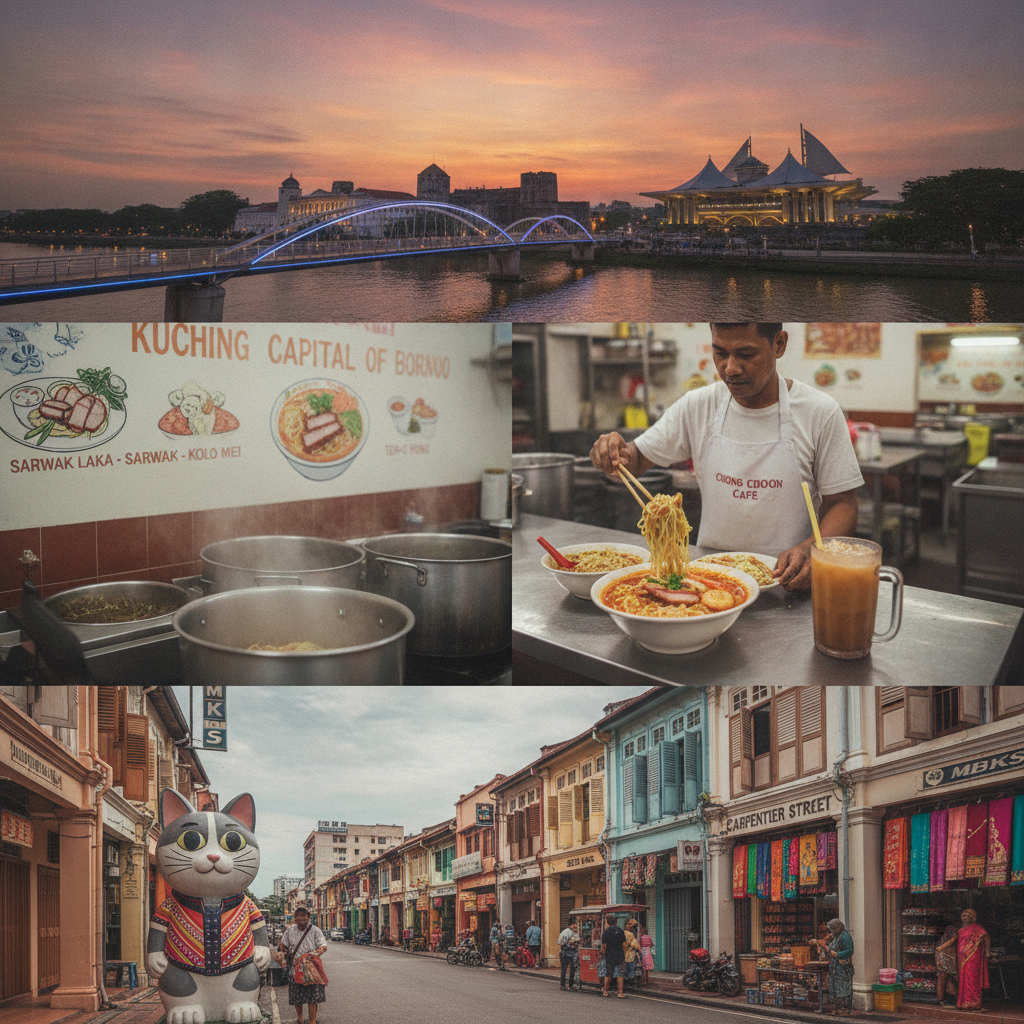
Kuching's reputation as one of Malaysia's most harmonious multicultural cities reflects the specific history of a state where no ethnic group holds a majority — the Malay/Melanau Muslim community (approximately 30%), the Chinese (25%), the Iban (25%), the Bidayuh (8%), and the various other Dayak and indigenous communities have negotiated a coexistence in Sarawak that has been more successful in managing ethnic relations than the peninsular Malaysian model. The Kuching waterfront promenade where all communities share public space, the Sunday morning tamu where indigenous and Chinese traders work side by side, and the open house culture at every festival season represent this multicultural practice in its most visible social forms.
Walk this route with audio
Stories play automatically as you reach each stop — no tapping needed.