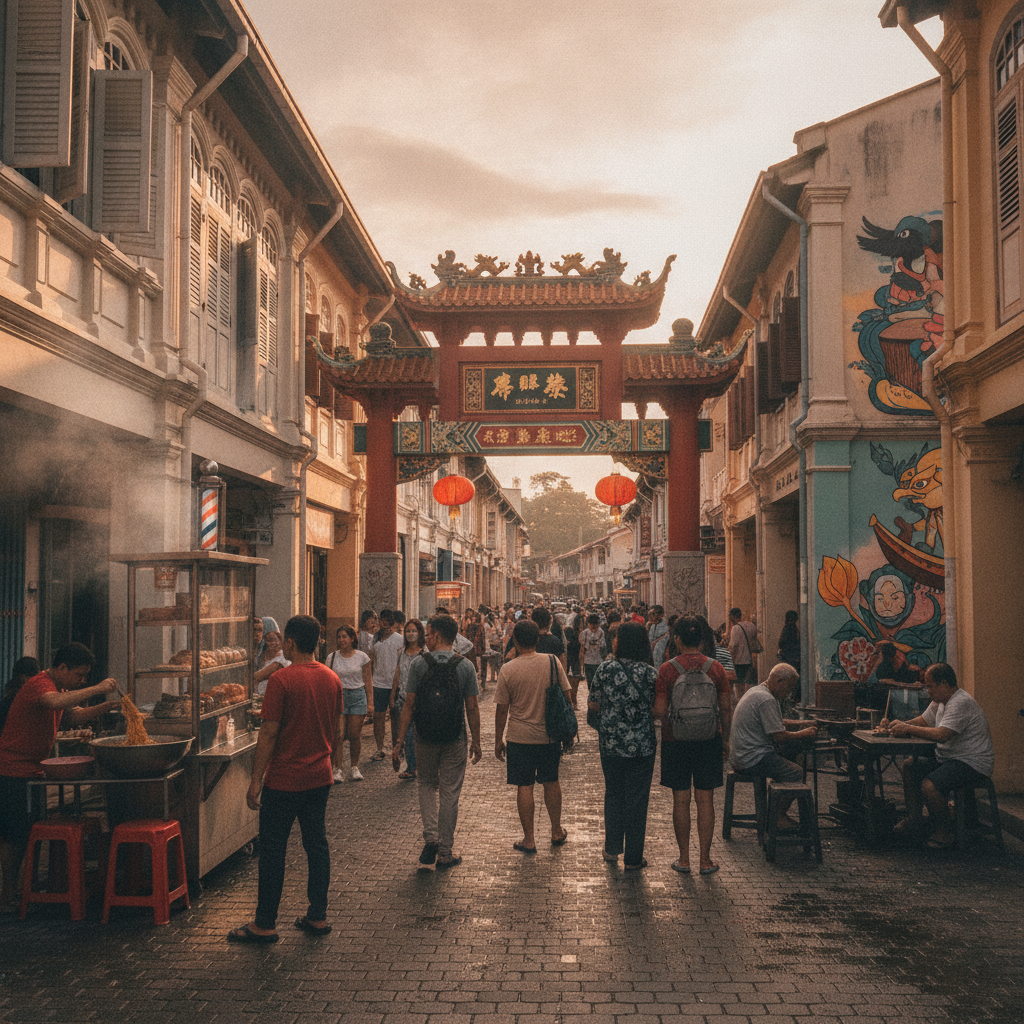
Kuching Chinatown & Carpenter Street Heritage Walk
Explore Kuching's historic Chinese quarter — the Foochow, Hakka, Hokkien, and Cantonese communities who established Kuching's commercial economy from the Brooke era created a Chinatown of shop-houses, clan temples, and coffee shops that is among the most preserved in Malaysian Borneo.
- 1
Carpenter Street Historic Row
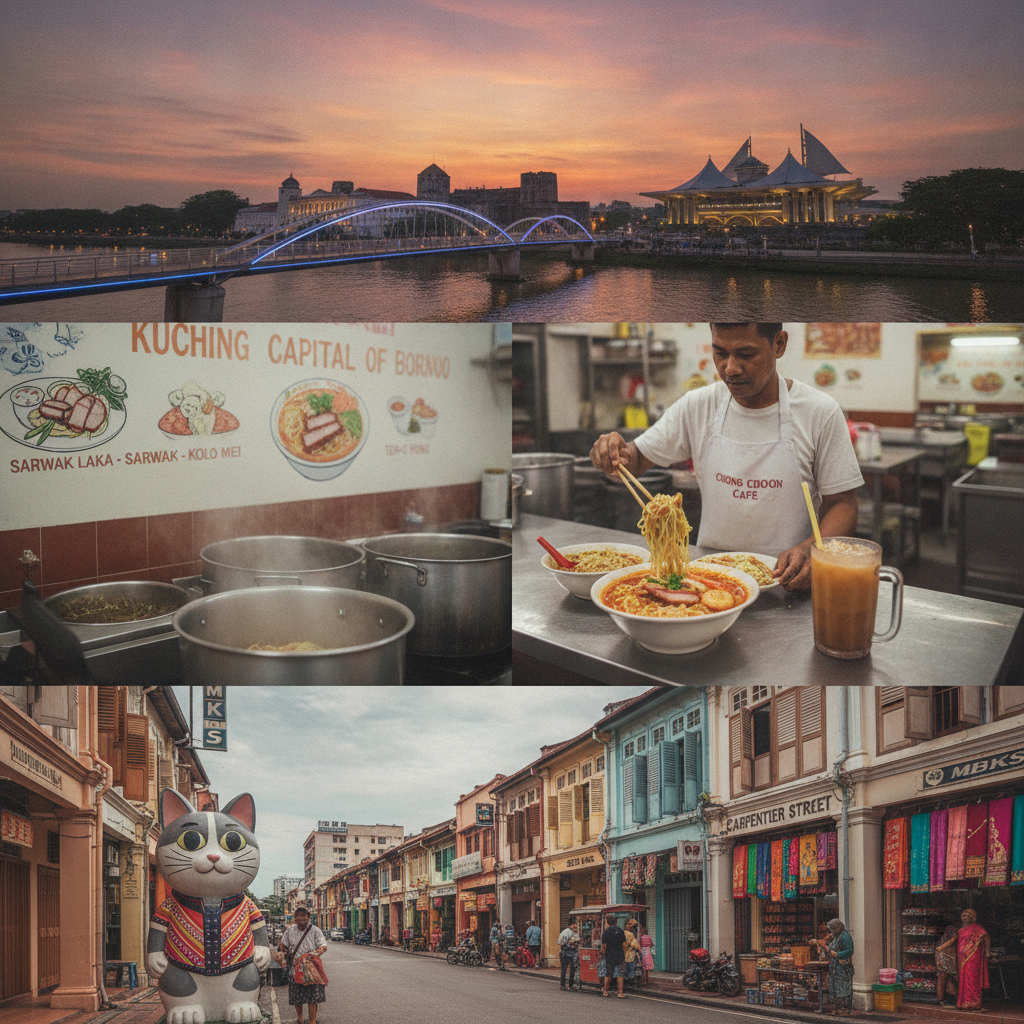
Carpenter Street (Jalan Carpenter) is the heart of Kuching's historic Chinatown — the colonial-era row of two-storey Chinese shop-houses with their five-foot covered walkways, the faded facades of once-prosperous trading houses, and the mix of small businesses (hardware shops, provision stores, the occasional traditional apothecary) that continues to operate in the ground-floor commercial spaces represents a Chinese commercial street of the early 20th century that has survived intact in Kuching's relatively undisturbed heritage zone. The street is most atmospheric in the early morning when the shopkeepers open their shutters and the kopitiam breakfast customers fill the pavement tables.
- 2
Tua Pek Kong Temple
The Tua Pek Kong Temple (Temple of the Earth God) at the waterfront is Kuching's oldest and most important Chinese temple — the temple dedicated to Tua Pek Kong (the earth deity venerated by Chinese communities throughout Southeast Asia, believed to bring wealth and prosperity to traders) was established by the earliest Chinese settlers in Kuching and has been the focus of Chinese community religious life since the Brooke era. The temple's annual festival (on the fifteenth day of the first lunar month) is the largest Chinese religious celebration in Kuching.
- 3
Chinese History Museum
The Chinese History Museum on the waterfront documents the history of the Chinese communities in Sarawak from the earliest arrivals through the Brooke era to contemporary times — the museum's collections of clan records, historical photographs, and cultural objects illustrate the Foochow, Hakka, Hokkien, Teochew, and Cantonese communities' different roles in Sarawak's economic development, from the Foochow farmers who established rubber and pepper plantations to the Hokkien traders who dominated commerce in Kuching's market district.
- 4
Satok Weekend Market
The Satok Weekend Market (Saturday evening and Sunday morning) is Kuching's most extraordinary bazaar — the market where indigenous jungle produce meets urban commercial culture brings together the widest variety of unusual ingredients in any Malaysian Borneo market. The jungle honey (wild bee honey from the rainforest), the freshwater stingray and exotic river fish, the wild board and deer meat from Iban hunters, the extraordinary variety of jungle tubers, the medicinal plants of the Sarawak interior, and the handicrafts from indigenous communities create a market experience unlike anything on the Malaysian peninsula.
- 5
Pepper Market Kuching
Sarawak is the world's most significant producer of white pepper — the Sarawak pepper industry, established by the Foochow Chinese farmers who cleared the peat swamp forests of the Sarawak interior to plant pepper vines, produces the Sarawak white pepper that is considered the finest in the world for its aroma and heat profile. The pepper market in Kuching where the processed white peppercorns are graded and sold for export connects the city to the agricultural economy of the Sarawak interior that has been the foundation of the Foochow Chinese community's prosperity since the early 20th century.
- 6
Foochow Community Heritage
The Foochow (Fuqing) Chinese who came to Sarawak in large numbers from the 1890s have become the dominant Chinese dialect group in the state — the Foochow community's establishment of rubber plantations, pepper gardens, and the commercial enterprises that supplied them created the economic backbone of modern Sarawak's Chinese commercial sector. The Foochow dialect is more widely spoken than Mandarin in Sarawak's Chinese community, and the Foochow food culture (including the kolo mee noodles and the Foochow tofu) remains distinctively present in Kuching's restaurant scene as a regional Chinese cuisine found in this form nowhere else in Malaysia.
Walk this route with audio
Stories play automatically as you reach each stop — no tapping needed.