Capri Day Trip — Blue Grotto, Villa Jovis & the Faraglioni
Capri (14km squared in the Bay of Naples, accessible from Amalfi by high-speed ferry in 1h20m for €22 one-way with Alicost or Travelmar, the most glamorous island in Italy, Emperor Tiberius's preferred residence 26-37 AD) is the natural full-day trip from the Amalfi Coast.
- 1
Blue Grotto — the Sea Cave of Blue Light
The Blue Grotto (Grotta Azzurra, northwest coast of Capri, motorboat from Marina Grande then rowboat entry; motorboat return €18 plus cave entry €10, daily 9am-5pm weather permitting) is a 60-metre sea cave where sunlight enters through a 2m-deep underwater opening, refracting to create intense blue luminescence throughout the interior. The cave ceiling (white limestone reflecting blue light) and the water surface (appearing silver when the oars break it) cannot be photographed adequately. The cave is entered lying flat in a rowing boat, the rower pulling a chain at the entrance.
- 2
Anacapri and Monte Solaro — the Upper Town
Anacapri (the upper town at 275m altitude, accessible from Capri town by bus or on foot, independent from lower Capri until a road was built in 1877) is dominated by the Villa San Michele (built by Axel Munthe 1887-1910, The Story of San Michele 1929 sold 3 million copies, €8, daily 9am-6pm, garden loggia with Sphinx overlooking the Bay of Naples) and Monte Solaro (589m summit, chairlift from Anacapri €12 one-way or €15 return, 360 degree view encompassing Vesuvius to Punta Campanella).
- 3
Villa Jovis — Emperor Tiberius's Palace
Villa Jovis (Jupiter's Villa, northeast cliff of Capri, 45 minutes walk from Capri town, €6 adults, Wednesday-Monday 10am-5pm) is the best-preserved of the 12 imperial villas Tiberius built on Capri during his 11-year seclusion (26-37 AD). The 7,000m squared complex commands the sheerest drop on the island: the Salto di Tiberio (Tiberius's Leap, the 300m cliff from which Suetonius and Tacitus record Tiberius had victims thrown into the sea) is at the northeast corner.
- 4
Capri Town and Via Krupp — the 1902 Serpentine Road
Capri town (the smaller and more fashionable of Capri's two settlements, the Piazzetta — Piazza Umberto I — the social centre visible from the sea) and the Via Krupp (the serpentine staircase road carved into the limestone cliff by industrialist Friedrich Alfred Krupp in 1902, connecting Capri town to Marina Piccola, now pedestrian-only) are the central elements. The Piazzetta aperitivo hour (6-8pm, spritz at Bar Tiberio at €18) is worth the price for location alone.
- 5
Faraglioni Rock Walk — the Marina Piccola Swim Circuit
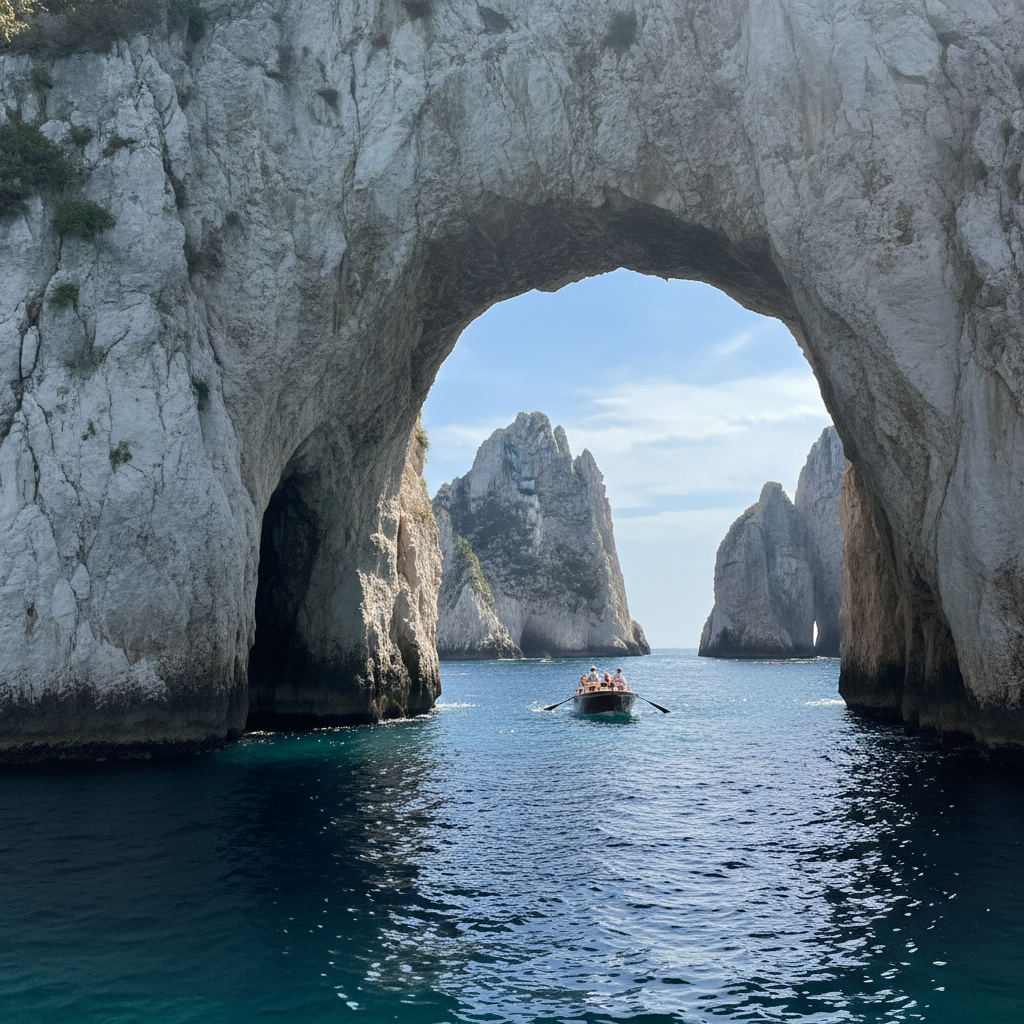
The Faraglioni (three limestone sea stacks on Capri's south coast: Stella attached to the island; Mezzo with the natural arch through which small boats pass; and Scopolo, home to the blue lizard Lacerta coerulea found nowhere else on Earth) are the island's most recognizable geological feature. The swim circuit from Marina Piccola (rowboat rental €15 per hour) circumnavigates the Faraglioni and Punta Tragara headland. The Punta Tragara terrace (25-minute walk from Capri town, free) is the classic photography position.
- 6
Limoncello and Torta Caprese — the Island's Signature Products
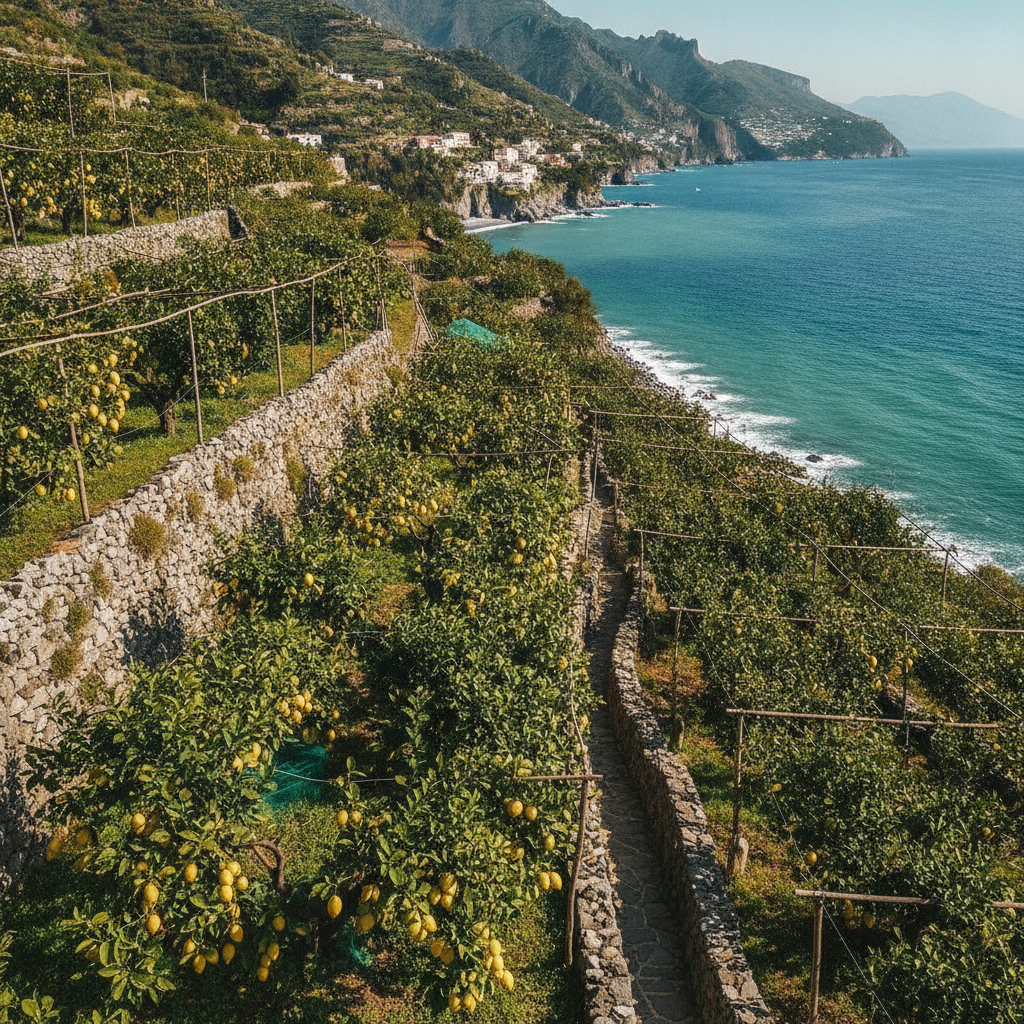
Capri lemons (Limone di Sorrento IGP, large thick-skinned variety with intense fragrance, grown on terraced hillsides) are the raw material for Capri's limoncello (macerated lemon peels in 95 percent ethyl alcohol for 30-60 days, diluted to 28-30 percent ABV with sugar syrup, served ice-cold from the freezer). The Arte del Limoncello (Via Roma 79, Capri town, free tasting) is the most accessible producer. The torta caprese (the flourless chocolate almond cake invented on Capri in the 1920s) and ceramic-bottle limoncello (€8-20) complete the island's pastry and spirits tradition.
Walk this route with audio
Stories play automatically as you reach each stop — no tapping needed.
More in amalfi
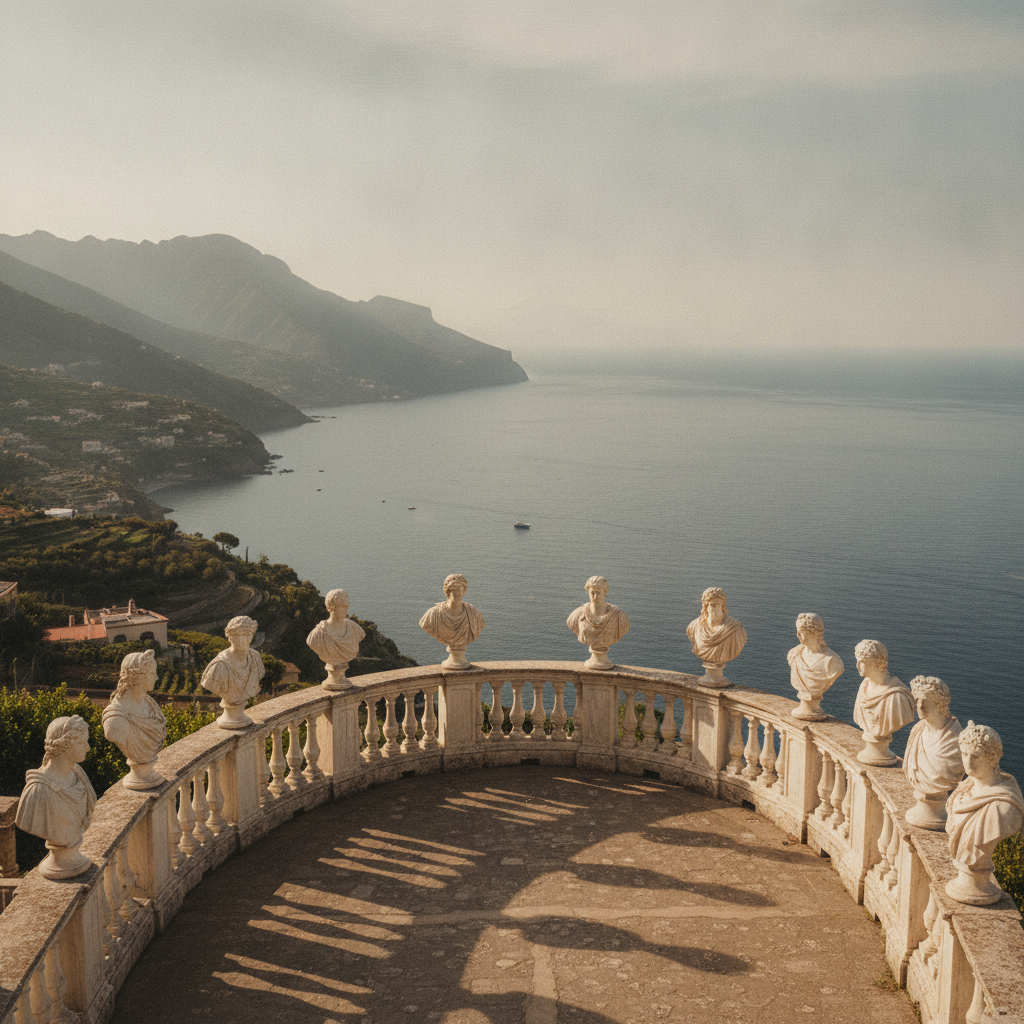
Ravello — Villa Cimbrone, Villa Rufolo & the Ravello Festival
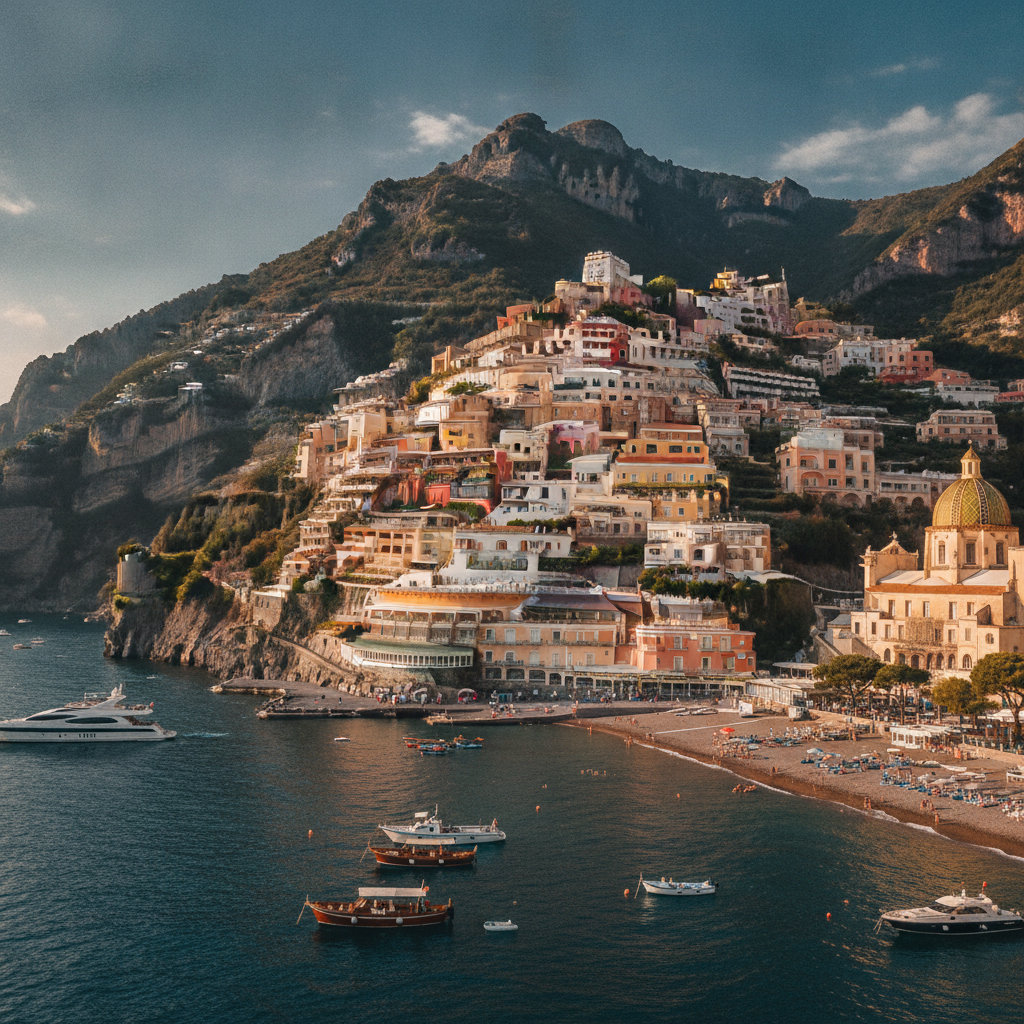
Positano — the Vertical Village, Li Galli Islands & Handmade Sandals
Amalfi Lemons — Sfusato Amalfitano, Limoncello Production & the Furore Fjord
Amalfi Town — Cathedral, Paper Museum & the Original Maritime Republic