Amalfi Town — Cathedral, Paper Museum & the Original Maritime Republic
Amalfi (population 5,000, at the base of the Valle dei Mulini gorge where it meets the Tyrrhenian Sea, the capital of the Duchy of Amalfi — the first of the four great Italian maritime republics and creator of the Tabula de Amalpha, the world's oldest maritime code, 11th century) is built vertically up the cliff from the sea.
- 1
Cattedrale di Sant Andrea — The Arab-Norman-Byzantine Cathedral
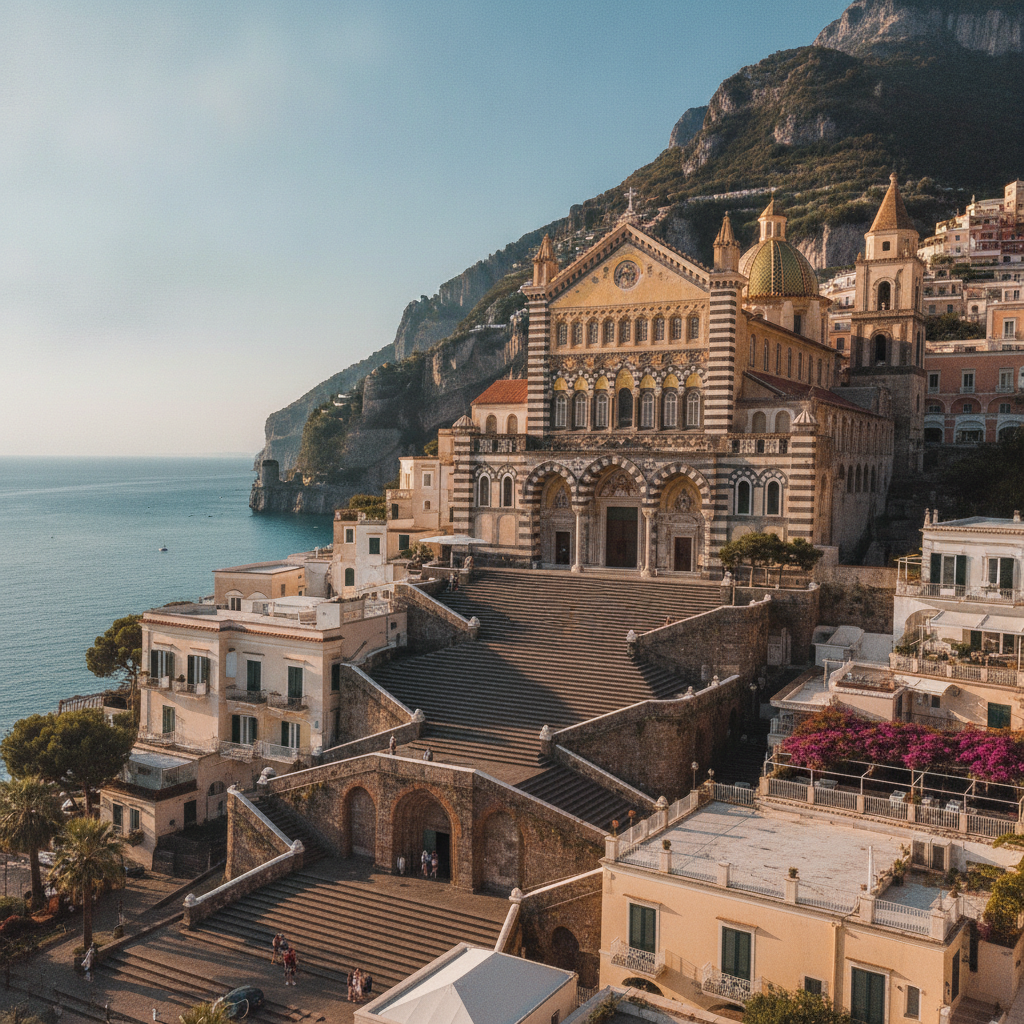
The Cathedral of Sant Andrea (9th century, rebuilt in Arab-Norman style 12th–13th century, the bronze doors cast in Constantinople 1065, the Chiostro del Paradiso cloister 1268, combined entry €4, daily 9am–7pm) is Amalfi's defining monument. The 62-step Scalinata del Duomo rising from Piazza del Duomo is the town's central theatrical set piece. The Crypt of Sant Andrea (the relics of the Apostle Andrew brought from Constantinople in 1208) is the devotional core.
- 2
Piazza del Duomo — The Living Room of Amalfi
Piazza del Duomo (the main square at the base of the cathedral staircase) is surrounded by the Fontana di Sant Andrea (18th-century fountain with the mitred bishop statue), Bar Pasticceria Pansa (established 1830, the oldest cafe in Amalfi — sfogliatella riccia and lemon delizia cake are the correct orders), and the covered fish market on the adjacent Piazza Flavio Gioia (morning market Tuesday–Saturday 7–11am). The square functions simultaneously as tourist node and working town centre.
- 3
Museo della Carta — The Paper Mill in the Gorge
Museo della Carta (Via delle Cartiere 23, Valle dei Mulini, €5 adults, Tuesday–Sunday 10am–6pm, the 13th-century paper mill demonstrating the hand-papermaking technique Amalfi introduced to Europe from Arab craftsmen in the 10th century) is one of only 3 working paper museum-mills in Italy. The demonstration (macerated cotton rags pulled onto rectangular frames, pressed, dried on mountain air) and the Amalfi paper samples (distinctive watermarked laid paper, the preferred writing paper of the medieval Italian merchant class) are the core experience.
- 4
Arsenale della Repubblica — The Maritime Republic's Shipyard
Arsenale della Repubblica (the 11th–12th century naval shipyard, the only surviving medieval shipyard in southern Italy, Piazza Flavio Gioia, €3 adults, Tuesday–Sunday 9am–7pm) preserves the vaulted boat halls where war galleys were built and wintered. The museum documents Amalfi's role as the dominant Mediterranean trading power 8th–12th centuries: the Tavola Amalfitana (the maritime code governing navigation from Naples to Byzantium) and the legend of Flavio Gioia and the compass are the key exhibits.
- 5
Valle dei Mulini Walk — The Hidden Industrial Gorge
The Valle dei Mulini (the gorge north of Amalfi town, accessible from Via Pietro Capuano in 5 minutes on foot) follows the Canneto stream through a deep limestone gorge containing 13 abandoned medieval paper mills that operated from the 13th century until the 1950s. The subtropical vegetation (ferns, lemon trees on old mill terraces, fig trees erupting from stone walls) and the mills themselves (increasingly overgrown as you ascend) make it the most atmospheric walk accessible from the Amalfi seafront. Free, open daylight hours.
- 6
Amalfi Coast Ferry — The Sea View Approach
The Amalfi Coast ferry service (Travelmar and Alicost, April–October, between Salerno, Amalfi, Positano, and Capri; Amalfi–Positano 25 min €8, Amalfi–Salerno 35 min €8, Amalfi–Capri 1h20m €22) provides the defining perspective on the coast — the vertical stacking of pastel buildings on near-vertical cliffs, visible only from the water. The ferry approach to Amalfi (the cathedral dome and campanile appearing above the town rooftops as the ferry enters the bay) is the definitive arrival image of the coast.
Walk this route with audio
Stories play automatically as you reach each stop — no tapping needed.
More in amalfi
Ravello — Villa Cimbrone, Villa Rufolo & the Ravello Festival
Positano — the Vertical Village, Li Galli Islands & Handmade Sandals
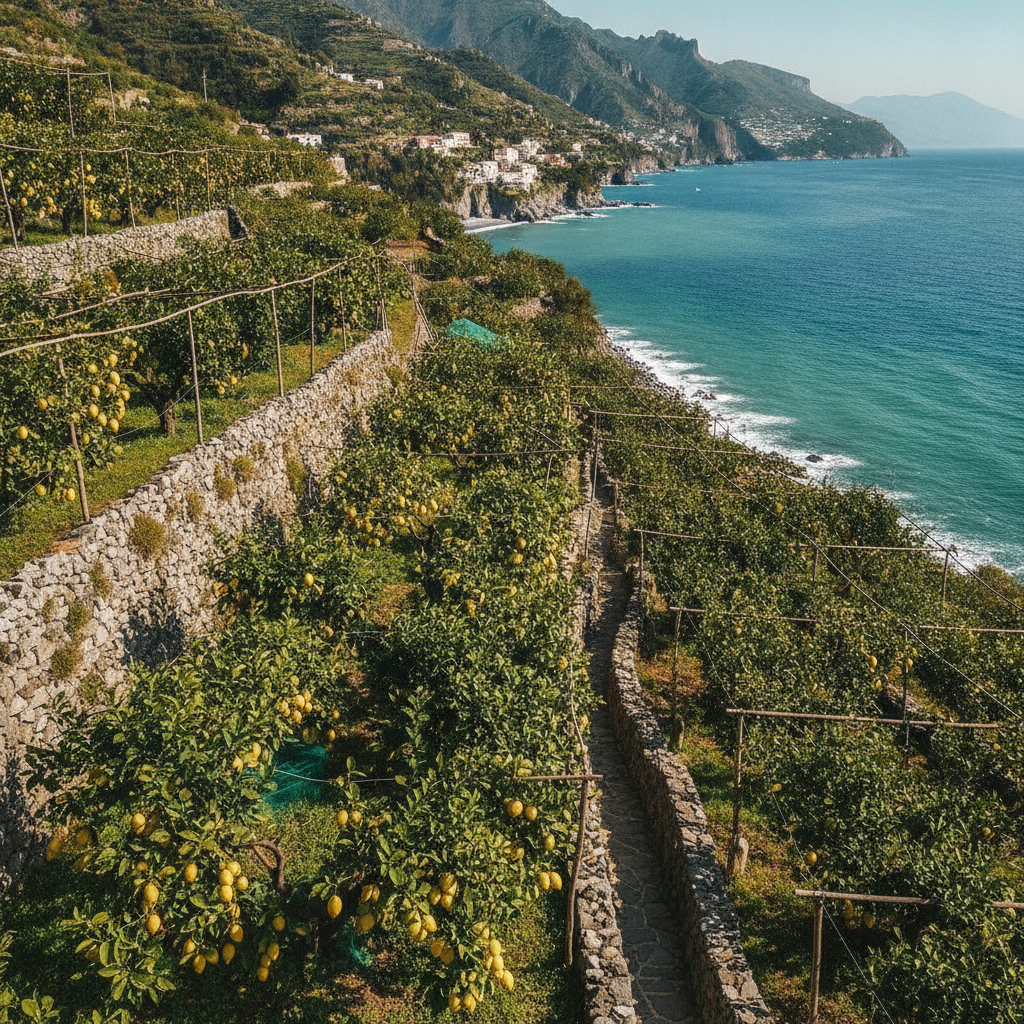
Amalfi Lemons — Sfusato Amalfitano, Limoncello Production & the Furore Fjord
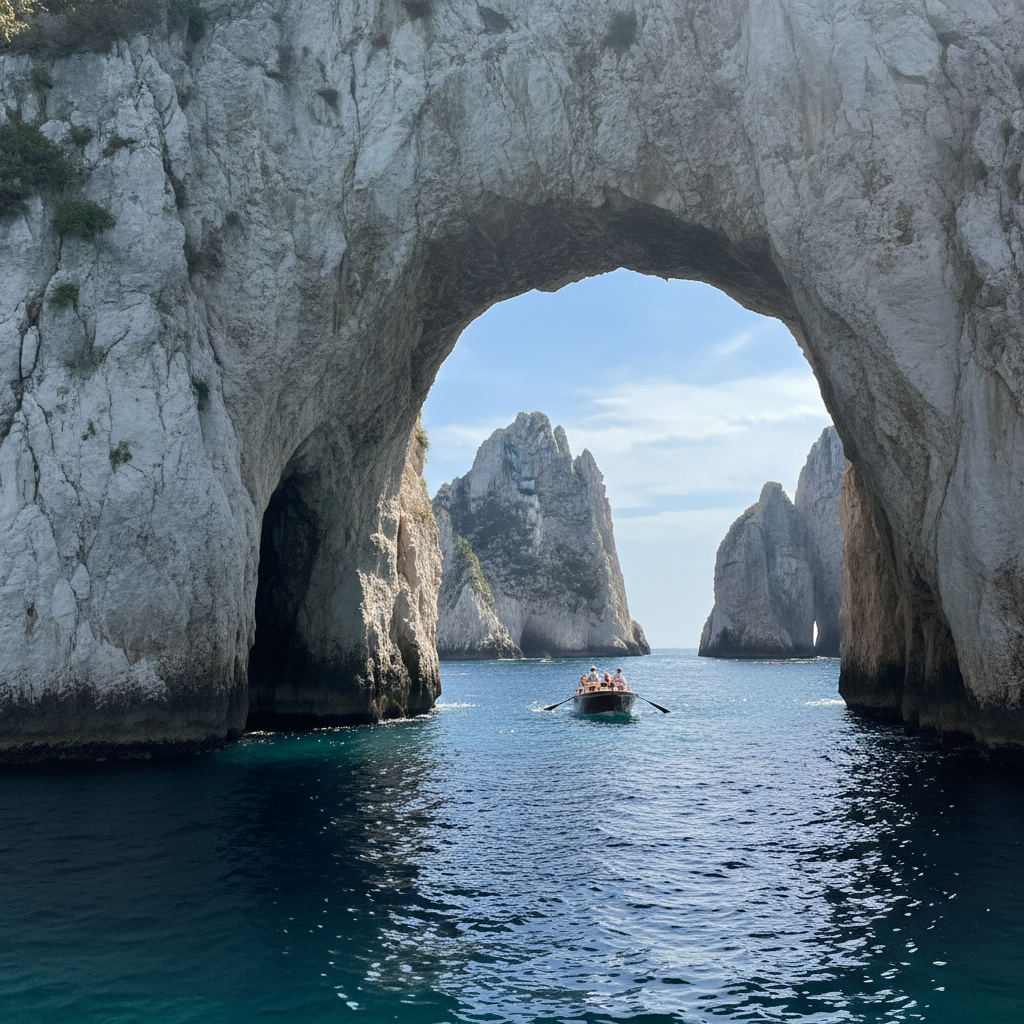
Capri Day Trip — Blue Grotto, Villa Jovis & the Faraglioni