

Đà Nẵng Completely: 7 Bridges Including the Swing Bridge That Opens at 22:30, the Marble Village Shipping 50,000 Pieces Per Month & the Mini Rice Pancakes That Don't Exist North of Đà Nẵng
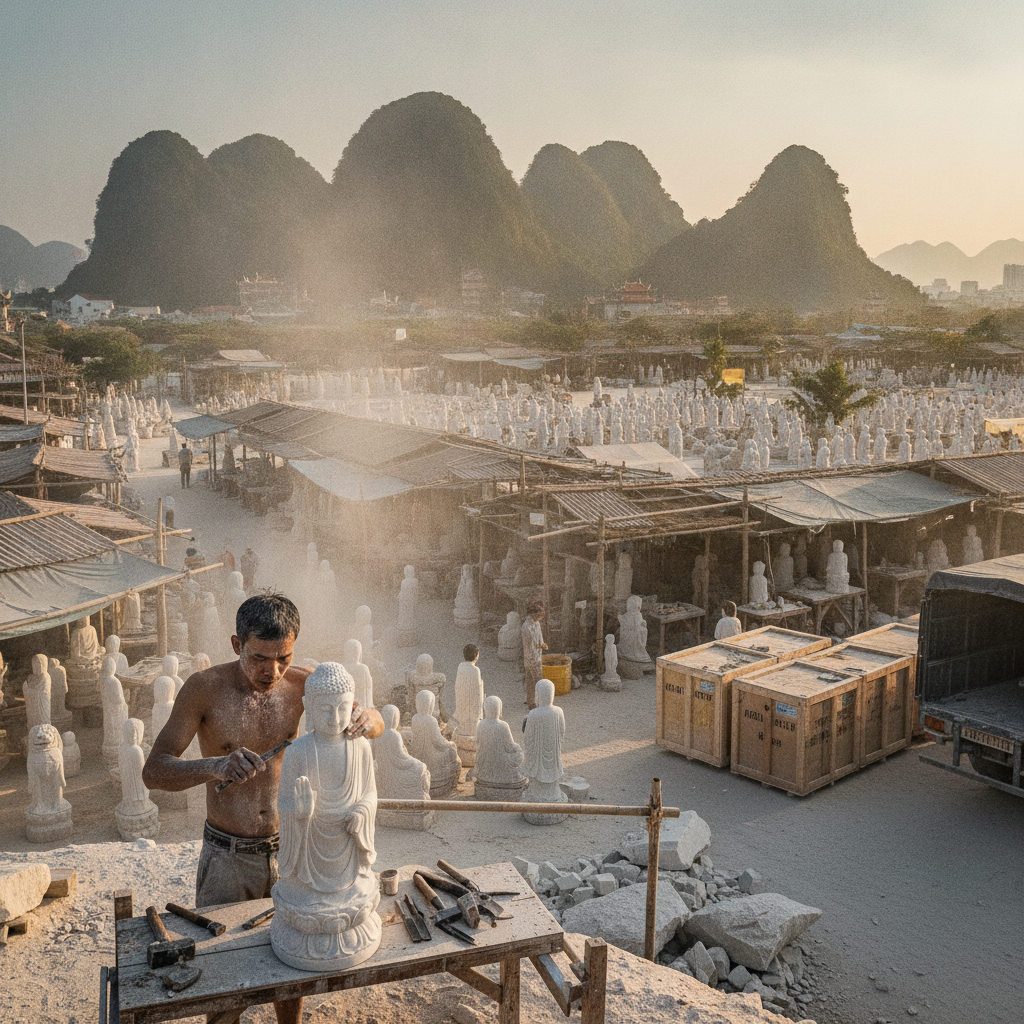
The DRiiVE e-bike share at VND 10,000/30 minutes along the beach cycling lane where 3,500 Marines landed in 1965; the 42-km Bà Nà Hills road ascent attracting Korean and Japanese competitive cyclists; the Hyatt STAY Spa at the most internationally recognised wellness facility in Vietnam outside of the Four Seasons Nam Hải; the 145-metre Trần Thị Lý Bridge tower designed by AECOM—the tallest in Vietnam—versus the rehabilitated American military swing bridge opening at 22:30 for boat traffic; Non Nước marble workshops finishing hand-carved Buddhas alongside CNC-produced Chinese imports they're also selling; bánh căn's quail egg mini pancakes in terracotta round-hole skillets as the most regionally specific Đà Nẵng street food; and the city choosing to be the modern gateway rather than the heritage destination—the most honest urban identity in central Vietnam.

Đà Nẵng's Contradictions: The East-Facing Sunrise Beach, 600,000 Korean Visitors Creating a Korean Quarter Behind the Sheraton & the Red-Shanked Douc Langur Habitat Threatened by Resort Development
Three Linh Ứng Pagodas—Marble Mountains at 09:00, Sơn Trà's 67-metre Guanyin at 11:00, Bà Nà Hills at 14:00 as the complete Buddhist heritage circuit; the Korean resort infrastructure of Trần Phú Street—Korean menus, karaoke, nail salons—within 200 metres of the beach where US Marines landed in 1965; Mỹ Khê Beach losing 20–30 metres of width from sand mining upstream while tetrapods stabilise the erosion and reduce the aesthetic; the Montgomerie Links golf course rated top 20 in Asia 50 km from the douc langur peninsula; and the beach that faces east producing Vietnam's most reliable direct sunrise-on-water photography at 05:30 while the sunset requires driving to the Sơn Trà west beach or ascending 1,487 metres by cable car.

Đà Nẵng Complete: Han Market's 1940 French Market Building, 250,000 Annual Aircraft Sorties From a Base Now Civilian Airport & Lang Co's Sand Spit Between Mountain and Sea
Han Market's upper floor áo dài fabric and conical hat stalls above the mantis shrimp and cá cơm dried anchovy stalls feeding the fish sauce industry; the Đà Nẵng Air Base USD 1 billion infrastructure now the civilian airport with the original US military Hangar 2 still operational; the 3D street art district of 80 trompe l'oeil murals on Nguyễn Văn Linh Street as the most visited public art in Vietnam; the Angsana Lang Co resort on a sand spit where the 15-km beach has mountains behind and lagoon in front—the specific combination unavailable at Đà Nẵng or Hội An; the Non Nước 06:00 fish auction as 15 men push wooden boats through surf while fishmongers bid on the catch for the Han Market kitchens; and the Phạm Văn Đồng seafood lane one block from the beach as the correct alternative to the hotel restaurant markup.

Đà Nẵng: The Dragon Bridge That Breathes Fire on Saturday Nights, the Golden Bridge Held by Stone Hands at 1,400m & the Red-Shanked Douc Langur Population Within 5km of the Beach
Mỹ Khê Beach's 9-km white sand arc that US Marines called 'China Beach' in the 1960s and Vietnamese families now fill to capacity on summer weekends; the Marble Mountains' 17th-century Buddhist sanctuaries built into limestone caves with a roof aperture illuminating the altar at specific times; Bà Nà Hills' Golden Bridge becoming the most internationally photographed Vietnamese structure within 48 hours of its 2018 opening; the 7 bridges built across the Hàn River since 2010 transforming an industrial port into the most modern waterfront in Vietnam; the Sơn Trà Peninsula's 1,500-individual red-shanked douc langur population descending to road level at 06:00 within 10km of the hotel strip; and the 2016 direct Paris–Đà Nẵng Air France flight as the first European direct service to a non-capital Vietnamese city.

Đà Nẵng's Two Identities: Asia's Most Advanced Fireworks Competition Over a Dragon Bridge That Breathes Real Fire & the Birth City of the Monk Martin Luther King Jr. Nominated for the Nobel Peace Prize
The IT Park's 10,000 workers averaging 26 years old with Vietnam's first majority-female IT workforce at FPT and Intel Products Vietnam; mì Quảng as the food-identity separator between Đà Nẵng's culinary tradition and the more famous adjacent cuisines; the IKO kitesurfing on the same beach where 3,500 US Marines landed combat-ready on 8 March 1965; the DIFF's 200,000–300,000 spectators per competition night booking hotel rooms 6 months in advance for the final weekend; Thích Nhất Hạnh's nomination by Martin Luther King Jr. for the 1967 Nobel Peace Prize and his Google-mindfulness legacy dying at Từ Hiếu Pagoda in Huế in January 2022; and the PCI first-place governance ranking that makes Đà Nẵng the most business-friendly and cleanest large city in Vietnam.

Đà Nẵng's Full Picture: 3,500 Marines Landing on Mỹ Khê Beach on 8 March 1965, the World's Most Important Cham Art Museum Visited by Fewer Than 100,000 People Annually & the Hải Vân Pass That Divides Central Vietnam's Climate
The 8 March 1965 Marine landing at what is now the Mỹ Khê tourist beach—the moment American advisors became combat troops; the USD 116 million USAID dioxin remediation of the airport soil completed 2017—the largest such project in history at the site of the primary Agent Orange storage and loading point; the Cham Sculpture Museum's 2,000 sculptures from 4th–15th century Hindu Champa attracting fewer visitors than any comparably significant art collection in Asia; mì Quảng's turmeric noodles with a small amount of broth rather than a full soup bowl—the central Vietnamese identity food that separates the region from Hanoi pho and Saigon hủ tiếu; Sky36's Saturday 20:45 pre-booking for the Dragon Bridge fire view; and the Lang Co lagoon sand-spit between sea and freshwater as the most beautiful detour on the Hải Vân Pass motorcycle route.