Đà Nẵng Completely: 7 Bridges Including the Swing Bridge That Opens at 22:30, the Marble Village Shipping 50,000 Pieces Per Month & the Mini Rice Pancakes That Don't Exist North of Đà Nẵng
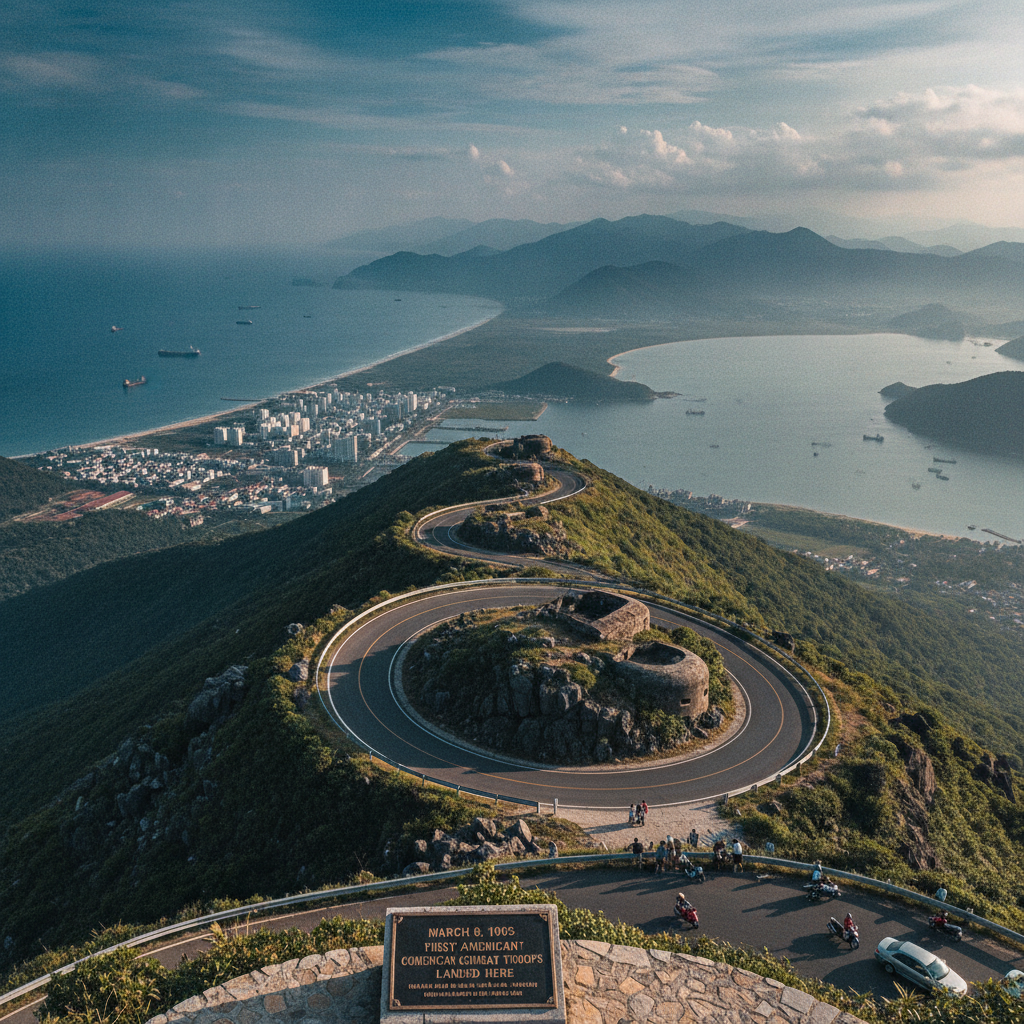
The DRiiVE e-bike share at VND 10,000/30 minutes along the beach cycling lane where 3,500 Marines landed in 1965; the 42-km Bà Nà Hills road ascent attracting Korean and Japanese competitive cyclists; the Hyatt STAY Spa at the most internationally recognised wellness facility in Vietnam outside of the Four Seasons Nam Hải; the 145-metre Trần Thị Lý Bridge tower designed by AECOM—the tallest in Vietnam—versus the rehabilitated American military swing bridge opening at 22:30 for boat traffic; Non Nước marble workshops finishing hand-carved Buddhas alongside CNC-produced Chinese imports they're also selling; bánh căn's quail egg mini pancakes in terracotta round-hole skillets as the most regionally specific Đà Nẵng street food; and the city choosing to be the modern gateway rather than the heritage destination—the most honest urban identity in central Vietnam.
- 1
The Đà Nẵng Cycling Scene – Urban Rides & the Beach Circuit
The Đà Nẵng cycling infrastructure—the most developed of any Vietnamese city—provides the most accessible urban cycling experience in Vietnam, with dedicated cycling lanes along the Hàn River promenade (both banks), the beach strip (Mỹ Khê Beach to Non Nước Beach—15 km of mostly flat cycling with the sea on one side and the hotels on the other), and the Sơn Trà Peninsula loop (25 km circuit of the peninsula on the coastal road—the douc langur watching, the Linh Ứng Pagoda viewpoint, and the secluded northern beaches accessed in a single cycling morning). The bike-share system: the DRiiVE electric bike-share (approximately 50 stations across the beach strip and the city centre—docked electric bicycles at VND 10,000/30 minutes; the most affordable urban bike-share in Vietnam; the charging docking system means the bikes are always partially charged). The dawn beach ride: the 06:00 cycle south from the Mỹ Khê central section to the Marble Mountains (14 km, 45 minutes on the flat beach road)—the beach is empty at dawn, the fishermen are returning with the overnight catch, the light is horizontal and warm. The Bà Nà Hills ascent: the 42-km Đà Nẵng–Bà Nà Hills road ascent (gaining 1,487 metres; a significant sporting cycling route attracting competitive cyclists from across Vietnam and from Korea and Japan for the annual Bà Nà Hills Cycling Challenge).
- 2
The Đà Nẵng Beach Massage & Wellness Economy
The Đà Nẵng beach wellness economy—the Vietnamese massage and spa services clustered along the Mỹ Khê Beach strip (in the hotel spas and the independent massage shops on the streets immediately behind the beachfront) constitutes the most accessible and most competitive massage market in central Vietnam. The beach massage: the beach massage service (independent masseuses operating from mobile baskets on the Mỹ Khê Beach—approaching guests on the beach with portable mattresses and massage kit; USD 5–8 for a 30-minute sand massage) is the most affordable and most informal wellness service in Vietnam; the operators are predominantly women from the nearby fishing villages who have supplemented the fishing income with massage services since the early 2000s. The hotel spa: the Hyatt Regency Đà Nẵng Resort's STAY Wellbeing & Lifestyle Resort (the largest hotel spa in central Vietnam—16 treatment rooms, infinity pools, a 1-km private beach section; Vietnamese traditional treatments including the hilot-equivalent Vietnamese massage and the hot stone riverbed technique) is the most internationally recognised spa in Vietnam outside of the Four Seasons Nam Hải. The Đà Nẵng wellness circuit: the combination of the dawn Hàn River paddle board (07:00), the Marble Mountains meditation walk (09:00), the Sơn Trà forest walk for douc observation (11:00), and the sunset beach massage (17:30) constitutes the most complete single-day wellness circuit available in any Vietnamese city.
- 3
Đà Nẵng Architecture – Bridges as Urban Identity
The Đà Nẵng bridge collection—7 bridges across the Hàn River, each with a distinctive design, collectively constituting the most ambitious urban bridge programme in Vietnam and one of the most interesting in Southeast Asia—has become the primary expression of the city's identity and ambition. The bridge inventory: the Dragon Bridge (2013—steel dragon; the city's symbol); the Thuận Phước Bridge (2009—the longest suspension bridge in Vietnam at 1.856 km; the most elegant span); the Trần Thị Lý Bridge (2013—the asymmetric cable-stayed bridge designed by AECOM; the tallest bridge tower in Vietnam at 145 metres); the Rồng (Dragon) Cable-Stayed Bridge (2009—the oldest of the three new bridges); the Nguyễn Văn Trỗi/Trần Thị Lý swing bridge (the rehabilitated American military bridge—a swing bridge that opens for boat traffic at specified times, the most unusual mechanical bridge spectacle in Vietnam); the Hòa Xuân Bridge (the newest—2015, serving the southern expansion area); and the Han Bridge (the earliest modern bridge—2000, the first bridge across the Hàn River, replaced the long-standing ferry that was the only crossing). The collective impact: the 7-bridge collection, viewed at night from the top of the Novotel or from the Bãi Sau Beach promontory, creates the most photogenic urban waterscape in Vietnam—the combination of lights, reflections, and architectural variety visible in a single panoramic photograph.
- 4
The Non Nước Stone Carving Village & Marble Art
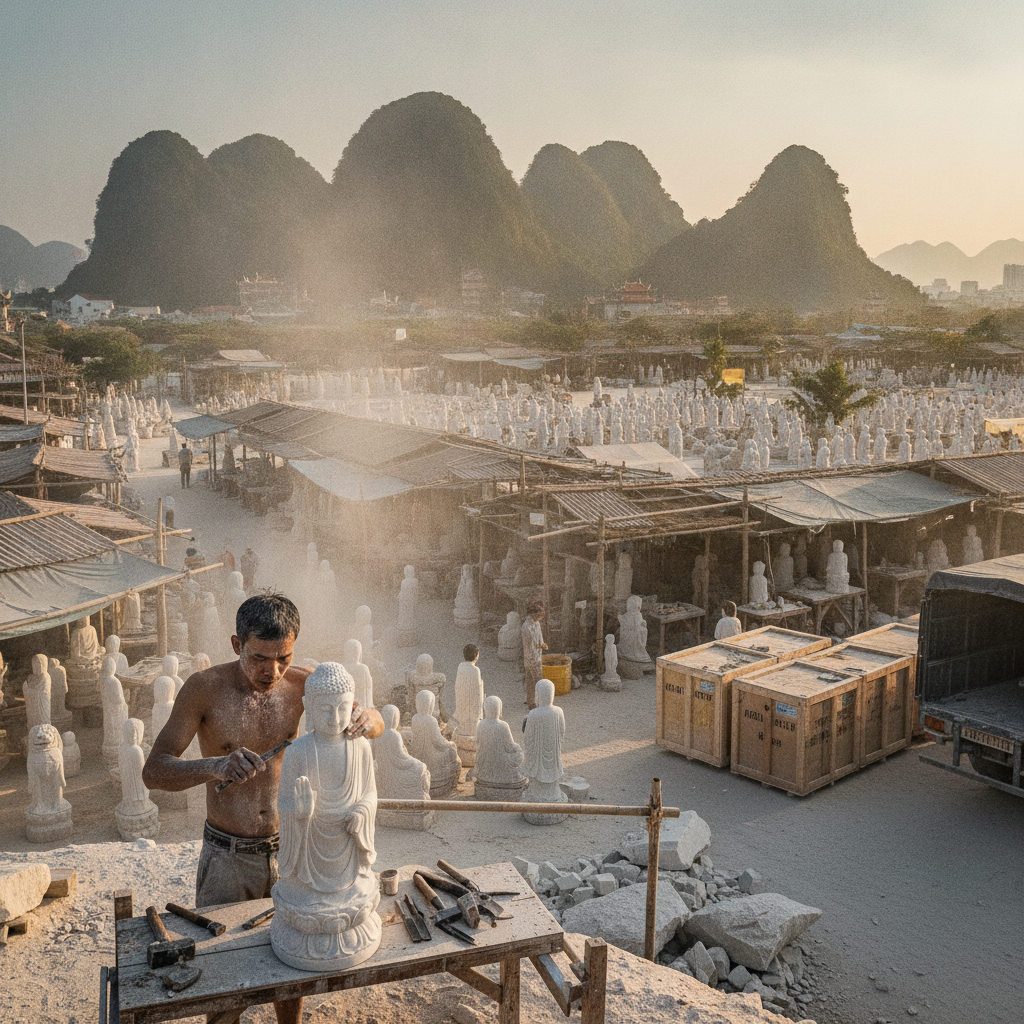
Non Nước village (at the base of the Marble Mountains, immediately south of the Marble Mountains tourist area—accessible by the same taxi or bicycle route from central Đà Nẵng in 20–25 minutes) is the most productive and most diverse stone carving village in Vietnam, producing approximately 50,000 marble and stone pieces per month for the domestic and export markets. The production: the village's 350+ workshops range from the large factory-scale operations (power saws, CNC routers, power grinders—producing standard Buddha statues, lions, and decorative columns in batches of 20–50 pieces at industrial speed) to the small family workshops (2–3 craftspeople, hand tools for the finishing and detail work, producing unique commissions for individual customers). The materials: the Non Nước village uses both the local Ngũ Hành Sơn marble (white and grey with natural veining—decreasing in availability as the supply from the quarried marble mountains reduces) and imported marble (white Carrara marble from Italy, Chinese marble, and Vietnamese mountain marble from Thanh Hóa province) for the larger and more expensive commissions. The price: a 60-cm Buddha statue in white marble costs USD 30–80 at the village (USD 5–15 from the Chinese mass-production factories whose products Non Nước workshops increasingly sell alongside their own production; USD 150–500 from the Đà Nẵng souvenir shops). Shipping: most workshops can arrange international shipping; crating and documentation for a typical Buddha statue costs USD 40–80 additional.
- 5
Đà Nẵng Cuisine Beyond mì Quảng – The Full Central Vietnamese Repertoire
The Đà Nẵng street food circuit—beyond the headline mì Quảng—covers the full range of central Vietnamese culinary production, concentrated in the Hải Châu district market area and the street food lanes behind the beach strip. Bánh mì Đà Nẵng (the Đà Nẵng version of the Vietnamese baguette sandwich—larger than the Hội An Phượng version but less international in its reputation; the best Đà Nẵng bánh mì is at the dawn stalls near Hàn Market (open 04:30–08:30) where the bread is freshest from the French-colonial-design wood-fired ovens). Bánh căn (the mini rice flour pancakes cooked in round-hole terracotta skillets—a specific central Vietnamese street snack, cooked one at a time with quail eggs and spring onion, eaten 8–10 at a sitting with a fermented fish sauce dipping): the bánh căn stalls (small, always run by a woman, the skillets smoking) are the most regionally specific street food in Đà Nẵng, not available in Hanoi or Ho Chi Minh City. Chè Đà Nẵng (the Vietnamese sweet soup/dessert—the Đà Nẵng version of chè is the most varied in central Vietnam, with the specific bột lọc bọc heo quay (tapioca balls filled with roasted pork and shrimp in a clear sweet broth) being the most unusual sweet-savoury combination in the Vietnamese dessert tradition).
- 6
Leaving Đà Nẵng – The Central Vietnam Legacy
The Đà Nẵng experience—the most active and most modern city stop on the central Vietnam circuit—provides the necessary urban counterpoint to the heritage quiet of Hội An and the royal solemnity of Huế: it is the city that shows what central Vietnam is choosing to become, while the other two show what it has been. The synthesis: the visitor who has seen the Dragon Bridge breathe fire, the Cham Museum's 2,000 sculptures, the Hải Vân Pass at dawn, and the douc langur on the Sơn Trà road has encountered the complete range of central Vietnamese experience—the geological heritage (the Marble Mountains), the artistic heritage (the Cham collection), the natural heritage (the douc langur peninsula), the military heritage (the American War beach and the dioxin airport), and the contemporary identity (the smart city, the fireworks festival, the surf culture). The city's contribution: of the three central Vietnam heritage cities, Đà Nẵng is the one that has most clearly chosen a direction—the ambitious, fast-growing, technology-investment-attracting city that happens to have a great beach, rather than a heritage destination that happens to have a modern service economy. The question: whether the central Vietnam combination (the three UNESCO sites within 100 km, the beach city gateway, the mountain pass) is sustainable as a single itinerary or whether the differentiation of the three cities (Đà Nẵng: modern/beach; Hội An: heritage/tailoring; Huế: royal/culinary) is the correct tourism planning framework going forward.
Walk this route with audio
Stories play automatically as you reach each stop — no tapping needed.
More in Đà Nẵng
Đà Nẵng's Contradictions: The East-Facing Sunrise Beach, 600,000 Korean Visitors Creating a Korean Quarter Behind the Sheraton & the Red-Shanked Douc Langur Habitat Threatened by Resort Development
Đà Nẵng Complete: Han Market's 1940 French Market Building, 250,000 Annual Aircraft Sorties From a Base Now Civilian Airport & Lang Co's Sand Spit Between Mountain and Sea
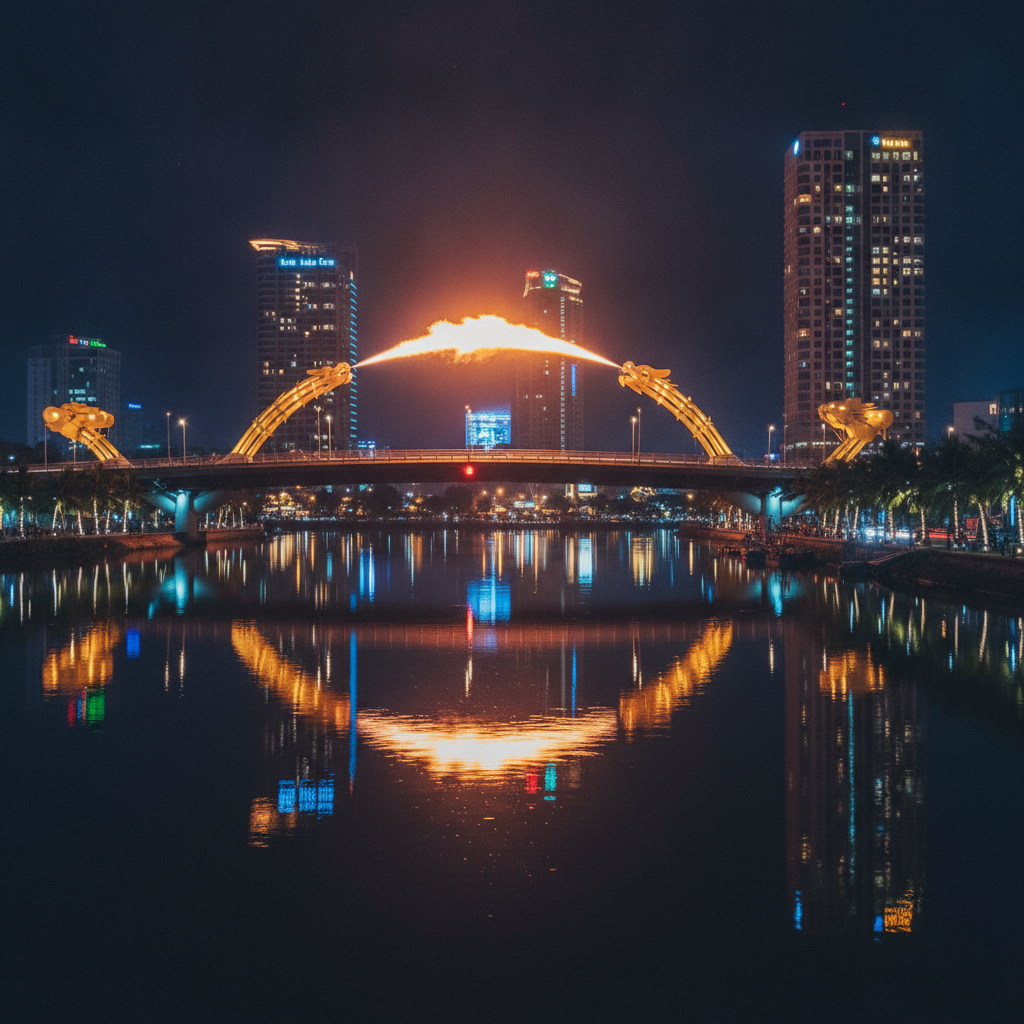
Đà Nẵng: The Dragon Bridge That Breathes Fire on Saturday Nights, the Golden Bridge Held by Stone Hands at 1,400m & the Red-Shanked Douc Langur Population Within 5km of the Beach
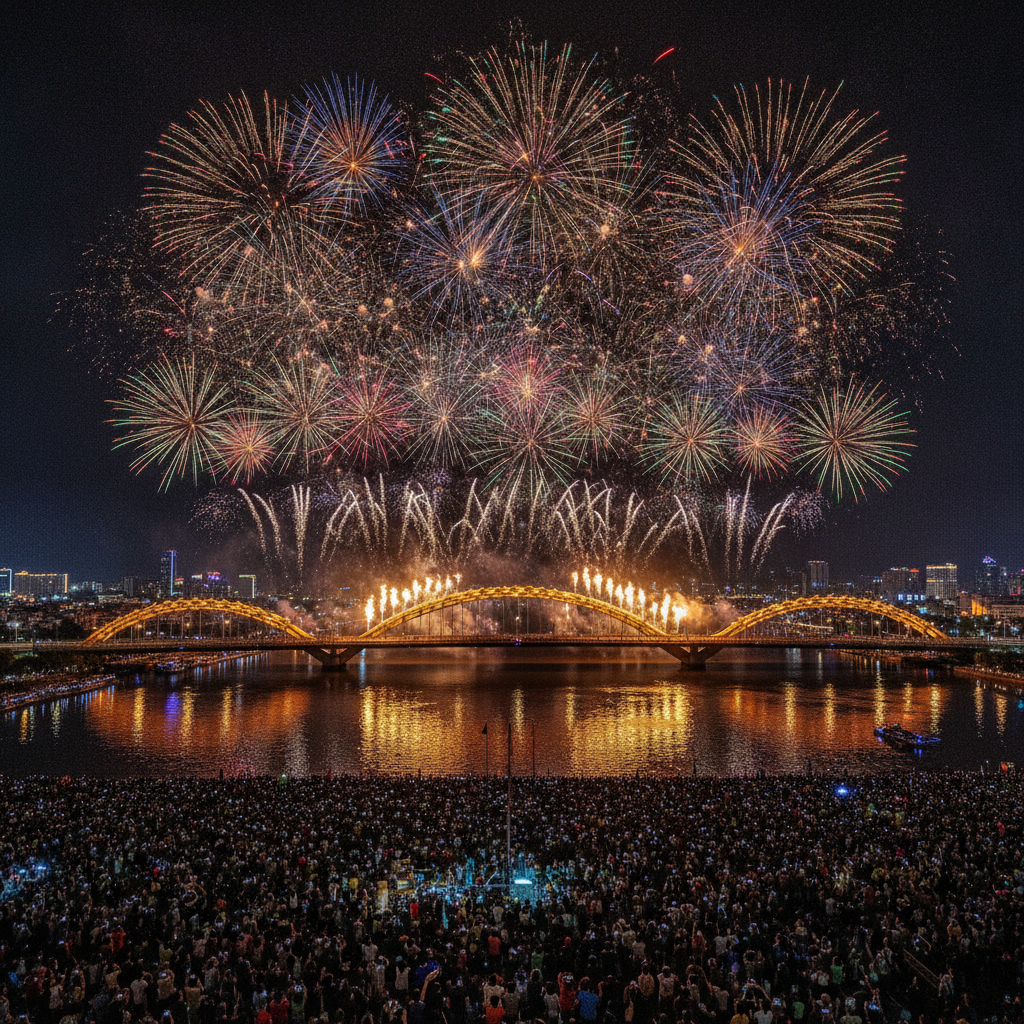
Đà Nẵng's Two Identities: Asia's Most Advanced Fireworks Competition Over a Dragon Bridge That Breathes Real Fire & the Birth City of the Monk Martin Luther King Jr. Nominated for the Nobel Peace Prize