Đà Nẵng's Full Picture: 3,500 Marines Landing on Mỹ Khê Beach on 8 March 1965, the World's Most Important Cham Art Museum Visited by Fewer Than 100,000 People Annually & the Hải Vân Pass That Divides Central Vietnam's Climate
The 8 March 1965 Marine landing at what is now the Mỹ Khê tourist beach—the moment American advisors became combat troops; the USD 116 million USAID dioxin remediation of the airport soil completed 2017—the largest such project in history at the site of the primary Agent Orange storage and loading point; the Cham Sculpture Museum's 2,000 sculptures from 4th–15th century Hindu Champa attracting fewer visitors than any comparably significant art collection in Asia; mì Quảng's turmeric noodles with a small amount of broth rather than a full soup bowl—the central Vietnamese identity food that separates the region from Hanoi pho and Saigon hủ tiếu; Sky36's Saturday 20:45 pre-booking for the Dragon Bridge fire view; and the Lang Co lagoon sand-spit between sea and freshwater as the most beautiful detour on the Hải Vân Pass motorcycle route.
- 1
The Hải Vân Pass – Central Vietnam's Most Dramatic Mountain Road
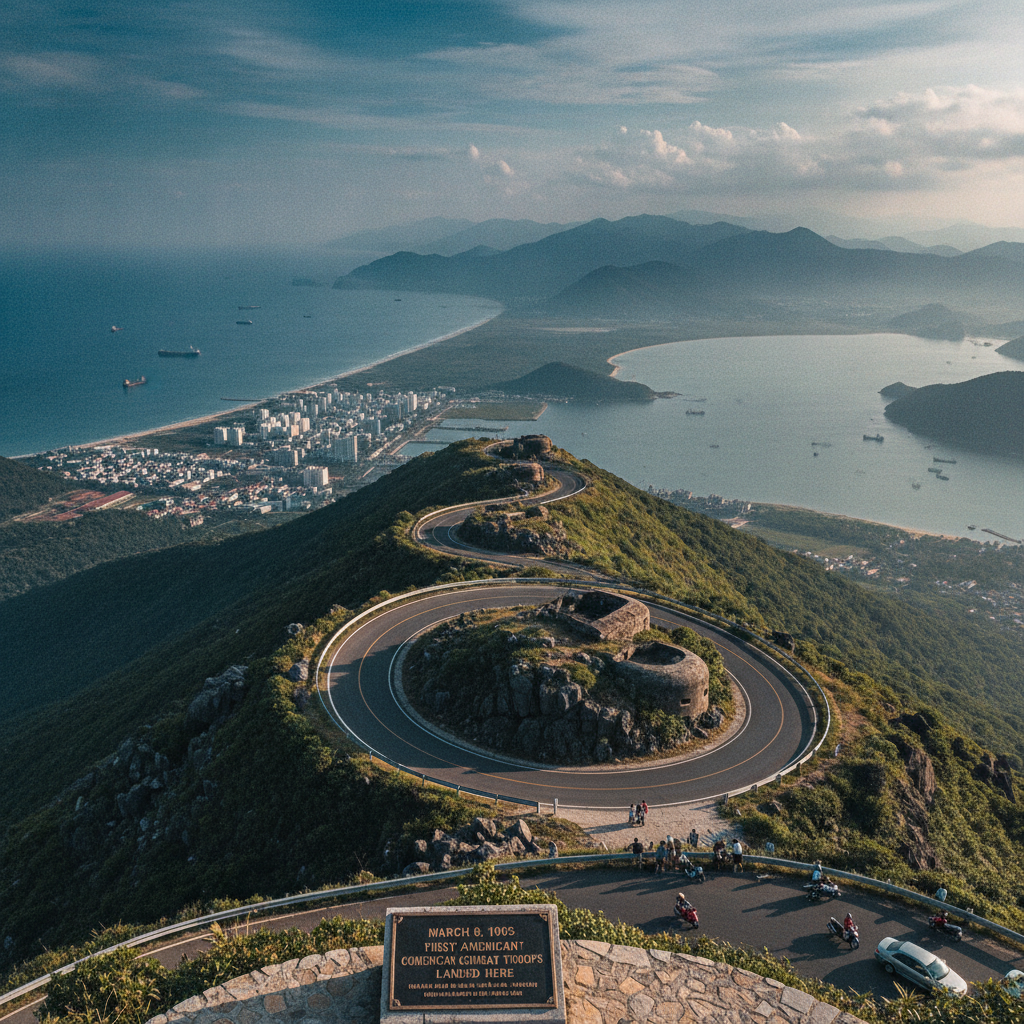
The Hải Vân Pass (the Đèo Hải Vân—Cloud Pass; at 496 metres elevation on the Trường Sơn mountain range spur that descends directly into the South China Sea, creating the natural boundary between the central Vietnamese climate zones and the administrative boundary between Đà Nẵng and Thừa Thiên Huế province; 30 km north of Đà Nẵng): the most scenic road section in Vietnam—the 20-km switchback road over the pass was the primary route between northern and southern Vietnam until the 2004 Hải Vân Tunnel (the longest tunnel in Southeast Asia—6.3 km) opened beneath the pass. The road: the Hải Vân Pass road (now bypassed by the tunnel and used only by light vehicles, motorbikes, and cyclists) runs along the cliff edge 200–400 metres above the sea, with views south over the Đà Nẵng bay and north over the Lang Co lagoon—the most dramatic panoramic road viewpoint in Vietnam. The motorcycle ride: the Đà Nẵng–Huế motorcycle journey via the Hải Vân Pass (approximately 3 hours—rent a motorbike in Đà Nẵng or take an Easy Rider guide; the 100-km route combines the pass crossing with the Lang Co beach stop and the Thuận An lagoon approach to Huế). The military history: the Hải Vân Pass was the site of intense military activity during both the French Indochina War (1945–1954) and the American War—the French colonial fortifications on the pass summit (now used as a military observation post) command the most strategically significant single mountain position in central Vietnam.
- 2
The Đà Nẵng Food Scene – Mì Quảng & the Central Vietnamese Kitchen
The Đà Nẵng food scene—the most underrated in central Vietnam, overshadowed by the fame of Huế's royal cuisine and Hội An's signature dishes—is a distinct culinary tradition with several dishes that are uniquely of the city. Mì Quảng (the Quảng Nam province turmeric noodle dish—wide, flat rice noodles in a small amount of rich broth (not the full bowl of soup of the northern pho or the southern hủ tiếu) topped with peanuts, sesame rice crackers, fresh herbs, and the protein of choice (shrimp, pork, chicken, or—at the best specialist shops—the chicken mì Quảng with bone-in pieces braised in the tumeric broth): the most regionally specific Vietnamese noodle dish, available at every Đà Nẵng street stall and the best single indicator of culinary authenticity at any central Vietnamese restaurant. Bánh xèo (the Vietnamese sizzling pancake—a turmeric-yellow crispy pancake folded around shrimp, pork, and bean sprouts, cooked in a screaming-hot pan with the characteristic crackling sound that gives the dish its name 'xèo'—the sizzle): the Đà Nẵng bánh xèo tradition (the pancake is larger in Đà Nẵng than in Hội An or Ho Chi Minh City—30–35 cm diameter, cooked in a dedicated bánh xèo specialist shop rather than as a street food item). The Đà Nẵng seafood: the Mỹ Khê beach seafood restaurants (operating until midnight, with live tanks of the daily catch from the Đà Nẵng fishing fleet—crab, lobster, grouper, squid, and mantis shrimp displayed for selection; the freshest seafood in a Vietnamese city outside of coastal Nha Trang).
- 3
Đà Nẵng & the American War – The Cradle of the Conflict
Đà Nẵng has a specific and pivotal place in the history of the American War in Vietnam: it was here, on 8 March 1965, that the first American combat troops landed in Vietnam (3,500 Marines from the 9th Expeditionary Brigade, coming ashore at Đà Nẵng beach from landing craft—the same beach that is now the Mỹ Khê tourist resort area). The significance: the 8 March 1965 landing at Đà Nẵng beach was the moment the American role in Vietnam shifted from military advisors to combat troops—the operational decision that committed the US to a war that would last 10 years, cost 58,000 American lives and 2–3 million Vietnamese lives, and fundamentally reshape American domestic politics. The Đà Nẵng Air Base: the Đà Nẵng Air Base (now the civilian international airport—the runway and base infrastructure rebuilt on the same site as the US military complex that was, at its peak in 1968, the busiest airport in the world by aircraft movement) processed approximately 250,000 sorties per year at peak; the Hangar 2 at the current airport is the original US military hangar. The Agent Orange legacy: the former Đà Nẵng Air Base was the primary storage and loading point for Agent Orange in Vietnam; significant dioxin contamination of the soil surrounding the airport was confirmed by US and Vietnamese environmental surveys in 2006–2012; the US government (USAID) funded a USD 116 million remediation project (completed 2017) that is the largest dioxin remediation project in history.
- 4
Đà Nẵng Museum of Cham Sculpture – The World's Most Important Cham Collection
The Đà Nẵng Museum of Cham Sculpture (the Bảo tàng Điêu khắc Chăm Đà Nẵng—established 1915 by the École française d'Extrême-Orient (EFEO), the French institution that conducted the most significant systematic archaeological study of Southeast Asian heritage sites from 1900–1954; the museum building designed in the Cham architectural style; located on the Hàn River in central Đà Nẵng) contains the world's largest and most important collection of Cham sculpture—approximately 2,000 sandstone and terracotta sculptures from the 4th to the 15th centuries CE, the artistic production of the Hindu Champa Kingdom. The collection: organised by the Cham religious site from which each sculpture was excavated (the rooms are named Mỹ Sơn, Trà Kiệu, Đồng Dương, and Tháp Mắm—the four principal Cham sanctuary complexes in central Vietnam); the most significant sculptures include: the Trà Kiệu altar (4th–5th century—the most refined early Cham sculpture in existence); the Đồng Dương Bodhisattva (9th century—the largest and most imposing standing Cham bronze); and the My Son dancers (7th–8th century—the bas-relief panels of Apsara dancers from the Mỹ Sơn B-C complex, demonstrating the relationship between Cham and Khmer decorative traditions). The museum experience: the most important collection of Hindu art in Southeast Asia outside of Cambodia, visited by fewer than 100,000 people per year despite being one of the most significant art museums in Asia—possibly the least-visited major art collection in the world relative to its scholarly importance.
- 5
Đà Nẵng's Nightlife & Entertainment – The Riverside After Dark
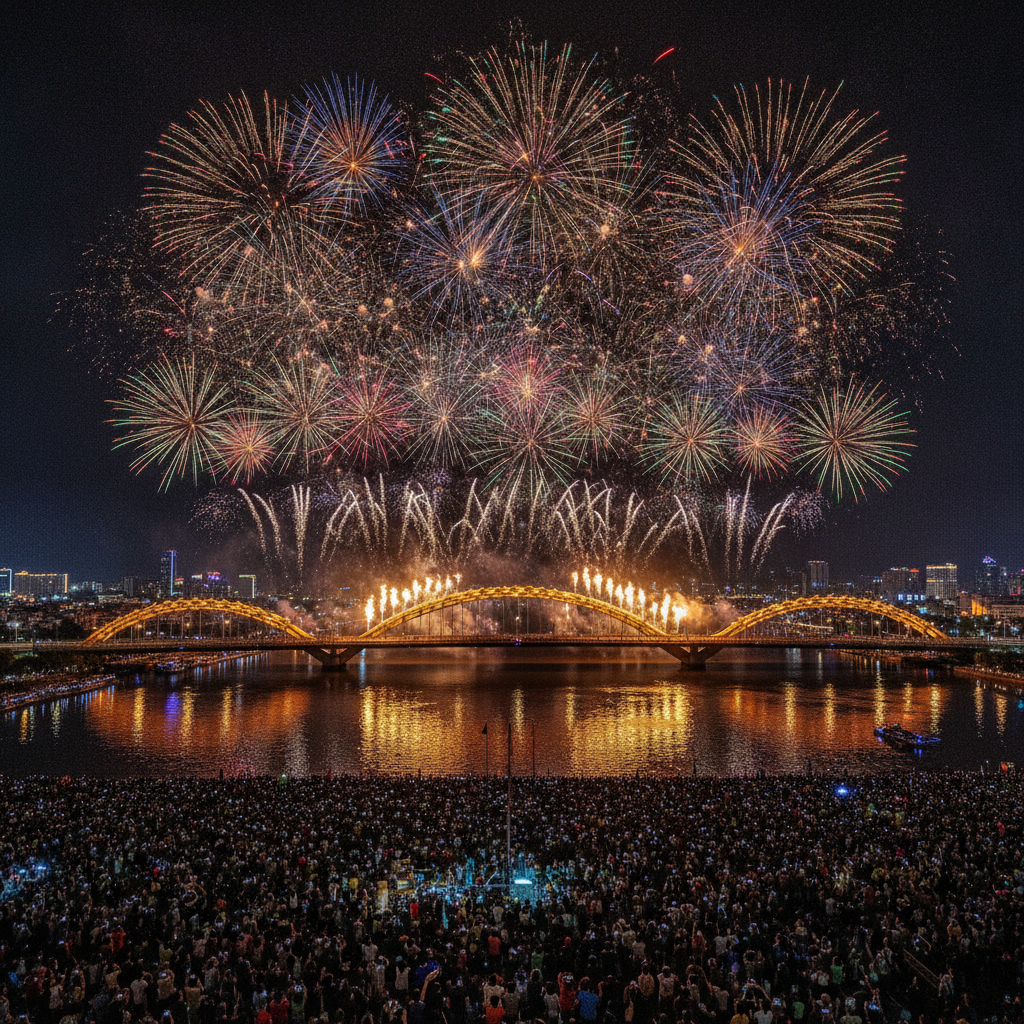
Đà Nẵng's nightlife—the most developed in central Vietnam (Hội An and Huế both have limited nightlife outside of restaurant dining)—is concentrated along the Hàn River promenade (both east and west banks), on the Mỹ Khê Beach strip (the beach bars operating until midnight), and in the Sky36 bar district (the rooftop bars visible from across the city). The Hàn River promenade at night: the walking promenade (both banks, connected by 7 bridges, lit by the bridge lighting and the building facades) is the most popular free evening activity in Đà Nẵng—the Vietnamese family evening walk (the gia đình đi dạo—the family evening stroll, the primary recreation of Vietnamese urban families) fills both river banks from 19:00–22:00. Sky36 (the rooftop bar on the 36th floor of the Novotel Đà Nẵng Premier Han River Hotel): the highest bar in central Vietnam, with 360-degree views of the Hàn River, the Dragon Bridge, and the South China Sea—the Saturday night Dragon Bridge fire (the most anticipated weekly event) is best viewed from Sky36 (pre-book a reservation for 20:45–21:30). The karaoke culture: the Vietnamese karaoke (karaoke phòng riêng—private room karaoke, where groups book a private room with a large screen, a song catalogue, and food service) is the most popular paid entertainment in Đà Nẵng; the karaoke establishments on the Hàn River west bank serve both the domestic Vietnamese and the visiting Korean and Japanese tourist markets.
- 6
Beyond Đà Nẵng – Huế, Hội An & the Central Coast Circuit
The Đà Nẵng position—at the geographic centre of the central Vietnam tourist circuit—makes it the most logical base for exploring a region that contains three UNESCO World Heritage Sites within 100 km: Hội An Ancient Town (30 km south), the Huế Imperial City (100 km north), and the Mỹ Sơn Cham Sanctuaries (70 km south). The Hội An route (south): the standard Đà Nẵng–Hội An day route passes the Marble Mountains (Ngũ Hành Sơn—20 km south), the Cửa Đại beach strip, and the Hội An outskirts; the Cơm Gà Bà Buội restaurant (at the Marble Mountains junction—the best chicken rice in central Vietnam, open only at lunch). The Huế route (north): the standard Đà Nẵng–Huế day route crosses the Hải Vân Pass (the most scenic 20 km of road in Vietnam) and passes the Lang Co beach lagoon (the most beautiful lagoon in central Vietnam—a narrow sand spit between the South China Sea and a freshwater lagoon, accessible by motorcycle detour from the pass road); the route continues to Huế's Imperial Citadel, the Royal Tombs (Minh Mạng, Tự Đức, Khải Định—the most architecturally varied collection of royal tombs in Southeast Asia), and the Thừa Thiên Huế provincial cuisine (the most sophisticated regional culinary tradition in Vietnam). The My Son route (southwest): the 70-km motorcycle route to Mỹ Sơn via the Thu Bồn River valley passes through the most rural and least-visited landscape accessible from Đà Nẵng.
Walk this route with audio
Stories play automatically as you reach each stop — no tapping needed.
More in Đà Nẵng
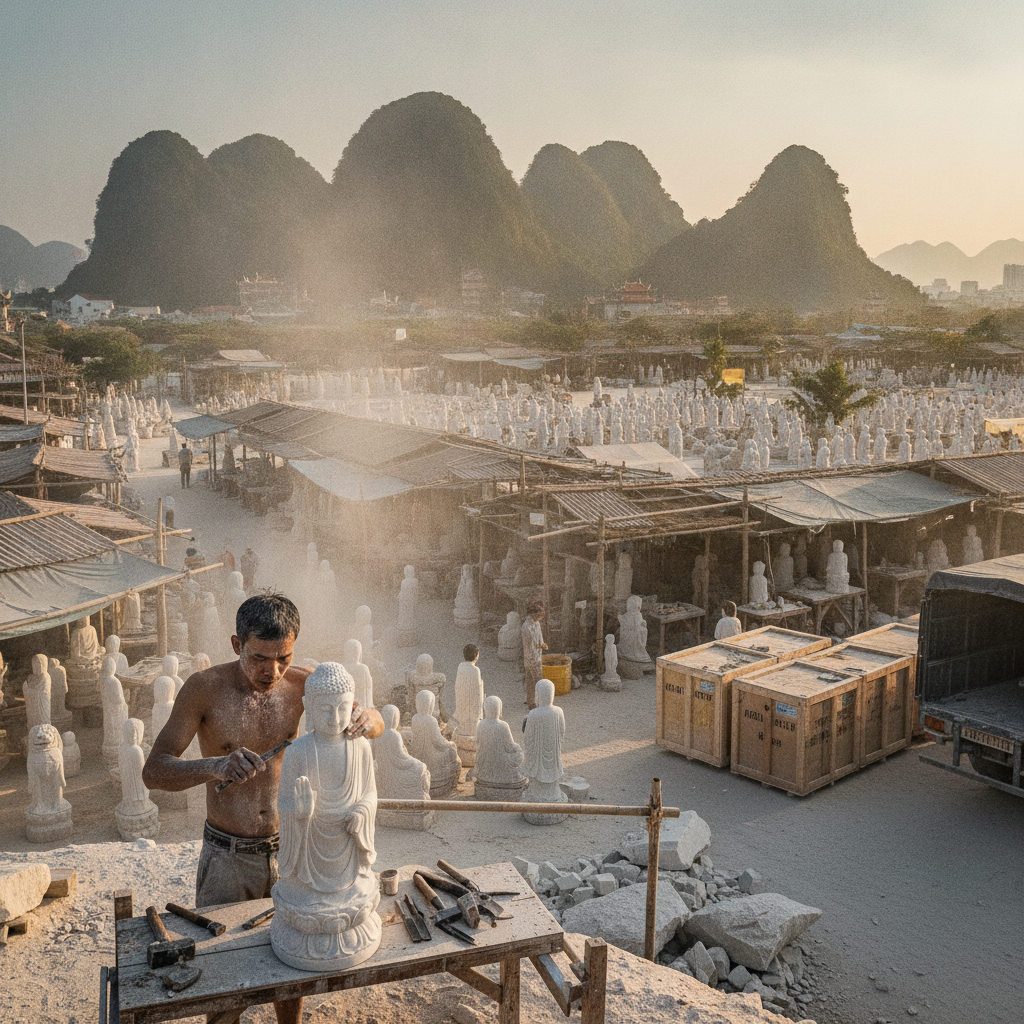
Đà Nẵng Completely: 7 Bridges Including the Swing Bridge That Opens at 22:30, the Marble Village Shipping 50,000 Pieces Per Month & the Mini Rice Pancakes That Don't Exist North of Đà Nẵng
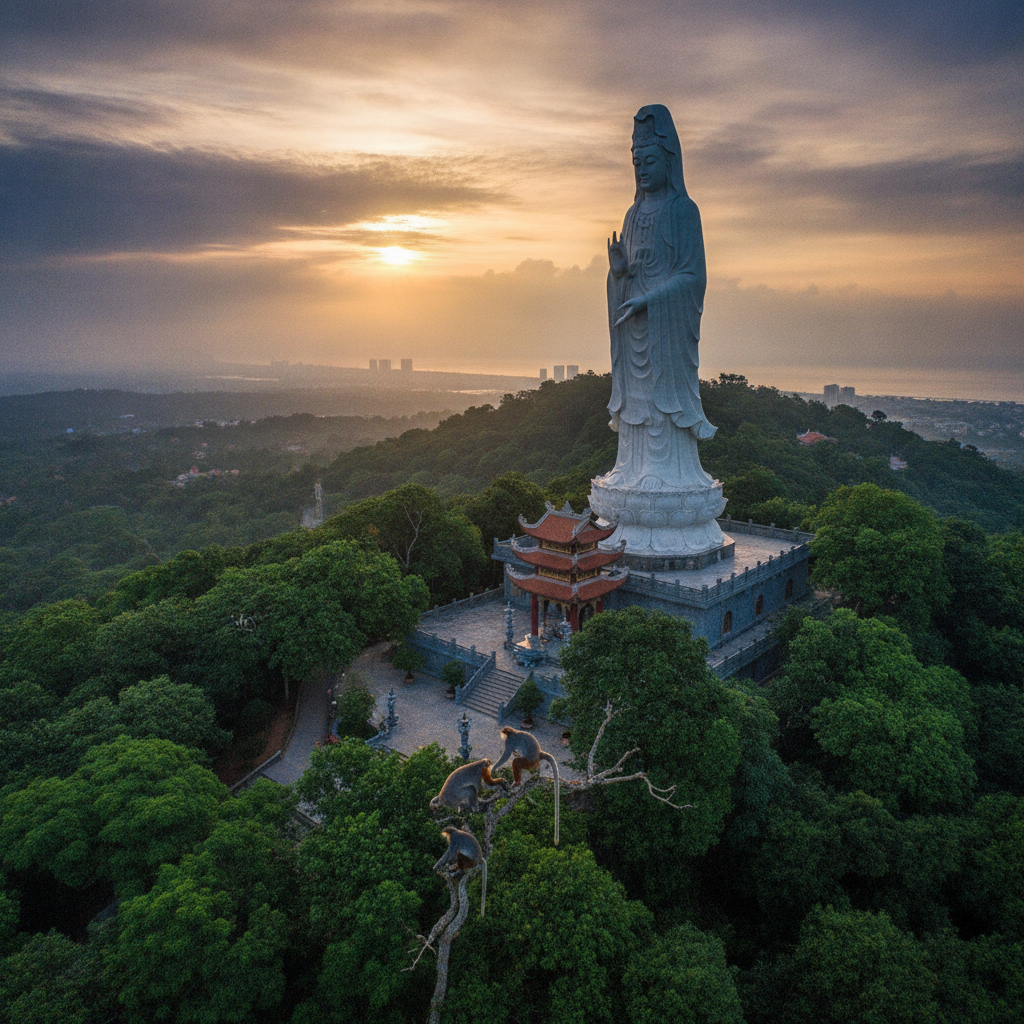
Đà Nẵng's Contradictions: The East-Facing Sunrise Beach, 600,000 Korean Visitors Creating a Korean Quarter Behind the Sheraton & the Red-Shanked Douc Langur Habitat Threatened by Resort Development
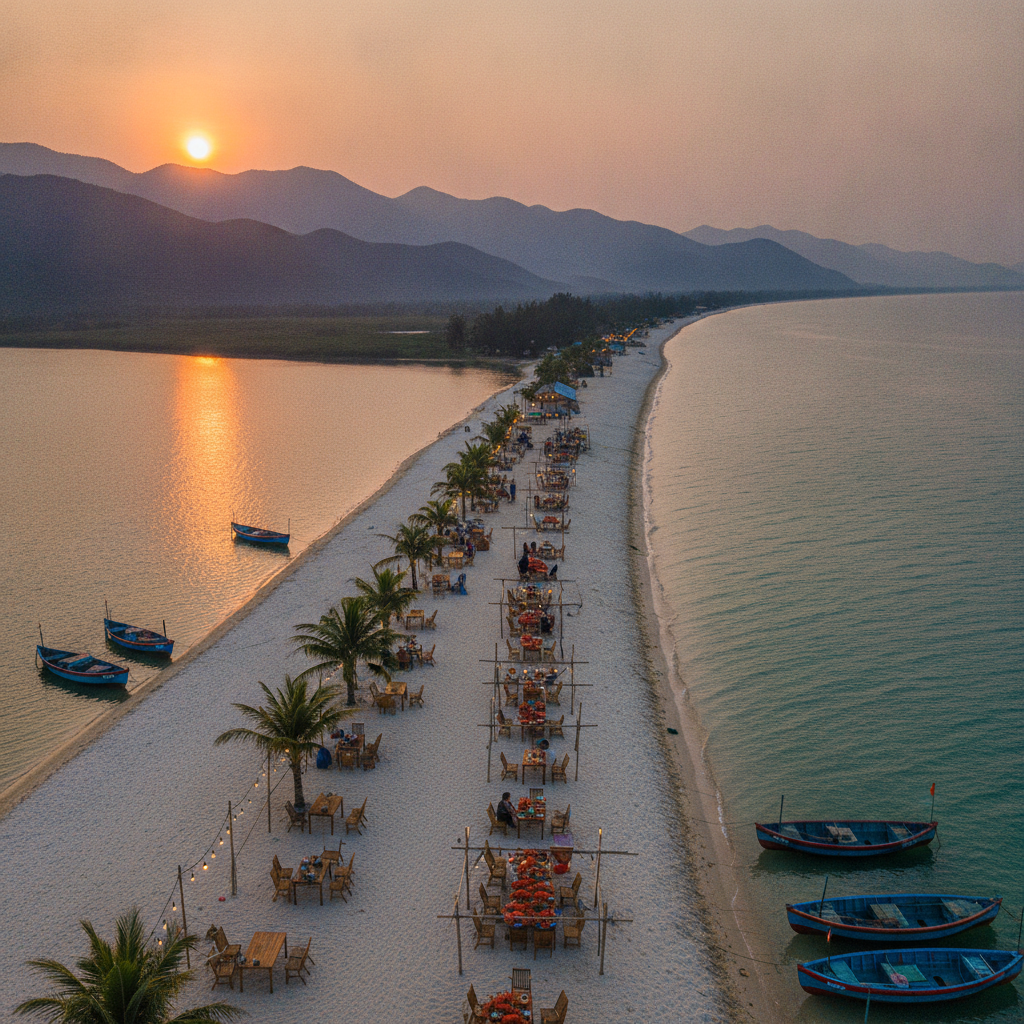
Đà Nẵng Complete: Han Market's 1940 French Market Building, 250,000 Annual Aircraft Sorties From a Base Now Civilian Airport & Lang Co's Sand Spit Between Mountain and Sea
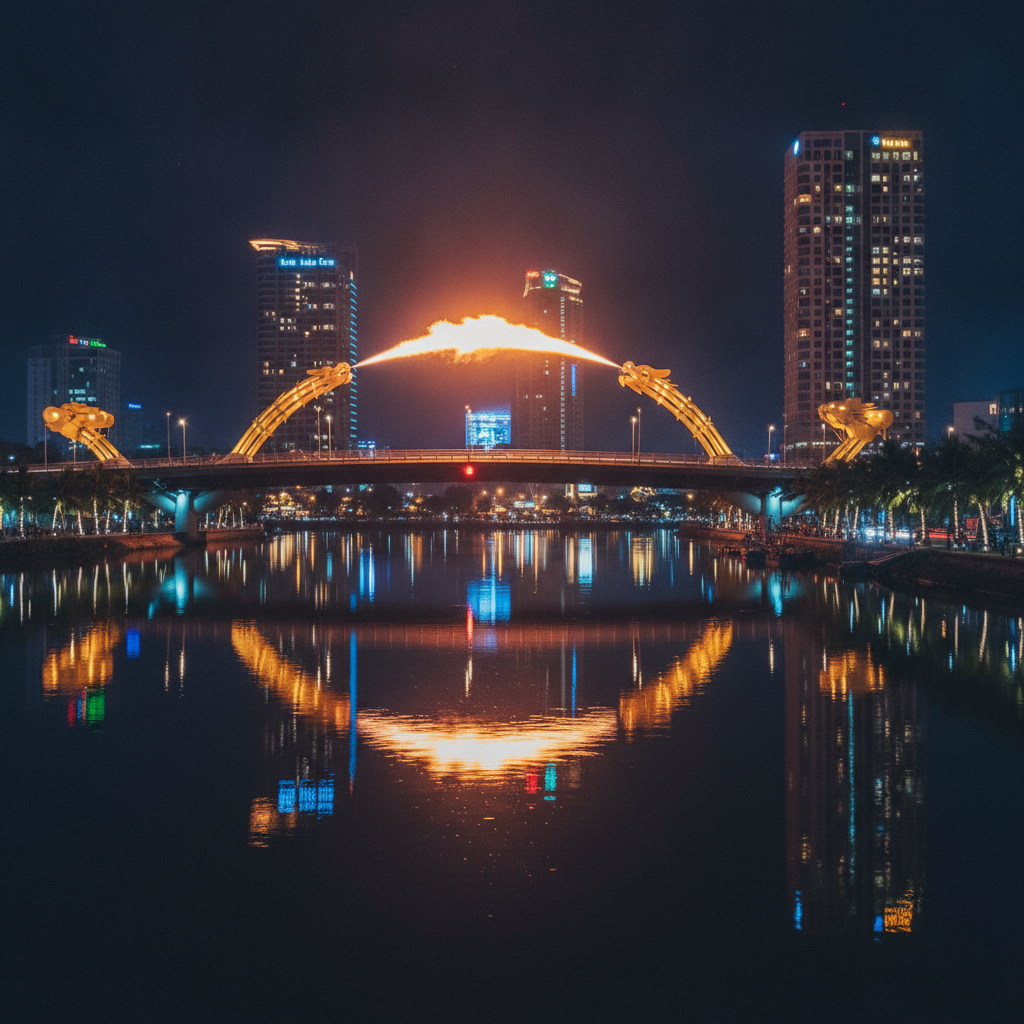
Đà Nẵng: The Dragon Bridge That Breathes Fire on Saturday Nights, the Golden Bridge Held by Stone Hands at 1,400m & the Red-Shanked Douc Langur Population Within 5km of the Beach