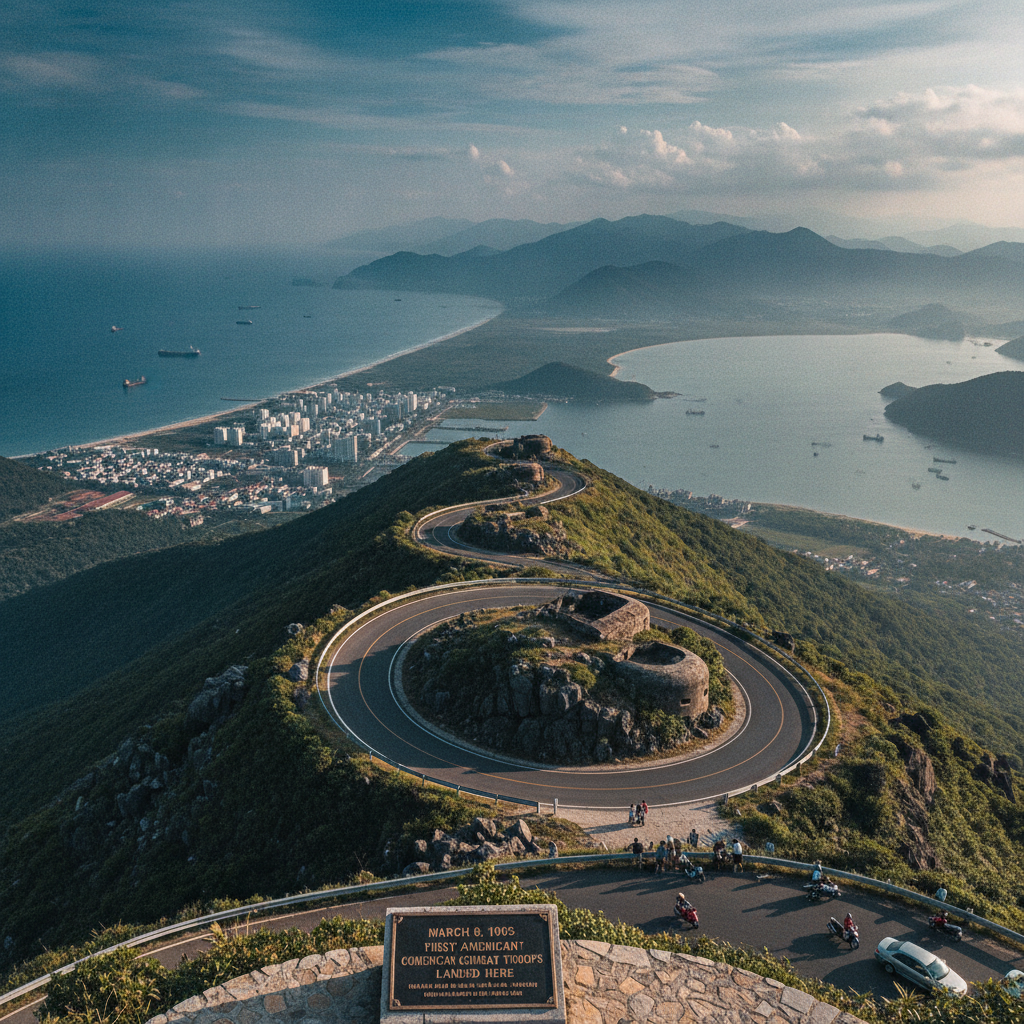
Đà Nẵng's Contradictions: The East-Facing Sunrise Beach, 600,000 Korean Visitors Creating a Korean Quarter Behind the Sheraton & the Red-Shanked Douc Langur Habitat Threatened by Resort Development
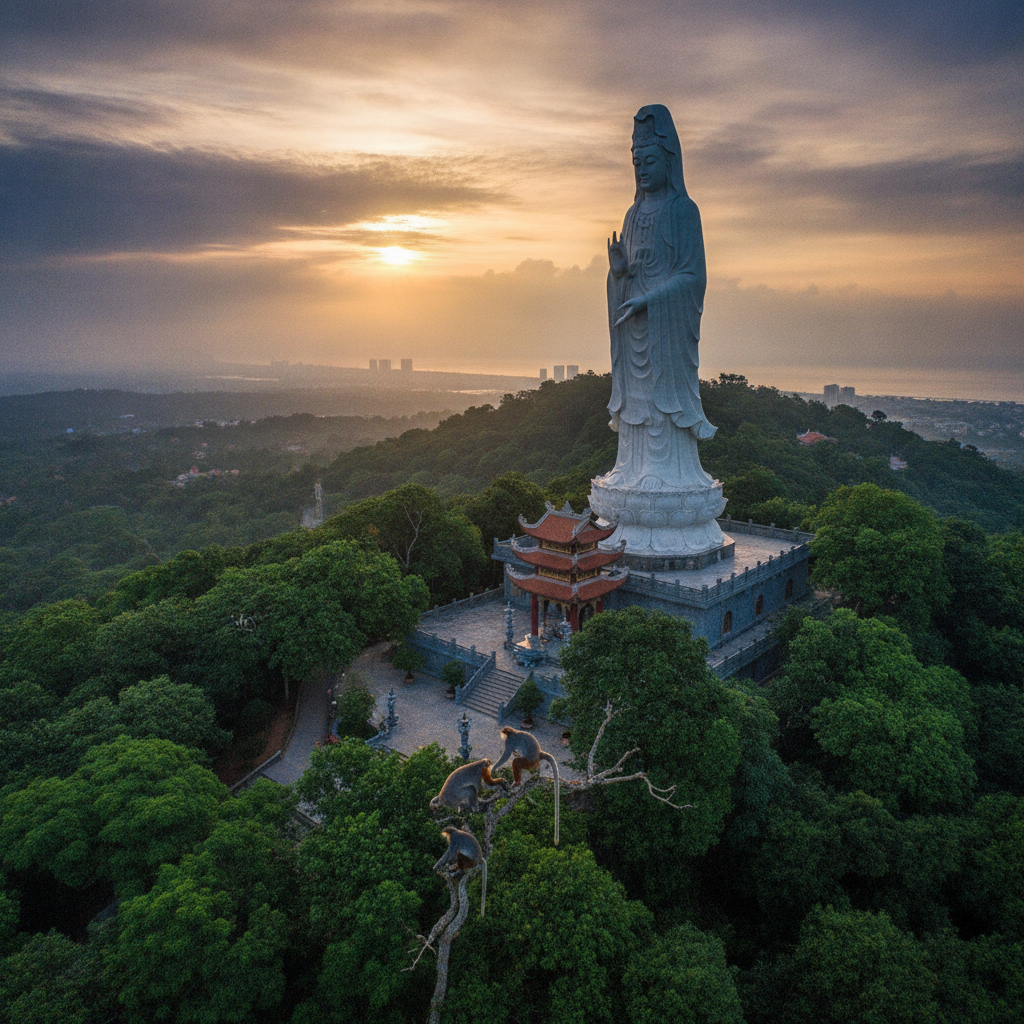
Three Linh Ứng Pagodas—Marble Mountains at 09:00, Sơn Trà's 67-metre Guanyin at 11:00, Bà Nà Hills at 14:00 as the complete Buddhist heritage circuit; the Korean resort infrastructure of Trần Phú Street—Korean menus, karaoke, nail salons—within 200 metres of the beach where US Marines landed in 1965; Mỹ Khê Beach losing 20–30 metres of width from sand mining upstream while tetrapods stabilise the erosion and reduce the aesthetic; the Montgomerie Links golf course rated top 20 in Asia 50 km from the douc langur peninsula; and the beach that faces east producing Vietnam's most reliable direct sunrise-on-water photography at 05:30 while the sunset requires driving to the Sơn Trà west beach or ascending 1,487 metres by cable car.
- 1
The Linh Ứng Pagoda Complex – Three Sacred Sites
The Linh Ứng Pagoda name applies to three separate but related Buddhist pagoda complexes in the Đà Nẵng area: the Linh Ứng Pagoda at Bãi Bụt on the Sơn Trà Peninsula (the most recently built and the most imposing—completed 2010, with the 67-metre Guanyin statue that is the tallest Guanyin in Vietnam and the most visible single landmark in the Đà Nẵng approach by sea or air); the Linh Ứng Pagoda at the Marble Mountains (Thủy Sơn—the oldest, built in the early 20th century within the Marble Mountains complex, accessible from the main Marble Mountains tourist circuit); and the Linh Ứng Pagoda at Bà Nà (on the Bà Nà Hills summit—the pagoda complex integrated into the Sun World resort development, giving the mountain resort a religious dimension). The Sơn Trà Guanyin: the 67-metre statue (visible from the beach strip on a clear day—approximately 20 km—and from the Hàn River bridges) is of the Guanyin Bodhisattva (the Bodhisattva of Compassion—Quan Âm in Vietnamese; the most widely venerated Bodhisattva in East and Southeast Asian Buddhism); the statue's scale is intended to represent Guanyin's protection over Đà Nẵng's fishing communities and their families at sea. The pagoda pilgrimage: visiting all three Linh Ứng Pagodas in a single day (Marble Mountains 09:00, Sơn Trà peninsula 11:00, Bà Nà Hills 14:00 via cable car) is the most comprehensive Buddhist heritage circuit in the Đà Nẵng area.
- 2
Đà Nẵng's Korean & Japanese Tourism Wave
The Korean and Japanese tourism wave that has reshaped Đà Nẵng since 2015—approximately 600,000 Korean visitors per year (30% of all international arrivals) and 150,000 Japanese visitors per year (8% of international arrivals) making Đà Nẵng the most Korean-visited destination in Vietnam—has produced a specific cultural geography. The Korean quarter: the Korean restaurant, karaoke, and nail salon concentration along Trần Phú Street (the 1-km strip immediately behind the Mỹ Khê Beach seafront hotels between the Hyatt and the Sheraton) is the most developed Korean tourism service corridor in any Vietnamese city outside of Ho Chi Minh City; the Korean-language menus, Korean music in the restaurants, and Korean-run beauty parlours create a Korean resort atmosphere within the Vietnamese beach city. The motivation: the Korean attraction to Đà Nẵng is explained by cost (the 3-hour Incheon–Đà Nẵng flight, the USD 150/night 5-star beachfront hotel that would cost USD 600 in Bali, the seafood meal for USD 20 that would cost USD 100 in Seoul), by climate (the warm beach weather unavailable in Korea), and by the specific Korean travel preference for beach destinations with luxury hotel infrastructure. The Japanese parallel: the Japanese attraction is more culture-oriented (Hội An and Huế day trips from a Đà Nẵng base) and less nightlife-oriented than the Korean market—the Japanese visitors average 3.5 days in the Đà Nẵng area versus the Korean average of 4.2 days.
- 3
Đà Nẵng's Environmental Challenges – Coastal Erosion & Urban Growth
The Đà Nẵng environmental management challenges—the most visible being the coastal erosion of Mỹ Khê Beach (the same erosion process affecting Cửa Đại at Hội An, driven by reduced sediment from upstream dam construction and the sand mining from the Hàn River) and the air quality reduction in the Hòa Khanh industrial zone—are the environmental counterweight to the city's ambitious development narrative. The erosion: Mỹ Khê Beach has lost approximately 20–30 metres of width at its most severely affected sections since 2010; the Đà Nẵng city government installed temporary concrete wave-breaking structures (tetrapods) at the most severely eroded sections in 2018–2020—effective at stabilising the erosion but reducing the aesthetic quality of the beach significantly. The douc habitat: the Sơn Trà Peninsula's douc langur population (the most important wildlife asset within any Vietnamese city boundary) is threatened by the continued pressure to develop tourist resorts and cable car facilities on the peninsula—several development proposals for additional resort hotels on the Sơn Trà coast have been rejected after environmental campaigns but the development pressure persists. The Ha Thanh River: the upstream sand mining on the Cu De River and the Ha Thanh River (which together deliver the sediment that maintains the Mỹ Khê Beach sand supply) is the primary cause of the beach erosion—a problem originating in the provincial governance of upstream mining permits rather than in Đà Nẵng's own environmental management.
- 4
The Đà Nẵng Botanical Garden & Green Spaces
The Đà Nẵng Botanical Garden (the Vườn Thực Vật Đà Nẵng—the 15-hectare green space in the Hòa Khánh area, 7 km northwest of the city centre; the most developed public botanical collection in central Vietnam; open daily 07:00–18:00; free admission) is the least visited significant attraction in Đà Nẵng—consistently overlooked in the tourist circuit in favour of the Marble Mountains and Bà Nà Hills. The garden collections: Vietnamese tropical flora (the primary collection—the native trees of the Trường Sơn mountain range, the coastal mangroves, and the medicinal plants of central Vietnam); ornamental tropical plants from the rest of Asia (the bonsai garden, the orchid collection); and the largest collection of bamboo species in Vietnam (over 30 species—bamboo being the most important natural material in Vietnamese daily life, construction, and craft production). The Asian Lotus Park: the Đà Nẵng Lotus Park (the Công viên Hòa Bình—'Peace Park'—on the east bank of the Hàn River, opposite the Dragon Bridge; the largest urban park in Đà Nẵng, built 2013 as part of the waterfront renewal): the water lotus garden (the Vietnamese white lotus—the national flower—blooming from June to September), the performance stage (outdoor concerts during the DIFF fireworks festival season), and the Dragon Bridge view terrace (the best public ground-level photography position for the Saturday night Dragon Bridge fire show).
- 5
The Đà Nẵng Marathon & Sports Tourism
Đà Nẵng has become the primary destination in Vietnam for sports tourism—the combination of the flat beach running course, the temperate climate (avoiding the tropical extremes of Ho Chi Minh City and the winter cold of Hanoi), and the modern hotel infrastructure creating the most complete sports event environment in Vietnam. The Đà Nẵng International Marathon (the IM Đà Nẵng—held annually in August, with courses of 42 km (full marathon), 21 km, 10 km, and 5 km along the Mỹ Khê Beach seafront and through the city; approximately 10,000 participants in 2023—the largest single-day sports event in central Vietnam): the full marathon course (42 km—along the beach promenade from the Sheraton to the Marble Mountains and back, then through the Sơn Trà peninsula road section and back—the beach section in the early morning before the heat builds to provide the fastest conditions). The Ironman Vietnam (the Đà Nẵng Ironman Triathlon—the swim leg in the South China Sea at Mỹ Khê, the bike leg along the coastal road, and the run along the beach promenade; approximately 1,500 participants—the most technically demanding single-day sports event in Vietnam). The golf: the Đà Nẵng golf market (the BRG Đà Nẵng Golf Resort, the Montgomerie Links, the Laguna Golf Lăng Cô—three international-standard golf courses within 50 km of the city centre; the Montgomerie Links designed by Colin Montgomerie and rated among the top 20 courses in Asia).
- 6
The Đà Nẵng Sunset – Golden Hour on the East-Facing Beach
Đà Nẵng presents the traveller with a geographical paradox: the city's main beach (Mỹ Khê) faces east—toward the South China Sea—which means the beach catches the sunrise but not the sunset. The sunset solution: the Đà Nẵng sunset requires going west—either to the Hàn River promenade (where the sun sets behind the city and the river reflections catch the last light), to the Sơn Trà Peninsula's west-facing beaches (Bãi Bắc—North Beach—accessible by the Sơn Trà mountain road, facing west over the bay), or to the Bà Nà Hills summit (1,487 metres—above the cloud layer, with a 360-degree sunset view that includes the South China Sea to the east and the Annamite mountains to the west). The sunrise: the compensation for the west-facing sunset problem is the Đà Nẵng sunrise—the sun rising directly from the South China Sea over the Mỹ Khê Beach at 05:30–06:00, creating the direct-light-on-water sunrise that is typically available only from the east-facing beaches of the Americas. The photography: the Đà Nẵng sunrise from Mỹ Khê Beach (the fishermen returning with the dawn catch, the first surfers in the water, the hotels' beach chairs still empty) and the sunset from the Sơn Trà west beach (the fishing boats visible against the orange water, the Đà Nẵng city lights beginning to come on in the background) produce the two most beautiful images that Đà Nẵng offers to the patient photographer.
Walk this route with audio
Stories play automatically as you reach each stop — no tapping needed.
More in Đà Nẵng
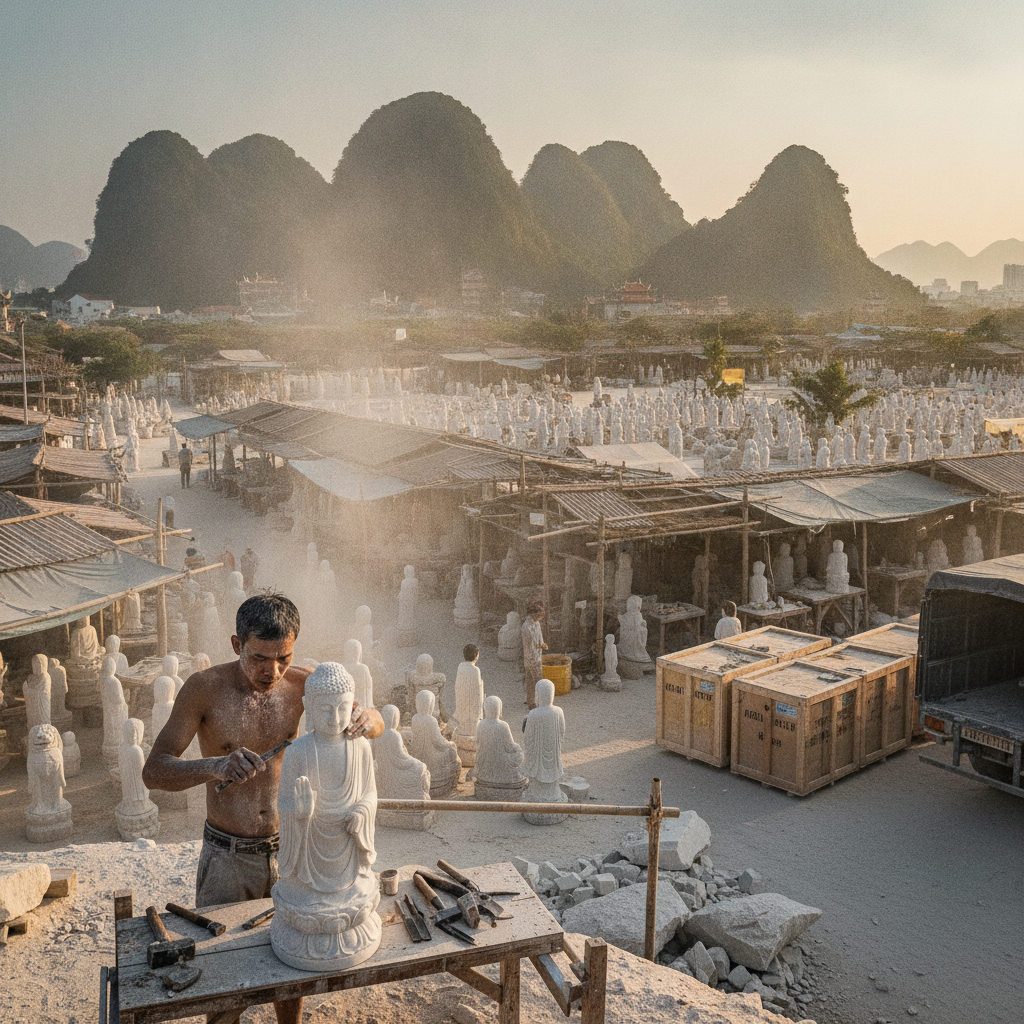
Đà Nẵng Completely: 7 Bridges Including the Swing Bridge That Opens at 22:30, the Marble Village Shipping 50,000 Pieces Per Month & the Mini Rice Pancakes That Don't Exist North of Đà Nẵng
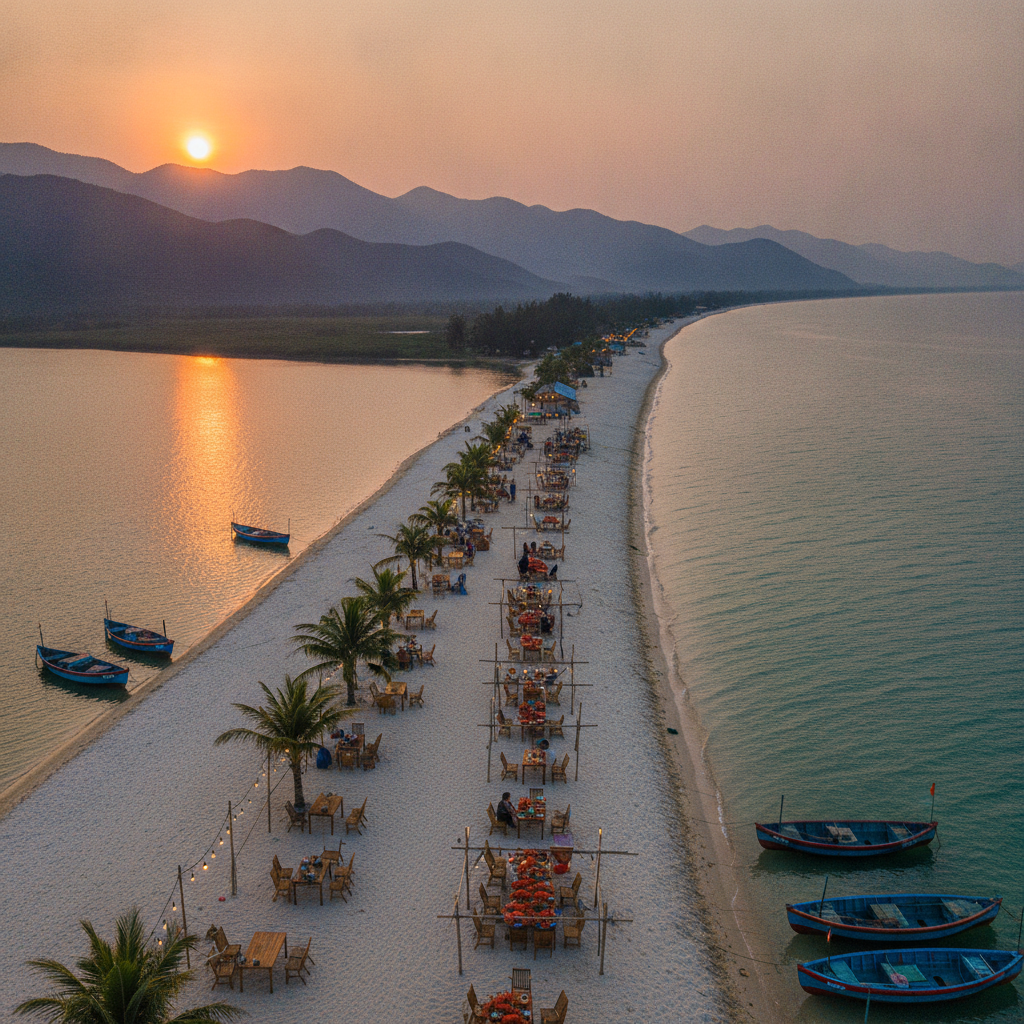
Đà Nẵng Complete: Han Market's 1940 French Market Building, 250,000 Annual Aircraft Sorties From a Base Now Civilian Airport & Lang Co's Sand Spit Between Mountain and Sea
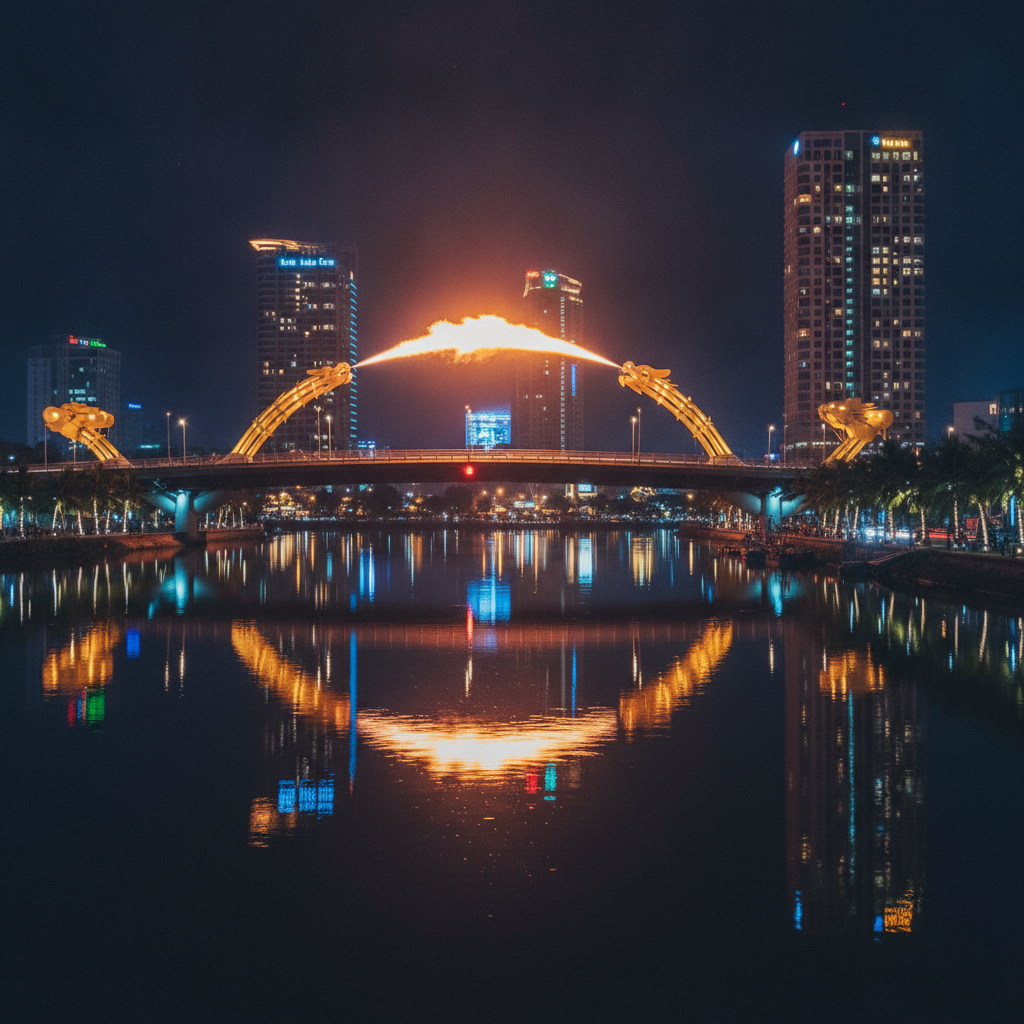
Đà Nẵng: The Dragon Bridge That Breathes Fire on Saturday Nights, the Golden Bridge Held by Stone Hands at 1,400m & the Red-Shanked Douc Langur Population Within 5km of the Beach
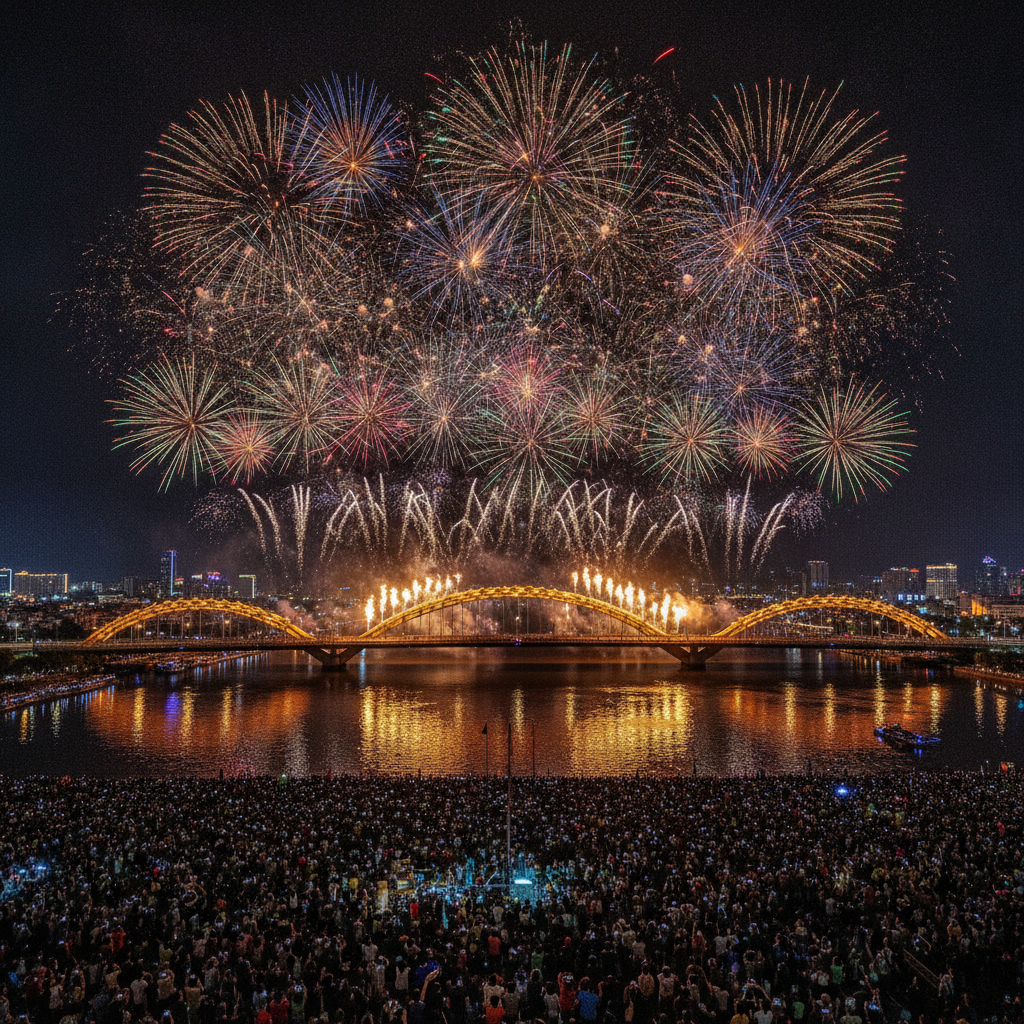
Đà Nẵng's Two Identities: Asia's Most Advanced Fireworks Competition Over a Dragon Bridge That Breathes Real Fire & the Birth City of the Monk Martin Luther King Jr. Nominated for the Nobel Peace Prize