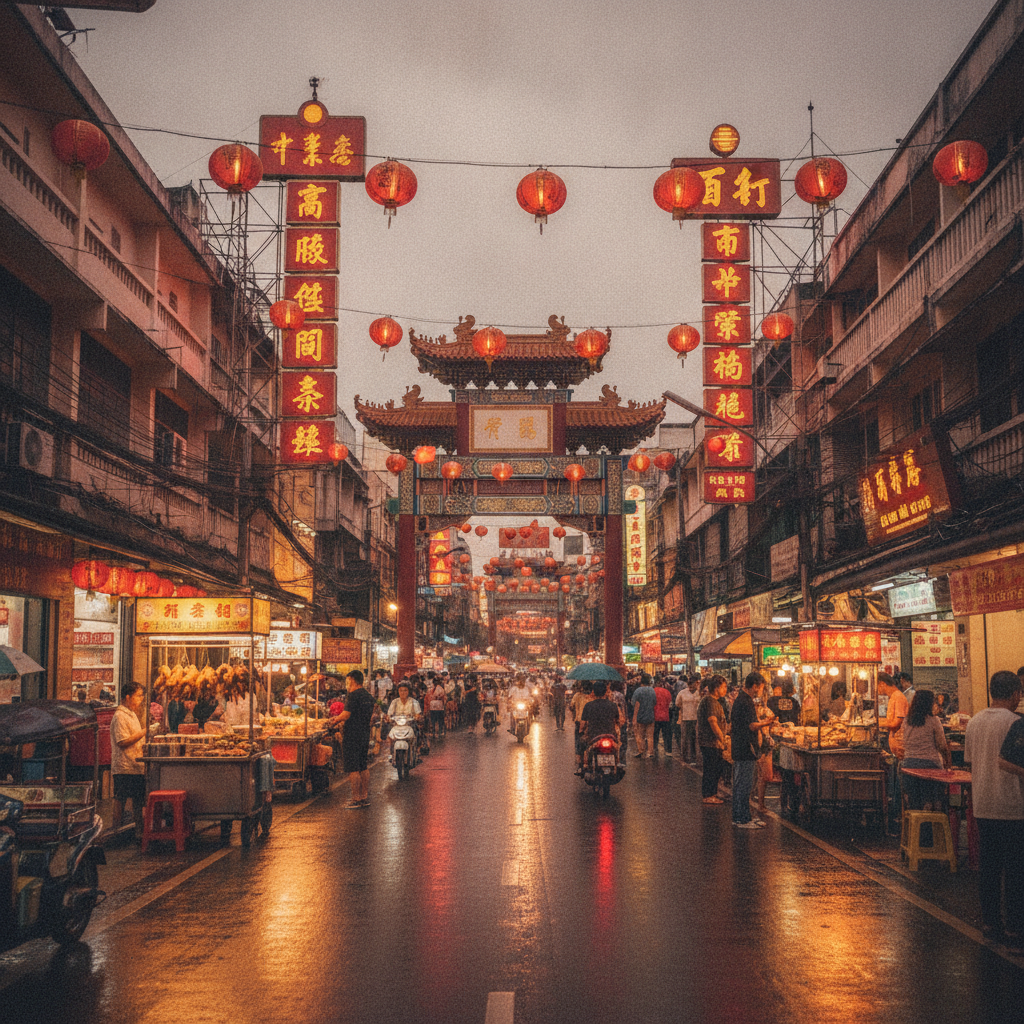

Chinatown Yaowarat, Pahurat Fabric Market & Bangkok Old Town Street Food
Bangkok's Chinatown district — known in Thai as Samphanthawong (สัมพันธวงศ์, the name of the administrative district) and internationally as Yaowarat (after Yaowarat Road, the main street) — was established by the Chinese community that migrated to Bangkok in the late 18th and early 19th centuries following the founding of the capital by Rama I, who invited the established Chinese merchant community to relocate from Thonburi (where they had been settled since the earlier Ayutthayan period) to the east bank of the Chao Phraya river, providing them with land adjacent to the new royal city.
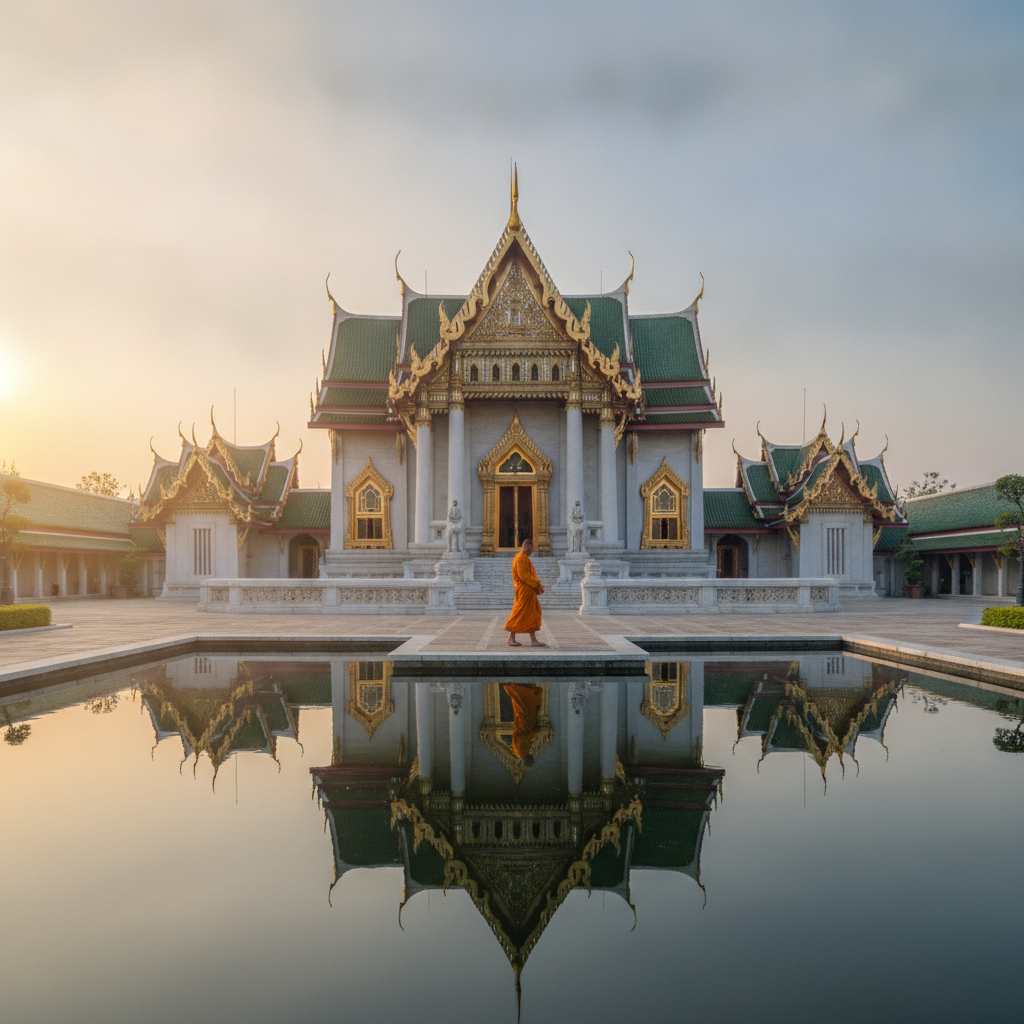
Wat Benchamabophit, Dusit Palace, Ananta Samakhom Throne Hall & Vimanmek Mansion
The Dusit district — the royal administrative district of Bangkok established by King Chulalongkorn (Rama V) in the 1890s-1900s as the location of a new European-influenced royal palace complex — preserves the most complete example of early 20th-century Thai royal architecture outside the Rattanakosin Island, combining the Italian-inspired Ananta Samakhom Throne Hall (the parliament building), the teak Vimanmek Mansion (the world's largest golden teak building), Wat Benchamabophit (the Marble Temple, the most recent of the major royal temples in Bangkok), and the formal planning of Ratchadamnoen Avenue and the Royal Plaza.
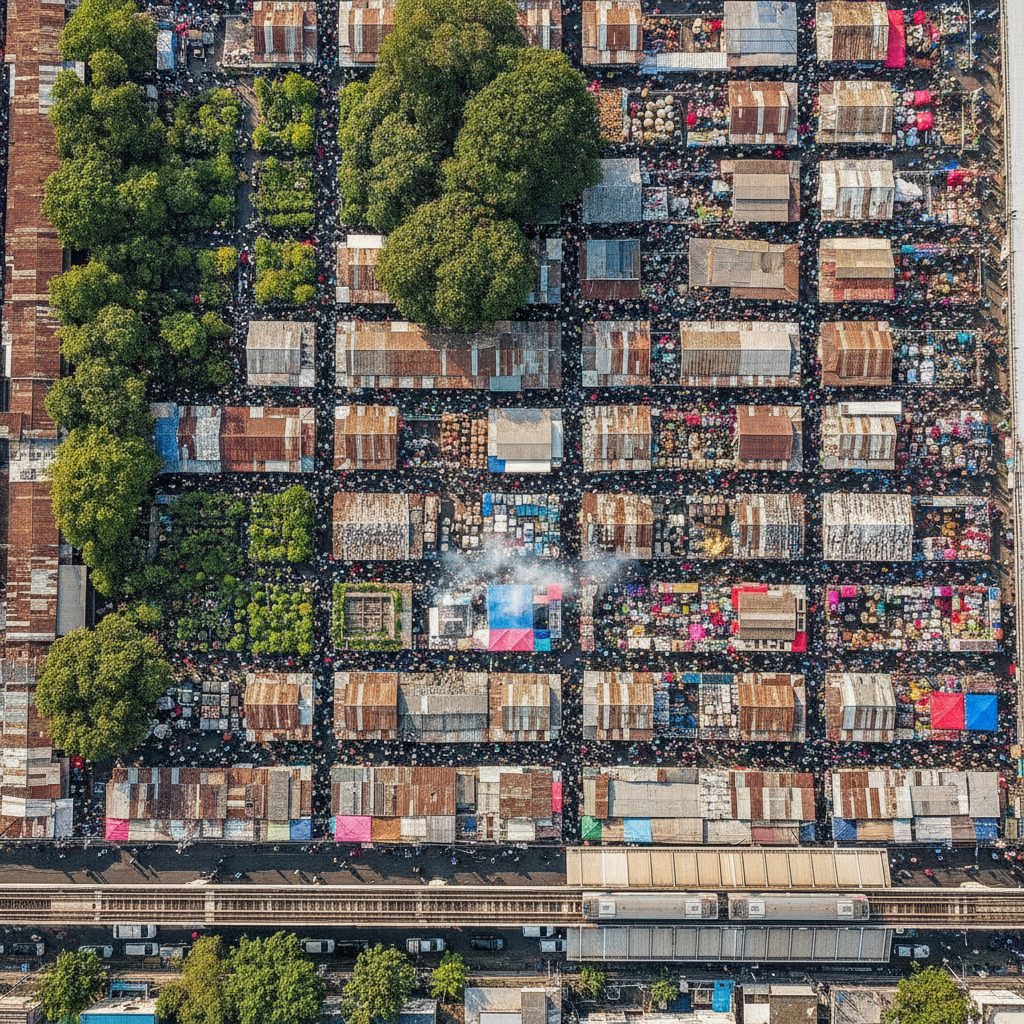
Chatuchak Weekend Market, Siam Square & Bangkok's Shopping Culture
Chatuchak Weekend Market (จตุจักร, JJ Market) — the largest outdoor market in the world by vendor count, with approximately 15,000 stalls covering 35 acres — anchors one of Bangkok's most distinctive urban zones: the area around Mo Chit and the northern BTS terminus where the city's green lung (Chatuchak Park) meets its greatest flea market, while the BTS Skytrain line south passes through Siam Square, Bangkok's youth culture and fashion epicentre, before reaching the canal-era districts of the inner city.
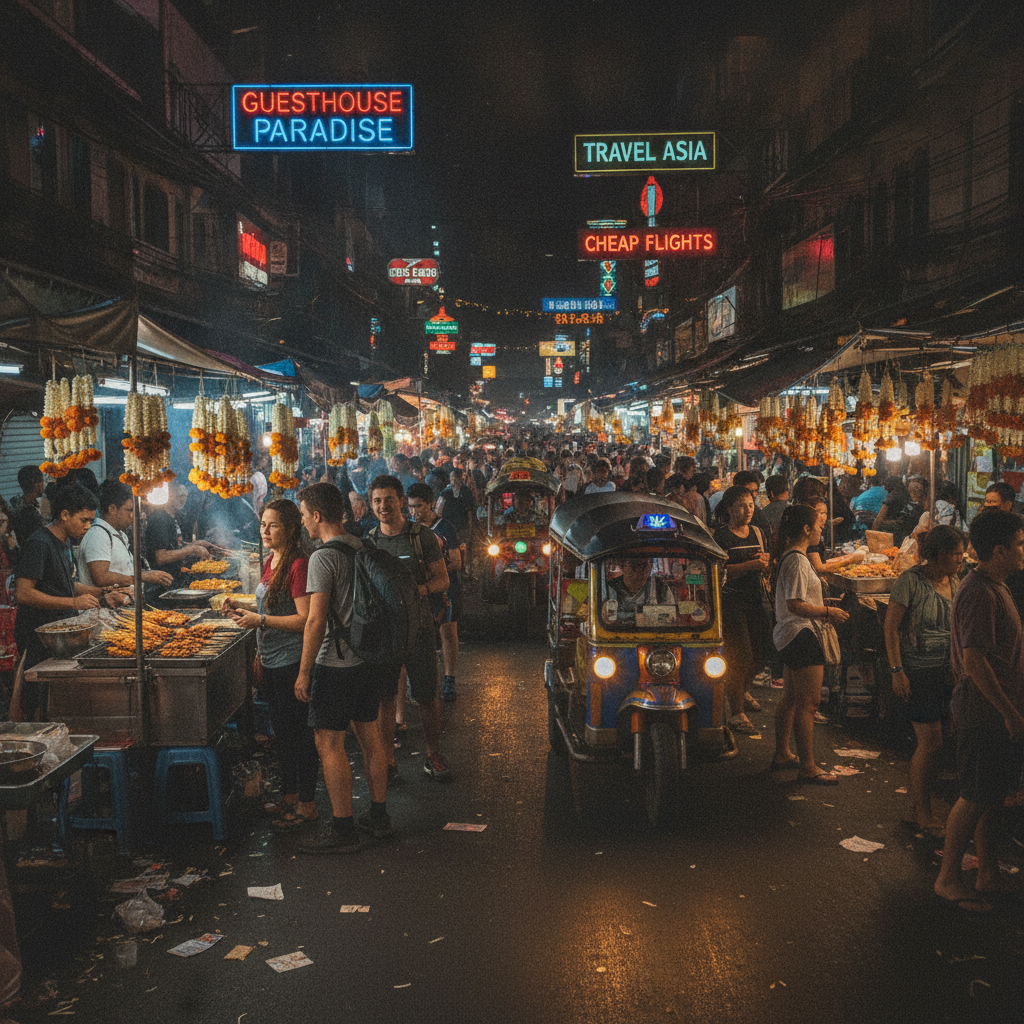
Khao San Road, Democracy Monument & the Banglamphu Backpacker District
The Banglamphu district — bounded by the Chao Phraya River to the west, Ratchadamnoen Avenue to the south, and the old city canal to the east — preserves the most intact examples of Rattanakosin-era Bangkok street life: traditional shophouses, neighbourhood temples, canal-side communities, and the Khao San Road (the world's most famous backpacker street, which has evolved from a 1970s budget guesthouse strip into a global nightlife destination) are all within walking distance of each other.
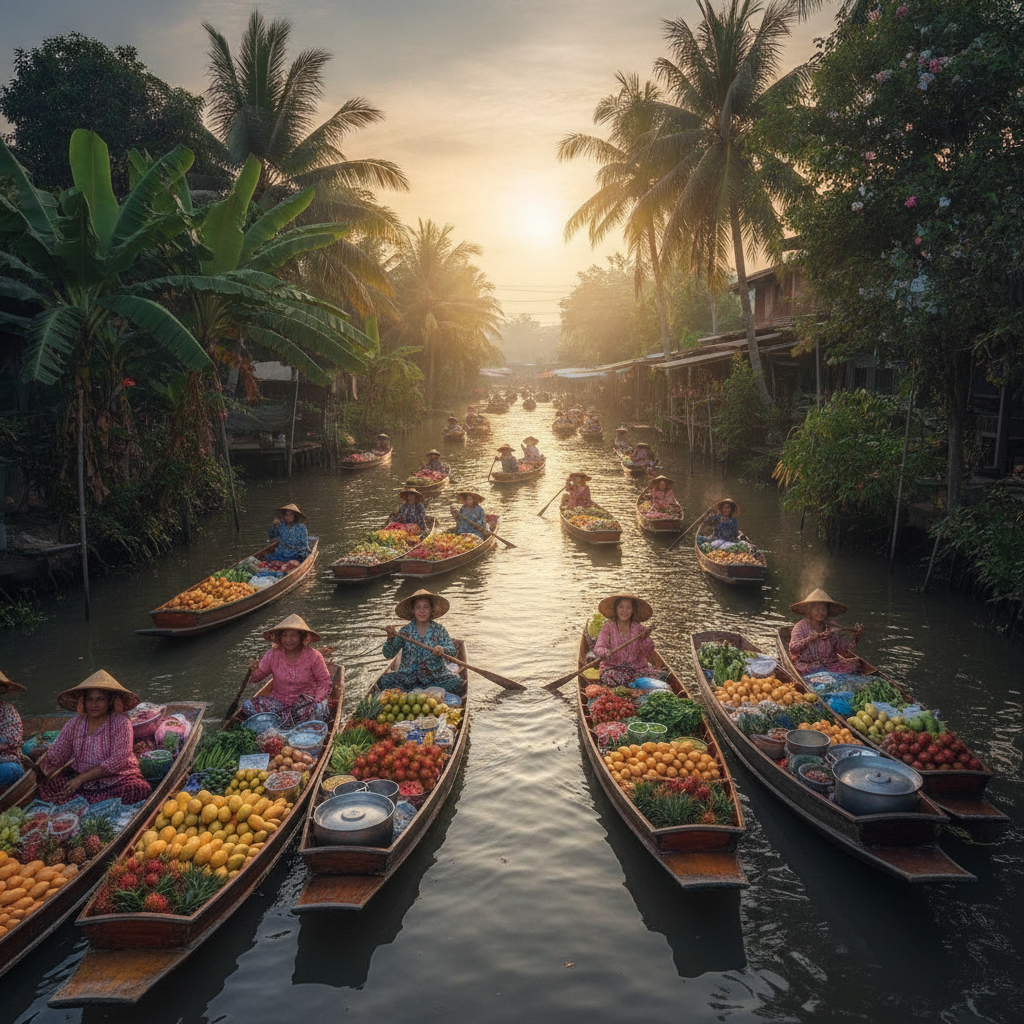
Damnoen Saduak Floating Market, Maeklong Railway & Amphawa Day Trip
The Ratchaburi province day trip from Bangkok encompasses three of Thailand's most atmospheric sites outside the capital: the Damnoen Saduak floating market (the largest and most photogenic of Thailand's remaining canal markets, operating on the klong network built by Rama IV in 1866), the Maeklong Railway Market (where fresh produce vendors fold their awnings to allow a full-size train to pass through the middle of their stalls eight times daily), and Amphawa (the most intact floating market town in the central plains, best experienced on weekend evenings when firefly boat tours operate on the canal).