Damnoen Saduak Floating Market, Maeklong Railway & Amphawa Day Trip
The Ratchaburi province day trip from Bangkok encompasses three of Thailand's most atmospheric sites outside the capital: the Damnoen Saduak floating market (the largest and most photogenic of Thailand's remaining canal markets, operating on the klong network built by Rama IV in 1866), the Maeklong Railway Market (where fresh produce vendors fold their awnings to allow a full-size train to pass through the middle of their stalls eight times daily), and Amphawa (the most intact floating market town in the central plains, best experienced on weekend evenings when firefly boat tours operate on the canal).
- 1
Damnoen Saduak Floating Market (ตลาดน้ำดำเนินสะดวก)
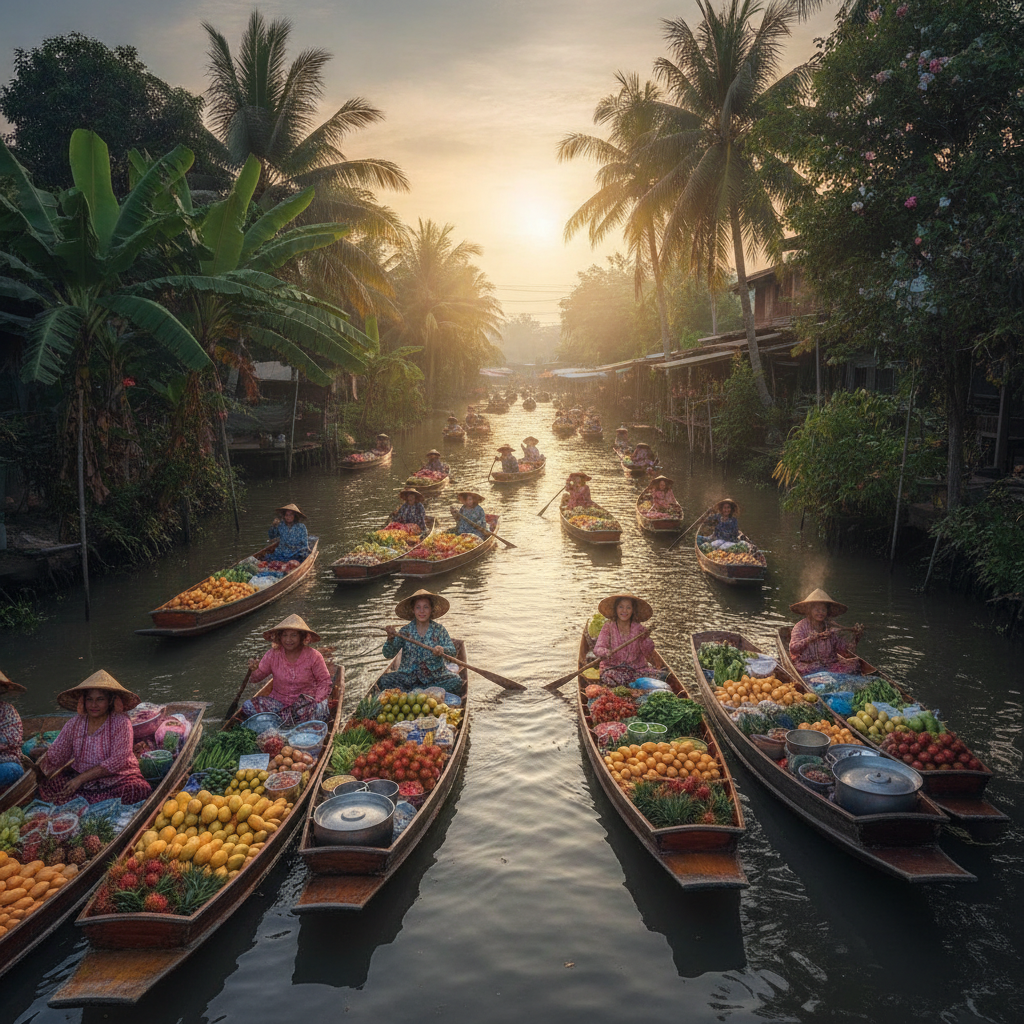
Damnoen Saduak Floating Market (ตลาดน้ำดำเนินสะดวก, Damnoen Saduak District, Ratchaburi Province, approximately 100 kilometres southwest of Bangkok via Highway 4 (Petchakasem Road) or Route 325 — the most famous floating market in Thailand and the primary destination for visitors making a day trip from Bangkok to experience the traditional canal market culture of the central plains: the market is set on the Damnoen Saduak Canal (คลองดำเนินสะดวก), the 32-kilometre channel originally constructed in 1866-1868 by order of King Mongkut (Rama IV) as an agricultural canal to irrigate the provinces of Ratchaburi and Samut Songkhram; the market has operated on the canal since the early 20th century, when the residents of the communities along the canal developed the practice of selling produce from their orchards and farms directly from small wooden boats; the current market operates primarily on three main intersecting canals (Ton Khem, Hia Kui, and Khun Phitak), with the boats of the fruit and vegetable vendors — women in traditional conical bamboo hats — navigating the narrow waterways while fixed vendors line the canal banks; the market is most active from approximately 06:30-11:00 (operating hours 06:00-14:00); long-tail boat tours of the canal network lasting 30-60 minutes are available from jetties at the market entrance; the market has been criticized for its commercialization — the majority of vendors are now selling souvenir goods and manufactured products rather than local produce — but the early morning boat journey through the canal, the cooking boats serving pad thai and fresh coconut ice cream, and the sheer visual spectacle of hundreds of wooden boats on the canal waterway remain extraordinary; the most authentic produce trading now takes place in the back canals away from the main tourist market areas, accessible only by hired long-tail boat.
- 2
Amphawa Floating Market (ตลาดน้ำอัมพวา) — The Weekend Night Market
Amphawa Floating Market (ตลาดน้ำอัมพวา, Amphawa District, Samut Songkhram Province, approximately 80 kilometres southwest of Bangkok — the most intact and celebrated traditional floating market town in the central plains of Thailand, and the preferred destination for Bangkok's middle-class Thai tourists over the more commercialized Damnoen Saduak: Amphawa operates primarily on Friday, Saturday, and Sunday evenings (16:00-21:00), when the main canal through the town centre fills with vendor boats selling fresh river prawns (grilled directly on the boat over a coal brazier), fresh seafood, mango with sticky rice, and boat noodles; the surrounding shophouses along the canal banks are occupied by independent restaurants and accommodation; the Amphawa waterfront preserves the most intact example of traditional Thai riparian architecture in the central plains: wooden shophouses built on stilts directly over the canal, painted in the terracotta, blue, and white colour palette of the Central Plains vernacular style; the Amphawa weekend firefly tour — a boat journey along the canal system at night to observe the bioluminescent fireflies that congregate in the Lamphu trees (Duabanga grandiflora) lining the canal banks at Amphawa — is one of the most unusual natural experiences available within easy reach of Bangkok; the firefly season runs year-round but is most active from December to May.
- 3
Maeklong Railway Market (ตลาดร่มหุบ) — The Umbrella Pull-Down Market
Maeklong Railway Market (ตลาดร่มหุบ, Talat Mae Klong, Maeklong Railway Station, Amphoe Mueang, Samut Songkhram — one of the most extraordinary market experiences in Southeast Asia and one of the most photographed locations in Thailand: the market consists of hundreds of fresh produce vendors who have established permanent stalls directly on the sleepers (railway ties) and gravel embankment of the Maeklong Railway line, operating in the narrow space between the track and the market perimeter; eight times each day (departures from Maeklong at approximately 06:20, 09:00, 11:30, 14:30 and returns from Ban Laem at approximately 07:10, 10:30, 12:30, 15:30) a full-size diesel locomotive passes through the middle of the market at low speed; when the train approaches, a vendor who watches the Maeklong Station end of the track gives warning, and all vendors immediately pull in their awnings and pull back any merchandise overhanging the track — creating the distinctive visual of a market stall canopy being retracted in accordion fashion along the length of the train — before resetting their stalls immediately after the train passes; the whole operation, from warning to train passage to stall reset, takes approximately 10 minutes; the market sells fresh fish, squid, shellfish (the Samut Songkhram coast is particularly famous for its fresh clams and oysters), tropical fruits, vegetables, dried goods, and prepared food; the Maeklong Railway (the Mae Klong Railway, opened 1905) is a narrow-gauge line connecting Maeklong to Ban Laem (where it connects to the Mahachai line to Bangkok Wongwian Yai Station) — the total journey time from Bangkok to Maeklong is approximately 1.5-2 hours by train via this route.
- 4
Wat Amphawan Chetiyaram — King Rama II Memorial Temple
Wat Amphawan Chetiyaram (วัดอัมพวันเจติยาราม, Amphawa, Samut Songkhram — the principal temple in the Amphawa district and one of the most historically significant temples in the central plains: the temple is built on the site of the royal birth house of King Phutthaloetla Naphalai (Rama II, 1767-1824), the second king of the Chakri Dynasty and the principal patron of classical Thai literature and performance arts (the Inao epic poem, several plays, and the Ramakien court drama were commissioned or authored by Rama II); the main ordination hall (ubosot) of the temple is in the classic Ayutthaya-Bangkok transitional style and contains a revered image of the Reclining Buddha; the compound also contains the Rama II Museum, which houses a collection of artifacts and representations related to the life and reign of Rama II and the literary and artistic culture of the early Chakri period; the temple is also the site of the most important annual celebration of Rama II — the Wan Dek (Children's Day) festival held at the temple each January, when traditional Thai arts performances are staged in the compound.
- 5
Don Hoi Lot — The Razor Clam Estuary of Samut Songkhram
Don Hoi Lot (ดอนหอยหลอด, Don Hoi Lot, Amphoe Mueang, Samut Songkhram — a sandbar and tidal mudflat located approximately 5 kilometres from the town of Samut Songkhram at the mouth of the Mae Klong River, famous throughout Thailand as the primary habitat of the razor clam (Solen regularis, หอยหลอด, Hoi Lot) — a bivalve shellfish of the Solenidae family that lives in the estuarine mudflats of the Mae Klong River estuary; the razor clams of Don Hoi Lot are considered the finest in Thailand and have been collected commercially for at least several hundred years; the tidal flats expose at low tide, allowing collectors to harvest the clams directly from the sand by a technique involving pouring salt brine into the clam's burrow to trigger it to emerge; the restaurants lining the Don Hoi Lot waterfront (a 2-kilometre strip of seafood restaurants overlooking the tidal flats) are the principal destination for Thais from Bangkok and Ratchaburi who make the day trip specifically to eat fresh razor clams, prepared as hoi lot pad cha (stir-fried with galangal, lemongrass, kaffir lime leaves, and fresh chili in a hot wok) or hoi lot naung manao (steamed with lime juice); the estuary is also an important habitat for migratory shorebirds.
- 6
Route Back to Bangkok — Road 35 & the Ratchaburi Motorway Corridor
Ratchaburi / Samut Songkhram Return Route (Highway 35, Ratchaburi-Bangkok — the principal road route returning to Bangkok from the Ratchaburi/Samut Songkhram day trip area: Highway 35 (the Petchakasem-Samut Sakhon Road) connects the Ratchaburi provincial road network to the Outer Ring Road (Kanchanaphisek Road) and the Bangkok expressway system; the return journey from Damnoen Saduak to central Bangkok by private vehicle takes approximately 1.5-2 hours depending on traffic; by public transport, the combination of local bus from Damnoen Saduak to Nakhon Pathom or Samut Sakhon, then minibus or BTS to Bangkok, takes approximately 2-3 hours; taxi fares from Damnoen Saduak to Bangkok centre range from approximately 600-900 baht depending on negotiation; organized day tours from Bangkok are available from most major hotels and from Khao San Road and the Silom and Sukhumvit tourist agency districts, typically including transportation, boat tour, and a seafood lunch at Don Hoi Lot or Amphawa.
Walk this route with audio
Stories play automatically as you reach each stop — no tapping needed.
More in bangkok
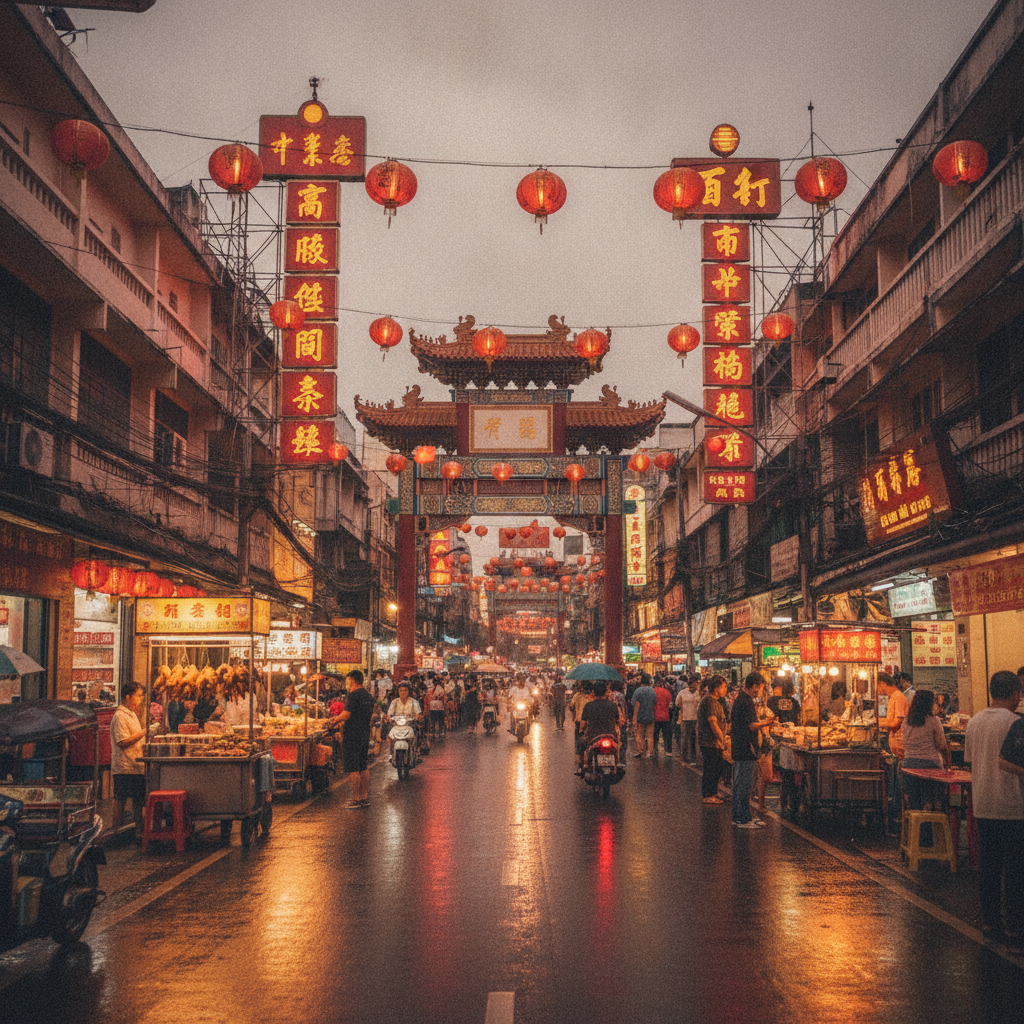
Chinatown Yaowarat, Pahurat Fabric Market & Bangkok Old Town Street Food
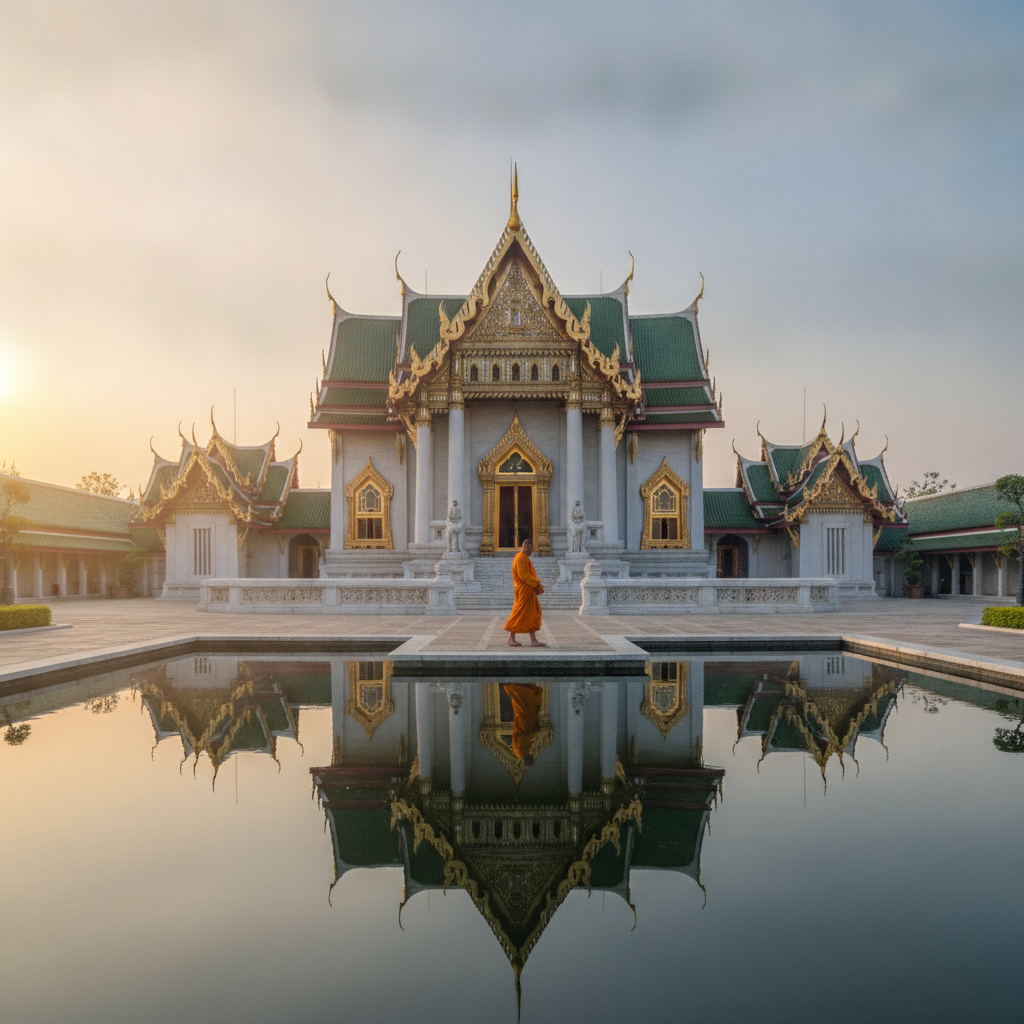
Wat Benchamabophit, Dusit Palace, Ananta Samakhom Throne Hall & Vimanmek Mansion
Chatuchak Weekend Market, Siam Square & Bangkok's Shopping Culture
Khao San Road, Democracy Monument & the Banglamphu Backpacker District
Wat Arun, the Chao Phraya & Thonburi's Ancient Waterways