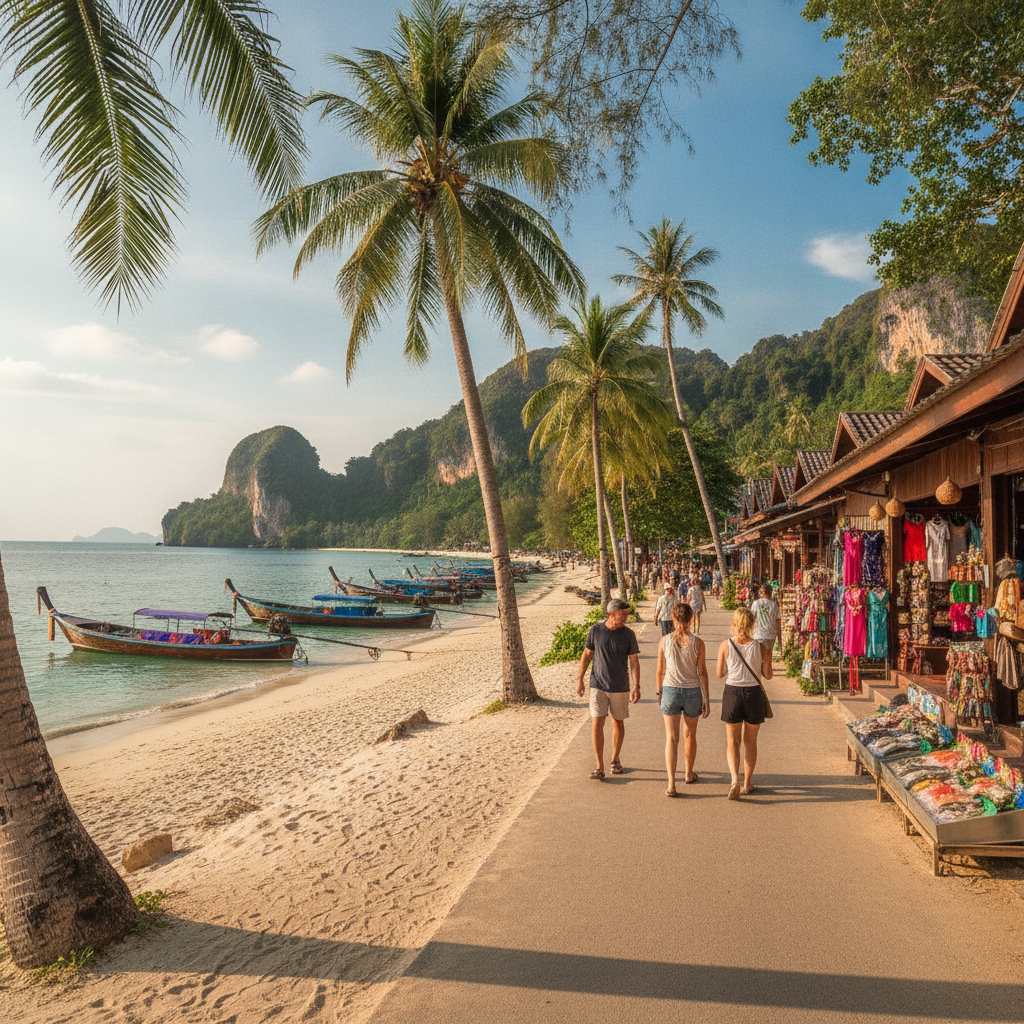
Koh Phi Phi Don Beach & Village Walk
Walk Koh Phi Phi Don — the main inhabited island of the Phi Phi archipelago is shaped like a dumbbell with two mountains connected by a narrow isthmus where the village and twin beaches sit, creating one of the most dramatically situated beach communities in Southeast Asia.
- 1
Tonsai Bay Village
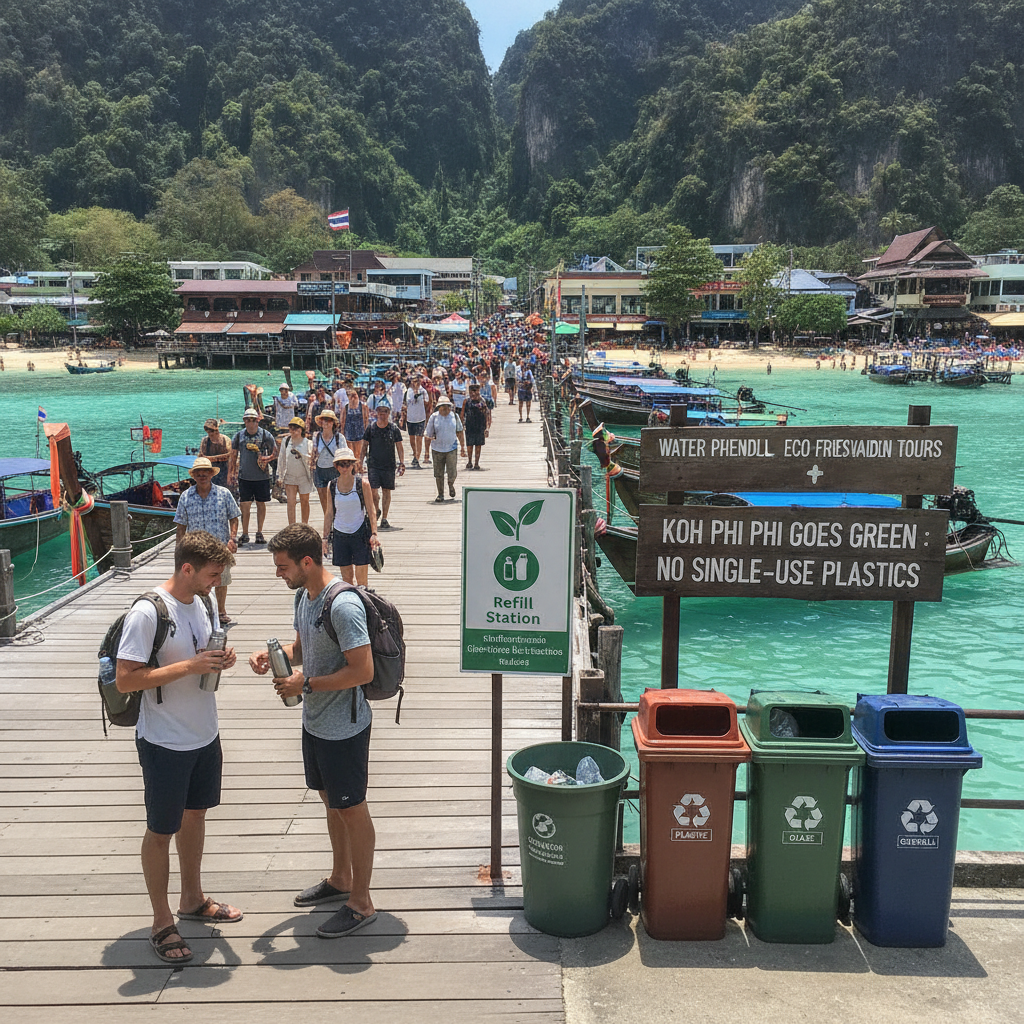
Tonsai Bay is the main village and arrival point of Koh Phi Phi Don — the flat isthmus of land between the two mountains of the island, narrowing to barely 200 metres at its narrowest point, hosts the island's entire commercial infrastructure (restaurants, dive shops, tour operators, guesthouses, and the market stalls serving the island's daily needs) in a setting that is both remarkably intimate and dramatically surrounded by the karst limestone cliffs on three sides. The morning arrival by ferry from Krabi or Phuket reveals the full dramatic impact of the Phi Phi landform: the twin bays of Tonsai and Loh Dalum visible simultaneously from the arriving ferry, with the limestone peaks of the two island masses framing the isthmus settlement between them.
- 2
Loh Dalum Bay Sunset Beach
Loh Dalum Bay on the northern side of the Phi Phi Don isthmus is the most spectacularly situated beach on the island — the crescent bay enclosed between the two limestone massifs frames a view of the open Andaman Sea that turns into one of the most dramatic sunset panoramas accessible from any Thai beach. The bay was completely destroyed by the 2004 Indian Ocean tsunami (the low isthmus suffered catastrophic flooding, and the majority of the estimated 2,000 tsunami deaths on Koh Phi Phi occurred in the village and on Loh Dalum Beach), and the rebuilt beach resort area that has risen from the devastation represents one of the most remarkable recoveries of any Asian tourist destination from natural disaster.
- 3
Phi Phi Viewpoint
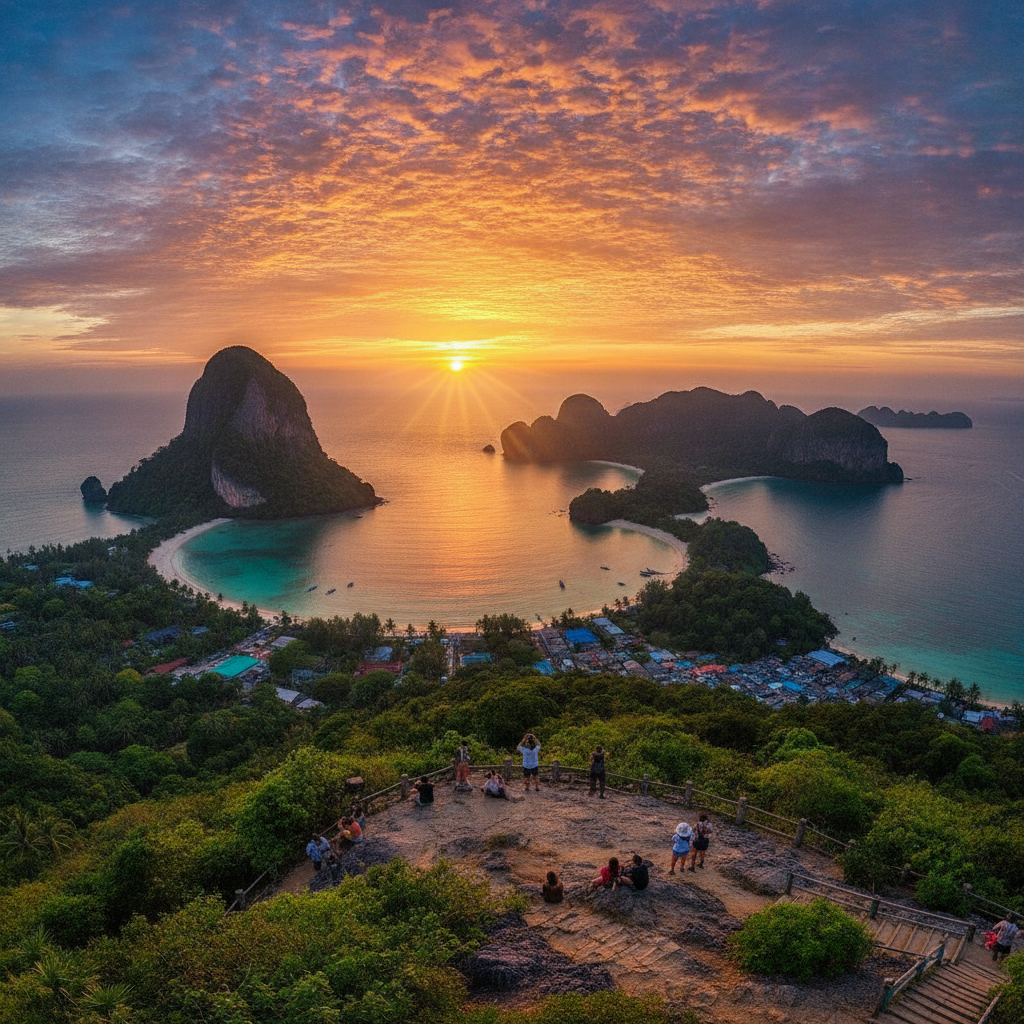
The viewpoint above the Phi Phi Don isthmus, reached by a steep 20-minute climb from the village, provides the most reproduced image in Thai tourism photography — the twin bays of Tonsai and Loh Dalum visible simultaneously from above, with the twin limestone massifs framing the narrow isthmus and the Andaman Sea visible in both directions, creates a panorama that has become one of the defining images of Thai island travel. The sunrise viewpoint experience (the climb is typically attempted before 7am to arrive for sunrise and to avoid the heat of the ascent) has become an industry in itself, with climbing guides, viewpoint cafes, and the constant stream of resort guests making the pilgrimage up the concrete staircase in the dark.
- 4
Long Beach Phi Phi
Long Beach on the southeastern coast of Phi Phi Don is the most accessible quieter beach on the island — the beach accessible by a 15-minute walk from the village or a 5-minute longtail boat ride has a more relaxed atmosphere than the main village beaches and has the clearest water immediately accessible from Phi Phi Don without taking a boat tour. The reef visible from Long Beach in the shallow water provides the best accessible snorkeling from Phi Phi Don's own shore, with the coral formations supporting the butterflyfish, parrotfish, and surgeonfish communities visible in the clear Andaman water.
- 5
Viking Cave Phi Phi Leh
Viking Cave on the eastern cliff of Phi Phi Leh (the uninhabited southern island of the Phi Phi group) is the most commercially significant natural feature in the Phi Phi archipelago — the large sea cave housing the swiftlet bird nests that are harvested for the Chinese bird's nest soup trade supports the bamboo scaffolding system that allows the nest collectors to reach the cave ceiling, with the harvest rights worth enormous sums to the concession holders. The name 'Viking Cave' comes from the boat paintings on the cave walls (actually historic Thai and Chinese paintings of various vessel types, not Viking ships), but the cave's real significance is economic: the bird's nest harvest from Phi Phi Leh is one of the most valuable per-square-metre land uses in Thailand.
- 6
Monkey Beach
Monkey Beach (Hat Ling) on the northwest side of Phi Phi Don is inhabited by a colony of crab-eating macaques (Macaca fascicularis) that have become accustomed to the boat tours that stop to feed them — the macaque colony is one of the most photographed animal encounters in the Phi Phi tourist circuit, and the monkeys' boldness (approaching boats, stealing food from visitors, and performing for treats) demonstrates the degree to which these wild animals have adapted to the tourist economy. The beach's turquoise water and the surrounding jungle backdrop make it visually spectacular, though the monkey feeding practice is increasingly criticised by wildlife welfare advocates.
Walk this route with audio
Stories play automatically as you reach each stop — no tapping needed.