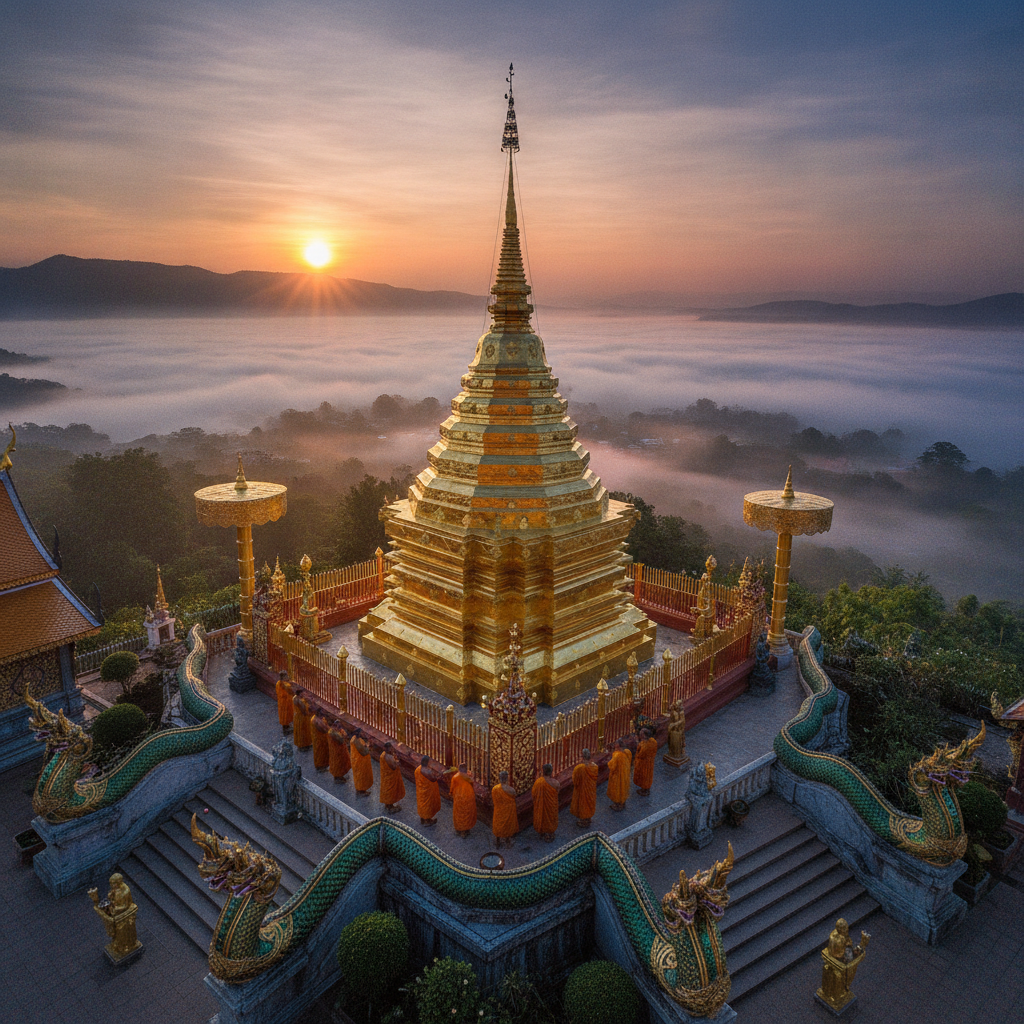


Chiang Mai Essentials: 300 Old City Temples, Khao Soi Noodles & Ethical Elephant Sanctuaries in the Mountains
Fall for northern Thailand's most liveable city—the Old City's 300 Buddhist temples packed within a 1296 moat (Wat Phra Singh, Wat Chedi Luang, Wat Chiang Man), the golden Doi Suthep chedi at 1,073 metres visible from the valley below founded where a white elephant died, Sunday Walking Street's silversmiths and lacquerware on Wualai Road, khao soi's rich coconut broth with crispy noodles (nothing like central Thai food), Lek Chailert's Elephant Nature Park rescuing 80+ animals from the riding industry, and Doi Inthanon's cloud forest summit at Thailand's highest point with 390 bird species.

Chiang Mai Living: Akha Ama Coffee from Hill Tribe Growers, Muay Thai at Lanna Camp & Night Train to Bangkok
Experience Chiang Mai day-to-day—Akha Ama's barista who sources directly from his own community's arabica mountain farms two hours north, a half-day northern Thai cooking class starting at Warorot Market and ending with khao soi and sai oua, the Riverside Restaurant's live music above the Ping River that teak merchants built mansions beside in the 19th century, Lanna Muay Thai Camp training sessions for the visitor who wants more than a tourist boxing show, Zoe in Yellow's outdoor bar cluster as backpacker social gravity, and the Bangkok night train route that the bus and plane cannot replicate.

Chiang Mai's Depth: Lanna's 700-Year Kingdom, Yi Peng Lanterns Rising & the Digital Nomad Capital of the World
Go deeper into Chiang Mai—the Lanna Kingdom that resisted Sukhothai and Ayutthaya for 200 years producing a distinct Buddha image style and script before Burma finally absorbed it in 1558, Wualai silversmith repousse and Bo Sang's painted paper parasol production, vipassana retreats at Wat Suan Dok and yoga studios in Nimman for the extended wellness visitor, the world's favourite digital nomad city ($800/month comfortable life, CAMP café open 24 hours, fibre internet in every guesthouse), thousands of paper lanterns floating into the November sky at Yi Peng, and the ethical trekking question around hill tribe village visits.

Chiang Mai's Layers: Akha Ama Coffee from Hill Tribe Farms, MAIIAM Contemporary Art & Shan-Myanmar Deep Roots
The less-visited Chiang Mai—Shan State cultural presence in the Ping riverside temples built by 19th-century Myanmar merchants, King Bhumibol's Royal Project that converted opium poppy farms into strawberry and arabica coffee growing from 1969 and is now internationally studied as a drug-substitution success, MAIIAM Contemporary Art Museum in a converted ice factory where Chiang Mai's 1990s social installation movement influenced global relational aesthetics, Akha Ama's barista sourcing exclusively from his home hilltribe community's arabica, Yunnanese KMT soldiers' noodles alongside kaeng hang le pork belly curry, and the Ping River's declining water quality and burning-season AQI crisis that defines the city's environmental future.

Beyond Chiang Mai: Mae Hong Son's 1,864 Curves, White Temple at Chiang Rai & the Region's Hardest City to Leave
The northern circuit around Chiang Mai—Mae Hong Son's Burmese chedis reflected in the still lake at dawn (316 km and 1,864 curves northwest, practically in Myanmar), Pai's mountain valley at 800 metres where Bangkok weekenders have replaced backpackers but the rice field landscape remains, Chiang Rai's White Temple (Chalermchai Kositpipat's mirror-glass Buddhist masterpiece begun 1997, planned for completion 2070) and the Wild Boars cave rescue site now a pilgrimage museum, the Night Safari at the foot of Doi Suthep, how Chiang Mai anchors the banana pancake trail's north-to-Laos overland route, and why the city is famous for being impossible to leave.

Chiang Mai's Hinterland: Mae Kampong Homestays, San Kamphaeng Silk Road & the Golden Triangle's Opium Past
Push beyond the old city—the Lanna temple architecture that differs from Bangkok's in every key detail (low-pitched tiered roofs, teak gables, octagonal chedis, original murals at Wat Phra Singh), the San Kamphaeng handicraft road's 12 km of silk and lacquerware factories by hired scooter, Mae Kampong's 100-household mountain village at 1,300 metres where fermented tea-leaf chewing is still practised and the homestay programme became Thailand's community tourism model, the March–April burning season that regularly makes Chiang Mai the most polluted city on Earth (AQI 400+, schools close), and the 3-hour drive north to the Hall of Opium museum at the Golden Triangle where Myanmar, Thailand and Laos converge.