Pai Temples & Hill Tribe Culture Walk
Explore Pai's cultural landscape — the town's Buddhist temples, the surrounding hill tribe villages (Karen, Shan, Lisu, and the Yunnan Chinese communities), and the cultural mix of the Mae Hong Son highlands provide the most ethnically diverse small-town cultural encounter in northern Thailand.
- 1
Wat Luang Temple
Wat Luang is the oldest temple in Pai town, established over 200 years ago when the town was a Shan trading post on the route between Chiang Mai and the Shan states of what is now Myanmar — the temple's chedi (stupa) and the ordination hall with its Shan architectural details (the multi-tiered roofline, the gilded finials, and the lotus bud spire that distinguish Shan Buddhist architecture from the Thai central plain style) document the Shan cultural heritage that predates the Thai administrative incorporation of the Pai valley. The temple's active monk community and the evening chanting audible from the road at sunset provide the most accessible encounter with the Shan Buddhist religious tradition in the Pai area.
- 2
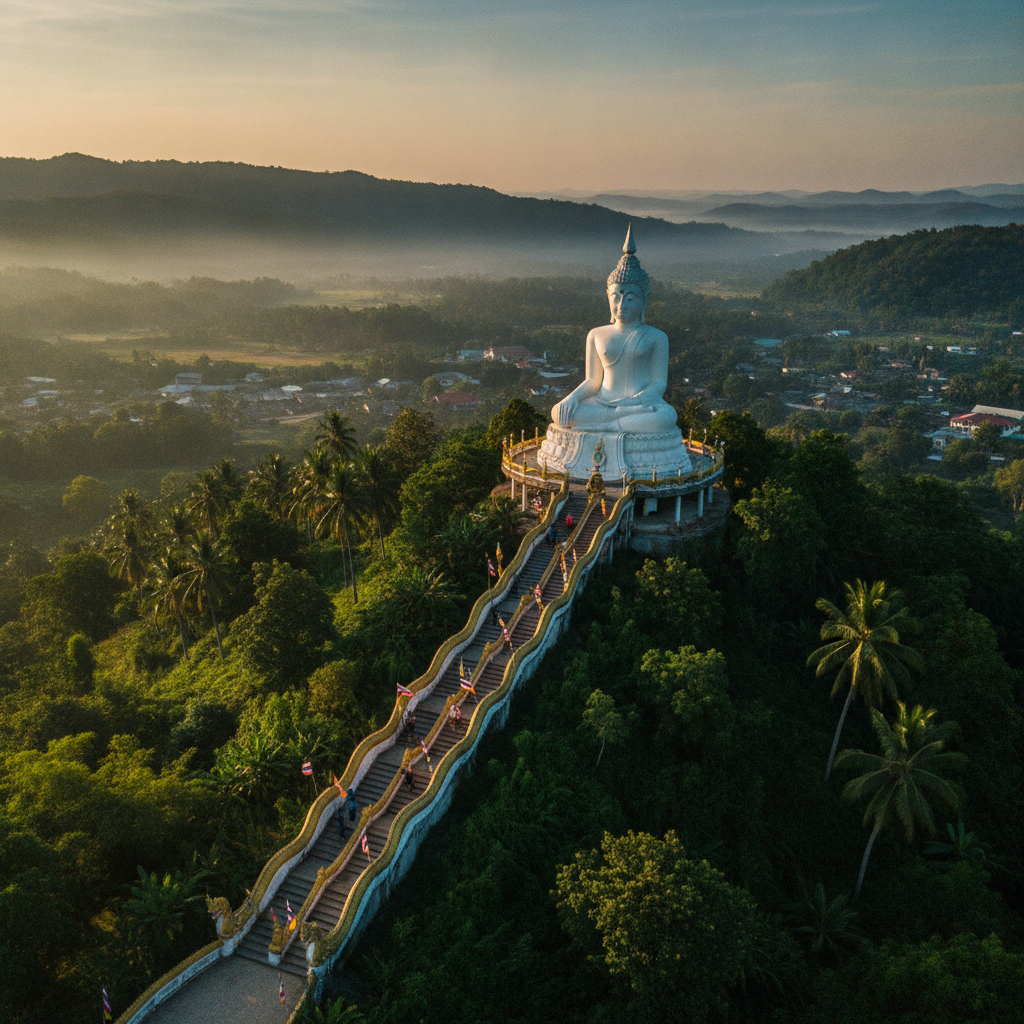
Wat Phra That Mae Yen
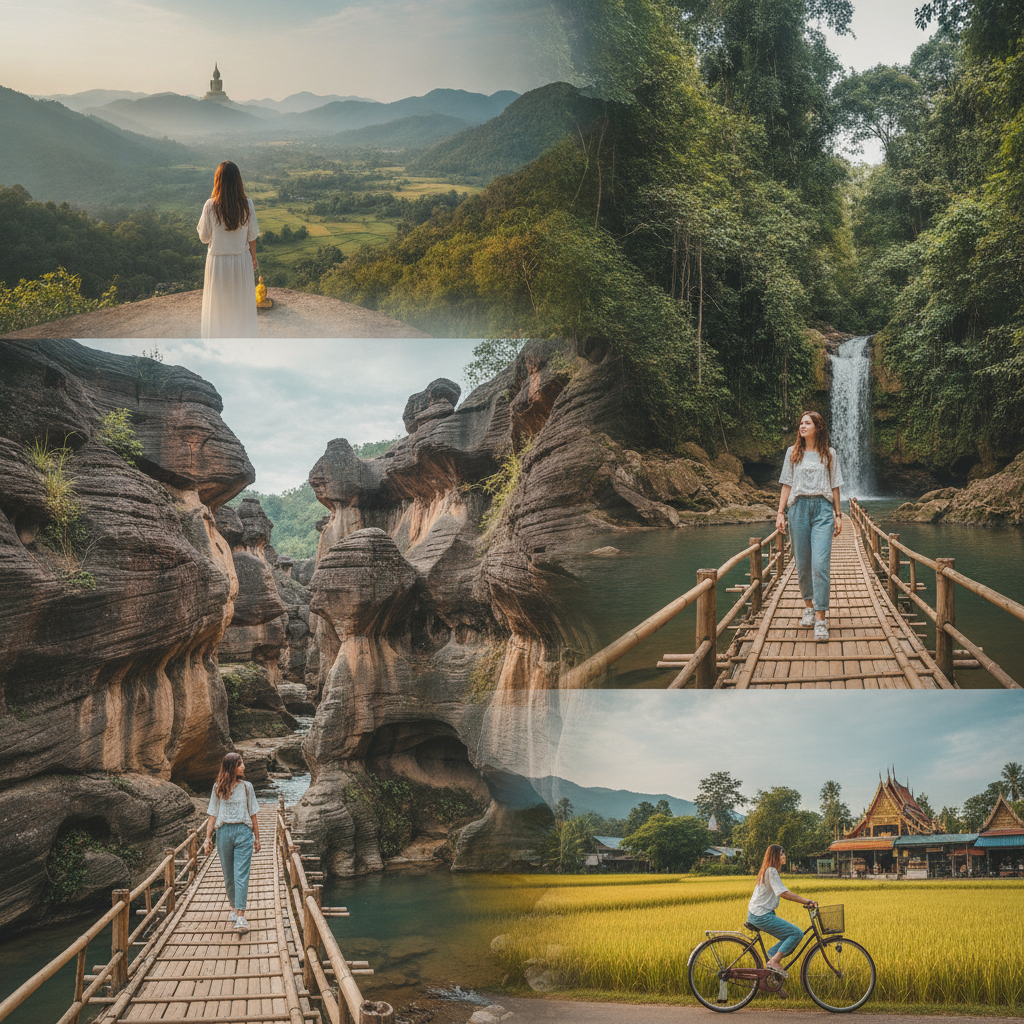
Wat Phra That Mae Yen on the hill east of Pai town is the most visited temple in the area — the large white Buddha image visible from the town centre sits at the top of the 353-step staircase that provides the most dramatic temple approach in the Pai area. The hilltop temple commands views of the Pai valley in all directions and is the most easily navigated elevated viewpoint accessible from the town on foot without a motorbike. The white Buddha image visible from throughout the valley (floodlit at night) has become the visual symbol of Pai's sacred geography and the staircase climb (morning or late afternoon when the heat is manageable) provides the most accessible spiritual ascent in the town's religious landscape.
- 3
Ban Santichon Yunnan Village
Ban Santichon (Peace Village) northwest of Pai is a community of Yunnan Chinese descent — the families of the Kuomintang (KMT) soldiers who retreated into Burma and then into Thailand after the Communist victory in the Chinese Civil War (1949) and who were resettled in the Thai highlands under Thai government arrangement. The village maintains its Chinese cultural identity (the Mandarin language still spoken between the older residents, the Chinese architecture of the community building, and the Chinese food specialties including the Yunnan tea cultivation and the coffee grown in the village's highlands) alongside the Thai civic identity acquired over two generations. The village's Chinese rice wine and the Yunnan-style food available at the village restaurant provide the most direct encounter with the Yunnan Chinese highland culture accessible in northern Thailand.
- 4
Karen Village Visit
The Karen (Kariang) village communities in the hills north and west of Pai maintain the distinctive material culture of the Karen people — the traditional long-necked Karen women (in the communities of Kayan/Padaung people within the broader Karen group) whose brass neck rings are the most internationally recognised symbol of hill tribe culture in northern Thailand, the traditional Karen textiles with their distinctive red and white geometric patterns, and the Karen agricultural practices (the swidden cultivation, the weaving tradition, and the community spirit ceremonies) provide the most accessible encounter with the hill tribe cultural traditions of the Mae Hong Son province. The Karen villages accessible from Pai range from communities that have maintained traditional practices to those that have integrated substantially with the Thai economy.
- 5
Shan Cultural Heritage
Pai town's Shan cultural heritage is visible in the temple architecture, the food culture, and the language patterns of the oldest resident families — the Shan (Tai Yai), the dominant ethnic group of the Shan States across the border in Myanmar, settled the Pai valley as traders and cultivators before Thai administration absorbed the region in the 19th century. The Shan language visible in some of the older temple inscriptions, the Shan Buddhist ceremonial objects in the Pai temple museums, and the Shan food traditions (the tok kaeng ceremony of communal food sharing, the Shan-style curry pastes with their distinctive fresh herbs and the fish paste base) that have merged into the northern Thai food culture of Pai provide the most accessible documentation of the Shan cultural substrate beneath the contemporary tourist economy.
- 6
Pai Cultural Museum
The small cultural display in the Pai Cultural Centre near the town centre provides an introduction to the ethnic and cultural groups of the Mae Hong Son province highlands — the displays of hill tribe textiles, the agricultural implements, the traditional musical instruments, and the ceremonial objects of the Karen, Shan, Lisu, and Hmong communities that occupy the surrounding highlands provide the most concentrated overview of the regional cultural diversity accessible in a single location. The cultural centre's documentation of the pre-tourist Pai valley community (the photographs of the town in the 1970s and 1980s, before the backpacker trail discovery transformed the economy and population) provides a historical perspective on the scale and speed of the change that tourism has brought to the valley.
Walk this route with audio
Stories play automatically as you reach each stop — no tapping needed.