Koh Lanta Sea Gypsy Village Walk
Visit the Chao Ley community — the indigenous Sea Gypsy (Chao Ley or Moken) community of Koh Lanta at Ban Sang Ga Ou on the island's southern coast is one of the few remaining traditional Sea Gypsy communities accessible to visitors in Thailand.
- 1
Chao Ley Village Entrance
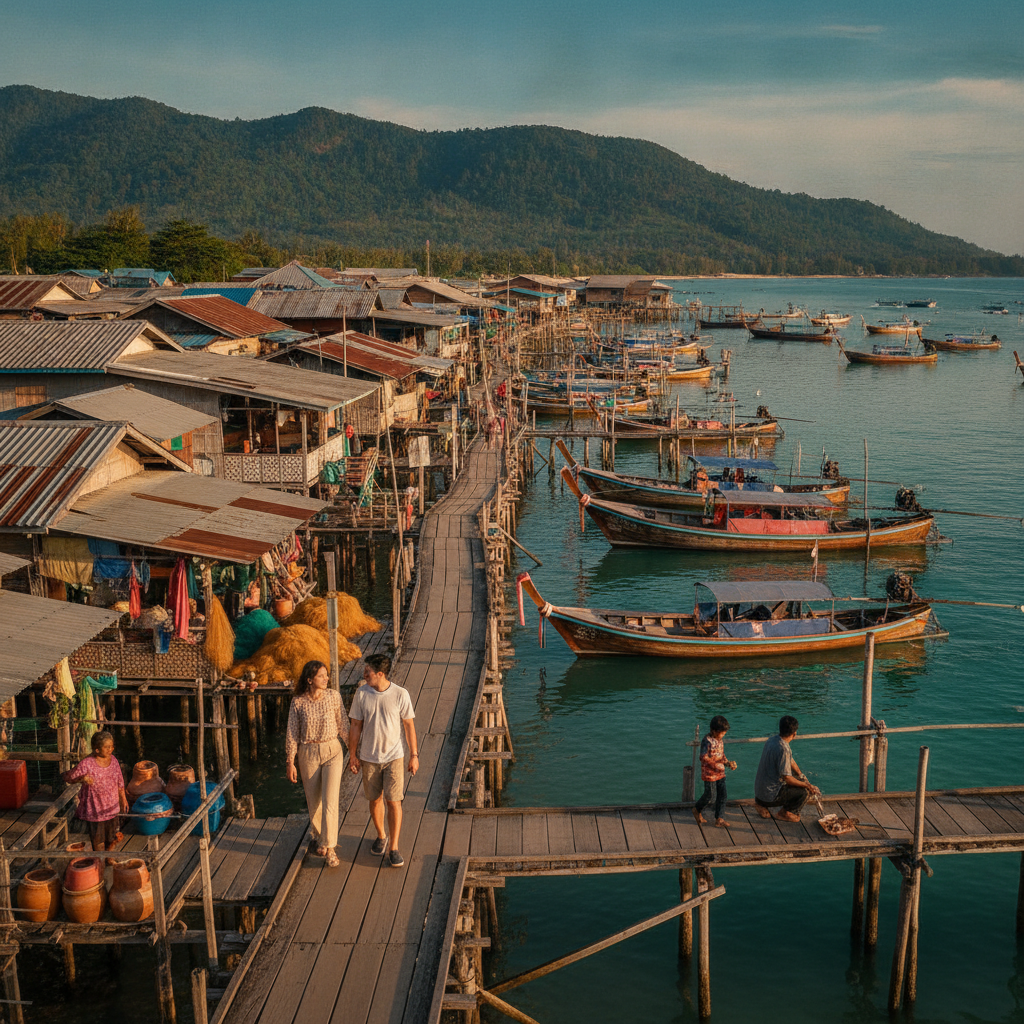
Ban Sang Ga Ou at the southern end of Koh Lanta Yai's eastern coast is home to the Chao Ley (Sea Gypsy, or Moken) community that was among the original inhabitants of the island before the more recent Thai, Chinese, and Malay settlement — the village's stilt houses, the fishing boat maintenance area, and the community's distinct culture (language, spiritual practices, and relationship with the sea) provide the most direct encounter with the indigenous maritime people of the Andaman available in the Krabi province tourist circuit. The Chao Ley have lived on and around the Andaman islands for generations, and their traditional knowledge of the sea (the tidal patterns, the reef locations, the seasonal fish migrations) is the most sophisticated local ecological knowledge in the region.
- 2
Traditional Fishing Practices
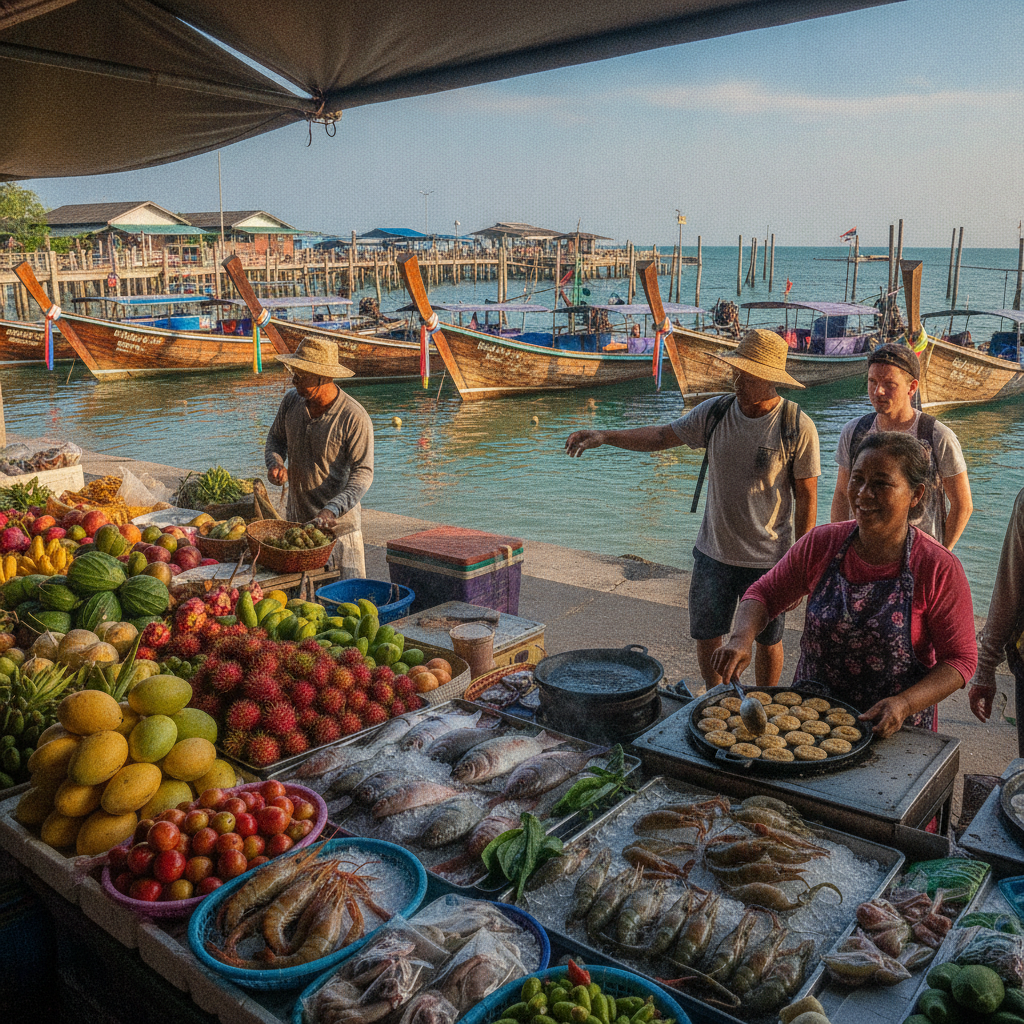
The Chao Ley fishing practices visible in and around Ban Sang Ga Ou demonstrate the traditional maritime knowledge of the Sea Gypsy community — the net-setting techniques adapted to the specific tidal patterns of the eastern strait, the fish trap designs (the bamboo weir traps set at the mangrove edge to capture the fish following the tide), and the free-diving fishing practice (the Chao Ley divers who can hold their breath for extended periods and navigate the reef without equipment) represent an integrated ecological knowledge system developed over generations of reef dependence. The traditional Chao Ley boats (narrower and lower in the water than the Thai longtail design, optimised for the reef-navigating rather than the open-water travel) visible at the village pier are among the last examples of the traditional Moken boat design in Thailand.
- 3
Chao Ley Spirit Traditions
The Chao Ley spiritual tradition (animist, centred on the spirits of the sea, the reef, and the forest) is most visible during the Loy Reua (boat floating ceremony) conducted at the full moon in May or June — the community's ritual construction of a spirit boat loaded with personal offerings, which is then launched out to sea to carry away the previous year's troubles and illnesses, is the most significant ceremonial event of the Chao Ley calendar and one of the most ancient maritime ritual traditions surviving in Southeast Asia. The spirit shrines at the village entrance and the spirit flags at the community boat house document the continued practice of the animist belief system that predates the Buddhist and Islamic religious traditions of the island's other communities.
- 4
Tsunami Survivors
The 2004 Indian Ocean tsunami's impact on the Chao Ley community of Koh Lanta documented one of the most remarkable traditional ecological knowledge events in the disaster's aftermath — the Chao Ley elders on the island recognised the signs of the approaching tsunami (the behaviour of the sea in the hours before the wave's arrival, the withdrawal of the water in the bay, and the sound of the deep-water disturbance) and warned the community to move to higher ground before the wave struck, resulting in a survival rate dramatically higher than the surrounding non-Chao Ley communities. The traditional knowledge that saved the community has since been studied by disaster risk reduction researchers and is cited as evidence for the value of indigenous ecological knowledge in early warning systems.
- 5
Handicraft and Cultural Exchange
The Chao Ley community at Ban Sang Ga Ou has developed a cultural exchange programme that allows respectful visitor contact with the community while maintaining the community's ability to control the terms of interaction — the programme involves community members demonstrating traditional crafts (boat model construction, net weaving, and the production of the traditional Chao Ley musical instruments), explaining the community's history and sea-based culture, and providing a direct income stream to the community from tourism that does not require the community to leave its traditional location or activities. The programme represents one of the more successful models of indigenous tourism in Thailand.
- 6
Lanta Animal Welfare
The Lanta Animal Welfare organisation near the Long Beach resort area operates an animal rescue and adoption programme for the island's large population of street dogs and cats — the organisation, founded by Danish volunteers and now locally managed, provides sterilisation, vaccination, and adoption services that address the specific animal welfare challenges of a resort island (the seasonal population of tourist-fed strays, the abandoned pets of resort workers, and the wild-born street dog population). The Lanta Animal Welfare operation represents the community development beyond resort tourism that demonstrates a socially conscious dimension to the Koh Lanta visitor economy.
Walk this route with audio
Stories play automatically as you reach each stop — no tapping needed.