Koh Lanta Diving & Marine Life Walk
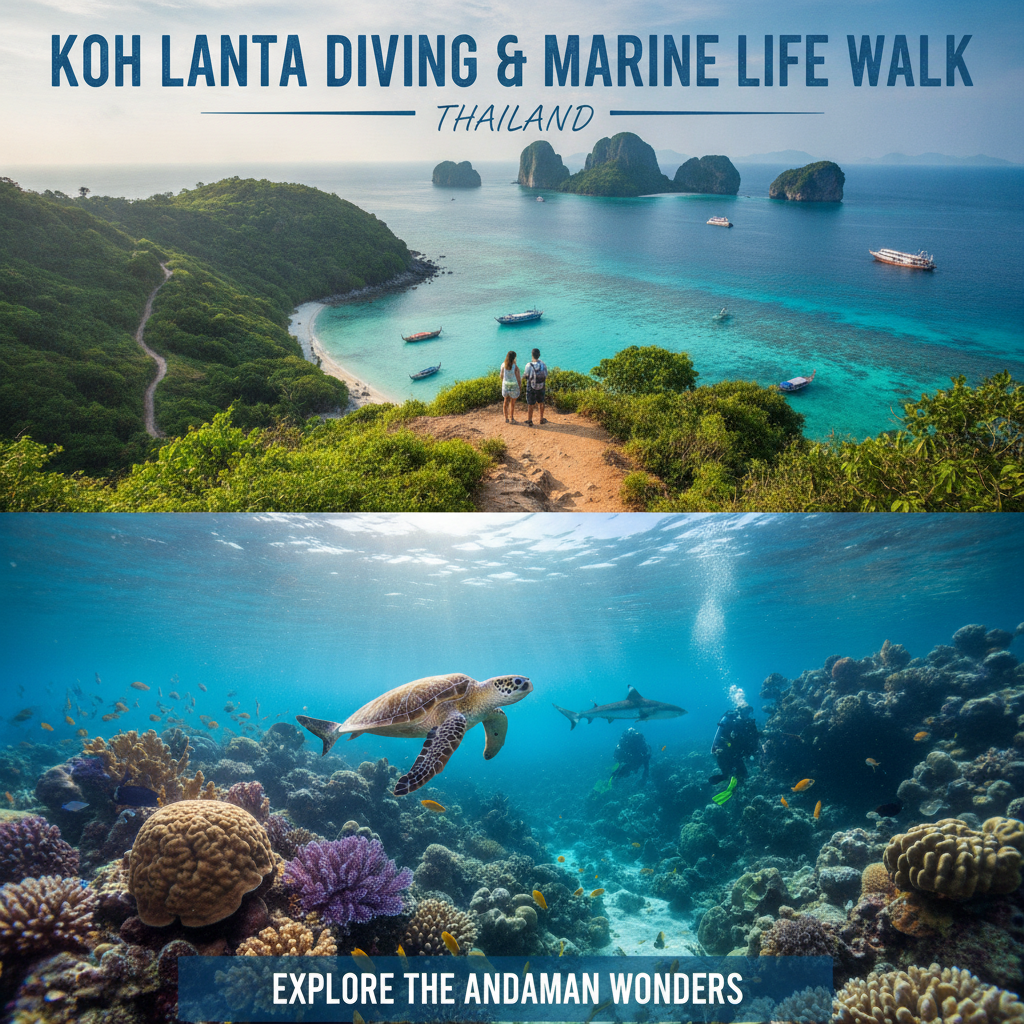
Dive from Koh Lanta — the island's position at the southern end of the Krabi archipelago provides access to some of the most celebrated dive sites in the Thai Andaman, including the legendary Hin Daeng and Hin Muang pinnacles where large pelagics and whale sharks are regularly encountered.
- 1
Lanta Dive Operators
The dive operators on Koh Lanta's Long Beach and Klong Dao Beach offer the most southern range of dive sites accessible from any of the major Andaman resort islands — the Lanta-based dive boats can access the Hin Daeng and Hin Muang pinnacles 40km south (typically a 1.5-hour boat journey), the Koh Haa group of five islands in the Mu Ko Lanta Marine Park, the Koh Rok dive sites, and the more accessible training and fun dive sites within the marine park waters around Koh Lanta itself. The operators range from the large professional PADI 5-star operations to the smaller boutique dive boats with limited daily passengers.
- 2
Hin Daeng Red Rock
Hin Daeng (Red Rock) is widely considered the most spectacular dive site in the Thai Andaman — the submerged pinnacle rising from 30 metres to within 3 metres of the surface is named for the crimson cup corals and encrusting red algae that cover its upper sections, creating a pinnacle that glows red in the dive torch beam at depth. The site's position in open water exposes it to the strongest currents of any regularly dived Thai site, which is what brings the large pelagics: the whale sharks (Rhincodon typus) that cruise the pinnacle from December to April, the giant manta rays (Mobula birostris) that visit the cleaning stations on the pinnacle wall, and the schooling barracuda and jack that use the pinnacle as an aggregation point.
- 3
Hin Muang Purple Rock
Hin Muang (Purple Rock), adjacent to Hin Daeng, is a submerged pinnacle reaching from 60 metres to 8 metres depth and covered in purple soft corals that give it its name — the deepest regularly dived site accessible from the Lanta base, Hin Muang provides the most technically demanding dive in the standard Thai Andaman circuit and requires advanced open water certification. The purple soft coral coverage on the wall from 10-40 metres is among the most spectacular coral displays in Southeast Asian diving, and the site's depth range makes it accessible only to experienced divers who can manage the narcosis and decompression planning that the depth requires.
- 4
Koh Haa Islands Dive
Koh Haa (Five Islands) within the Mu Ko Lanta Marine National Park is the most accessible multi-site diving destination from a Lanta base — the cluster of five limestone islands with their surrounding reef and sea caves provides a diversity of dive environments in a single location: the external wall dives with their sea fan and soft coral communities, the cave dives accessible through the islands' base (the 'chimney' passages that run through the limestone connecting the external sea to the enclosed lagoons), and the shallow lagoon dive sites suitable for beginner divers and snorkelers. Koh Haa is the standard day-trip destination for Lanta dive operators when the conditions at Hin Daeng and Hin Muang are too challenging.
- 5
Whale Shark Season
Koh Lanta is the most reliable whale shark encounter location in Thailand — the whale shark sightings at Hin Daeng and Hin Muang from November to April (with the peak sighting frequency in March and April) are documented by the dive operators and the whale shark research organisations that have established monitoring programmes in the area. The whale shark (the world's largest fish, reaching 12 metres) is a filter feeder that visits the Hin Daeng area for the plankton-rich upwelling current that the pinnacles concentrate, and the encounters (the animal swimming slowly through the mid-water at 5-15 metres, completely unperturbed by the divers maintaining a 3-metre distance) are the most extraordinary wildlife encounters accessible from any Thai resort island.
- 6
Koh Lanta Marine Research
The reef monitoring and marine research conducted in the Mu Ko Lanta Marine National Park by the universities and NGOs operating on the island has produced some of the most detailed data on coral reef health in the Thai Andaman — the long-term monitoring data documenting the coral bleaching events of 2010 and 2016, the recovery rates at different sites, and the effectiveness of the national park management restrictions provides the scientific basis for the conservation decisions that shape visitor management at the island's most sensitive marine sites. The dive operators' participation in the citizen science monitoring programmes (recording sightings of whale sharks, manta rays, and indicator species on standardised forms) represents one of the most successful integrations of tourism and conservation science in the Thai marine environment.
Walk this route with audio
Stories play automatically as you reach each stop — no tapping needed.