Koh Lanta National Park & Forest Walk
Explore Mu Ko Lanta National Park — the protected area at the southern tip of Koh Lanta Yai protects the island's last primary forest, the pristine beaches inaccessible from the resort side, and the surrounding coral reef that represents the most ecologically significant marine environment accessible from the Lanta resort base.
- 1
National Park Headquarters
The Mu Ko Lanta National Park headquarters at the southern tip of Koh Lanta Yai marks the boundary between the resort development of the island's western coast and the protected natural environment of the park — the transition from the asphalt road and beach resort infrastructure to the park's gravel track and forest environment is immediate at the park gate, and the visitor facilities at the headquarters (the park information displays, the tide tables, and the guided trail information) provide the most comprehensive introduction to the island's natural environment available anywhere on Koh Lanta. The park headquarters beach (accessible through the forest from the gate) provides a beach environment completely different from the resort beaches to the north, with undisturbed sand, natural forest backing, and the absence of any commercial beach infrastructure.
- 2
Tham Mai Kaew Caves
The Tham Mai Kaew cave system in the Koh Lanta Yai hillside is the most extensive accessible cave on the island — the series of interconnected limestone caves with their stalactite and stalagmite formations requires a guide (available from the cave entrance) to navigate the passages, some of which require crawling through narrow squeezes. The cave system extends through multiple chambers with different geological character (the dry upper chambers with their mature stalactite formations, the lower wet chambers where the cave water pools reflect the torch light, and the deepest passages accessible only in dry season), creating a cave exploration experience that is more adventurous than the typical Thai tourist cave visit.
- 3
Park Forest Trail
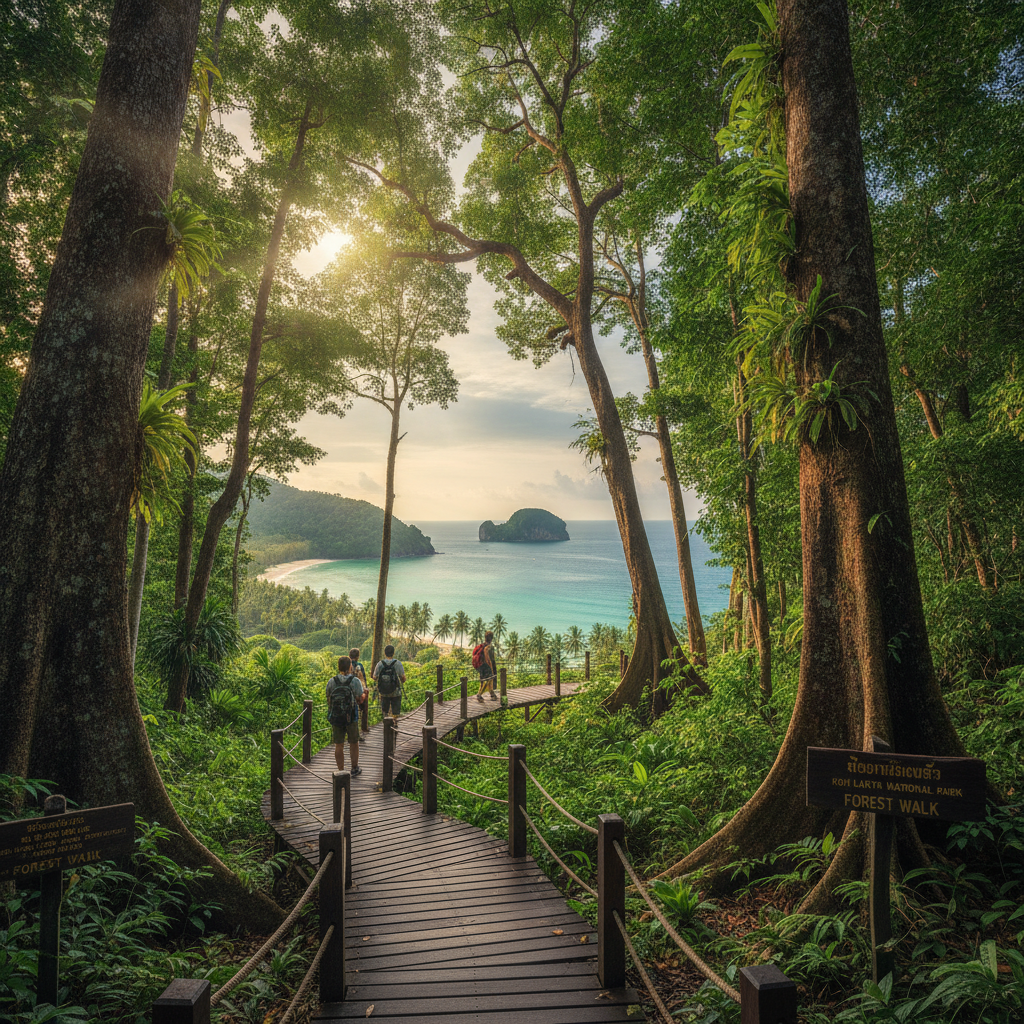
The forest trails within the Mu Ko Lanta National Park pass through the primary forest that covers the hills of the island's southern section — the forest above 200 metres elevation has the full canopy structure of the undisturbed tropical forest, with the emergent trees rising above the main canopy, the understorey ferns and gingers at ground level, and the strangler figs that begin as epiphytes on the canopy trees and gradually envelop and kill their host in the most dramatic example of forest succession visible on the trails. The forest is habitat for the dusky leaf monkey, the long-tailed macaque, and the various hornbill species that require old-growth forest for nesting.
- 4
Bamboo Beach Park
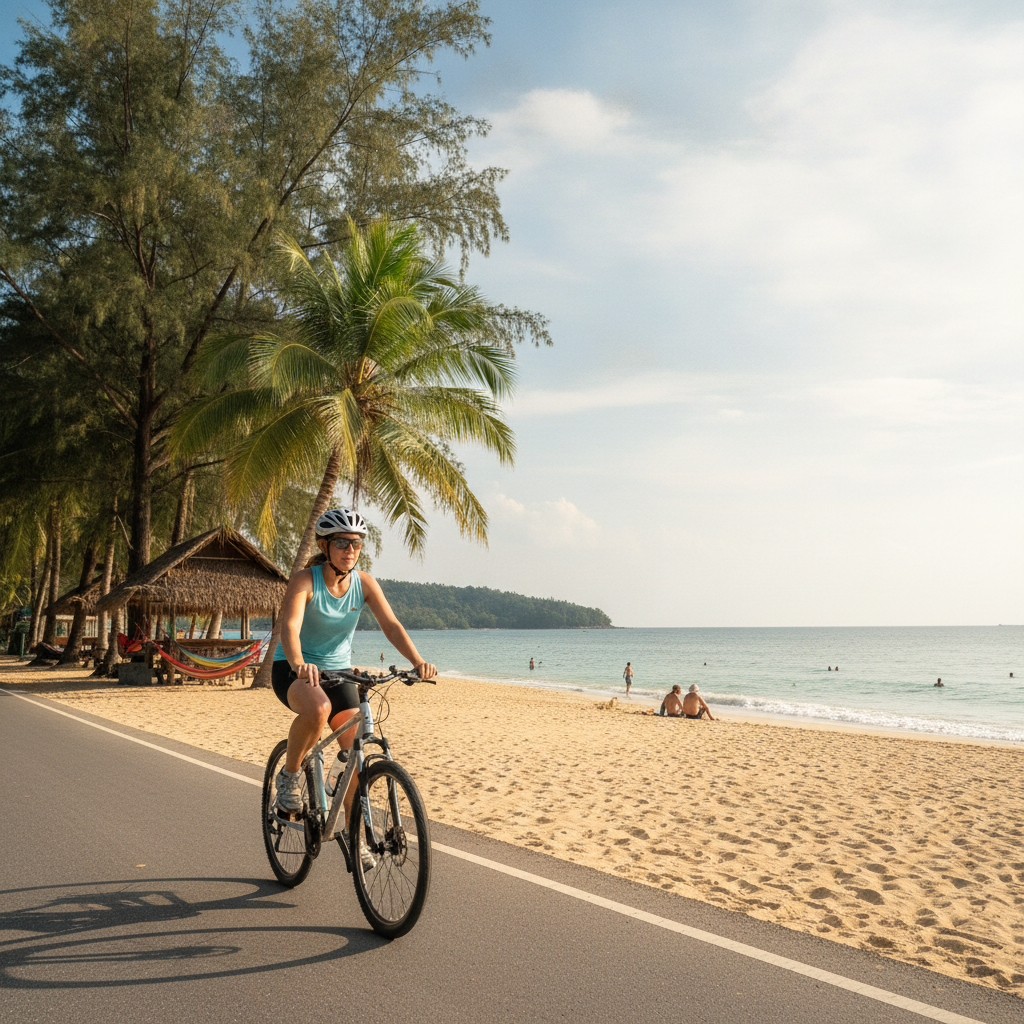
Bamboo Beach within the national park boundaries on the western coast is the most pristine beach accessible from Koh Lanta Yai — the beach with its forest backing (the bamboo clumps that give the beach its name visible at the forest edge), the complete absence of commercial beach infrastructure, and the clear water with accessible snorkeling on the near-shore reef provide the most natural beach environment on the island. The contrast between Bamboo Beach's natural environment and the resort development of Long Beach (only 3km to the north) demonstrates how rapidly the coastal character changes at the park boundary.
- 5
Lighthouse Viewpoint
The lighthouse at the southern tip of Koh Lanta Yai provides the most panoramic viewpoint accessible from the island — the lighthouse platform (accessible by the road from the park headquarters) overlooks the open Andaman Sea to the south and west, the uninhabited limestone islands visible on the horizon, and the long arc of Koh Lanta's western coastline receding northward in the distance. The south tip viewpoint provides the perspective to appreciate the full scale of the island's geography: the 27km coastline, the central mountain ridge, and the surrounding marine environment that makes Koh Lanta the largest island in the Krabi province and the most geographically complex resort destination in the region.
- 6
Coral Garden Snorkel
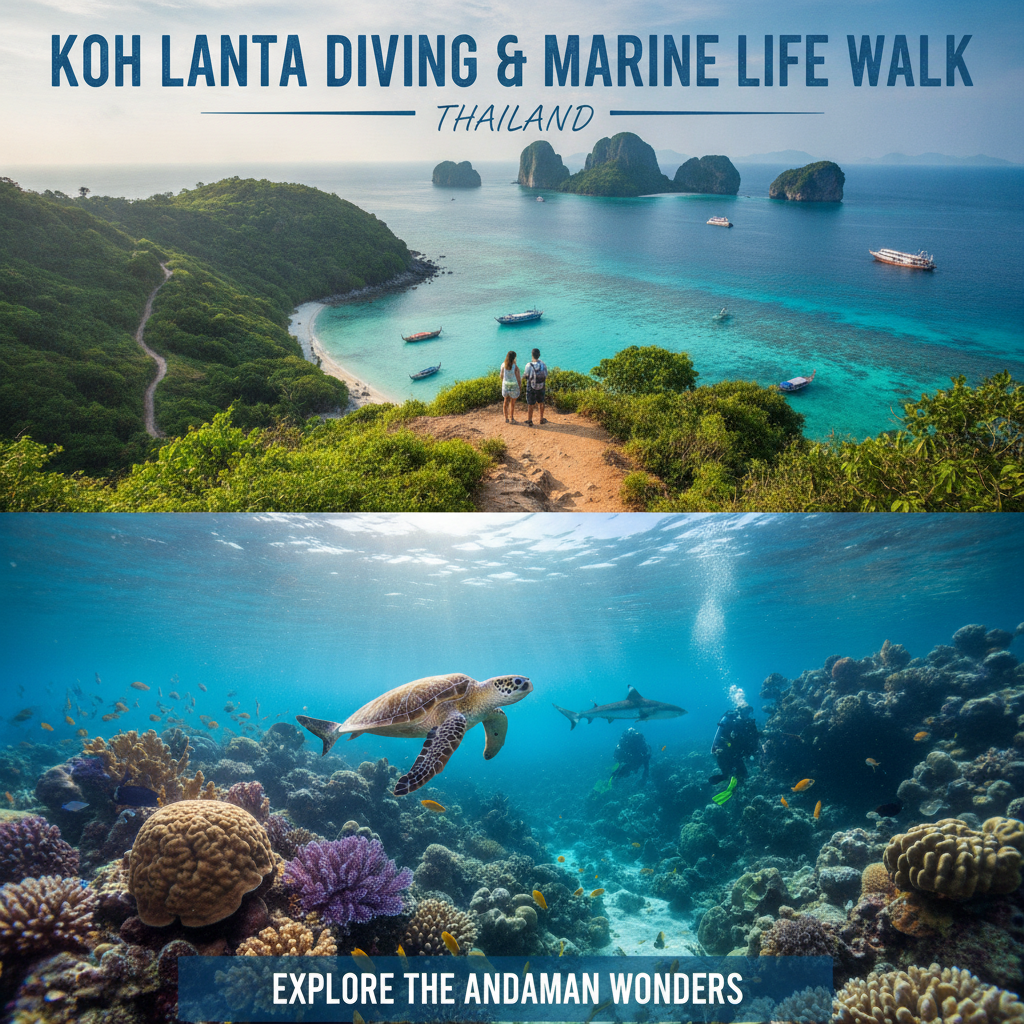
The coral garden accessible from the national park's southern waters (reached by longtail boat from the park pier or from Kantiang Bay) has the best coral coverage accessible from Koh Lanta without a full diving operation — the shallow reef at 2-5 metres depth has hard coral formations and the full range of associated reef fish, with the parrotfish grazing the coral, the moorish idol patrolling in pairs, and the occasional blacktip reef shark visible in the slightly deeper water at the reef edge. The coral garden's protected status within the national park has allowed the reef to maintain a health level above that of the more heavily visited reefs to the north.
Walk this route with audio
Stories play automatically as you reach each stop — no tapping needed.