Kota Kinabalu Night Market & Seafood Walk
Eat through Kota Kinabalu's celebrated food scene — the city's proximity to the South China Sea and Sabah's fertile agricultural interior has created a food culture of exceptional fresh seafood, Kadazan-Dusun indigenous ingredients, and the multicultural street food of a city where Malay, Chinese, Filipino, and indigenous cuisines overlap.
- 1
KK Night Market Gaya Street
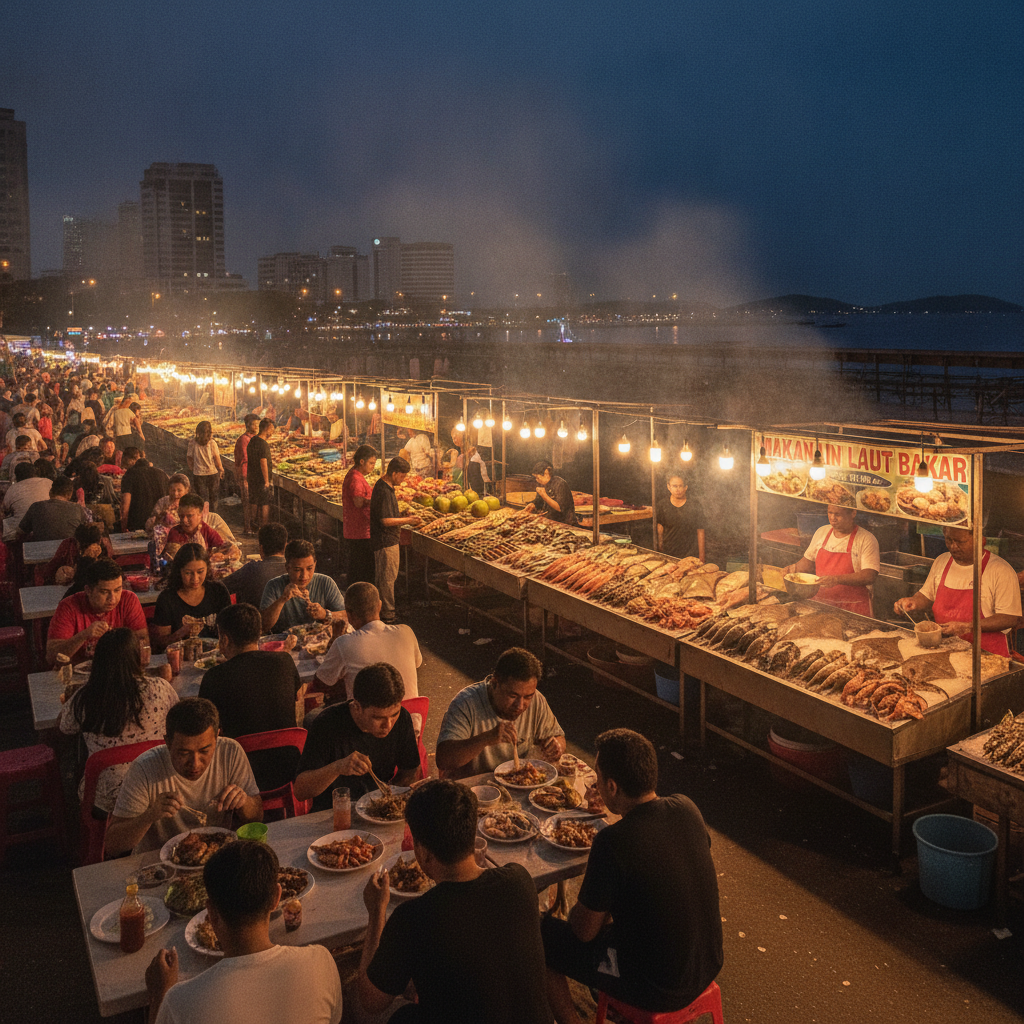
The KK night market around the central market area is the most active evening street food environment in Sabah — the combination of grilled seafood, satay, barbecued chicken wings, and the various Malay and Chinese preparations served from the stalls that set up from late afternoon creates a comprehensive street food destination. The KK night market is particularly celebrated for its fresh seafood grilled over charcoal — the prawns, squid, and fish from the South China Sea morning catch prepared simply with sambal or butter-garlic sauce represent the most direct path from sea to plate available in the city.
- 2
Sedco Square Seafood Complex
Sedco Square is KK's most celebrated seafood restaurant complex — the cluster of Chinese seafood restaurants serving live seafood from tanks (grouper, lobster, crab, abalone) in the cooking styles of the Sabah Chinese community (steamed with ginger and soy, wok-fried with black bean sauce, or butter-baked) draws seafood lovers from across Sabah and from regional visitors specifically seeking the high-quality South China Sea seafood that KK's position on the coast makes available at prices below those of Singapore or Kuala Lumpur.
- 3
Lintas Square Hawker Centre
The Lintas Square hawker centre serves the residential areas east of KK's city centre with a comprehensive range of Sabah Chinese and Malay food — the breakfast culture of KK features the Sabah-style noodle soup (mee, kolo mee with dried pork lard and spring onions, and the Sabah version of wonton soup with its larger dumplings and richer broth), and the hawker centre serves the workers of the surrounding commercial district with the efficiency of an established market food environment that has served the community for decades.
- 4
Kadazan-Dusun Indigenous Food
The indigenous Kadazan-Dusun food culture of the Sabah interior is most accessible in KK at the markets and the restaurants serving the traditional staples — the hinava (raw fish marinated in lime juice with chilli and bitter gourd) is the most distinctive Kadazan-Dusun dish, similar in principle to ceviche but using local river fish and the specific flavour balance of the Sabah highland cuisine. The tapai (fermented rice wine) consumed from bamboo containers at Kadazan-Dusun celebrations is the traditional beverage accompanying the food culture of a community for whom fermentation is the central food preservation and flavour development technique.
- 5
Api-Api Area Restaurants
The Api-Api area and the surrounding new commercial developments south of the city centre have KK's fastest-growing restaurant scene — the mix of Malaysian Chinese restaurants, international food chains, and the specialty restaurants serving Sabah's ethnic food diversity (Bajau seafood preparations, Kadazan-Dusun traditional dishes, and the Filipino-influenced food of the Sabah coast) creates a dining landscape that reflects the multicultural character of Sabah's capital city. The restaurants here serve the business and professional community of the city rather than the tourist market.
- 6
Gaya Street Sunday Market
Gaya Street Sunday Market is KK's most famous weekly event — the street market that closes the central Gaya Street to traffic from 6am to midday every Sunday sells everything from exotic tropical fruits and organic vegetables from the Sabah highlands, to jungle produce collected by indigenous communities, to local handicrafts, antiques, and the various processed food products of Sabah's domestic food industry. The Sunday market draws both KK residents shopping for the week's produce and visitors specifically coming for the market atmosphere and the opportunity to encounter Sabah's agricultural biodiversity in a single street.
Walk this route with audio
Stories play automatically as you reach each stop — no tapping needed.
More in Kota Kinabalu
Kota Kinabalu Mount Kinabalu & Kinabalu Park Walk
Kota Kinabalu City Centre & Waterfront Walk
Kota Kinabalu Diving & Marine Life Walk

Kota Kinabalu Orangutan & Sabah Wildlife Walk
Kota Kinabalu Bajau Culture & Kota Belud Walk