Kota Kinabalu Bajau Culture & Kota Belud Walk
Explore the Bajau sea nomad and cowboy culture of Sabah's northwest coast — the Bajau people, famous both as the 'sea nomads' of Southeast Asia and as the 'cowboys of the East' for their horseback culture around Kota Belud, have one of the most distinctive cultures in Malaysian Borneo.
- 1
Kota Belud Tamu Market
Kota Belud's Sunday tamu (market) is the most famous indigenous market in Sabah — the weekly gathering of Bajau, Kadazan-Dusun, Rungus, and Chinese traders from the surrounding communities creates a market that serves simultaneously as a commercial exchange and a social institution, with the Bajau cowboys sometimes arriving on horseback, the Rungus women in traditional dress selling their beadwork and brass jewellery, and the extraordinary variety of agricultural, forest, and handicraft products from Sabah's northwest interior creating the most comprehensive display of the region's cultural and agricultural diversity available to visitors.
- 2
Bajau Horseback Culture
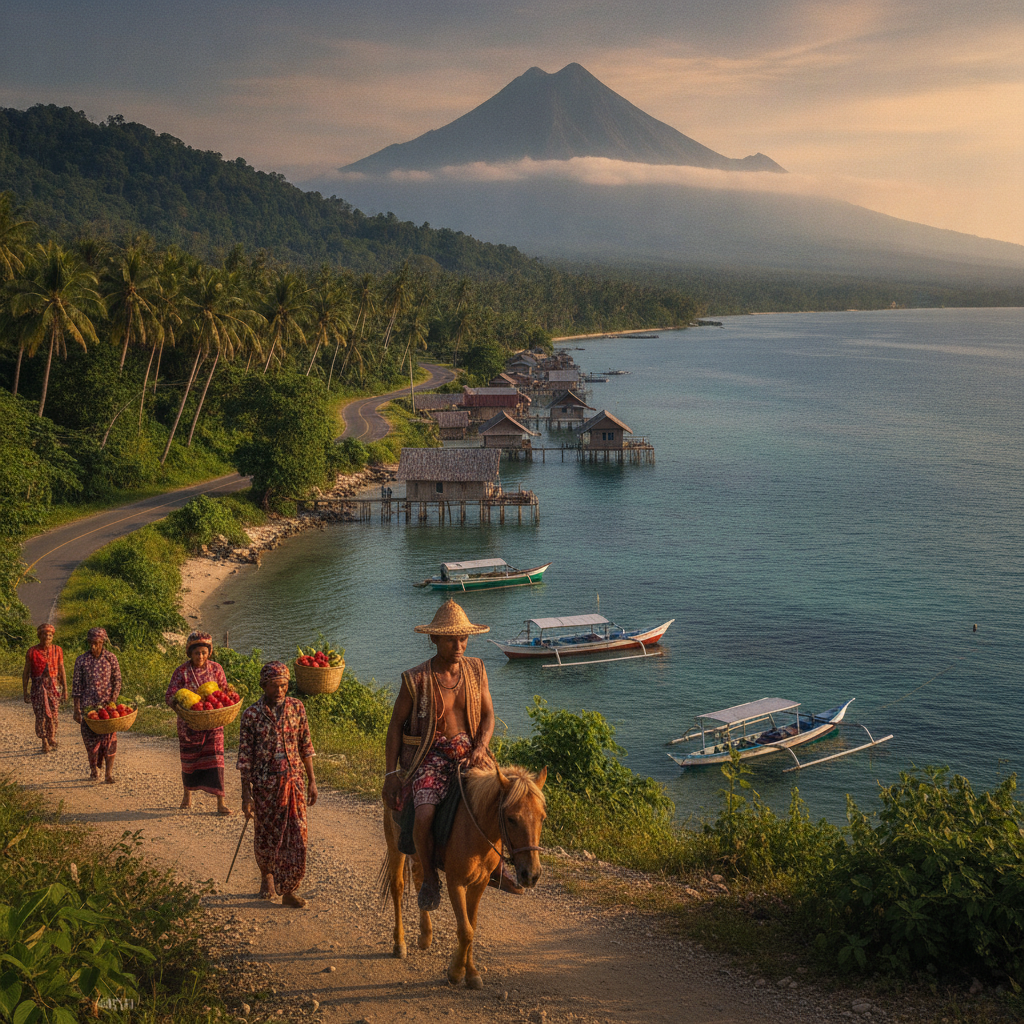
The Bajau of the Kota Belud area are famous throughout Sabah as expert horsemen — the 'Cowboys of the East' who developed a distinctive equestrian culture combining the horsemanship tradition with the elaborate Bajau ceremonial dress, with riders in traditional costumes performing at the annual Kota Belud Tamu Besar festival. The Bajau horseback tradition, unusual for a coastal people whose cultural origins are maritime, represents the adaptation of a sea nomad community to a highland agricultural environment when they settled the interior Sabah coast centuries ago.
- 3
Bajau Water Village Menggatal
The Bajau Laut (Sea Bajau or sea nomads) water villages built on stilts over the sea near KK represent the traditional settlement form of the sea-faring Bajau communities who historically lived on their boats or in permanent stilt house settlements over the water — the water villages accessible near Kota Kinabalu maintain a lifestyle organised around the sea, with fishing and trading as the primary occupations and the stilt house architecture providing homes built on the tidal zone where land and sea meet.
- 4
Mengkabong Water Village
Mengkabong water village north of KK is one of the most accessible traditional Bajau stilt house settlements — the village built entirely over the tidal estuary, connected by wooden walkways, and accessible by small boat from the shore demonstrates the architectural adaptation of a maritime community to the tidal environment. The Mengkabong community maintains the traditional boat-building skills, the fishing practices, and the community organisation of a Bajau settlement that has evolved from the sea nomad tradition to a more settled but still water-based village lifestyle.
- 5
Rungus Longhouse Culture
The Rungus people of Sabah's Kudat Peninsula maintain one of the most complete longhouse cultures in Malaysian Borneo — the Rungus longhouse (bivouak) housing multiple families under one roof, the distinctive Rungus beadwork that produces the most elaborate bead jewellery in Sabah, and the traditional brass ring and coil ornaments worn by older Rungus women provide an encounter with an indigenous cultural tradition less modified by tourism than the more accessible Kadazan-Dusun communities near Kota Kinabalu.
- 6
Monsopiad Cultural Village
Monsopiad Cultural Village south of KK is a cultural heritage centre presenting Kadazan-Dusun traditions — the centre named for Monsopiad, the legendary Kadazan warrior whose collection of skulls from enemies defeated in battle is displayed in a traditional house, offers cultural performances, traditional food demonstrations, and hands-on experiences of Kadazan-Dusun customs. The village's blowpipe demonstrations, traditional costume displays, and explanations of the harvest festival (Kaamatan) traditions provide the most accessible structured introduction to the culture of Sabah's largest indigenous ethnic group available from Kota Kinabalu.
Walk this route with audio
Stories play automatically as you reach each stop — no tapping needed.