Kota Kinabalu City Centre & Waterfront Walk
Walk Kota Kinabalu's lively waterfront city — the capital of Sabah on the northwest coast of Borneo faces the South China Sea with an island-dotted horizon, a busy central market, and the mix of Malay, Chinese, Kadazan-Dusun, and Filipino cultures that make it one of the most diverse cities in Malaysian Borneo.
- 1
KK Waterfront Promenade
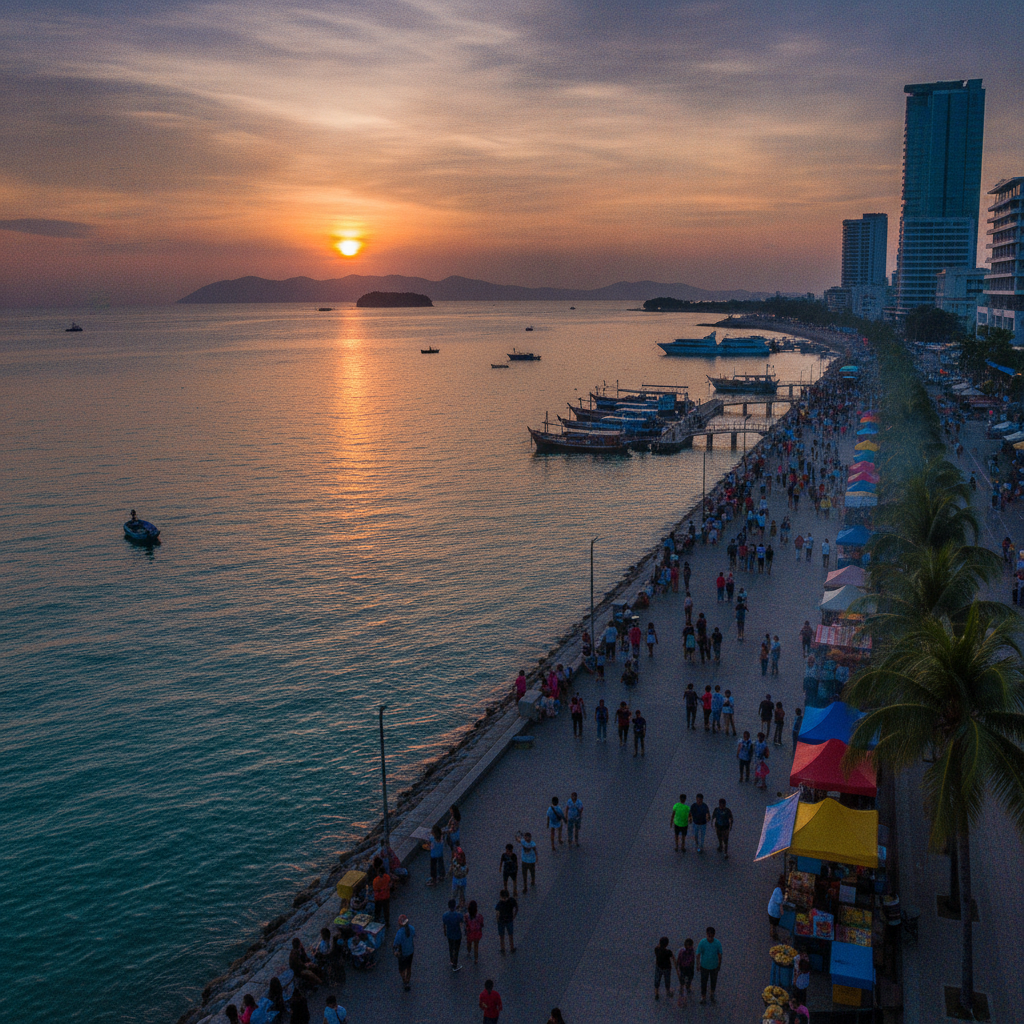
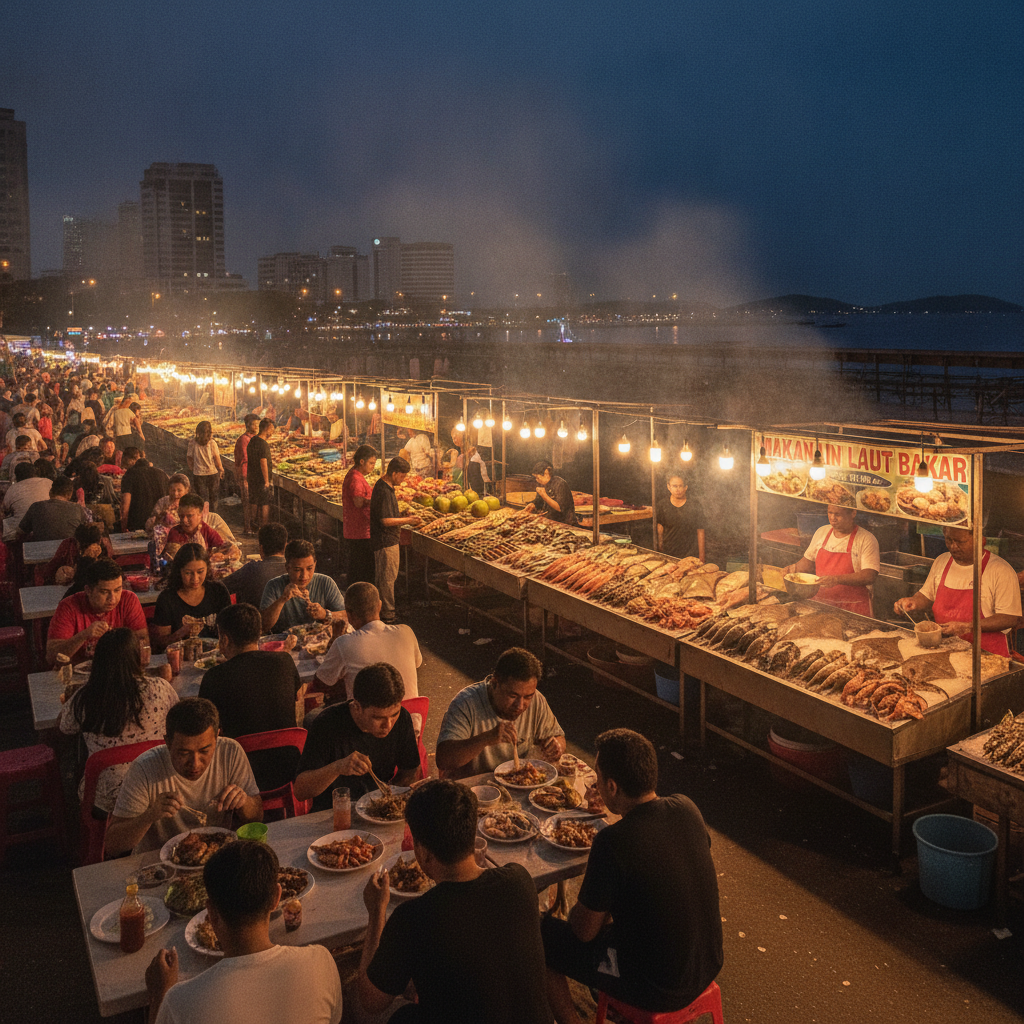
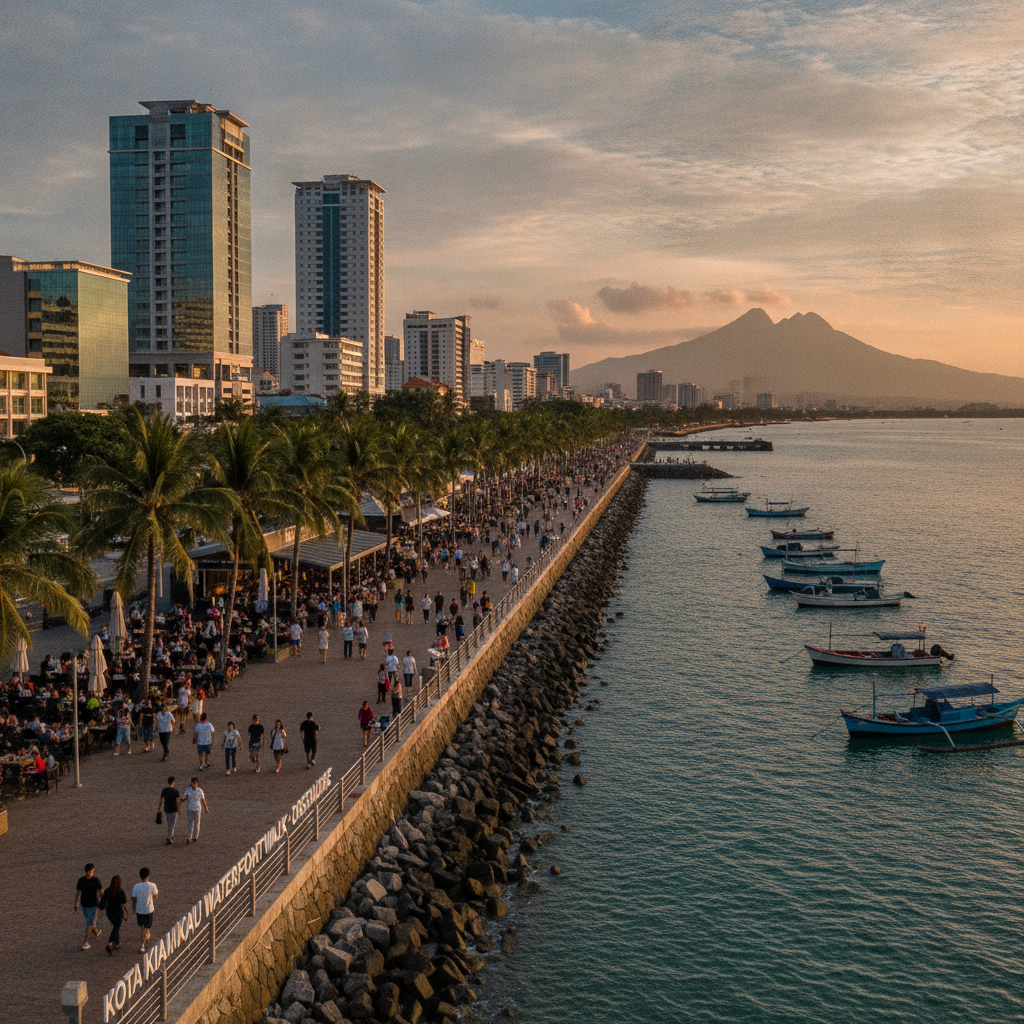
The Kota Kinabalu waterfront promenade extends along the South China Sea coastline facing the offshore islands of the Tunku Abdul Rahman Marine Park — the evening promenade where the city's population gathers to watch the South China Sea sunset, with the silhouettes of the five marine park islands against the orange sky, provides one of the finest urban sunset views in Malaysian Borneo. The promenade's restaurants, food stalls, and the night market that sets up facing the sea make this the most social public space in Kota Kinabalu.
- 2
Filipino Market Handicraft
The Filipino Market (Pasar Kraftangan Filipino) on the waterfront is one of KK's most colourful bazaars — the market operated primarily by vendors from the Sulu Archipelago and Mindanao, who arrived in Sabah as economic migrants and traders from the Philippines, sells shell jewellery, woven rattan items, dried seafood, and the inexpensive handicrafts that serve both local buyers and tourists. The Filipino market's character as an immigrant community commercial space rather than a curated tourist attraction gives it an authenticity that the adjacent heritage craft shops lack.
- 3
Central Market Pasar Besar
Kota Kinabalu's central market is the most active commercial space in the city — the multi-storey market building with its fresh produce ground floor (selling tropical fruits from the Sabah interior, the local vegetables, and the fish and seafood from the South China Sea and Sabah's coastal waters), the dry goods and household items on upper floors, and the surrounding street market creates a commercial environment where the full diversity of Sabah's agricultural and marine produce can be seen in one location.
- 4
Atkinson Clock Tower
Atkinson Clock Tower is the oldest surviving structure in Kota Kinabalu — the simple wooden clock tower built in 1905 as a memorial to Francis George Atkinson (the first district officer of Kota Kinabalu, who died of malaria at the age of 28) survived the near-total destruction of the city by Allied bombing during WWII when the Japanese military used KK as a base. The tower's survival when almost nothing else did makes it both a historical landmark and a symbol of the pre-war colonial settlement that was razed in the same Pacific War campaign that destroyed most of Borneo's coastal settlements.
- 5
Sabah State Museum
The Sabah State Museum is the most comprehensive repository of Sabah's cultural and natural heritage — the museum's collections of Kadazan-Dusun ceremonial objects, Bajau traditional crafts, Murut blowpipes, colonial-era photographs, and the natural history collection documenting Sabah's extraordinary biodiversity provide the most complete introduction to the state's cultural and ecological complexity available in a single location. The museum complex also includes traditional house replicas representing the different ethnic groups of Sabah, providing physical context for the cultural objects inside.
- 6
KK Sunset Facing Islands
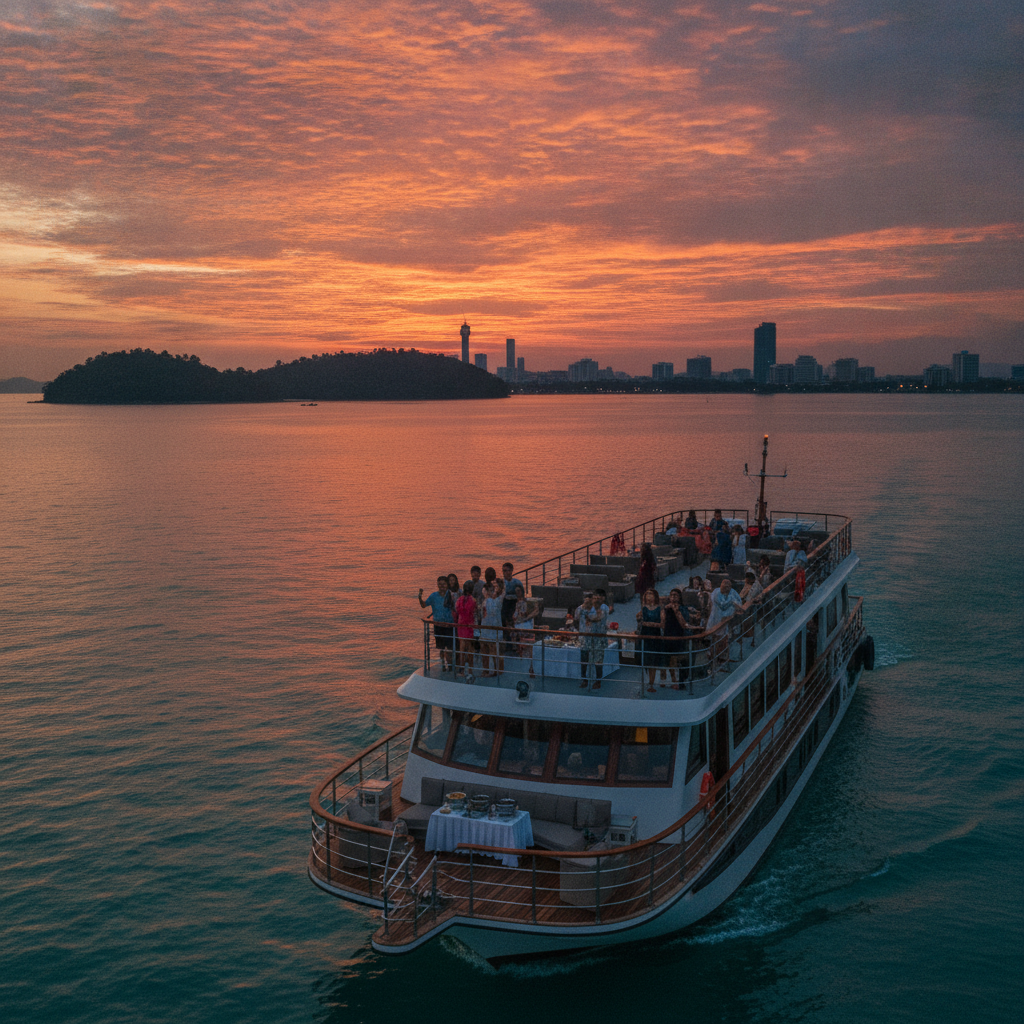
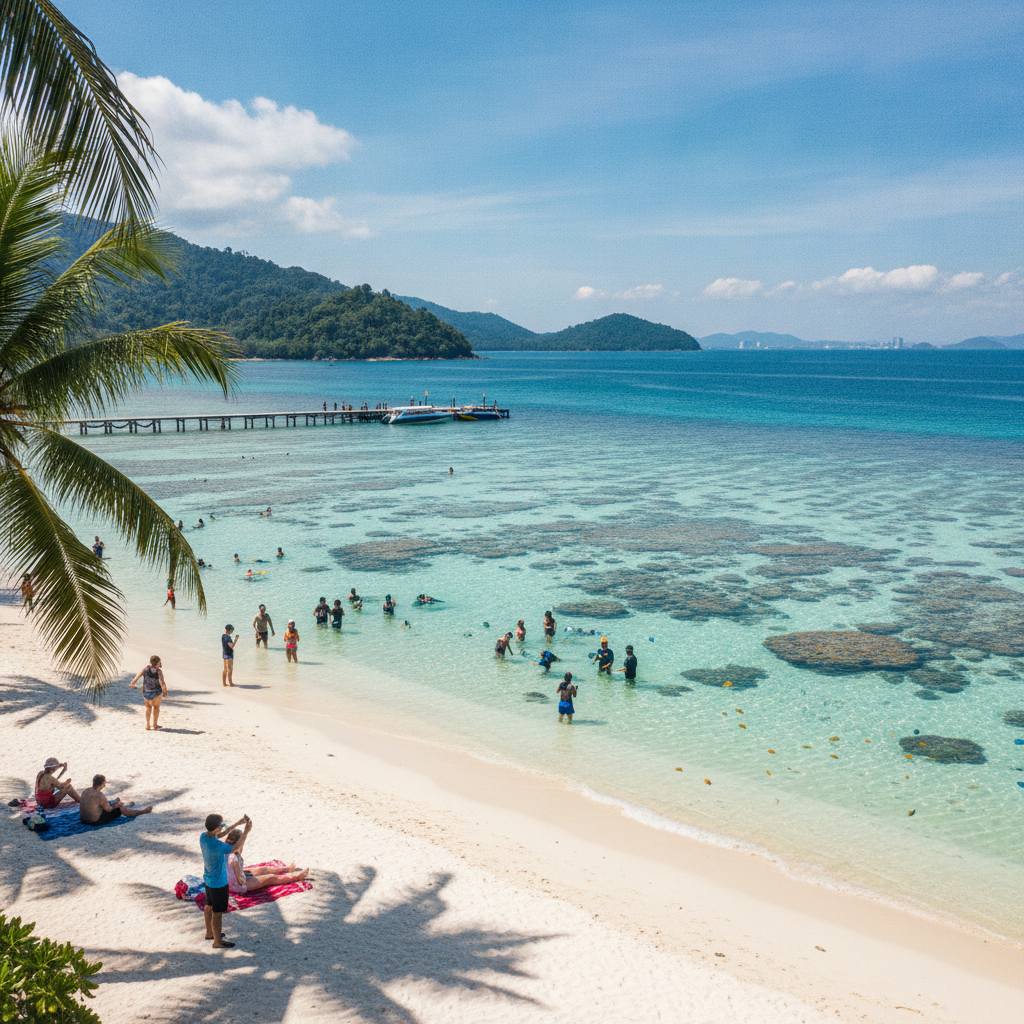
The sunset from KK's western waterfront facing the Tunku Abdul Rahman Marine Park islands is the defining visual experience of the city — the five islands (Pulau Gaya, Sapi, Manukan, Mamutik, and Sulug) silhouetted against the South China Sea sunset create a view that residents and visitors gather to watch each evening from the promenade, the waterfront restaurants, and the boats returning from the islands. The sunset colours over the South China Sea are intensified during the southwest monsoon season when atmospheric dust from distant sources adds warm tones to the sky.
Walk this route with audio
Stories play automatically as you reach each stop — no tapping needed.