The River Filmed on 500 Million Banknotes, the Zhang Yimou Outdoor Performance With 600 Real River Fishermen & the Fuli Village Where Fans Are Painted With Mountains That Appear on Money
The Han Yu poem 'Guilin's mountains and rivers are finest under heaven' appearing on the entrance gates of every major Guilin site since the Tang Dynasty; the Impression Liu Sanjie's 600 performers using the actual Li River as the stage; Fuli Village's hand-painted folding fans with ink-wash karst scenes; the Yulong River bamboo raft as the most serene non-commercialized Li River experience; the geological difference between Guilin tower-karst and Zhangjiajie quartzite pillar-karst; and the 8-day Guilin-Changsha-Zhangjiajie complete karst circuit.
- 1
Guilin in Rain – The Mist-and-Karst Effect
The Guilin rainy season (April–June): the paradox that makes the Guilin landscape most spectacular when the weather is technically worst. The mist and low cloud that accompany the rain settle in the valleys between the karst towers, leaving the tower summits visible above the white cloud—the most atmospheric and most photographed Guilin weather condition. The Li River in high water (the river swells after heavy rain, rising 2–3 metres and turning from green to brown while the reflections of the karst peaks become more dramatic in the faster current): the bamboo raft operators switch from the shallow rock-strewn routes to the deeper channel, making the narrow meanders accessible. The photography strategy: the best rain-light photographs of the Guilin karst are taken from the bridge over the Li River in Yangshuo town (the karst peaks above the town in morning mist—the most painterly Guilin photograph available within 5 minutes walk of any Yangshuo accommodation).
- 2
Yangshuo Cooking Classes & Local Craft
The Yangshuo cooking class industry: the most comprehensive cooking class network of any small Chinese tourist town—approximately 20 cooking schools in Yangshuo offering classes in Sichuan (the dominant culinary style), Guilin (rice noodles and beer fish), and Cantonese cuisine. The most recommended class format: a 4-hour market visit + cooking + eating session (¥200–350 per person including market purchases and all ingredients): the market visit component (the Yangshuo morning market where the local vegetables, fresh river fish, and the bamboo shoots are purchased): the most immersive local food experience in the Guilin region. The Yangshuo craft market (the textile and craft stalls on West Street): the Guilin shadow puppetry (the traditional Guangxi shadow puppet theatre—the most accessible demonstration at the teahouses of the West Street): the Guilin paper-cut art (the intricate red paper-cut designs depicting the karst landscape—the most distinctive Guilin paper souvenir).
- 3
The Guilin Art Legacy – Tang Dynasty Poets & Modern Painters
The Guilin landscape's cultural significance in Chinese art history: the karst landscape has been the subject of Chinese painting (山水画, shān shuǐ huà—mountain-and-water painting) for over 1,000 years and constitutes the primary visual reference for the genre globally. The Tang Dynasty poet Han Yu (韩愈, 768–824 CE) wrote the most quoted line about Guilin: '桂林山水甲天下' ('Guilin's mountains and rivers are the finest under heaven')—this line appears on the entrance gates of every major Guilin site and is the most cited description of any Chinese landscape. The Li Kuchan (李苦禅, 1899–1983 CE) and the Guilin ink-wash painting tradition: the 20th-century Chinese ink-wash painters who used the Guilin karst as primary subject matter. The Xinhua Bookstore in Guilin (the bookstore that has the largest collection of Guilin landscape painting reproductions of any bookstore in China).
- 4
Yangshuo Nightlife & Evening Entertainment
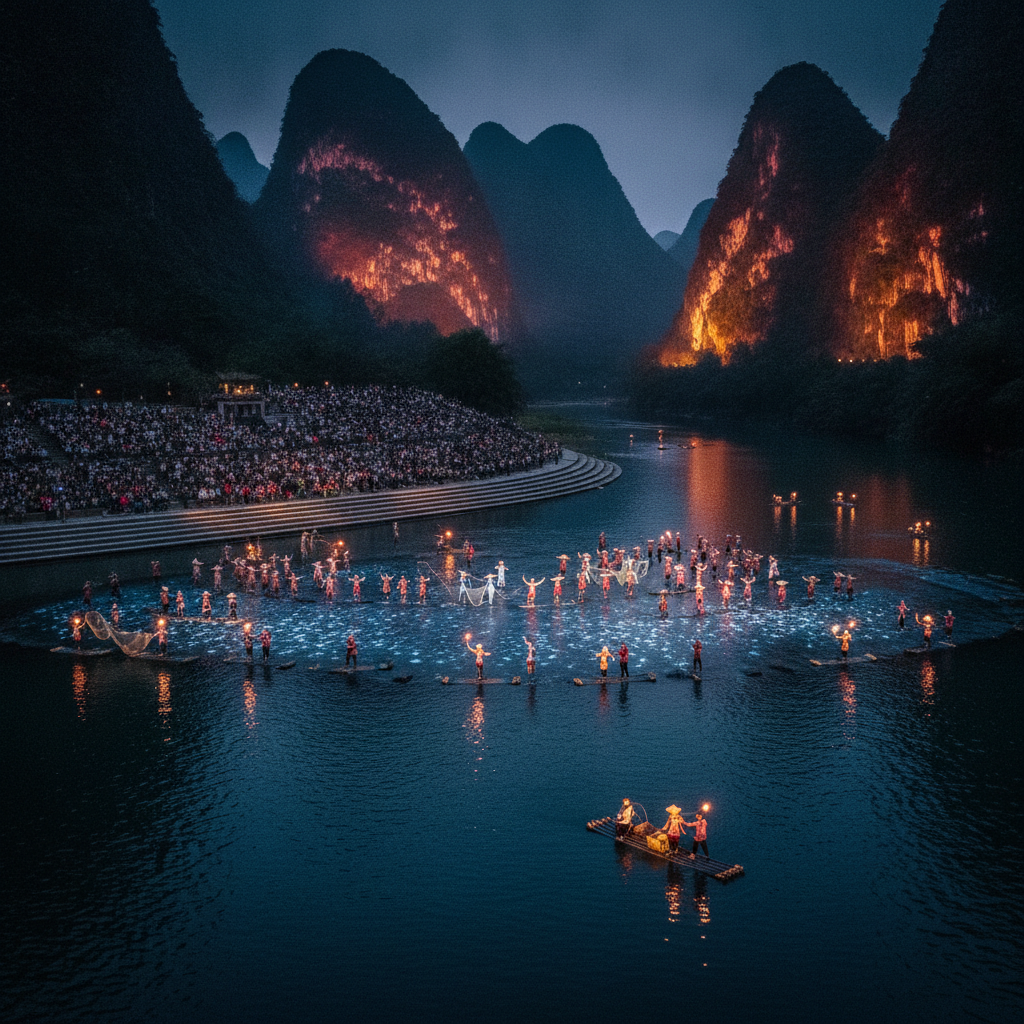
Yangshuo's evening culture: the most developed evening entertainment scene in the Guilin region and one of the most varied in rural China. The Impression Liu Sanjie (印象·刘三姐—the large-scale outdoor performance directed by Zhang Yimou (张艺谋—the director of the 2008 Beijing Olympics opening ceremony) using the actual Li River and the karst towers as the stage backdrop): the performance features 600 performers (local Guilin residents, ethnic minority performers, and professional dancers) on the Li River water stage with the karst towers illuminated in colored light behind them—the most spectacular outdoor performance in China. The show runs nightly at 19:30 and 21:30 (seasonal variation); tickets: ¥198–688 depending on seat tier. The Yangshuo bar street (the West Street bars from 21:00 onwards): the most consistently lively bar district in any Chinese rural tourist destination, with live music at the Monkey Jane Bar and the Under The Moon bar. The night cycling (the illuminated bicycle path along the Li River bank in Yangshuo town from 20:00 to 23:00).
- 5
The Karst Villages – Off the Tourist Circuit
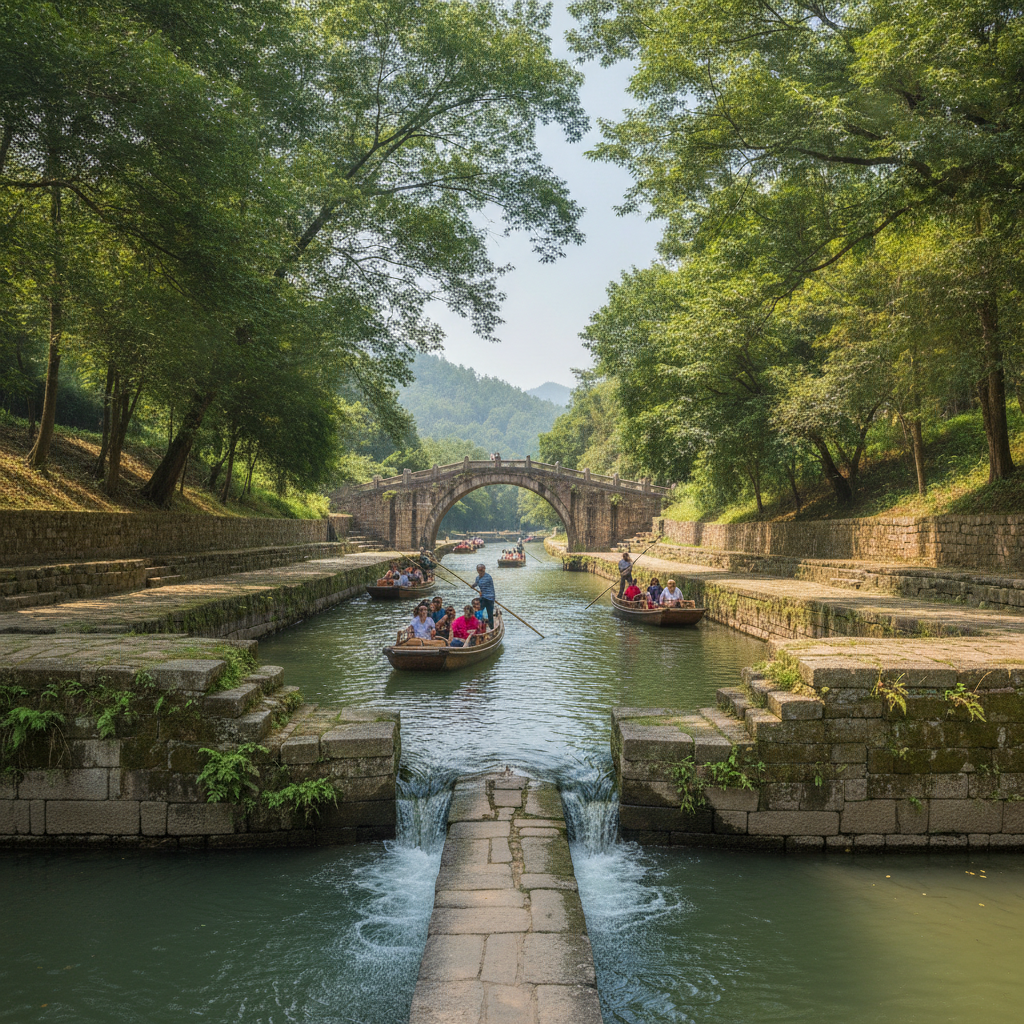
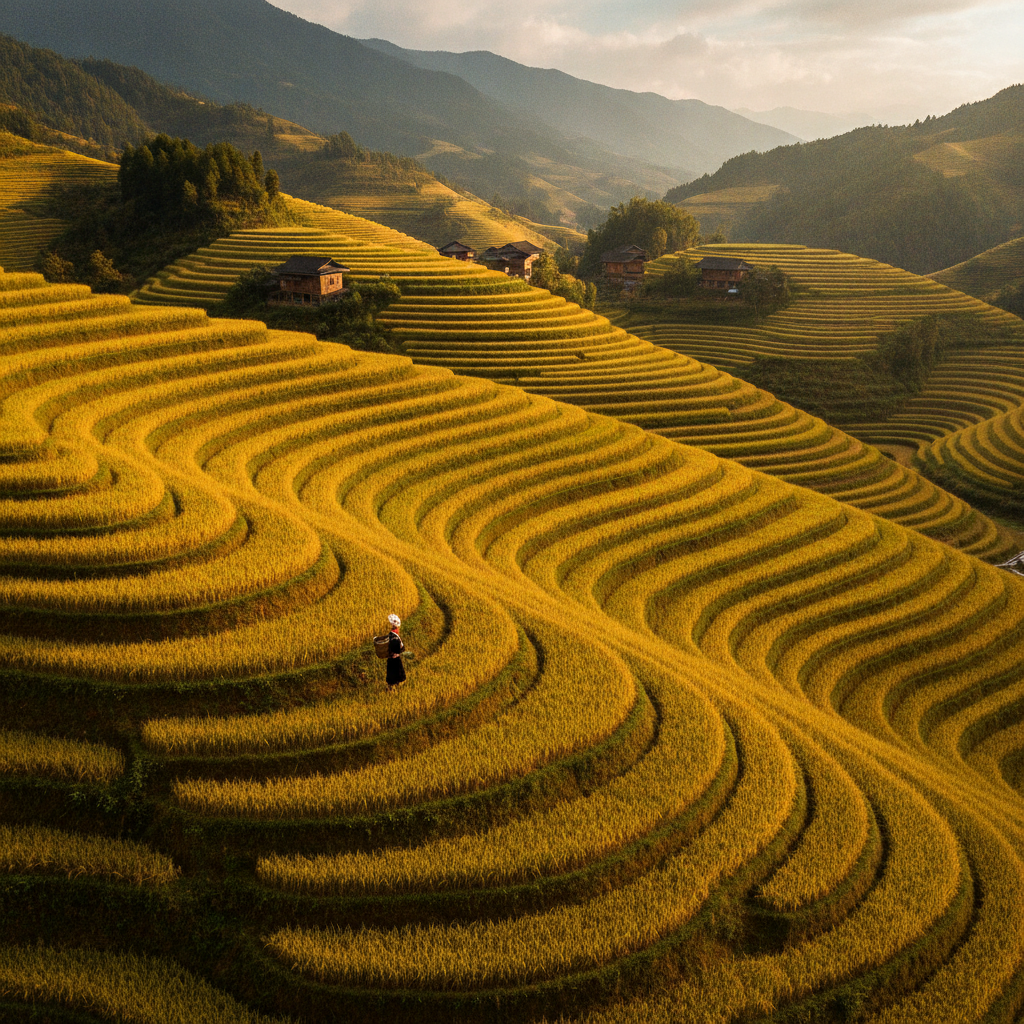
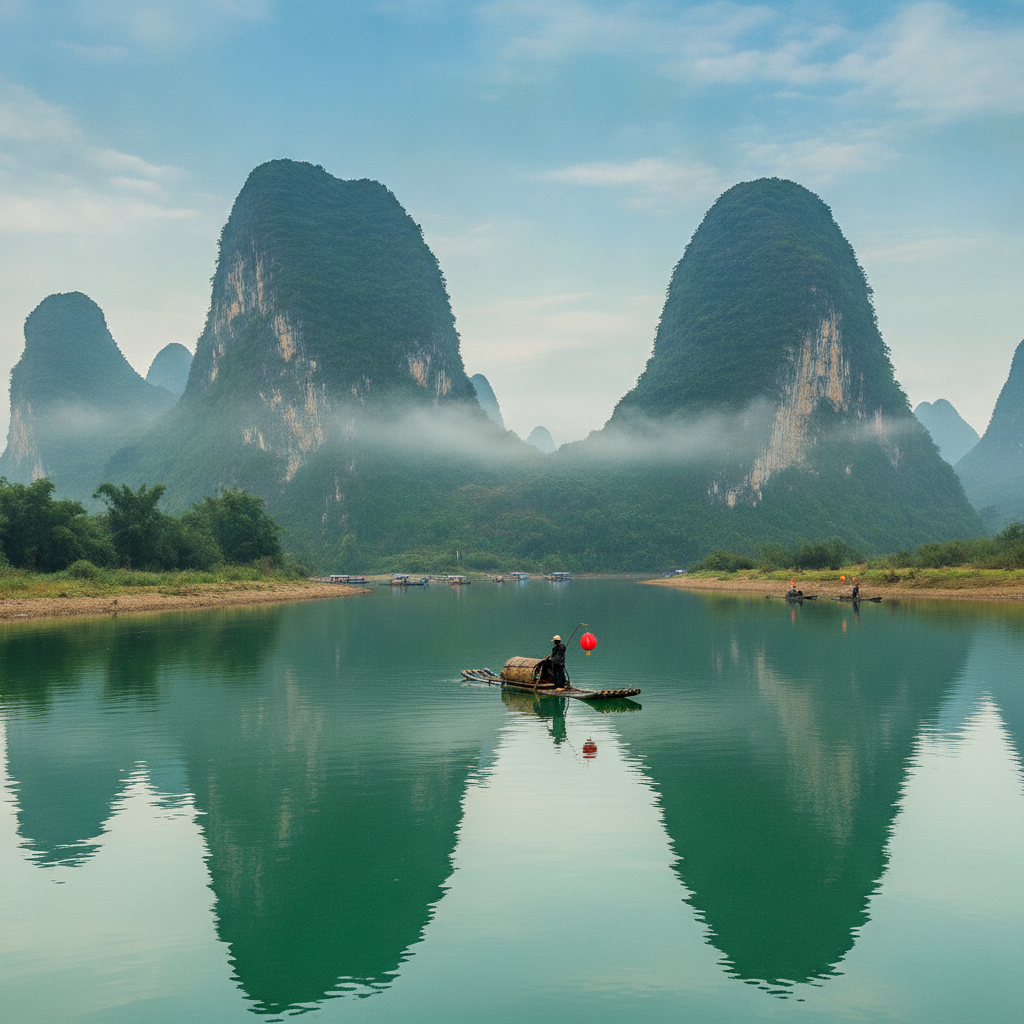
The Guilin countryside beyond the Li River cruise and the Longji terraces: the villages accessible by bicycle or motorbike from Yangshuo that have not yet been absorbed into the commercial tourist circuit. The Fuli Village (福利镇—8 km east of Yangshuo): the village known for its paper fan craft (the Guilin folding fans hand-painted with ink-wash karst scenes—the most skilled paper fan painters in Guangxi work in the Fuli village workshops). The Baisha Village (白沙—5 km north of Yangshuo): the traditional rice farming village in the karst tower landscape that has not yet developed tourist infrastructure—the village market (the Tuesday and Friday market gathering where the Zhuang farming communities exchange goods). The Moon Water Cave (月水岩—the karst cave 5 km west of Yangshuo with underground river and hot spring): the cave that combines the karst interior with natural hot spring water at 37°C—the most unusual natural experience in the Yangshuo area. The bamboo raft (the narrow bamboo raft for hire on the Yulong River (遇龙河—the smaller, quieter river parallel to the Li River north of Yangshuo): the most serene and least commercialized Li River area experience.
- 6
Guilin vs. Zhangjiajie – China's Two Karst Spectacles
The comparison between Guilin's and Zhangjiajie's karst landscapes (the two most internationally recognized karst destinations in China, visited together or chosen between by most international visitors with limited time): the definitive guide to choosing or combining them. The geological difference: Guilin's karst is tower-karst (峰林—flat plain with isolated vertical towers) formed in subtropical limestone; Zhangjiajie's karst is pillar-karst (砂岩峰林—quartzite sandstone pillars) formed in harder sandstone and has no cave formations. The visual comparison: Guilin (water + reflections + mist + the 20-yuan note image—the most photogenic when on the Li River); Zhangjiajie (vertical height + fog + forest + the Avatar movie connection—the most photogenic from elevated walkways above the pillars). The access comparison: Guilin is accessible by direct international flight from Hong Kong (1h20m); Zhangjiajie requires a domestic connection from Changsha or a direct flight from fewer international hubs. The best combined itinerary: Guilin 3 days + high-speed rail to Changsha (1h50m) + Changsha 1 day + high-speed rail to Zhangjiajie (2h) + Zhangjiajie 2 days: the complete Chinese karst landscape circuit in 8 days.
Walk this route with audio
Stories play automatically as you reach each stop — no tapping needed.
More in Guilin
The Song Dynasty Painter Who Invented a New Brushstroke Technique Just for This Mist, the Alila Yangshuo in a Sugar Mill & the Longji Terrace Mirror in February When the Fields Are Flooded
The World's Tallest Bronze Pagoda on a Lake Island, the Cave That Sheltered Thousands During the 1944 Japanese Bombing & the Savory Tea That Takes Three Encounters to Like
The 300-Million-Year Acid That Sculpted Tower Mountains Found Only Here and in Halong Bay, the Dong Bridge Built Without Metal Nails & the Beer Fish Braised in the River It Came From
The 20-Yuan Note Landscape, the Cave With 77,000 Square Metres of Stalactites & the Red Yao Women Who Hold the World Record for Longest Hair