The World's Tallest Bronze Pagoda on a Lake Island, the Cave That Sheltered Thousands During the 1944 Japanese Bombing & the Savory Tea That Takes Three Encounters to Like
The Sun-Moon Pagoda's bronze tower as the world's tallest bronze pagoda; the Reed Flute Cave's WWII civilian shelter function; the 1944 Battle of Guilin and the evacuation of the 14th Air Force base; the Guilin youcha savory oil tea as the most counter-intuitive local morning drink; the Silver Cave's musical stalactites played as percussion instruments; and the Guilin–Guiyang 1h40m HSR connection as the access point for the Miao silver headdress culture and the largest waterfall in China.
- 1
Guilin's Waterways – Lakes, Canals & River Walks
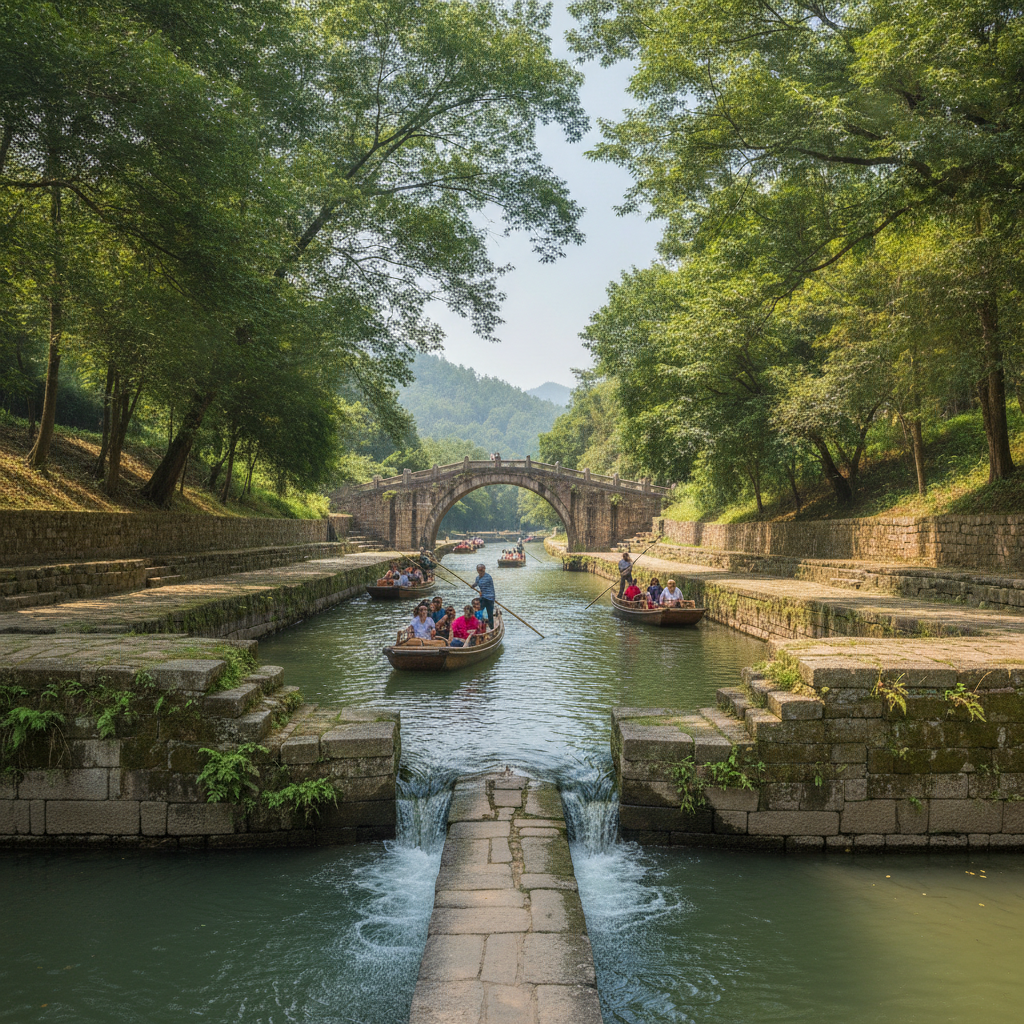
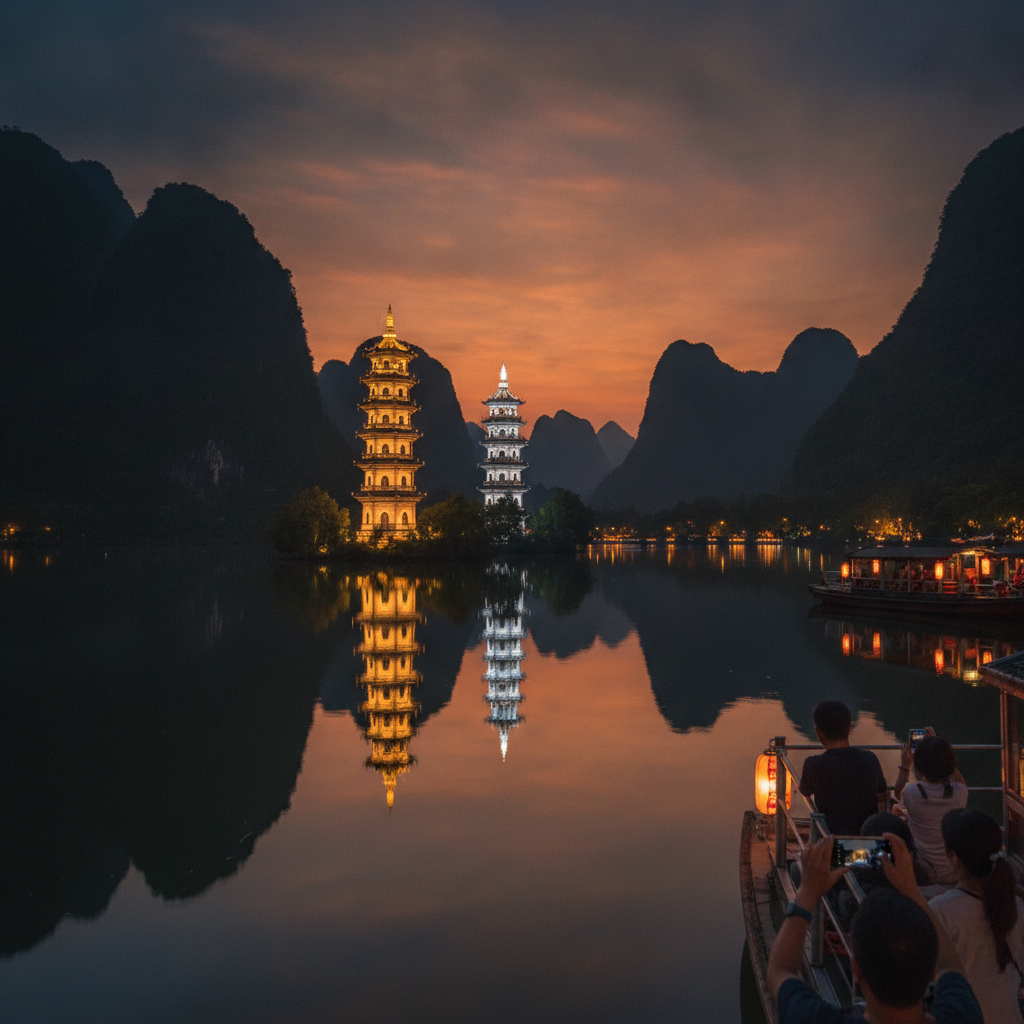
Guilin city center's waterway network (the Two Rivers and Four Lakes system—the linked waterway connecting the Li River, the Peach Blossom River, and 4 inner-city lakes): the most pleasant walking environment in Guilin city center and the context for the most atmospheric evening in the city. The Ronghu Lake (榕湖—the Banyan Lake) and the Shanhu Lake (杉湖—the Sun and Moon Lakes): the twin lakes at the center of the Guilin historic area connected by the Sun-Moon Pagodas (日月双塔—the twin pagodas on the lake islands, one of bronze (9 stories, the tallest bronze pagoda in the world) and one of stone (7 stories)). The evening cruise (the nightly illuminated boat tour on the Two Rivers and Four Lakes circuit—the 70-minute boat tour departing from the Elephant Trunk Hill pier at 19:30, covering the entire inner-city waterway with the karst towers and city architecture illuminated in colored light): the most complete single evening experience available in Guilin city. The Rongcheng waterfront walk (the riverside promenade between the Elephant Trunk Hill and the Liberation Bridge—the most pleasant daytime walking route in central Guilin, with the karst towers rising above the buildings on the opposite bank).
- 2
Guilin's WWII History – The Forgotten Wartime Capital
Guilin's World War II history (the city that served as a significant Allied and Chinese military base in the Second Sino-Japanese War (1937–1945)): the most under-documented dimension of one of China's most visited tourist destinations. The Japanese bombing of Guilin (1941–1944—the Japanese air force bombed Guilin repeatedly as a strategic Chinese military base, destroying significant portions of the pre-war city): the Reed Flute Cave as bomb shelter (the cave was used by Guilin civilians as an air-raid shelter during the heaviest bombing raids, with thousands of residents sheltering in the cave's 77,000 m² interior). The Guilin campaign (the Battle of Guilin and Liuzhou, November 1944—Operation Ichi-Go): the Japanese ground offensive that captured Guilin in November 1944, forcing the evacuation of the Allied air base (the 14th Air Force base at Guilin that had been conducting bomber raids against Japanese shipping from the Guilin airfield): the Guilin massacre (the killings of Chinese civilians by the Japanese Army during the occupation of November–December 1944—an aspect of the war that is documented in the Guilin Museum but rarely mentioned in tourism literature).
- 3
The Silver Cave & Guilin's Cave Network
The Silver Cave (银子岩—the limestone cave 55 km south of Guilin City near Lipu County): the cave with the most varied secondary mineral formations of any Guangxi cave open to visitors. The Silver Cave's distinguishing features: the cave contains the three largest stalactite formations in China (the 'Coral', the 'Snow Mountain', and the 'Moon and Star' chambers—each named for the specific formation pattern); the 'musical stalactites' (the section of stalactites with different natural resonance pitches that are played as percussion instruments during the guided tour). The Guilin cave tourism industry (Guilin Province has 1,000+ documented karst caves of which 27 are developed for tourism—the highest concentration of accessible karst caves of any Chinese province): the cave comparison (Reed Flute Cave vs. the Seven Star Cave (七星岩) vs. the Silver Cave): Reed Flute Cave (most accessible, best illumination, most visited); Seven Star Cave (within the Seven Star Park, the most historically significant cave with Tang Dynasty inscriptions); Silver Cave (furthest from Guilin but the most spectacular formations).
- 4
Guangxi Cuisine – What Guilin Actually Eats
The Guangxi culinary tradition beyond the tourist rice noodle (the actual daily food culture of Guilin residents that is invisible in most tourism presentations): the authentic food guide. The morning dim sum (the Guilin tea-house dim sum culture—less elaborate than Cantonese dim sum but more affordable and more embedded in daily life): the Guilin youcha (油茶—the Guilin oil tea (a savory tea made from tea leaves, fried peanuts, puffed rice, and salt, boiled together with water)—the most distinctively Guilin morning drink, reported as initially unpleasant to visitors unfamiliar with the savory-tea format but described as addictive after multiple encounters). The Guilin vinegar pork (酸辣猪脚—sour-spicy pig's trotters): the traditional Guilin market stall food made from simmered pig trotters with vinegar, chili, and garlic. The Guilin rice wine (桂林三花酒—the triple-distilled Guilin rice wine produced since the Song Dynasty): the most important alcoholic product from Guilin, the wine used to flavor the beer fish and consumed as a clear spirit in small ceramic cups at the Guilin teahouses.
- 5
Guilin's Photography – When, Where & How
The complete Guilin photography guide (the practical guide to photographing the Li River karst landscape in the conditions that produce the most evocative images): the timing, weather, and position guide. The 20-yuan note shot (the Yellow Cloth Shoal—the specific Li River location photographed for the 20-yuan note—accessible only from the Li River cruise boat or from a privately hired bamboo raft from Xingping): the photography conditions (early morning cruise with overcast sky = the most saturated color reflection; sunny afternoon = the brightest light but the strongest contrast; morning mist = the most atmospheric but least detailed). The Yangshuo dawn (the Yangshuo town karst towers photographed from the West Street pedestrian bridge at 06:00–07:00 before sunrise completely clears the valley mist): the single most accessible high-quality Guilin landscape photograph without leaving the town. The Longji terrace timing (the October–November harvest produces the golden rice terraces; the June–July growing season produces vivid green layers; the February–March winter water reflection (when the terraces are flooded for the new planting) produces mirror-like reflections of the sky).
- 6
Guilin to Guizhou – The Minority Culture Route
The Guilin-to-Guizhou route (the overland journey from the Guangxi karst landscape to the Guizhou ethnic minority highland culture—the most culturally rich overland journey in southern China accessible by high-speed rail): the route that combines the 2 most ethnically diverse provinces in China. The high-speed rail (Guilin to Guiyang: 1h40m by high-speed rail—the connection that makes a 1-day Guizhou extension viable from a Guilin base). The Guizhou Miao minority culture (the Miao (苗族) silver headdress culture—the Miao women of Guizhou who wear elaborate silver headdresses weighing up to 5 kg for festival occasions): the Miao New Year festival (the most spectacular ethnic minority festival in China, held in November at the Leishan Miao villages in the Qiandongnan Miao and Dong Autonomous Prefecture). The Huangguoshu Waterfall (黄果树瀑布—the largest waterfall in China (77.8m high, 101m wide)—2h by bus from Guiyang): the waterfall context (the Huangguoshu is fed by the Baihe River from the Guizhou Plateau—the high plateau that produces the waterfall height): the complete Guangxi-Guizhou loop (Guilin 3 days → Guiyang 1 day → Huangguoshu 1 day → Miao villages 2 days → return to Guilin by HSR): the most culturally complete circuit in southern China.
Walk this route with audio
Stories play automatically as you reach each stop — no tapping needed.
More in Guilin
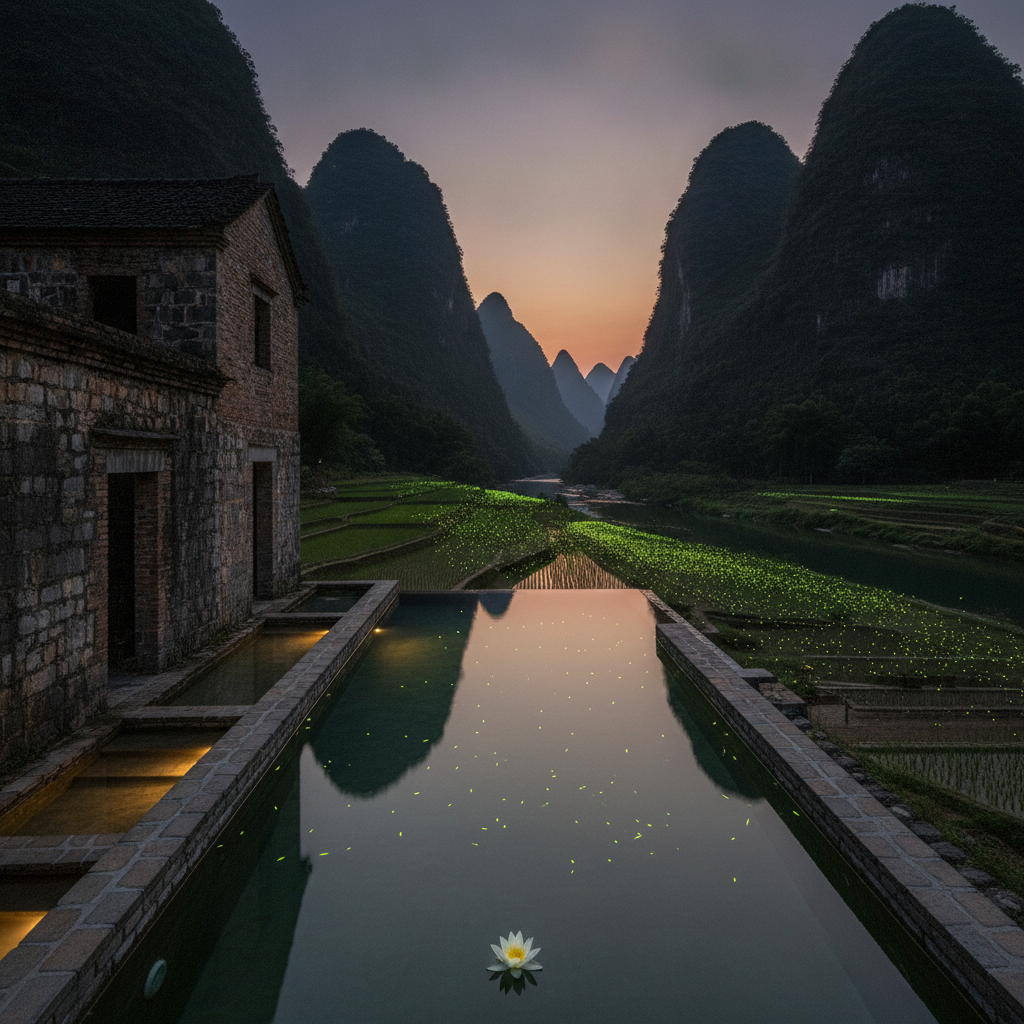
The Song Dynasty Painter Who Invented a New Brushstroke Technique Just for This Mist, the Alila Yangshuo in a Sugar Mill & the Longji Terrace Mirror in February When the Fields Are Flooded
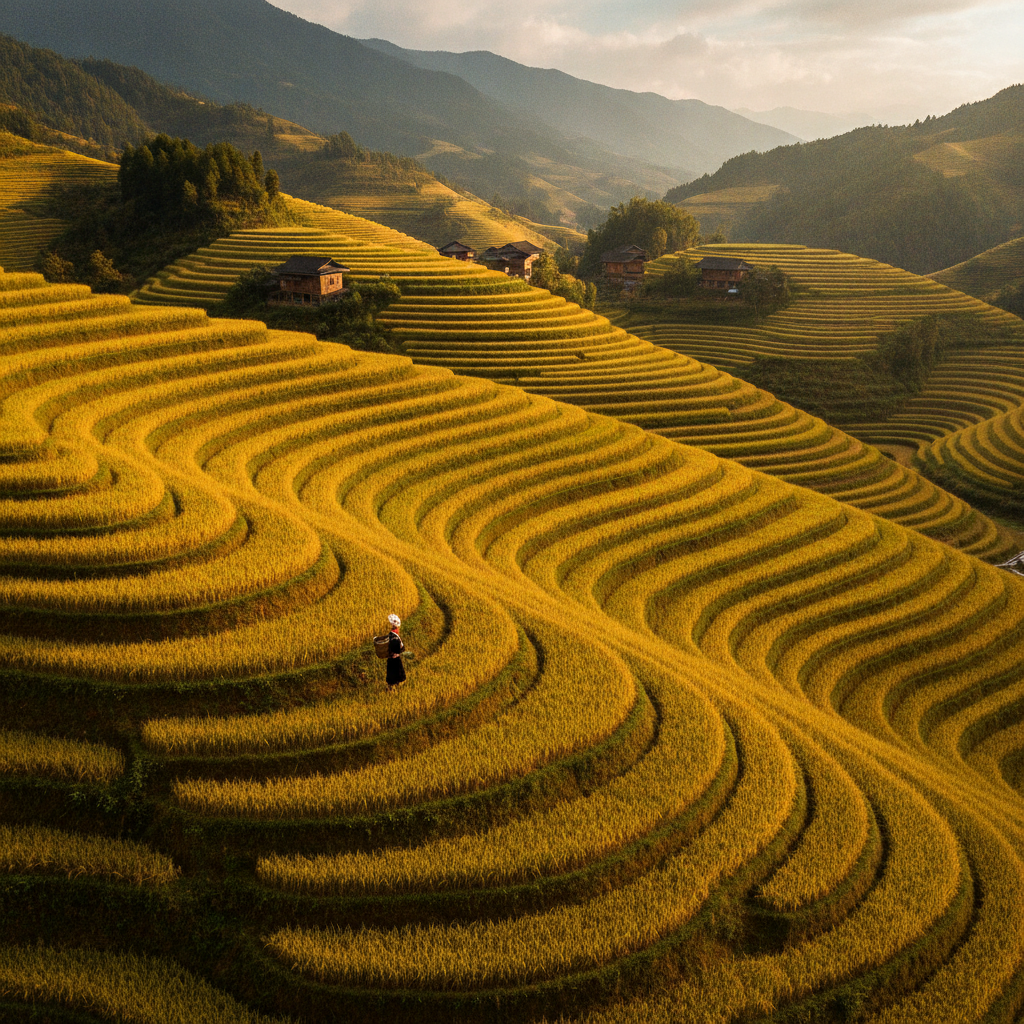
The 300-Million-Year Acid That Sculpted Tower Mountains Found Only Here and in Halong Bay, the Dong Bridge Built Without Metal Nails & the Beer Fish Braised in the River It Came From
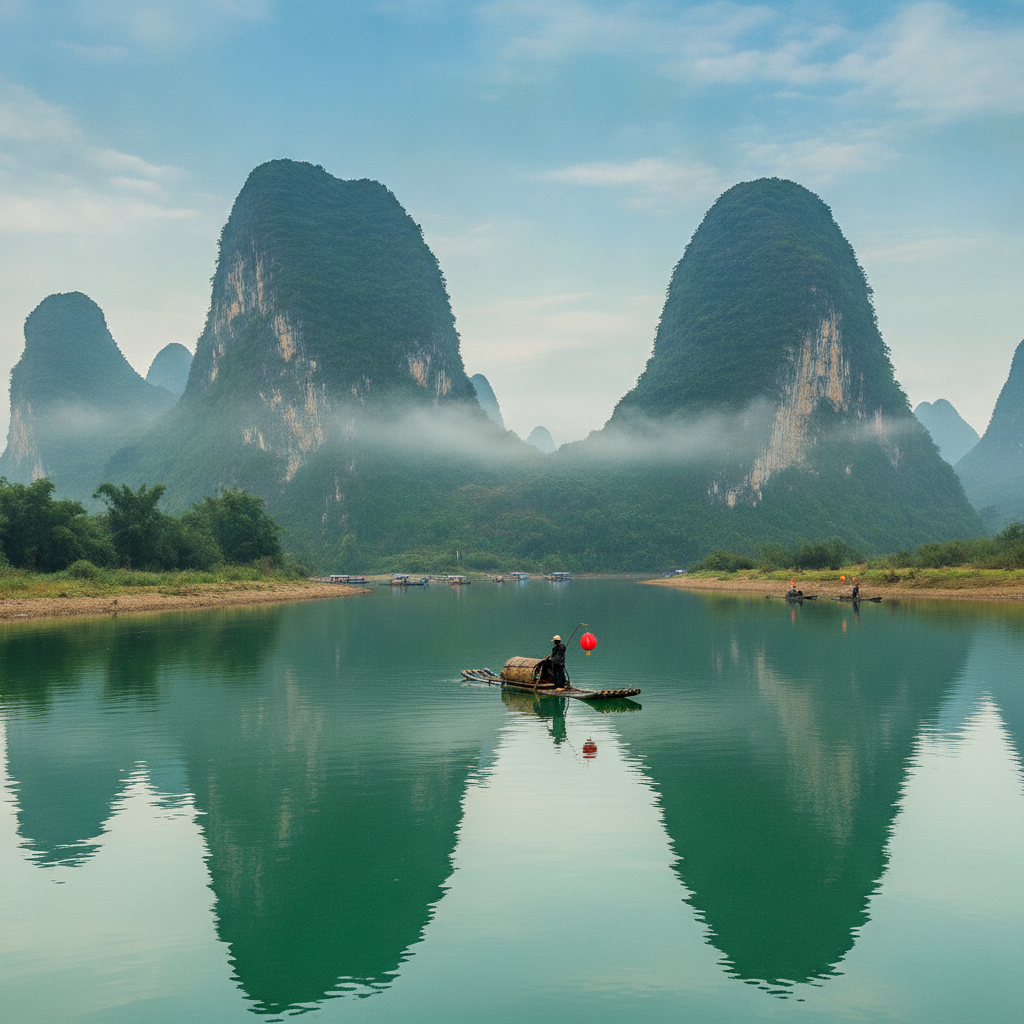
The 20-Yuan Note Landscape, the Cave With 77,000 Square Metres of Stalactites & the Red Yao Women Who Hold the World Record for Longest Hair
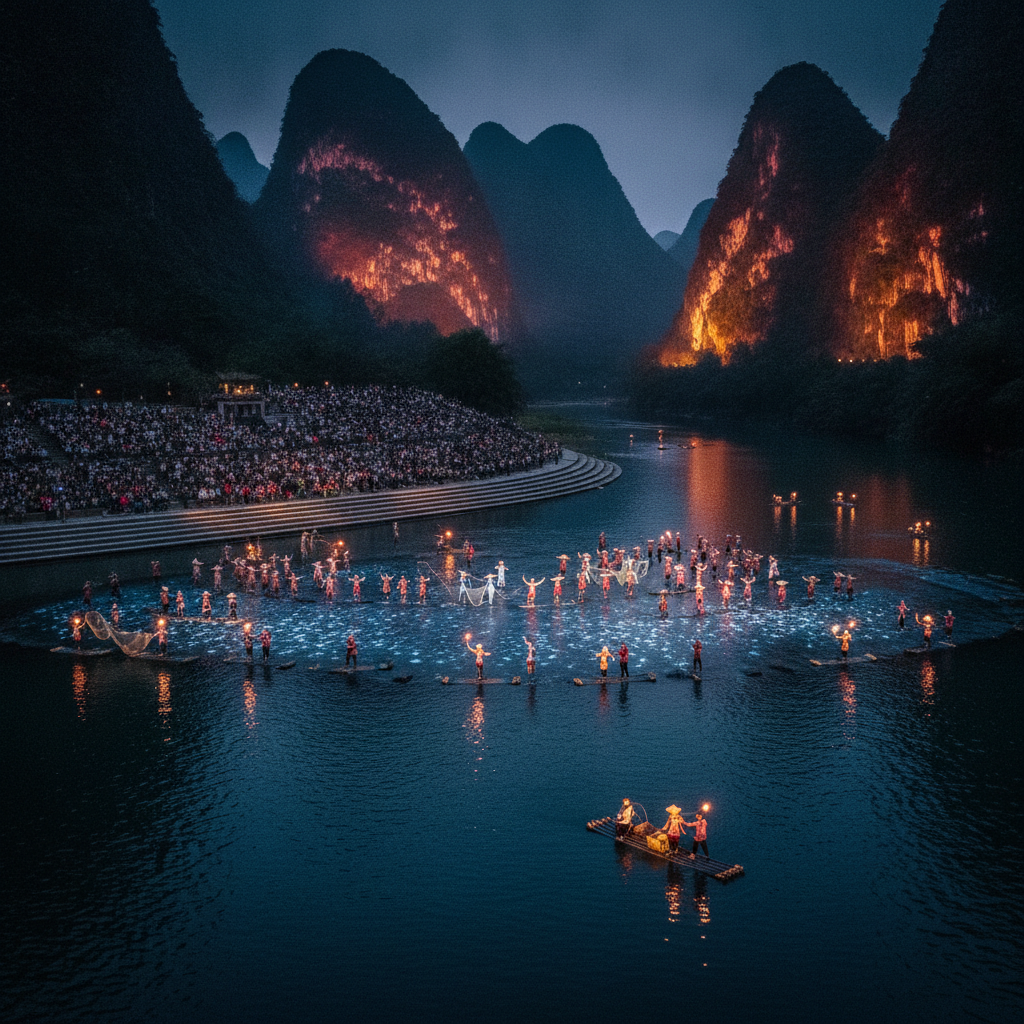
The River Filmed on 500 Million Banknotes, the Zhang Yimou Outdoor Performance With 600 Real River Fishermen & the Fuli Village Where Fans Are Painted With Mountains That Appear on Money