The Song Dynasty Painter Who Invented a New Brushstroke Technique Just for This Mist, the Alila Yangshuo in a Sugar Mill & the Longji Terrace Mirror in February When the Fields Are Flooded
Mi Fu's 11th-century 'Mi dot' brushstroke invented to capture the Guilin mist and establishing the primary technique in Chinese landscape painting; the Yulong River's Song Dynasty stone bridge as the oldest and most beautiful in Yangshuo; the Alila Yangshuo converted sugar mill as the most acclaimed boutique hotel in southern China; the Longji terrace February water-filling creating mirror reflections as the most photogenic but least-known Longji season; the Liu Sanjie story's 1961 film origin before becoming the Zhang Yimou performance; and the private Li River bamboo raft charter at the Yellow Cloth Shoal.
- 1
The Yulong River – Guilin's Quieter Waterway
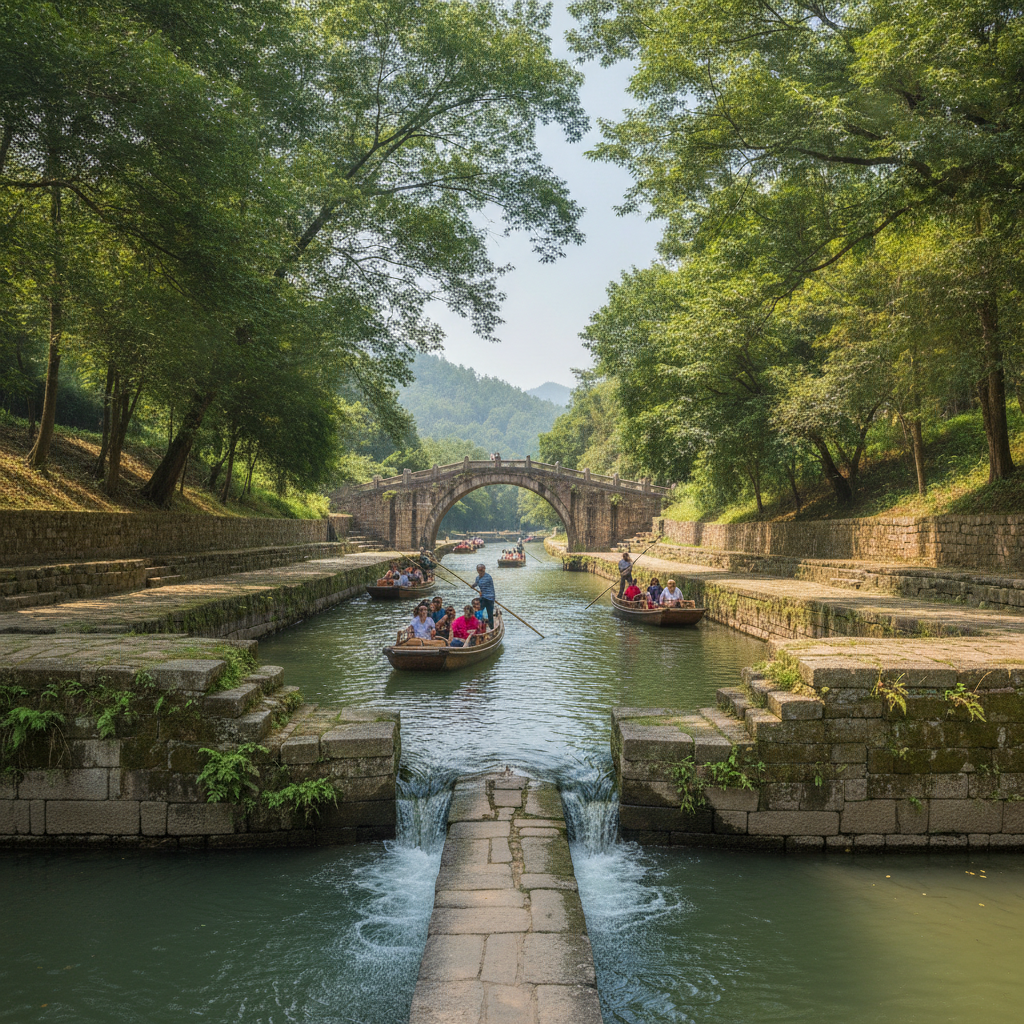
The Yulong River (遇龙河—the tributary river parallel to the Li River running through the Yangshuo basin): the most serene water experience in the Guilin region, accessible by bamboo raft from multiple points along the river valley without the commercialization of the main Li River cruise. The Yulong River bamboo raft (the narrow bamboo raft punted by a single boatman from the stone bridges along the river—the raft journey from the Yulong Bridge (遇龙桥—the Song Dynasty stone arch bridge, the oldest and most beautiful bridge in Yangshuo) downstream to the Gongnong Bridge (公农桥—approximately 8 km, 2 hours): the bamboo raft experience that provides the most intimate encounter with the karst landscape without a large commercial cruise boat. The Yulong Valley cycling (the cycling route along the Yulong River valley from Yangshuo town (West Street) south through the flat valley between the karst towers, past the Yulong Bridge, Jima Village, and Fuli Village—approximately 20 km one way on flat riverside roads): the most bicycle-friendly full-day ride in the Guilin region. The Yulong Valley villages (the traditional farming villages along the Yulong River—the villages that have been less affected by tourism development than the Li River corridor): Jima Village (骥马村—the village with the most intact traditional Guangxi residential architecture along the Yulong route).
- 2
Guilin's Modern City Life
The contemporary Guilin (the city of 4.9 million (2024 metropolitan population) that exists beyond the karst tourism circuit): the modern Chinese city that is the most overlooked dimension of one of China's most visited destinations. The Guilin CBD (the Xiufeng District commercial center—the shopping malls, KTV venues, and Chinese franchise restaurant chains that constitute the daily commercial life of a mid-sized Chinese provincial city). The Guilin University of Electronic Technology (GUET—桂林电子科技大学): the primary university in Guilin (enrollment approximately 30,000 students) whose student population sustains the cafe, bar, and restaurant culture of the Qixing District. The Guilin Lijiang Theatre (the primary performance venue for Guilin cultural events—the venue hosting the annual Guilin Arts Festival in October). The Guilin craft beer scene (the emerging craft beer bars in the bar streets near the Zhengyang Pedestrian Street—the most recent development in Guilin's entertainment landscape): the Guilin local beer brands (the Liquan Beer (漓泉啤酒)—the dominant Guilin local beer brand since 1982, the beer used to braise the Yangshuo beer fish): the brewing water from the Li River karst aquifer is cited as the primary quality factor in Guilin beer production.
- 3
Guilin in Chinese Literature & Film
The Guilin karst landscape in Chinese cultural production: the landscape that has been depicted in Chinese ink-wash painting (山水画) for 1,000 years, cited in Tang Dynasty poetry, and used as a film backdrop for over 50 Chinese films and television dramas. The Han Yu poem (韩愈's '桂林山水甲天下'—'Guilin's mountains and rivers are finest under heaven'—the most quoted line about a Chinese natural landscape, appearing on the entrance gates of every major Guilin site). The ink-wash painting tradition (the Song Dynasty painter Mi Fu (米芾, 1051–1107 CE) developed the 'Mi dot' technique (米点) specifically to represent the misty karst landscape of Guilin and southern China—the technique of short horizontal brushstrokes accumulated to represent the diffuse light on mist-covered mountains that has been the primary influence on all subsequent Chinese landscape painting). The film connection (Zhang Yimou's 'The Great Wall' (长城, 2016) used the Guilin karst as a background location; the Impression Liu Sanjie performance (2004) was itself a film-to-performance adaptation of the 1961 Chinese film 'Liu Sanjie' (刘三姐—the story of a Zhuang folk-song singer who resisted the landlord class through satirical song).
- 4
Guilin's Hot Spring Circuit
The Guilin hot spring landscape (the hot spring resorts accessible from the Guilin and Yangshuo areas): the thermal wellness dimension of a destination primarily known for visual landscape. The Yangshuo hot springs (the Yangshuo Secret Garden Resort—the most developed hot spring facility in the Yangshuo area, featuring 8 outdoor pools fed by natural thermal water at 38–45°C, surrounded by the karst tower landscape): the most visually spectacular hot spring setting in southern China (the pools in the open-air courtyard with the karst towers visible above the steam rising from the pools at dusk). The Guilin Longsheng hot springs (the Longsheng hot spring resort in the Longji terrace area—the thermal water complex adjacent to the Zhuang and Yao minority villages): the combination (hot spring bathing + Longji terrace landscape): the most complete single-day wellness-nature experience accessible from Guilin. The Lipu hot springs (the thermal springs 80 km south of Guilin in Lipu County near the Silver Cave): the least touristically developed hot spring resource in the Guilin region and the closest thermal bathing option to the Silver Cave visit.
- 5
Guilin's Festivals & Seasonal Calendar
The Guilin annual festival calendar (the events that most directly reward a visit timed to coincide with them): the seasonal guide. Spring (February–April): the Guilin Cherry Blossom (the cherry blossom season in the Guilin city parks—typically late February to mid-March, 4–6 weeks earlier than the mainland northern spring, due to the subtropical latitude): the Guilin Camellia Festival (early March). The Longji terrace water-filling season (February–March: the terraces are flooded for the spring planting, creating mirror reflections of the sky and mountains): the most photogenic Longji season for photography of water reflections. Summer (May–September): the Dragon Boat Festival (端午节—May–June): the Li River dragon boat racing in Guilin city (the most visually dramatic Li River sporting event). Autumn (October–November): the Li River at its most photogenic (the post-flood season with green-turning-to-gold karst forest); the Longji harvest (October): the golden rice terraces at their seasonal peak. Winter (December–February): the Guilin ice (the rare winter frost on the Longji terraces creates a white-dusted terrace landscape—the least photographed but most unexpected visual in the Guilin region).
- 6
Guilin Budget vs. Luxury Travel
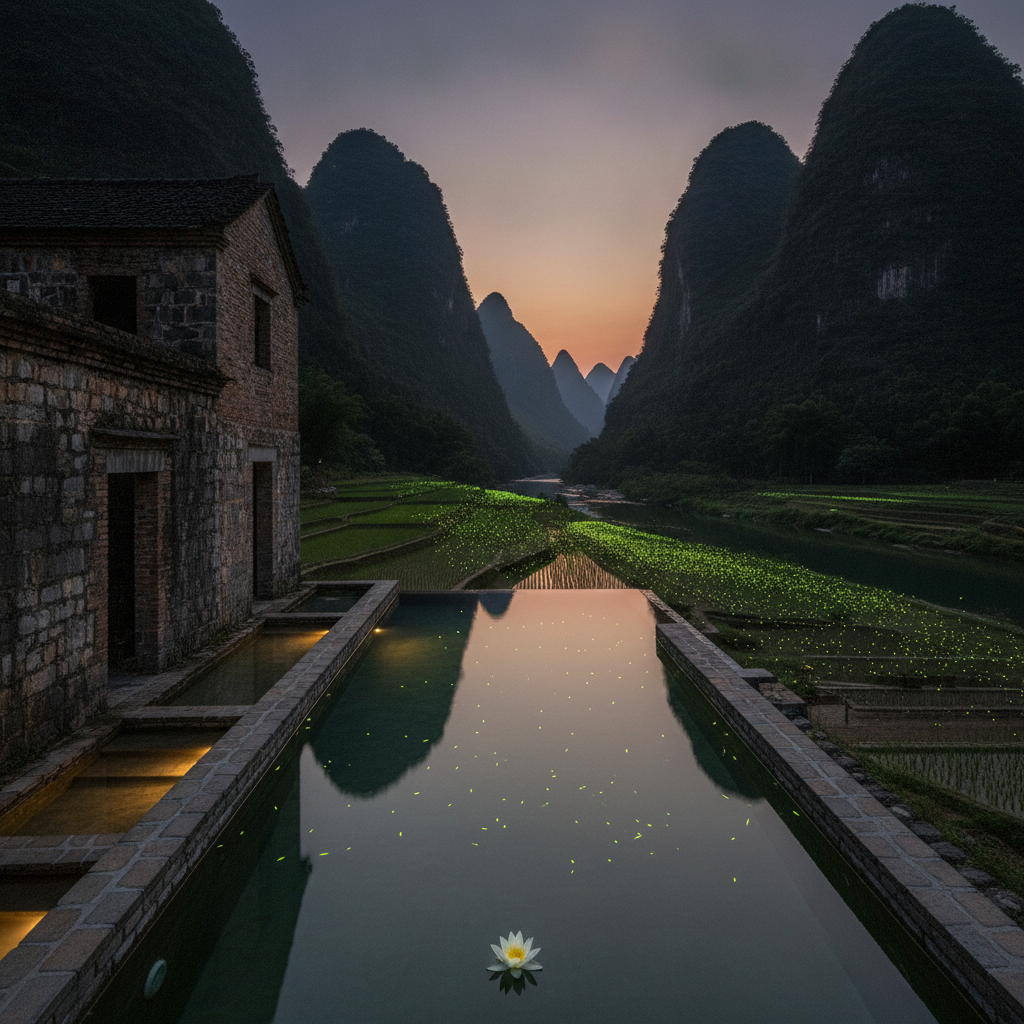
The Guilin travel budget guide (the city that accommodates the widest range of travel budgets of any major Chinese tourist destination—from ¥150/day backpacker to ¥3,000+/day luxury): the framework for planning a Guilin visit at any budget level. Budget (¥150–250/day): dormitory accommodation at the Yangshuo hostels on West Street (¥60–100/night); Guilin rice noodle breakfast (¥10–15); pack lunch from the morning market; the Li River cruise (the cheapest option: the public ferry from Zhujiang Wharf (¥210 including bus return from Yangshuo)). Mid-range (¥400–800/day): guesthouse accommodation in the Yangshuo countryside (¥200–400/night in a riverside karst-view room); cooking class (¥250); guided bamboo raft on the Yulong River (¥200). Luxury (¥1,500–4,000/day): the Alila Yangshuo (the most acclaimed boutique hotel in southern China—a converted Qing Dynasty sugar mill in a rice terrace valley below the karst towers, with infinity pools overlooking the Li River): the private Li River charter boat (the exclusive bamboo raft with chef-prepared picnic lunch on the Yellow Cloth Shoal—approximately ¥2,500–4,000 for a half-day private raft with custom catering): the ultimate Guilin luxury experience.
Walk this route with audio
Stories play automatically as you reach each stop — no tapping needed.
More in Guilin
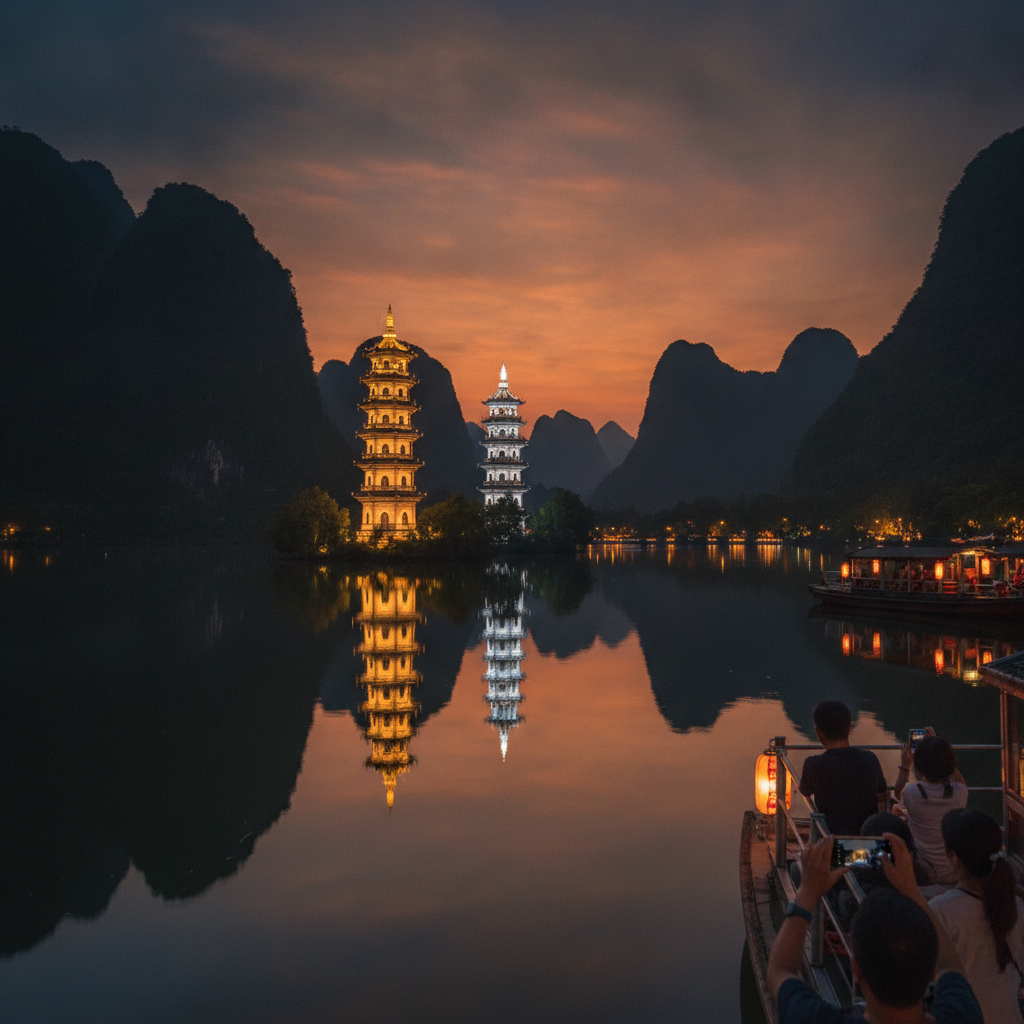
The World's Tallest Bronze Pagoda on a Lake Island, the Cave That Sheltered Thousands During the 1944 Japanese Bombing & the Savory Tea That Takes Three Encounters to Like
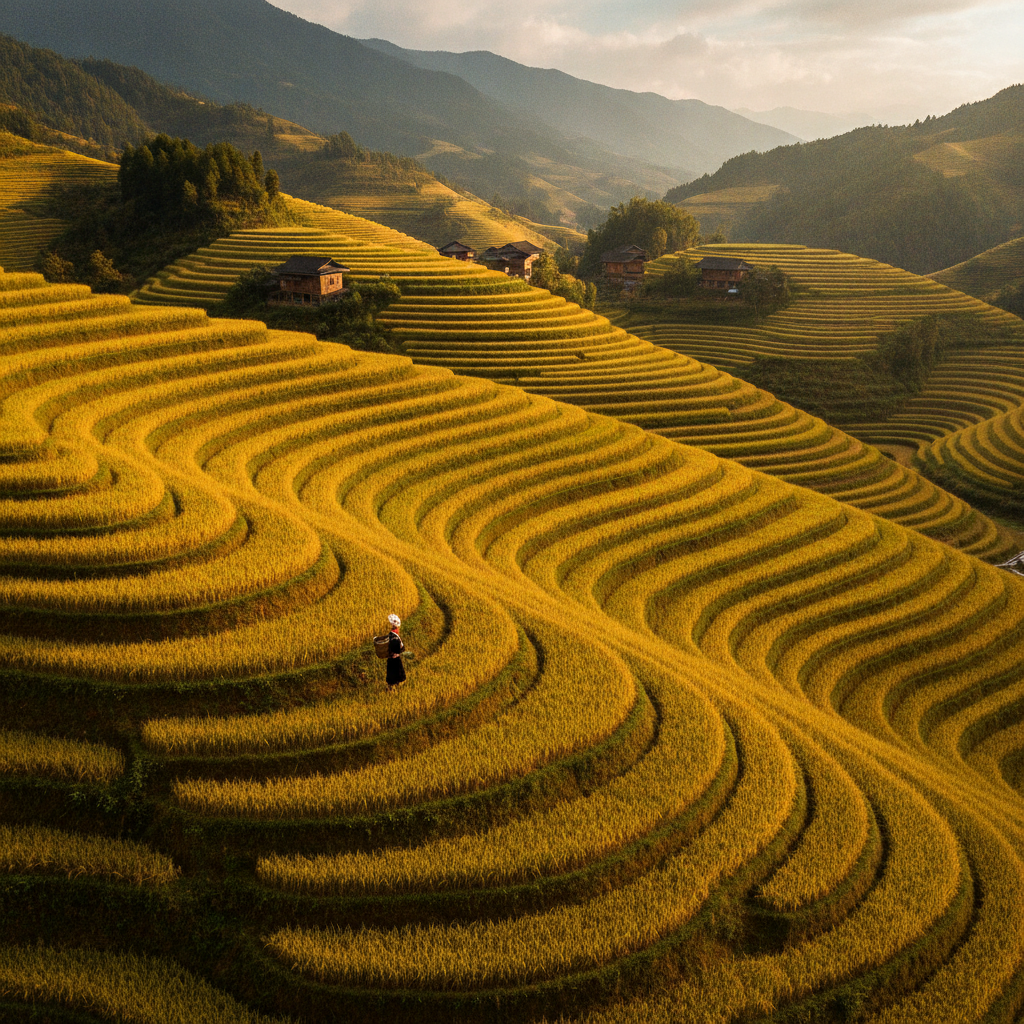
The 300-Million-Year Acid That Sculpted Tower Mountains Found Only Here and in Halong Bay, the Dong Bridge Built Without Metal Nails & the Beer Fish Braised in the River It Came From
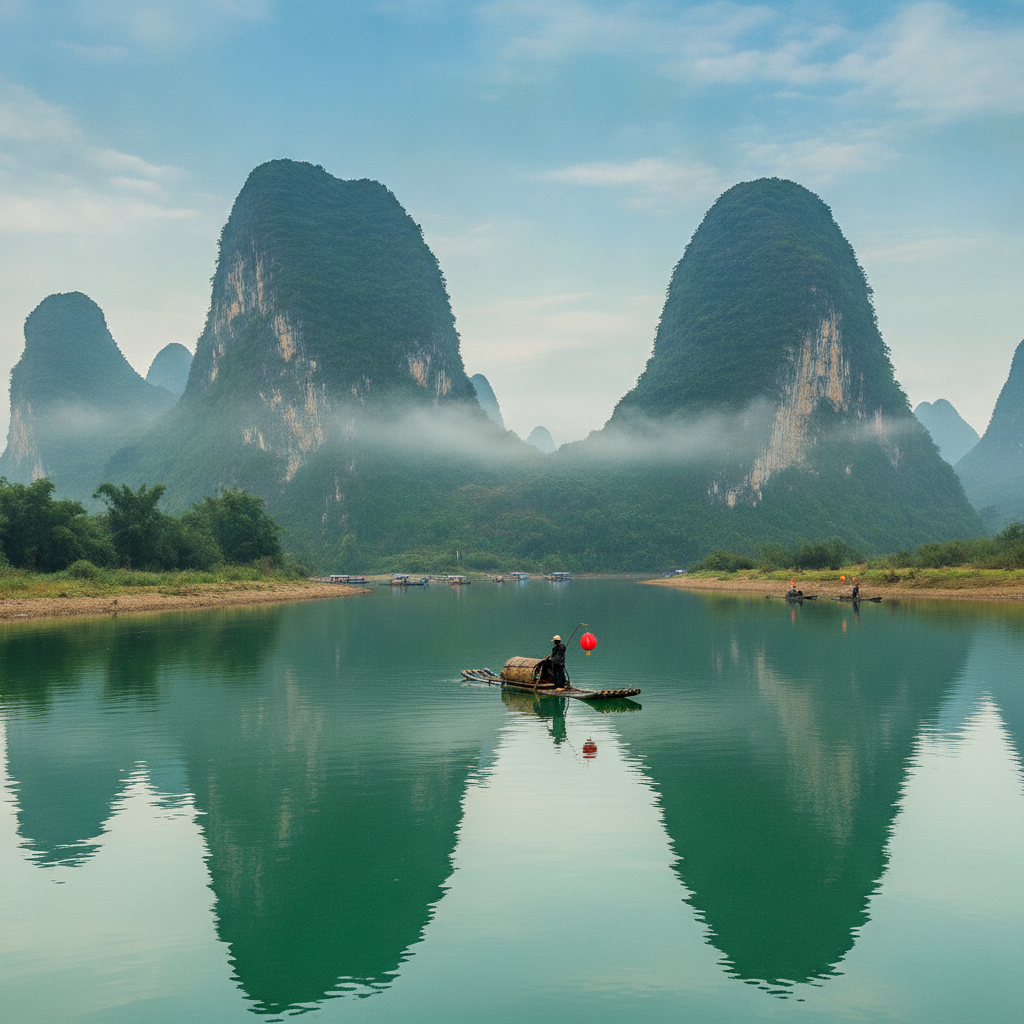
The 20-Yuan Note Landscape, the Cave With 77,000 Square Metres of Stalactites & the Red Yao Women Who Hold the World Record for Longest Hair
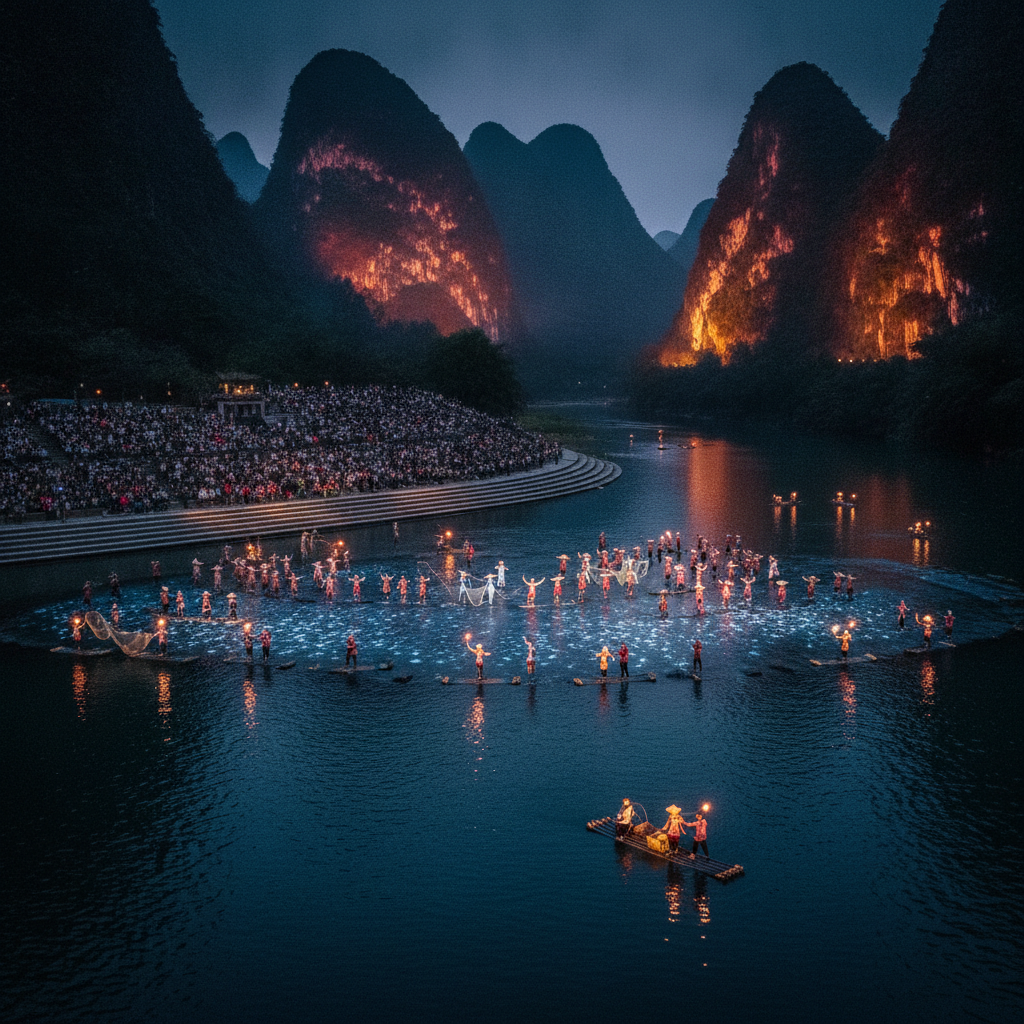
The River Filmed on 500 Million Banknotes, the Zhang Yimou Outdoor Performance With 600 Real River Fishermen & the Fuli Village Where Fans Are Painted With Mountains That Appear on Money