The 300-Million-Year Acid That Sculpted Tower Mountains Found Only Here and in Halong Bay, the Dong Bridge Built Without Metal Nails & the Beer Fish Braised in the River It Came From
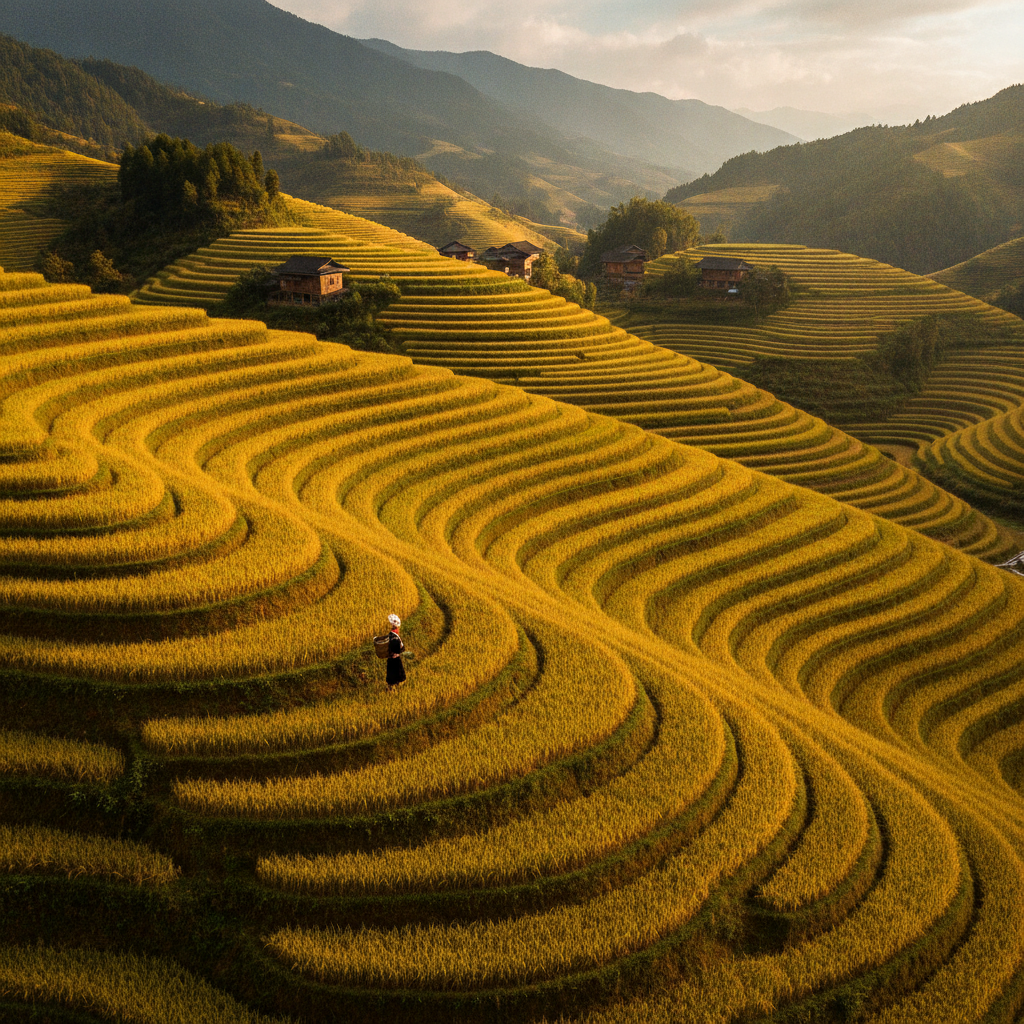
The carbonic acid karst process over 300 million years producing the world's most extreme tower-karst only in Guilin and Halong Bay; the Chengyang Dong bridge at 76m as the longest wooden covered bridge in China; the Dong grand song as a 2009 UNESCO Intangible Cultural Heritage; the Red Yao hair-washing ceremony at the Lu'an River; Yangshuo's 3,000 sport climbing routes on karst towers; and the Longji terraces' less-than-1-metre width with 1,000+ layers on some sections.
- 1
How Karst Was Made – 300 Million Years of Acid Rain
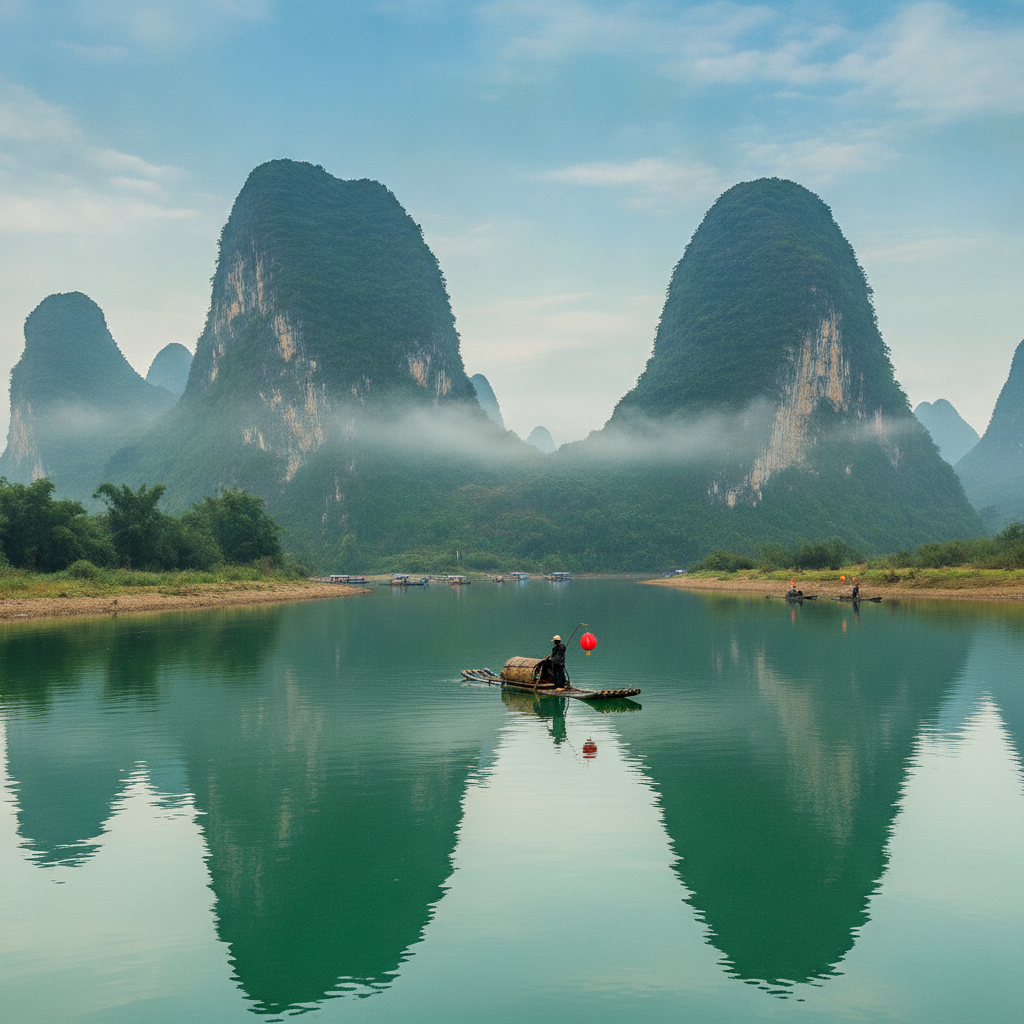
The Guilin karst: rainwater absorbs atmospheric CO₂ to form carbonic acid, which dissolves the calcium carbonate limestone over 300 million years. The soluble calcium bicarbonate is carried away by water, leaving only the most resistant towers standing. The tower-karst (峰林) morphology—vertical-sided columns rising from flat alluvial plains—is the most extreme karst landscape on Earth, found only in Guilin and Halong Bay (Vietnam). Specific conditions: 1,900 mm annual rainfall, subtropical temperature accelerating dissolution, and thick horizontal limestone beds lifted from the seabed by tectonic uplift ~50 million years ago. The 'karst window' (the open landscape between towers visible from the Li River): the aesthetic effect produced when dissolution removes the connecting rock between towers and leaves only the isolated peaks.
- 2
Xingping Village – The 10-Yuan Note View
Xingping (兴坪—57 km downstream from Guilin on the Li River): the village on the back of the 10-yuan RMB banknote. The 10-yuan note view: the specific karst grouping (the 'Five Fingers Mountain' group) visible from the Ancient Ferry Dock (古码头) viewpoint above Xingping. The Qing Dynasty commercial streets of Xingping are the most intact riverside trading village architecture in the Guilin region. Local foods: smoked pork (腊肉) and bamboo rice (竹筒饭—rice cooked inside a bamboo tube over fire). Best access: bamboo raft from Yangshuo to Xingping (1h upstream, return by road) or stopping during the Li River cruise on full-length itineraries.
- 3
The Zhuang, Yao & Dong Minority Cultures
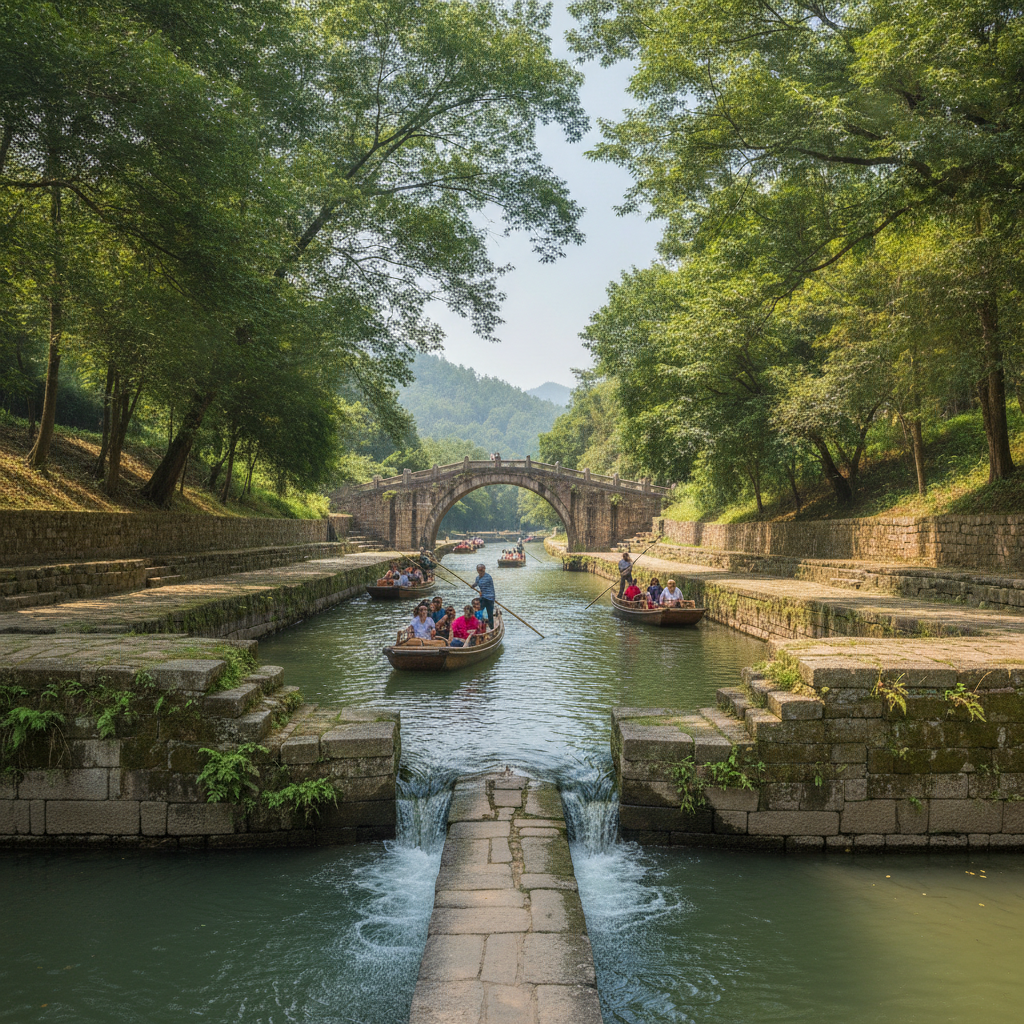
Guangxi's ethnic diversity: the Zhuang (壮族—China's largest ethnic minority, ~17 million people), the primary architects of the Longji terraces. The Yao (瑶族), known for the Red Yao women's floor-length hair tradition—the hair-washing ceremony (performed publicly once per year at the Lu'an River when women wash and comb their 1.4m-average hair with wooden combs). The Dong (侗族) of the Guilin-adjacent Sanjiang area: known for the drum tower (鼓楼) architecture and wind-and-rain bridges (风雨桥). The Chengyang Wind-and-Rain Bridge in Sanjiang (76 metres long—the longest and most photographed wooden covered bridge in China): the Dong bridge-building tradition using no metal nails. The Dong grand song (侗族大歌): the polyphonic folk singing tradition of the Dong people, listed as UNESCO Intangible Cultural Heritage in 2009.
- 4
Yangshuo Rock Climbing – China's Karst Climbing Capital
Yangshuo is the rock climbing capital of mainland China with approximately 3,000 sport climbing routes on the karst limestone towers above the Li River and Moon Lake. Climbing areas: White Mountain (白山—beginner and intermediate, 5a–7b French grading); the Egg Crag (蛋岩—overhanging egg-shaped tower with advanced routes 7c–9a); the River Cave (cave climbing accessible by boat). The Moon Hill arch hike (月亮山): 8-km bicycle ride south from Yangshuo + 340 steps (30 minutes) to reach the 50-metre-diameter natural arch—the single most dramatic karst viewpoint without a boat. Cycling infrastructure: Yangshuo has the highest bike-hire density of any Chinese town—the flat flood-plain roads between the Li River and karst towers are the most bicycle-friendly terrain in Guangxi.
- 5
Guilin's Cuisine & Osmanthus Culture
The Guilin culinary tradition: Guilin rice noodle (桂林米粉)—the most important street food in the region: rice noodles blanched in boiling water served with pork-herb broth poured over, topped with braised pork slices, marinated dried tofu, peanuts, pickled vegetables, and chili oil. The beer fish (啤酒鱼—Yangshuo specialty): whole Li River carp braised in local beer with tomatoes, chili, and spices. Bamboo rice (竹筒饭): glutinous rice and chestnuts cooked inside fresh bamboo over open fire—the most distinctively village food format in Guangxi. Guilin osmanthus wine (桂花酒): the osmanthus-infused rice wine produced since the Song Dynasty—the wine gives Guilin its name (桂林 = 'Forest of Osmanthus'). The osmanthus bloom: October–November, filling the city streets and parks with fragrance. The Guilin water chestnut (马蹄, mǎ tí): the freshwater caltrop grown in the Li River floodplain, used in dumplings, soups, and the distinctive Guilin water chestnut cake.
- 6
Guilin 4-Day Itinerary – River, Terraces & Caves
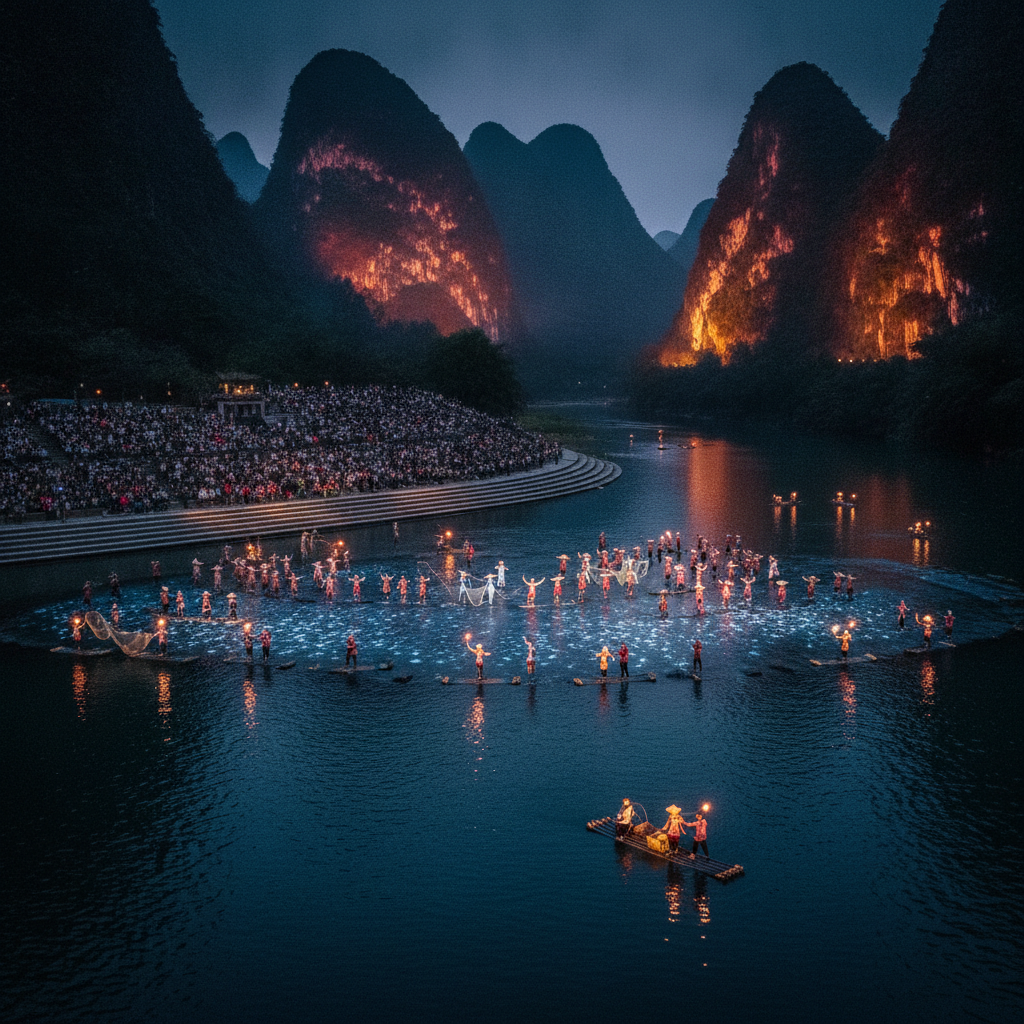
Day 1 (City sites): 08:00 Elephant Trunk Hill (before tour buses) → Reed Flute Cave (50-minute tour) → Seven Star Park → evening Guilin rice noodle at Zhengyang Pedestrian Street. Day 2 (Li River): 09:00 Zhujiang Wharf departure → 83-km Li River cruise to Yangshuo (4.5 hours; bring food and water; afternoon light after 14:00 is best for photography) → Yangshuo West Street evening + beer fish dinner. Day 3 (Yangshuo adventures): morning bicycle rental → Moon Hill (8-km ride + 30-minute arch hike) → cormorant fishing evening performance on the Li River. Day 4 (Longji terraces): 07:00 departure from Yangshuo by private car/bus (2h30m to Longji) → Ping'an viewpoint ('Dragon' terrace panorama) → hike between Zhuang and Red Yao villages → descend by 15:00 → Guilin airport for departure. Best tip: pre-book the Li River cruise through a hotel or agency (¥210–330 per person including the one-way bus back from Yangshuo to Guilin).
Walk this route with audio
Stories play automatically as you reach each stop — no tapping needed.
More in Guilin
The Song Dynasty Painter Who Invented a New Brushstroke Technique Just for This Mist, the Alila Yangshuo in a Sugar Mill & the Longji Terrace Mirror in February When the Fields Are Flooded
The World's Tallest Bronze Pagoda on a Lake Island, the Cave That Sheltered Thousands During the 1944 Japanese Bombing & the Savory Tea That Takes Three Encounters to Like
The 20-Yuan Note Landscape, the Cave With 77,000 Square Metres of Stalactites & the Red Yao Women Who Hold the World Record for Longest Hair
The River Filmed on 500 Million Banknotes, the Zhang Yimou Outdoor Performance With 600 Real River Fishermen & the Fuli Village Where Fans Are Painted With Mountains That Appear on Money