Chefchaouen Craft Shopping: The Wool Weaving Tradition, the Chefchaouen Djellaba, the Striped Wool Blanket, the Kif Sebsi Pipe, the Medina Artisan Shops, and the Authentic vs Tourist Craft
The Chefchaouen craft shopping route covers the Rif wool weaving tradition distinct from the lowland Moroccan textiles, the Chefchaouen djellaba in the distinctive Rif colors, the striped wool blanket from the mountain looms, the kif sebsi pipe as the most controversial single souvenir, the medina artisan shops, and the distinction between the authentic craft and the tourist import.
- 1
Chefchaouen Djellaba: The Rif Mountain Garment
The Chefchaouen djellaba (the hooded full-length garment worn by both men and women) differs from the lowland Moroccan djellaba in the heavier wool weave appropriate to the Rif mountain climate, the wider hood, and the Rif color palette of the earthy terracotta, the olive, and the cream that contrasts with the urban white and black of the Fes and the Marrakech djellaba tradition. The Chefchaouen djellaba is the most authentically Rif Berber single garment available in the medina craft shops and the most practically useful souvenir for the colder European climate that the wool weave makes the warmest single Moroccan textile purchase.
- 2
Striped Wool Blanket: The Rif Berber Textile
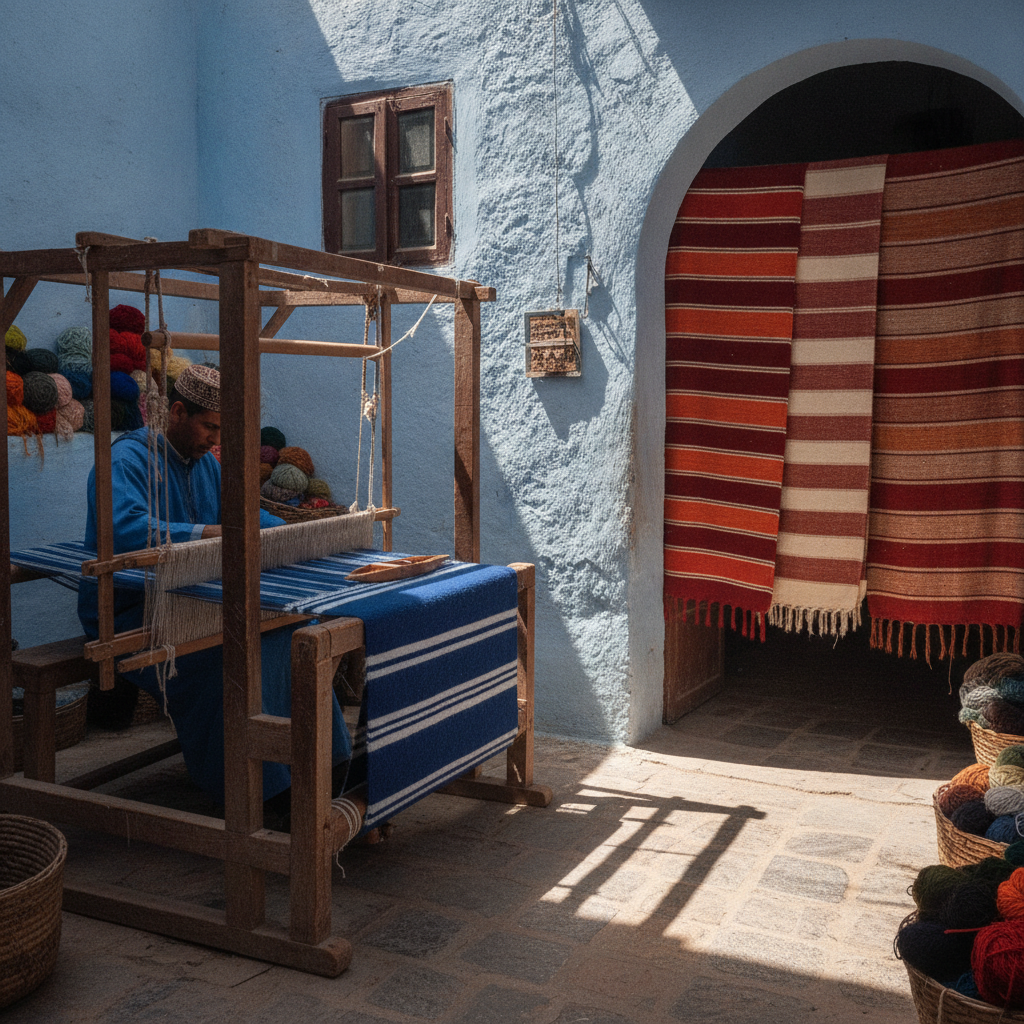
The striped wool blanket (haik) woven on the traditional wooden looms in the Chefchaouen medina workshops in the bold red, white, orange, and black horizontal stripe patterns of the Rif Berber women textile tradition is the most distinctively regional single textile in Morocco and the craft product that most clearly expresses the Rif Berber identity in the domestic textile market. The Rif striped blanket is the most practically durable single Moroccan textile souvenir and the item most recommended by the experienced Morocco traveler as the highest quality-to-price ratio single craft purchase available in the Chefchaouen medina.
- 3
Kif Sebsi Pipe: The Rif Cannabis Instrument
The sebsi, the traditional long-stemmed pipe used for smoking the kif cannabis resin that is the primary agricultural product of the Rif mountain region, is the most controversial single craft item in the Chefchaouen medina with the carved wood, the bone, and the silver-inlaid pipes ranging from the practical to the decorative at every quality and price level. The sebsi is the most widely sold single souvenir in the Chefchaouen medina alongside the blue wall paintings and the wool textiles and represents the most direct single cultural expression of the Rif cannabis agricultural tradition.
- 4
Chefchaouen Leather: The Smaller Scale
The Chefchaouen leather goods market is smaller and less commercially developed than the Fes and the Marrakech leather markets but offers the most directly made-on-premises single leather craft in Morocco with the leather workshop sandal makers visible through the shop doorways hand-stitching the traditional babouche slippers and the leather bags. The Chefchaouen leather craftsman is the most accessible single artisan for the visitor who wants to observe the craft production process without the commercial viewing platform arrangement of the Fes or the Marrakech tanneries.
- 5
Authentic vs Tourist Craft: The Chefchaouen Shopping Reality
The authentic craft versus tourist import distinction is the most practically important single shopping assessment in the Chefchaouen medina where the Chinese-manufactured djellaba fabrics, the machine-woven blanket imitations, and the Indian-imported brass objects are mixed with the locally produced wool textiles, the Rif pottery, and the handmade sebsi pipes in the same medina shop. The most reliable single indicator of the authentic Rif Berber textile is the uneven weave visible on the reverse of the blanket and the hand-spun wool irregularity that the machine-woven product cannot replicate.
- 6
Chefchaouen Practical: The One-Day vs Two-Day Visit
The Chefchaouen visit decision between the one-day visit (most common, arriving by morning bus from Fes and departing by afternoon bus to Tangier) and the two-night stay represents the single most consequential visitor decision in the Chefchaouen experience. The one-day visitor sees the blue lanes in the peak tourist hour, the two-night visitor sees the golden hour morning, the evening square, the morning market, and the Akchour waterfall day trip. The two-night Chefchaouen stay is the single highest-return additional day available in the northern Morocco circuit and the recommendation of every experienced Morocco traveler who has made both versions of the visit.
Walk this route with audio
Stories play automatically as you reach each stop — no tapping needed.
More in Chefchaouen
The Chefchaouen Jewish Community Spoke Haketia (15th Century Castilian Spanish) for 430 Years After the 1492 Expulsion and Spanish Military Officers Who Entered the City in 1920 Could Understand the Jewish Residents; The Rif Mountain Wild Thyme Honey Is the Primary Product of Chefchaouen's Traditional Agricultural Economy; Chefchaouen Receives 300,000-400,000 Visitors Per Year in a 0.4 km2 Medina
The Jebala Berbers of Chefchaouen's Western Rif Mountains Have Largely Lost Their Tamazight Language to Arabic Over the 17th-18th Centuries But Maintain a Distinct Cultural Identity in Dress, Music, and Agricultural Practices; Chefchaouen Spring (March-May) Offers the Best Combination of Wildflower Bloom, Mild Temperatures, Good Light, and Moderate Crowds; The Ouezzane Wazzaniyya Sufi Zawiya 44 km South of Chefchaouen Was Historically One of the Most Powerful Religious-Political Institutions in Morocco
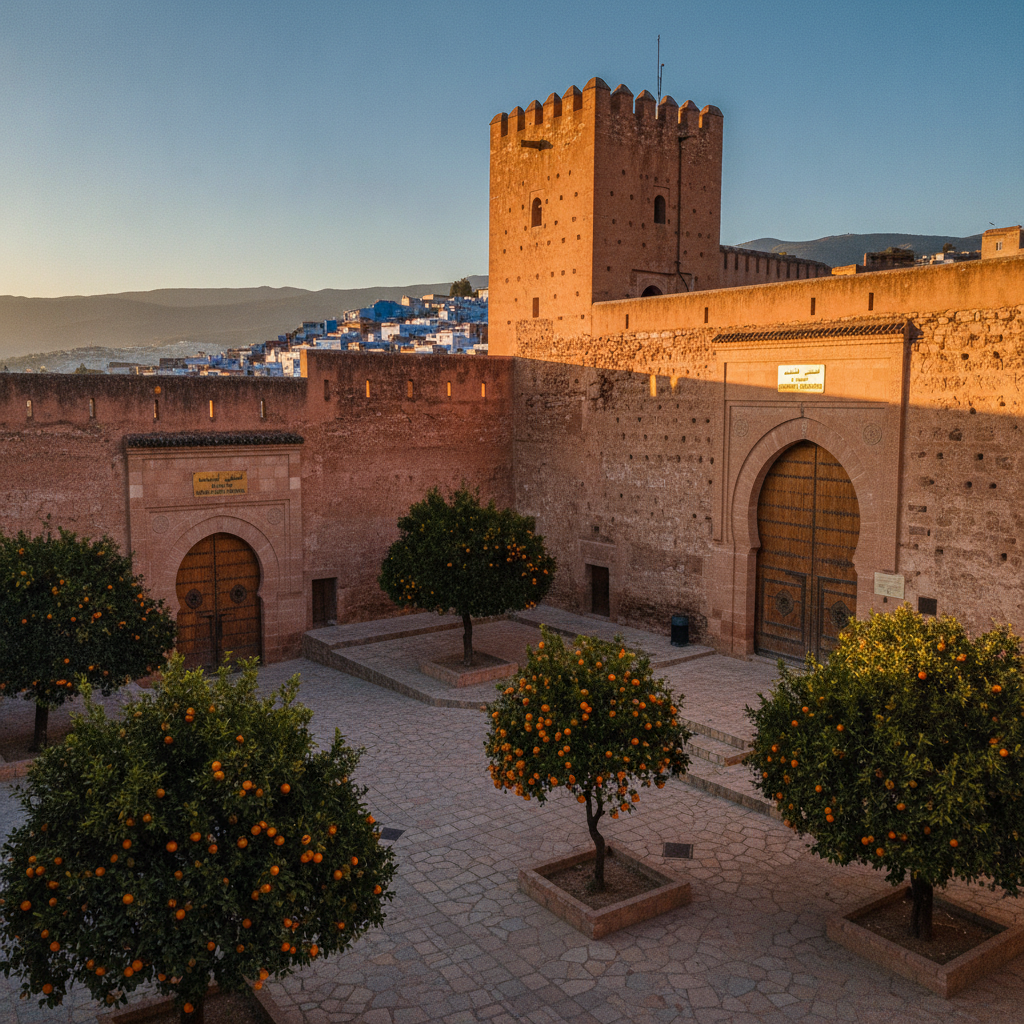
Chefchaouen History: The Spanish Protectorate Era, the Rif War and Abd el-Krim, the Closed City Period, the Independence and Reopening, and the Bilingual Spanish-Arabic Culture
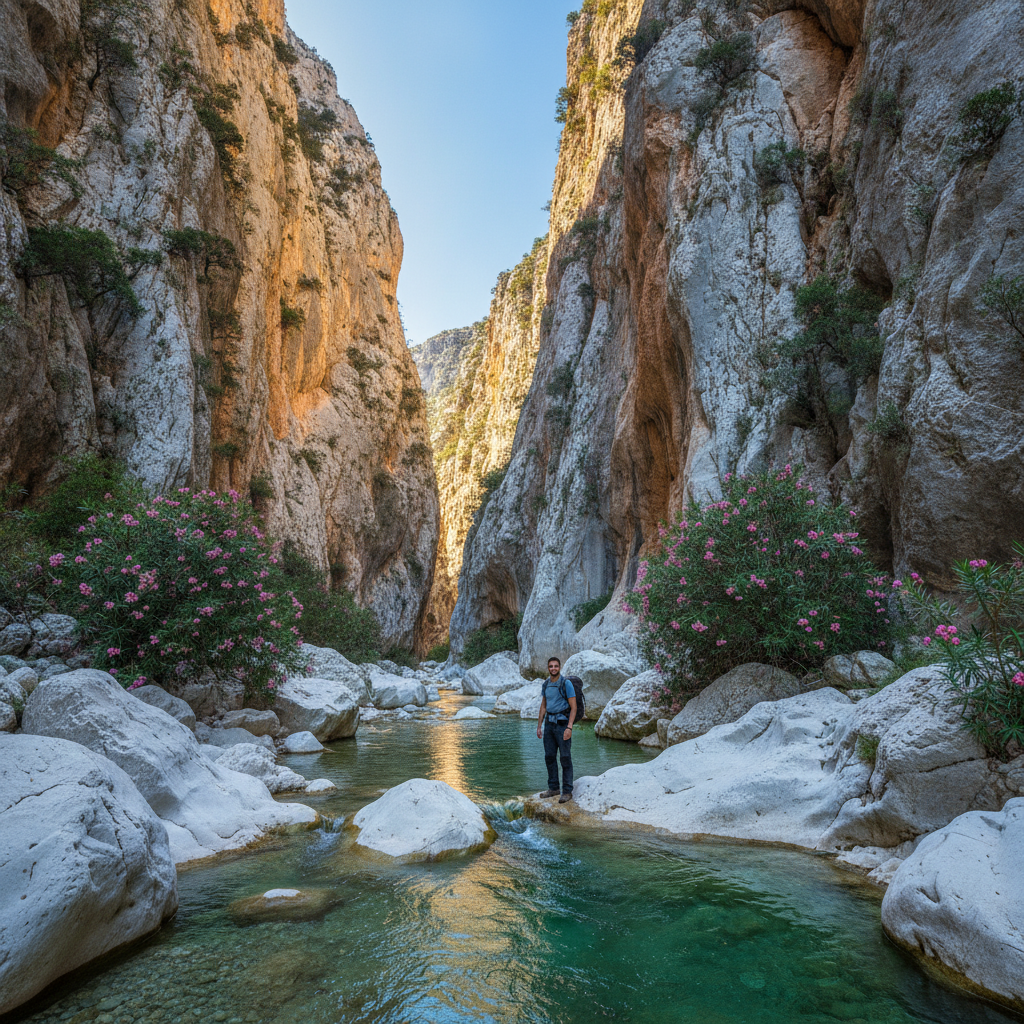
The Talassemtane National Park Protects the Only Significant Moroccan Population of the Abies Pinsapo Spanish Fir Tree Whose Primary Habitat Is the Sierra de las Nieves in Southern Spain; Chefchaouen Medina Was Described by Spanish Military Officers Entering in 1920 as the Most Perfectly Preserved Medieval Andalusian City Outside Andalusia Itself; The Beat Generation Writers Paul Bowles William S. Burroughs and Allen Ginsberg Were All Connected to Tangier During Its International Zone Period (1923-1956)
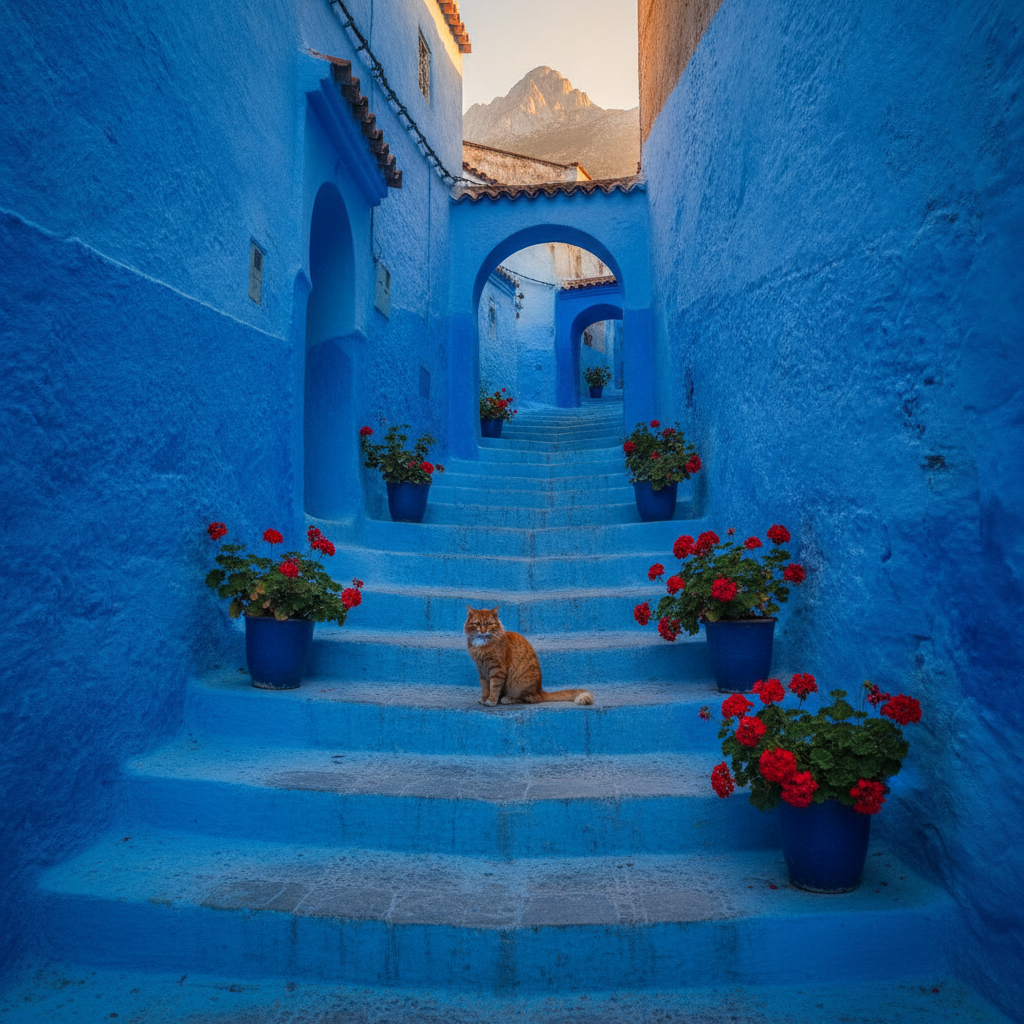
Chefchaouen's Blue Medina May Have Been Painted Blue By Jewish Refugees From the 1492 Spanish Expulsion Who Painted Doorways the Color of Heaven; The Rif Mountains Produce Approximately 40-60% of the Hashish Consumed in Europe With 90,000 Farming Families Dependent on Cannabis Cultivation; Morocco Legalized Cannabis Cultivation Under License in 2021 After Decades of the Largest Illegal Cannabis Production Zone in the World